🛰️Origins & Evolution

Aerospace Engineer · Designs, analyzes and certifies the aircraft, rockets and spacecraft that leave the ground, working to safety margins that leave no room for guessing.

Aerospace engineering is unusually well documented for a young field: most of its foundational figures lived into the age of photography, film and, for the most recent ones, live television. Its recorded history runs from a Yorkshire baronet sketching the forces on a bird's wing to a live broadcast of a rocket landing itself upright on a floating platform in the ocean.

The story runs through two world wars, a Cold War fought partly through competing rocket programs, and a late-century shift from state-funded prestige projects toward commercial companies competing on cost. It is also, more than most engineering histories, a story of nations: Germany's early theoretical lead, Britain and the United States racing to industrialize flight, and the Soviet Union — later joined by China — proving that a rival state-run program could match or beat the West to a given milestone.

Where it began

1799Scarborough, Yorkshire, England

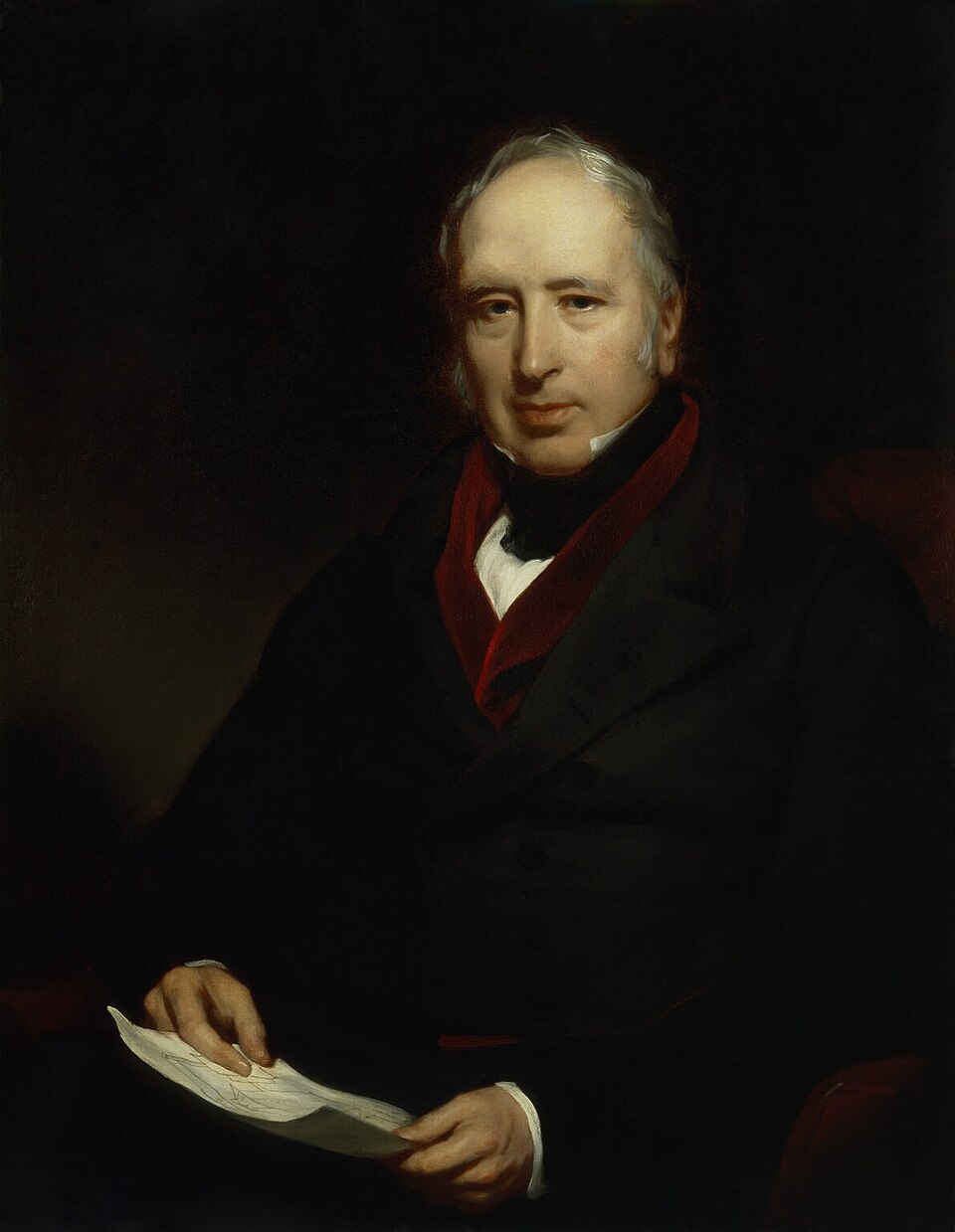
George Cayley, a baronet with no formal engineering training, engraves a silver disc with a diagram identifying the four forces that act on any flying object — lift, drag, weight and thrust — and sketches a fixed-wing glider with a separate tail for stability, breaking decisively from centuries of failed attempts to imitate a flapping bird. He goes on to build and fly a series of gliders, reportedly sending his coachman aloft in 1853 in the first recorded flight of a heavier-than-air craft carrying an adult, and is now generally credited as the founder of aerodynamics as a science.

Timeline

1799Cayley defines the four forces of flight

George Cayley identifies lift, drag, weight and thrust as the forces governing flight and proposes a fixed-wing design with a separate control surface, laying the theoretical foundation aerodynamics still uses.

1903The Wright brothers achieve powered flight

Orville and Wilbur Wright fly the Wright Flyer for 12 seconds at Kitty Hawk, North Carolina, on December 17 — the first sustained, controlled, powered flight of a heavier-than-air craft.

1904–1905Prandtl explains the boundary layer

Ludwig Prandtl presents boundary-layer theory at a mathematics congress in Heidelberg, resolving a long-standing contradiction between theoretical and observed drag and giving engineers the tools to calculate lift and drag accurately.

1915NACA is founded

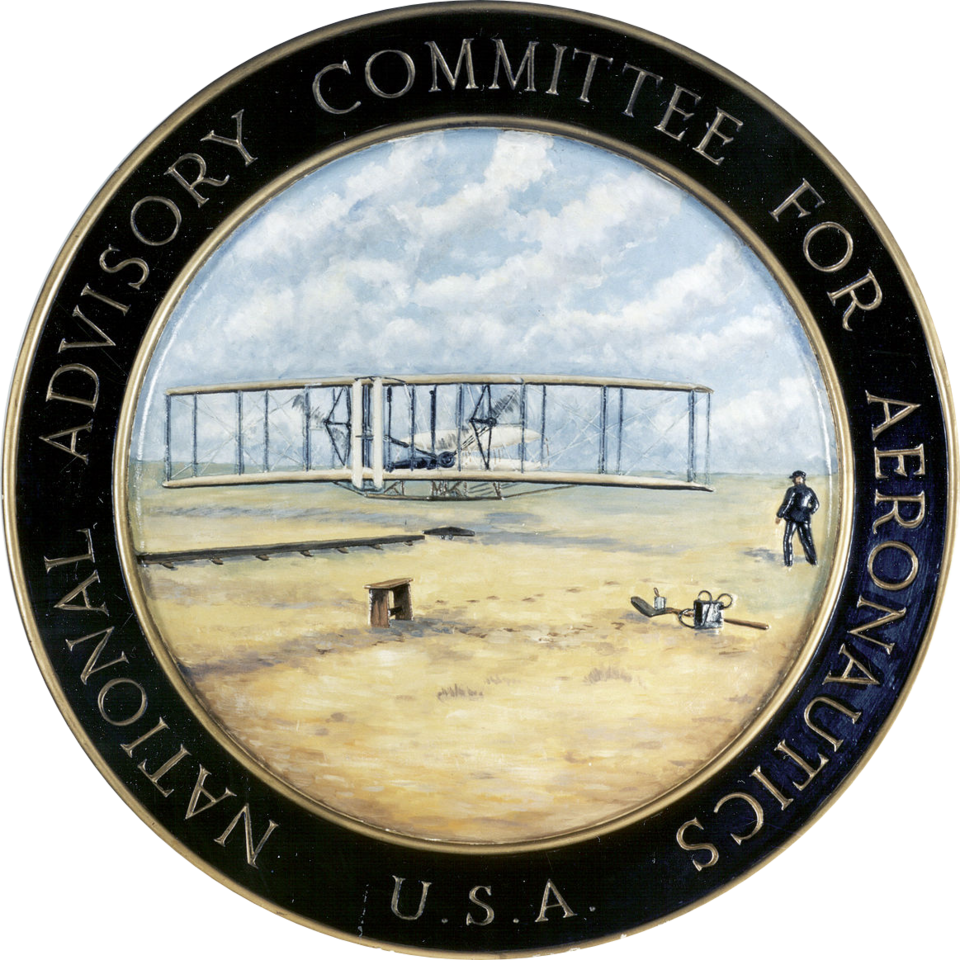
The US Congress creates the National Advisory Committee for Aeronautics to coordinate government aeronautical research, the body that becomes NASA in 1958 and standardizes much of the field's early testing methodology.

1939The first jet-powered flight

The Heinkel He 178, powered by Hans von Ohain's turbojet engine, flies near Rostock, Germany, on August 27 — a parallel British project led by Frank Whittle flies two years later.

1942The V-2 reaches space

A V-2 rocket, developed under Wernher von Braun at Peenemünde, becomes the first human-made object to reach an altitude of roughly 100 km, the boundary now used to define space — and is then used as a weapon against London and Antwerp.

1957Sputnik 1 opens the Space Age

Sergei Korolev's design bureau launches Sputnik 1, the first artificial satellite, on October 4 — a basketball-sized sphere that shocked the United States into founding NASA the following year.

1961Gagarin becomes the first human in space

Yuri Gagarin orbits Earth once aboard Vostok 1 on April 12, a flight engineered by Korolev's team that beat the American Mercury program into orbit by ten months.

1969Apollo 11 lands on the Moon

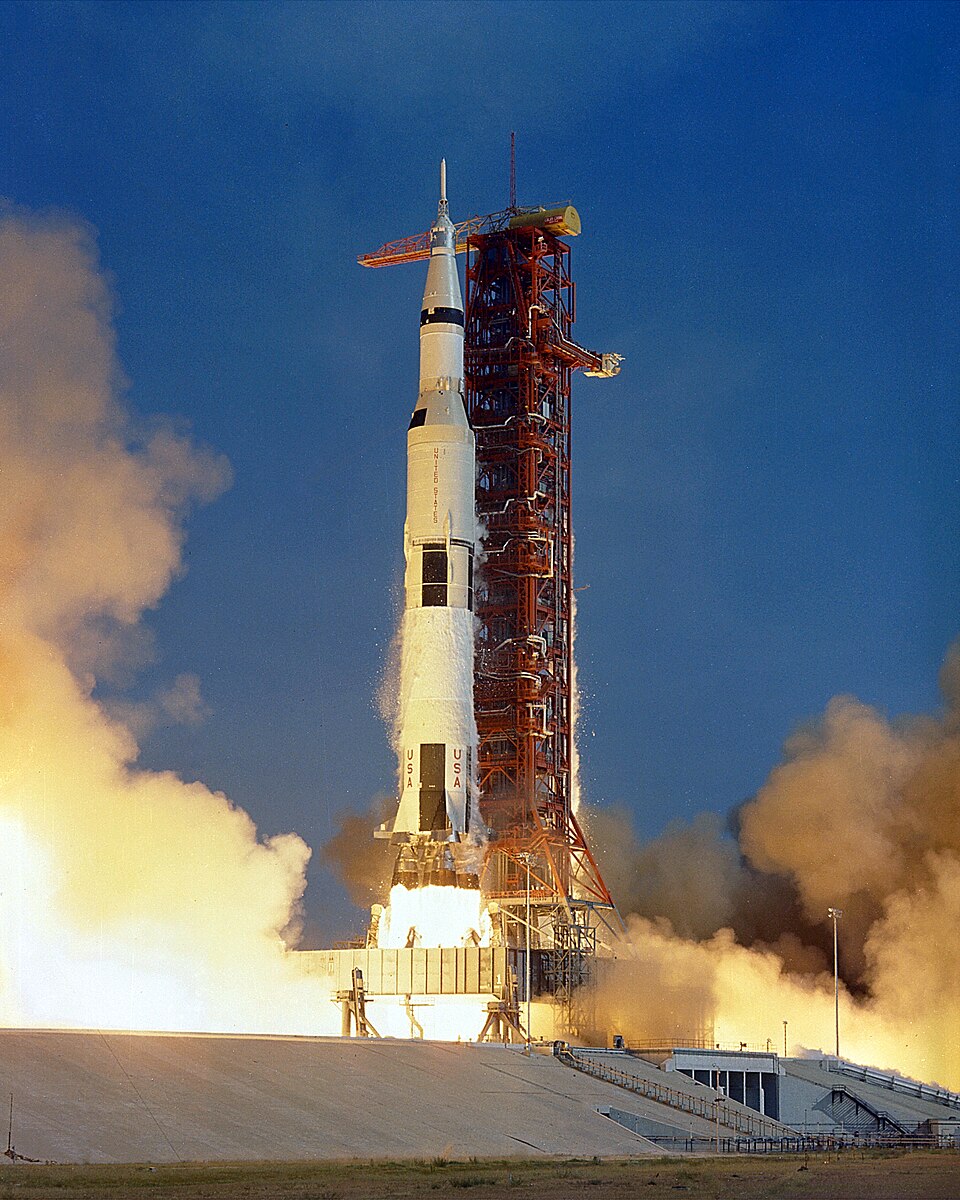
The Saturn V rocket, developed under von Braun at NASA's Marshall Space Flight Center, carries Apollo 11's crew to the Moon on July 20, fulfilling a goal President Kennedy had set eight years earlier.

2015SpaceX lands an orbital rocket booster

Falcon 9's first stage returns to a landing pad at Cape Canaveral on December 21 after launching a payload to orbit, the first such landing and the start of routine, economical rocket reuse.

The eras

Portrait of Sir George Cayley, pioneer of aerodynamic theory
Henry Perronet Briggs · Public domain · Wikimedia Commons
1799–1903

Gliders and the birth of aerodynamic theory

Between Cayley's 1799 diagram and the Wright brothers' 1903 flight, aerodynamics developed almost entirely through unpowered gliders and wind-tunnel experiments. Otto Lilienthal made and documented more than 2,000 glider flights in Germany in the 1890s before dying in a 1896 crash, data the Wrights studied closely; they built their own wind tunnel in Dayton, Ohio, to test and correct Lilienthal's published lift tables before ever attempting powered flight. The era's central lesson — that theory has to be checked against instrumented, repeatable testing — became the field's defining habit.
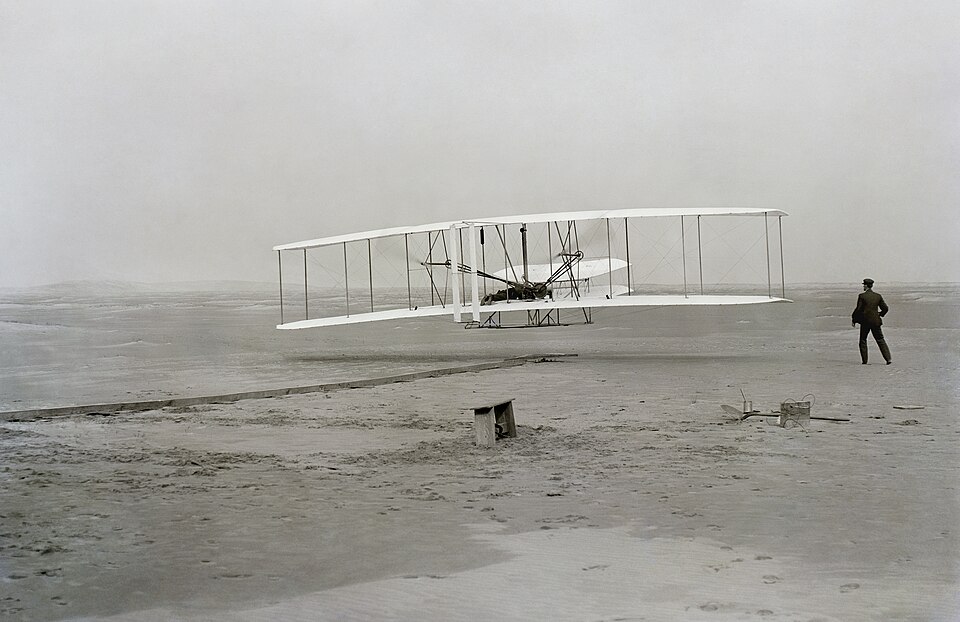
The Wright Flyer during its first powered flight, December 1903
John T. Daniels · Public domain · Wikimedia Commons
1903–1918

Powered flight and the first war in the air

Powered aviation went from a 12-second hop to a decisive military weapon in fifteen years. Structural failures were common and often fatal, since engineers were still learning how thin, fabric-covered wooden airframes behaved under real aerodynamic loads; the profession's early emphasis on structural safety factors traces directly to crashes from this period. World War One turned aircraft from a novelty into an industrial priority, and national governments — Britain, France, Germany, the United States — began funding dedicated aeronautical research establishments for the first time.

A NACA wind-tunnel testing facility in the early twentieth century
NASA Headquarters - Greatest Images of NASA (NASA-HQ-GRIN) , edited by Blue Sonic ( talk · contribs ) · Public domain · Wikimedia Commons
1919–1945

Streamlining, jets and a science of high-speed flight

Between the wars, engineers led by Prandtl and his students, including Theodore von Kármán, turned aerodynamics into a rigorous applied science, explaining drag, streamlining and eventually the strange behavior of air near the speed of sound. Germany and Britain independently developed the jet engine in the late 1930s, and World War Two turned aircraft design into a mass-production discipline, with the United States alone building over 300,000 aircraft between 1940 and 1945. The same war funded the V-2, the first large liquid-fuel rocket, under Wernher von Braun at Peenemünde.

A Saturn V rocket on its launch pad, Apollo program
NASA · Public domain · Wikimedia Commons
1945–1975

The Cold War space race

After 1945, the United States and Soviet Union each recruited German rocket engineers and built rival space programs on Cold War rivalry. Korolev's bureau launched Sputnik in 1957 and Gagarin in 1961; von Braun's team answered with the Saturn V and the Apollo Moon landings of 1969–1972. Supersonic and then hypersonic flight, the Anglo-French Concorde and the Soviet Tupolev Tu-144, and the ballistic-missile programs that shadowed the whole era were all products of the same state-funded urgency, engineering talent treated as a strategic resource to be recruited, protected or, in Qian Xuesen's case, deported.

A SpaceX Falcon 9 booster landing after launch
Philip Terry Graham · Public domain · Wikimedia Commons
1976–present

Shuttles, satellites and reusable rockets

The Space Shuttle (1981–2011) tried to make orbital flight routine and partially succeeded, while the commercial satellite and airliner industries — Airbus, founded in 1970 as a European consortium, chief among them — turned aerospace engineering into a much larger civilian business than defense alone. China's program, dormant since Qian Xuesen's early missiles, matured rapidly from Shenzhou 5's first crewed flight in 2003 to a permanently crewed space station by 2022. SpaceX's 2015 booster landing then reopened a question the field had treated as settled: that a rocket, like an airliner, could be flown, inspected and flown again rather than discarded after one use.

What this job replaced

Neighbouring trades that no longer exist — absorbed, automated or regulated away.

Human computer

1930s–1960s

Before electronic computers, aerospace research organizations like NACA and later NASA employed rooms of mathematicians — disproportionately women, including Katherine Johnson and Dorothy Vaughan at Langley — to perform trajectory and aerodynamic calculations by hand or with mechanical calculators. Electronic computers took over the raw calculation from the late 1950s onward, and the surviving human specialists were retitled 'aerospace technologists' or engineers rather than replaced outright.

Flight engineer

1920s–2000s

A third cockpit crew member responsible for monitoring engines, fuel and pressurization systems on complex piston and early jet airliners, reading dozens of analog gauges a pilot could not watch alone. Automated 'glass cockpit' systems on aircraft like the Boeing 757/767 and Airbus A320 (1980s) moved that monitoring to onboard computers, and two-pilot crews became the airline standard, ending the role on new aircraft designs.

Loftsman

1910s–1980s

Before computer-aided design, loftsmen worked full-scale on a factory floor called the mold loft, fairing an aircraft's compound curves by hand with long flexible battens, lead weights and chalk lines so every department built to the same true shape. Computer-aided design systems like CATIA, adopted industry-wide through the 1980s and 1990s, moved that work into software, and the mold loft floor disappeared from aircraft factories.

Trades that vanished →

Nearly every leap in this history follows the same pattern: a theoretical gap identified, closed under wartime or Cold War urgency, then handed to commercial industry once the state-funded risk had been proven survivable. Cayley's forces, Prandtl's boundary layer and von Braun's rockets all made that same journey from paper to weapon to product.

The reusable rocket is the latest version of that pattern, and it is still being written: whether routine reuse does for spaceflight what the jet engine did for air travel — collapsing cost until the activity becomes unremarkable — is the open question the rest of this profile keeps returning to.

Keep exploring

More in Engineering & Technology