🛰️The Greats

Aerospace Engineer · Designs, analyzes and certifies the aircraft, rockets and spacecraft that leave the ground, working to safety margins that leave no room for guessing.

Aerospace engineering's canon runs directly through the twentieth century's great state rivalries, and its most consequential figures rarely worked for the country they were born in: a German rocket engineer built America's Moon rocket, and a Chinese-born Caltech professor, deported by the country he helped arm, built China's.

The eight people here span five countries and more than a century, from a Göttingen professor who explained why wings work to two NASA women whose hand calculations were trusted over a new computer's own output during a live orbital flight.

The all-time podium

Sergei Korolev
Sergei Korolev
Soviet Union
2
Wernher von Braun
Wernher von Braun
Germany / United States
1
Theodore von Kármán
Theodore von Kármán
Hungary / United States
3

The eight who reached the top

1
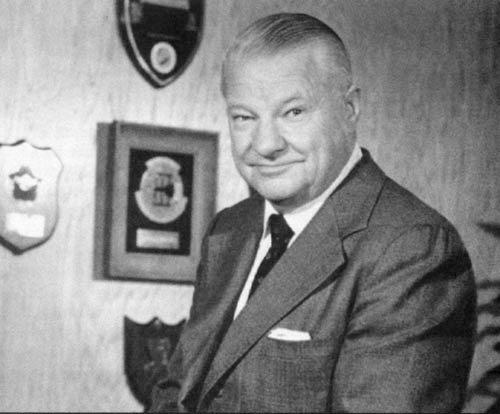
Photograph of Wernher von Braun NASA/MSFC · Public domain

Wernher von Braun

Germany / United States · 1912–1977

Led development of the V-2 ballistic missile for Nazi Germany, then surrendered to American forces and became the driving technical force behind NASA's Saturn V, the rocket that carried Apollo astronauts to the Moon — the field's most celebrated and most morally fraught career.

The story

On July 16, 1969, von Braun watched from Launch Control at Kennedy Space Center as his Saturn V lifted Apollo 11 off the pad — the same engineer who, 27 years earlier at Peenemünde, had watched his V-2 become the first human-made object to reach space, then relied on forced laborers from the Mittelbau-Dora concentration camp to mass-produce it as a weapon against London.

“The same engineering brilliance can serve conquest or exploration — who directs it matters as much as the technology itself.”
Saturn V height
111 m (363 ft)
Director, Marshall Space Flight Center
1960–1970
V-2 missiles built, WWII
~6,000
2
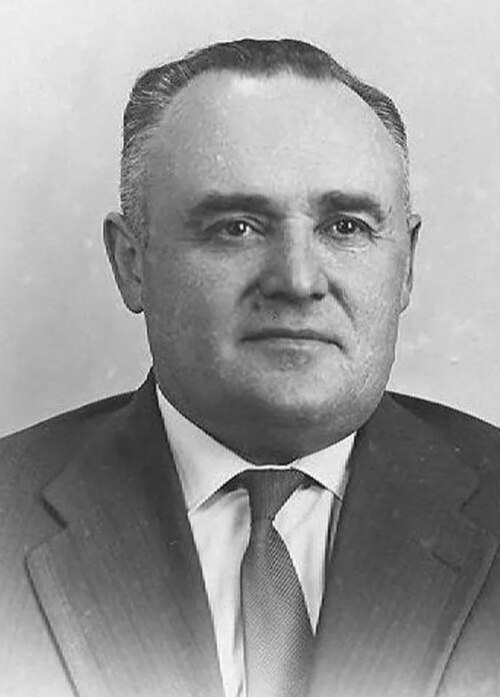
Photograph of Sergei Korolev Unknown author Unknown author · CC BY 4.0

Sergei Korolev

Soviet Union · 1907–1966

Chief Designer of the Soviet space program, though his identity was a state secret until his death — engineered the R-7 rocket, launched Sputnik 1 in 1957, and put Yuri Gagarin into orbit in 1961, opening the Space Age from behind an anonymity his government insisted on.

The story

Korolev spent years in Stalin-era labor camps after being denounced in 1938, including a stretch in the Kolyma gold mines; he lost most of his teeth to scurvy and suffered a broken jaw during interrogation, injuries widely believed to have contributed to the heart complications that killed him during what should have been routine surgery in January 1966, at just 59.

“State secrecy can bury even a program's most essential person — build systems that outlast any one name.”

R-7 rocket family still flying
Soyuz, since 1966
Identity publicly revealed
Posthumously, 1966
Years in Soviet labor camps
~6 years
3
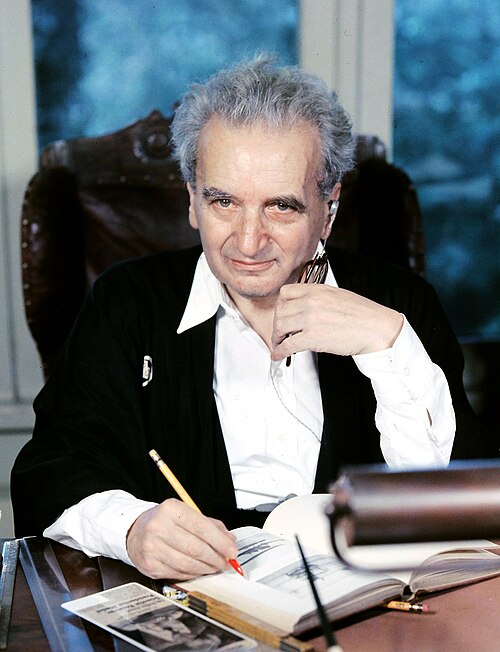
Photograph of Theodore von Kármán NASA/JPL-Caltech · Public domain

Theodore von Kármán

Hungary / United States · 1881–1963

Hungarian-born aerodynamicist who trained a generation of American aerospace engineers at Caltech, co-founded the Jet Propulsion Laboratory in 1936, and worked out much of the mathematics behind supersonic flight and the sonic boom that shaped every high-speed aircraft since.

The story

In 1936, von Kármán let a group of Caltech graduate students — later nicknamed the 'Suicide Squad' after a rocket-motor test set fire to a canyon hillside — pursue rocketry experiments other faculty considered reckless and unserious. That scorched patch of the Arroyo Seco outside Pasadena became the site of the Jet Propulsion Laboratory.

“Take marginal, laughed-at research seriously early — JPL began as a scorched patch of canyon nobody else wanted.”

JPL co-founded
1936, Pasadena
First recipient, National Medal of Science
1963
PhD students trained at Caltech
Dozens, incl. Qian Xuesen
4
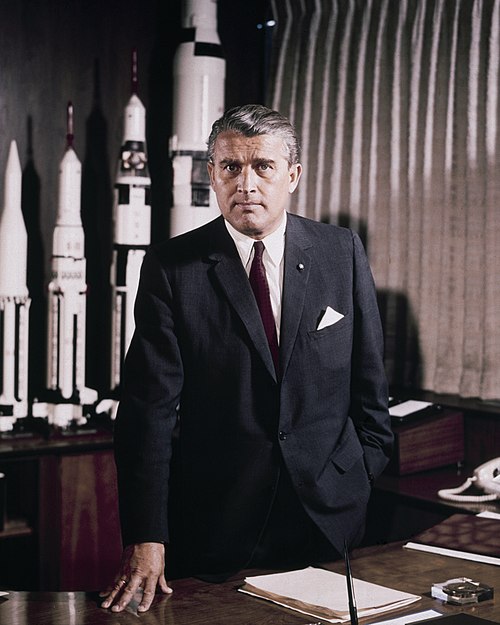
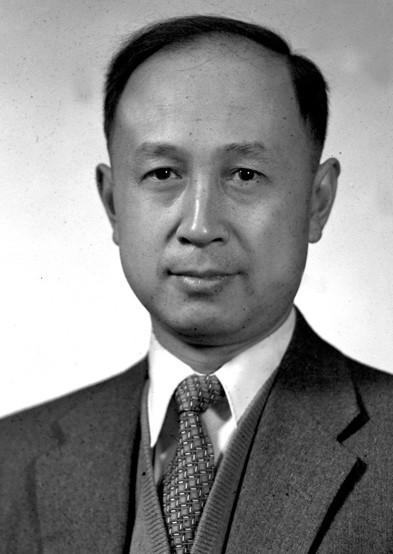
Photograph of Qian Xuesen Unknown author Unknown author · Public domain

Qian Xuesen

China / United States · 1911–2009

Studied under von Kármán at Caltech and co-founded the Jet Propulsion Laboratory, then was accused of Communist sympathies during the McCarthy era, stripped of his security clearance, and deported to China in 1955 — where he founded the missile and space program that eventually launched Chinese satellites and astronauts.

The story

A US Navy official who opposed his removal reportedly said Qian was worth 'five divisions' to any country. Barred from rocket work and placed under years of surveillance and house arrest after 1950, he was traded to China for American prisoners of war in 1955; by 1960 he was leading the launch of China's first domestically built ballistic missile.

“Talent exiled by one country's politics becomes another country's founding capability — expertise doesn't disappear, it relocates.”

Years restricted/under watch in US
~5 years
Deported to China
1955
China's first ballistic missile launch
DF-1, 1960
5
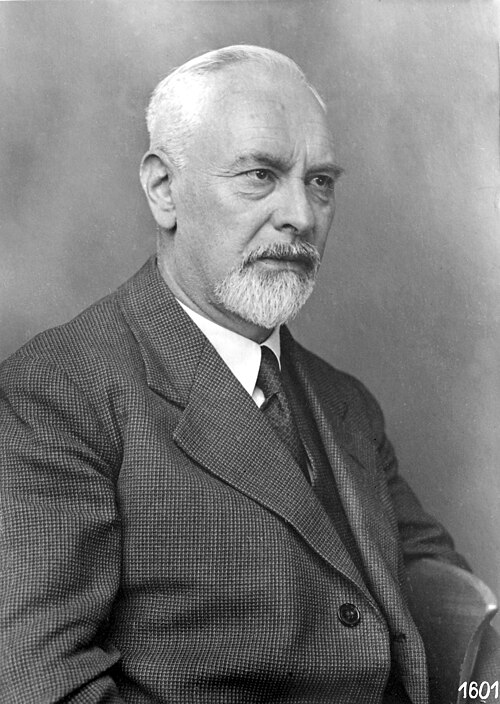
Photograph of Ludwig Prandtl Unknown author Unknown author · CC BY 3.0 de

Ludwig Prandtl

Germany · 1875–1953

A Göttingen professor whose 1904 paper on the boundary layer explained why air resists a moving wing far less than earlier theory predicted, resolving a contradiction that had stumped fluid dynamics for a century and giving aircraft designers the tools to calculate drag and lift accurately.

The story

Prandtl presented his boundary-layer theory in a single ten-minute talk at the Third International Congress of Mathematicians in Heidelberg in 1904; the paper ran to only eight pages, yet it resolved d'Alembert's paradox — the puzzle of why theoretical fluid dynamics predicted zero drag on a moving body while every real object plainly experienced it.

“A short, precise idea, argued rigorously and presented once, can outlive a career of longer papers.”

Boundary-layer paper length
8 pages, 1904
Years leading Göttingen's institute
~46 years
Notable doctoral students
Incl. von Kármán
6
Photograph of Kelly Johnson CIA · Public domain

Kelly Johnson

United States · 1910–1990

Led Lockheed's secretive Skunk Works division and personally directed the design of more than 40 aircraft, including the P-38 Lightning, the U-2 spy plane and the SR-71 Blackbird, still among the fastest air-breathing crewed aircraft ever flown.

The story

To keep the U-2 spy plane's 1955 development secret and fast, Johnson set up his design team in a rented circus tent next to a plastics factory whose smell gave the operation its 'Skunk Works' nickname; he built and flew the prototype in under a year, a pace he later formalized into his famous '14 Rules' for lean, fast engineering.

“Strip away bureaucracy and keep a small, empowered team close to the hardware — Kelly Johnson's rules still get quoted today.”

Aircraft designs led
40+ over career
SR-71 top speed
Mach 3.3+
Presidential Medal of Freedom
1964
7

Katherine Johnson

United States · 1918–2020

A NASA mathematician and aerospace technologist whose hand calculations verified the orbital trajectory for John Glenn's 1962 orbital flight and later supported Apollo, work credited with helping NASA trust its new electronic computers only after her numbers matched them.

The story

Before his February 1962 orbital flight, John Glenn reportedly asked engineers to have Katherine Johnson personally check the IBM computer's trajectory calculations by hand, saying, according to later NASA accounts, that if she said the numbers were good, he was ready to go. Johnson spent about a day and a half rechecking equations she had helped derive years earlier for suborbital flights.

“Trust in a new system is earned through an independent human check, not through the system's own claims about itself.”

NASA career length
33 years
Presidential Medal of Freedom
2015
Major missions' trajectories verified
Mercury, Apollo
8

Mary Jackson

United States · 1921–2005

NASA's first Black female engineer, who spent years analyzing airflow data from Langley's Supersonic Pressure Tunnel before petitioning a Virginia court to attend segregated night classes so she could qualify for the engineer title itself, earning it in 1958.

The story

To be promoted from mathematician to engineer at Langley in the 1950s, Jackson needed graduate-level courses offered only at then-segregated Hampton High School. She petitioned the City of Hampton in court for special permission to attend, won, completed the courses, and in 1958 became NASA's first Black female engineer.

“Sometimes the hardest engineering problem is the institutional one blocking you from doing the technical work at all.”

Years at NASA Langley
~34 years
First Black female NASA engineer
1958
Congressional Gold Medal, posthumous
2019

Bars are scaled to the leader in this list.

Comparison Lab

Toggle names on and off — every bar rescales to the leader of your selection.

5 / 8

The argument

Whether Wernher von Braun should be celebrated at all remains contested: his Saturn V made Apollo possible, but he ran V-2 production at Peenemünde using thousands of forced laborers from the Mittelbau-Dora concentration camp, a fact NASA's own histories now foreground rather than omit.

Historians still argue how much credit belongs to Sergei Korolev alone versus the thousands of engineers in Soviet design bureaus who worked under a secrecy regime designed to erase individual names — a structural problem that makes crediting any single 'chief designer' incomplete.

Keep exploring

More in Engineering & Technology