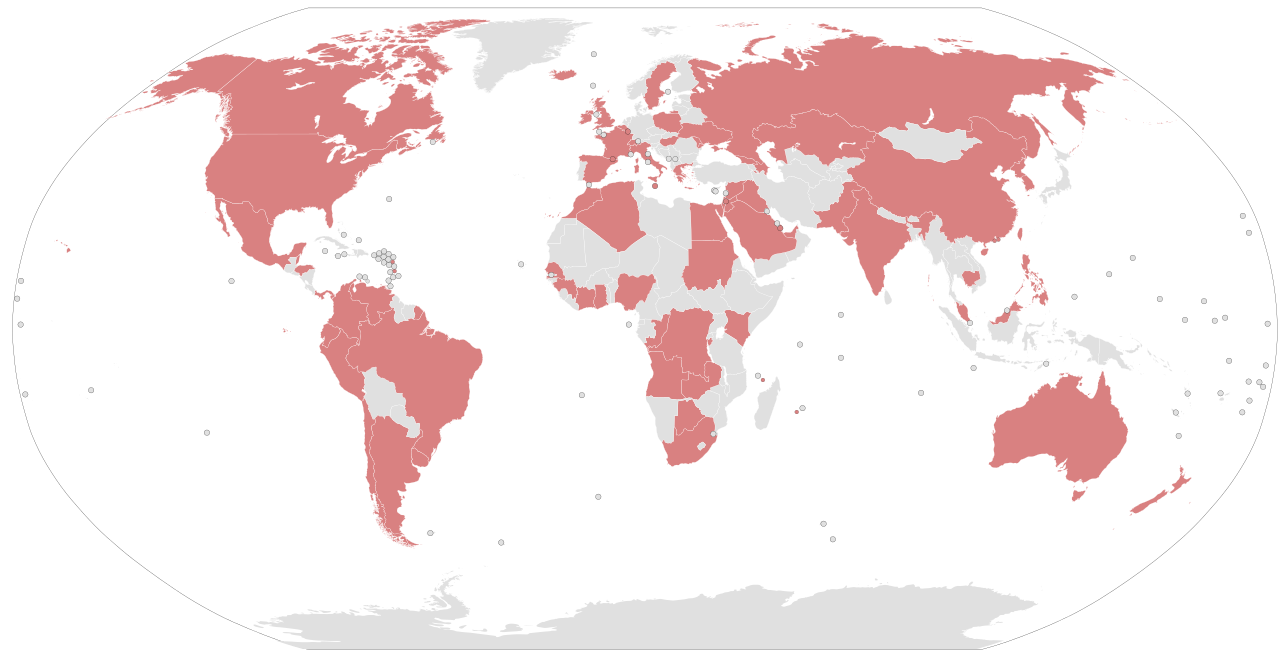
On 3 April 2016 ICIJ and more than a hundred outlets began publishing 11.5 million files from Panama firm Mossack Fonseca, a leak that toppled governments and left a mixed dock of inquiries.
Also called: Mossack Fonseca leak · ICIJ 2016
At a glance
Score intensity
Darker cells mean a higher score for this topic on that metric.
Notoriety90
Mystery28
Scale92
Evidence85
Legal impact78
Culture82
LessMore
Score profile
Each bar is a 0-100 atlas score for this topic, not a timeline.
Notoriety90
Mystery28
Scale92
Evidence85
Legal impact78
Culture82
Evidence
Evidence
85%
Score profile
Mystery
28%
Timeline
Milestones in order. This is history, not a weekly activity grid.
On 3 April 2016, after a year of coordinated reporting, the Süddeutsche Zeitung and the International Consortium of Investigative Journalists (ICIJ) began publishing stories drawn from 11.5 million files — about 2.6 terabytes — from the Panamanian law firm Mossack Fonseca. The source used the name John Doe. More than a hundred newsrooms in dozens of countries worked from a shared cache. The files described shell companies, trusts and the clients who used them, including heads of government, relatives of officials and well-known business figures.
Political shock was immediate. Iceland's prime minister, Sigmundur Davíð Gunnlaugsson, resigned after a televised confrontation about an offshore company. In Pakistan, the Supreme Court disqualified Prime Minister Nawaz Sharif in 2017 in a case that grew from the leak. Britain's then prime minister, David Cameron, faced questions about his late father's offshore interests. Other names — including associates of Vladimir Putin, denied by the Kremlin — drove a week of global headlines. Mossack Fonseca shut down in 2018.
The status is mixed because journalism produced resignations, inquiries and some convictions, not a single world court verdict. Many uses of offshore vehicles were legal. Some were not. This page records the leak, the consortium method and the public aftershocks. It does not explain how to hide assets or how to build a shell.
Published3 Apr 2016
Files11.5 million
FirmMossack Fonseca
ConsortiumICIJ + 100+ outlets
SourceJohn Doe
StatusMixed
Dossier scores
Notoriety 90
Mystery 28
Scale 92
Evidence 85
Legal impact 78
Culture 82
Notoriety
90
Mystery
28
Scale
92
Evidence
85
Legal impact
78
Culture
82
A leak that became a global civic file
The Panama Papers are the type case of cross-border investigative journalism: a named firm, a dated dump, a consortium and a scatter of national outcomes rather than one dock.
What the files were
Mossack Fonseca, based in Panama City, was a large incorporator of offshore companies. The leaked material included emails, contracts and corporate registries spanning decades. ICIJ's public database later listed officers and intermediaries; it did not publish every raw email. Scale in this atlas is about the size of the cache and the geographic spread of names, not a single stolen cash total.
John Doe's manifesto, published later, framed the leak as a protest against inequality. German reporters Bastian Obermayer and Frederik Obermaier received the first contact at Süddeutsche Zeitung. ICIJ, then directed by Gerard Ryle, organised the collaboration so that local desks could read local names — a method later reused on Paradise Papers and Pandora Papers.
Governments under a Sunday paper
Iceland's resignation was the cleanest early political result: a prime minister who had not disclosed a company tied to crashed Icelandic banks left after public anger. Pakistan's Panama case became a multi-year Supreme Court and accountability-bureau fight that ended Sharif's third premiership. Other countries opened tax audits that produced fines more often than prison.
English-language papers emphasised Western politicians and celebrities; Spanish- and Latin American desks emphasised regional elites. Both readings are in the files. The leak was not a single nation's scandal. Panama's government protested that the country had been branded, and later tightened some registry rules under international pressure.
Courts, closures, unfinished docks
Germany, France and other states opened investigations into tax offences and money-laundering predicates. Some intermediaries faced charges. Many clients were never accused of a crime. The honest summary is a mixed legal map: resignations here, disqualification there, audits elsewhere, silence in jurisdictions that did not pick the file up.
Mossack Fonseca's 2018 closure is a corporate ending, not a global verdict. Jürgen Mossack and Ramón Fonseca denied wrongdoing; Fonseca died in 2024 while cases continued. ICIJ won a Pulitzer Prize for explanatory reporting in 2017. The journalistic case is closed as a publication event; the legal case is a federation of leftovers.
Law after a terabyte
The leak accelerated beneficial-ownership registers in the European Union and tighter OECD common-reporting talk. The United Kingdom's public register debates and later Economic Crime Acts cite Panama as atmosphere if not as a single clause. How much secrecy actually fell is still argued by tax scholars.
English culture gained a phrase: 'Panama Papers' as shorthand for elite offshore life. The film The Laundromat (2019) is a dramatisation. This atlas treats ICIJ's published stories and official inquiries as the record, not the movie.
Beat weight marks
Mark each timeline beat already on this dossier as supported, contested or unknown, using the public-record claims already filed here. Not a verdict.
Editorial marks on this device only. Public-record encyclopedia — not legal advice, not a how-to, not a private file.
Timeline beat
Supported / Contested / Unknown
2014–15 — Files reach Süddeutsche
Claim already on file: Every name in the Papers is a criminal.
2015–16 — Consortium reporting
Claim already on file: The leak was a US intelligence operation.
3 Apr 2016 — Global publication
Claim already on file: Mossack Fonseca was the world's only offshore firm.
A 2016 journalistic publication of 11.5 million files from the Panamanian firm Mossack Fonseca, coordinated by ICIJ and more than a hundred outlets after Süddeutsche Zeitung received the cache from a source called John Doe. Stories began on 3 April 2016.
Was every name in the files a criminal?
No. Many offshore companies are legal. The leak showed who used Mossack Fonseca's services. Some later faced tax or corruption cases; many did not. Appearance in the files is not, by itself, a conviction.
Who is John Doe?
The still-anonymous source who delivered the files to Süddeutsche Zeitung. A later manifesto argued that inequality justified the leak. ICIJ has not publicly identified the person. Mystery in this atlas is about that identity, not about whether the files existed.
Which leaders fell?
Iceland's Sigmundur Davíð Gunnlaugsson resigned in April 2016. Pakistan's Nawaz Sharif was disqualified by the Supreme Court in 2017 in a case that grew from the leak. Other countries saw ministers questioned or audits opened without a uniform result.
What happened to Mossack Fonseca?
The firm announced it would shut down in 2018 after the reputational and legal shock. Founders denied criminality. Closure of a firm is not the same as a single global judgment against every client.
Did the leak change the law?
It sped beneficial-ownership and tax-transparency projects already underway at the EU and OECD. National statutes vary. LegalImpact in this atlas is high because registers and inquiries moved, not because one treaty was named 'Panama'.
How did the journalism work?
A German paper received the files, ICIJ invited partner newsrooms, and reporters searched a shared archive under embargo until 3 April 2016. Local desks wrote local names. The method is the public lesson; the raw cache is not a how-to for concealment.
Why is the status mixed?
Because outcomes split: resignations and some court findings in some countries, legal silence or mere audits in others, and many file names never charged. There is no single convicted/unsolved token that fits a 76-country story.