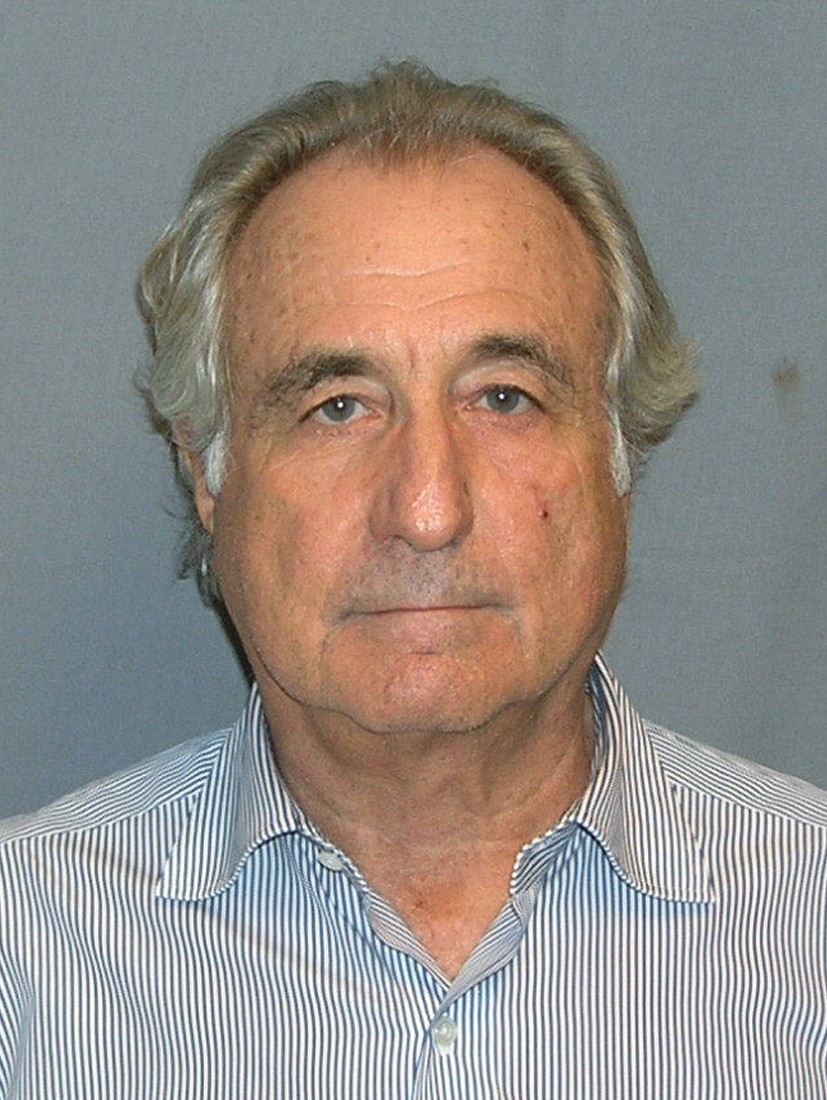
Bernard L. Madoff pleaded guilty in 2009 to the largest Ponzi scheme then recorded in U.S. court, after his New York investment business collapsed in December 2008.
Also called: Bernard L. Madoff · Madoff securities fraud
At a glance
Score intensity
Darker cells mean a higher score for this topic on that metric.
Notoriety95
Mystery22
Scale94
Evidence82
Legal impact80
Culture85
LessMore
Score profile
Each bar is a 0-100 atlas score for this topic, not a timeline.
Notoriety95
Mystery22
Scale94
Evidence82
Legal impact80
Culture85
Evidence
Evidence
82%
Score profile
Mystery
22%
Timeline
Milestones in order. This is history, not a weekly activity grid.
On 11 December 2008, Federal Bureau of Investigation agents arrested Bernard L. Madoff at his Manhattan apartment after he told senior employees that the investment-advisory arm of Bernard L. Madoff Investment Securities LLC was insolvent and had been a fraud. The firm had been a fixture of Wall Street market-making; the advisory books, kept apart from that business, showed customer statements that later proved fictitious.
Madoff pleaded guilty on 12 March 2009 in the U.S. District Court for the Southern District of New York to eleven felony counts, including securities fraud, investment-adviser fraud, mail and wire fraud, money laundering, false statements, perjury, making false filings with the Securities and Exchange Commission, and theft from an employee benefit plan. Judge Denny Chin sentenced him on 29 June 2009 to 150 years in prison and ordered forfeiture later entered as about $170 billion on the paper losses.
Irving H. Picard, appointed trustee under the Securities Investor Protection Act, spent the following decade reconstructing transfers and recovering principal for allowed claims. The case sits in the public record as a collapse of supervision as much as of a firm: the SEC’s own inspector general later documented missed warnings that had reached the agency years before the arrest.
Collapse yearDecember 2008
CourtU.S. District, SDNY
Plea11 felony counts
Sentence150 years (2009)
Paper losses~$65B (2008)
StatusConvicted
Dossier scores
Notoriety 95
Mystery 22
Scale 94
Evidence 82
Legal impact 80
Culture 85
Notoriety
95
Mystery
22
Scale
94
Evidence
82
Legal impact
80
Culture
85
What the Madoff record actually shows
The docket, the SIPA liquidation, and the SEC inspector-general file are the primary sources. They describe a long-running advisory fraud that ended when redemptions in the 2008 crash exceeded cash on hand.
Two businesses under one name
Bernard L. Madoff Investment Securities operated a legitimate market-making and proprietary-trading desk that helped computerize Nasdaq execution. Separate from that desk, an investment-advisory practice issued account statements claiming a split-strike conversion strategy and unusually smooth returns.
After the arrest, court-appointed professionals found that the advisory side had not been executing the reported strategy for customers at the scale the statements implied. Customer money had been commingled and used to meet withdrawals and personal outflows, a pattern the plea allocution accepted.
How the collapse reached a courtroom
Redemption requests surged in late 2008 as markets fell. Madoff told his sons, who worked at the firm, that the advisory business was a fraud; they contacted counsel, who notified federal authorities. The FBI arrest followed the next day.
The criminal case did not go to a contested trial on guilt. The March 2009 plea, the June 2009 sentencing transcript, and later prosecutions of aides and family members supplied the factual core that civil recovery then used.
Supervision that failed in public view
Harry Markopolos and others had submitted analyses to the SEC as early as 2000 arguing that the reported returns could not be real. Examinations occurred; they did not stop the advisory business.
The SEC Office of Inspector General’s 2009 report, Investigation of Failure of the SEC to Uncover Bernard Madoff’s Ponzi Scheme, reconstructed those contacts. It is a primary document for why the case is taught as a regulatory failure as well as a fraud.
Recovery after the plea
Picard’s SIPA proceeding in the Bankruptcy Court for the Southern District of New York treated many withdrawals as potentially recoverable transfers. Settlements with banks, funds, and feeder vehicles returned a large share of allowed principal over time.
Paper losses near $65 billion in 2008 included fictitious profits. Net principal lost was later estimated near $17–20 billion. Those two figures are often confused in casual retellings; the trustee reports distinguish them.
Beat weight marks
Mark each timeline beat already on this dossier as supported, contested or unknown, using the public-record claims already filed here. Not a verdict.
Editorial marks on this device only. Public-record encyclopedia — not legal advice, not a how-to, not a private file.
Timeline beat
Supported / Contested / Unknown
1960 — Firm founded
Claim already on file: Investors lost $65 billion in cash.
1990s — Nasdaq and prestige
Claim already on file: The SEC never received a warning.
2000 — Markopolos submissions begin
Claim already on file: A jury found Madoff guilty after a long trial.
2006 — Investment-adviser registration
Claim already on file: The market-making desk was the fraud.
2008 — Arrest in Manhattan
Claim already on file: The market-making desk was the fraud.
2009 — Plea and sentence
Claim already on file: The market-making desk was the fraud.
2010 — DiPascali and the employee cases
Claim already on file: The market-making desk was the fraud.
2012 — Peter Madoff sentence
Claim already on file: The market-making desk was the fraud.
2014 — Major bank settlements
Claim already on file: The market-making desk was the fraud.
2021 — Death in custody
Claim already on file: The market-making desk was the fraud.
On 12 March 2009 he pleaded guilty in the Southern District of New York to eleven felony counts, among them securities fraud, investment-adviser fraud, mail and wire fraud, money laundering, false statements, perjury, false SEC filings, and theft from an employee benefit plan.
How long was the prison sentence?
Judge Denny Chin imposed 150 years on 29 June 2009, the statutory maximum on the counts as grouped. Madoff died in federal custody on 14 April 2021 at the Federal Medical Center in Butner, North Carolina.
How much money was involved?
Customer statements at collapse implied about $65 billion including fictitious gains. Court and trustee materials later put net principal lost near $17–20 billion. Forfeiture paperwork used a much larger paper figure; SIPA recoveries are tracked against allowed principal claims.
Did the SEC examine the firm before 2008?
Yes. The 2009 inspector-general report documents multiple tips and examinations, including submissions associated with Harry Markopolos, that did not result in stopping the advisory fraud. The report is a public critique of those reviews.
What is the Picard trusteeship?
After the firm entered SIPA liquidation, the Bankruptcy Court appointed Irving H. Picard as trustee to marshal assets and distribute them to allowed customers. His reports and adversary complaints are the main civil record of who received what and when.
Were other people convicted?
Yes. Among them, Frank DiPascali, who had overseen much of the advisory paperwork, pleaded guilty in 2009. Peter Madoff, the defendant’s brother and former chief compliance officer, pleaded guilty in 2012 and received a ten-year sentence. Other employees and outside counterparties faced criminal or civil cases.
Is the case still considered a mystery?
Guilt and the basic mechanism are not in serious dispute after the plea. Open questions are mostly about the completeness of recoveries, the role of specific feeders and banks, and how examinations missed the advisory books — historiography, not an unsolved crime.
Where are the primary documents?
The criminal docket is United States v. Madoff in the Southern District of New York. SIPA filings sit in the bankruptcy court. The SEC OIG report of 2009 and later trustee status reports are the standard public starting points.