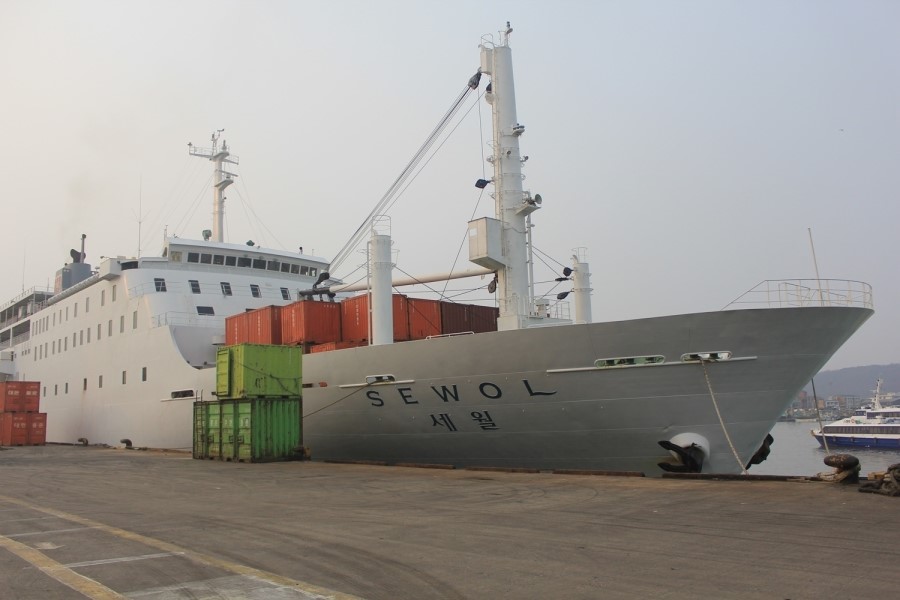
On 16 April 2014 the ferry MV Sewol capsized in the Yellow Sea; 304 people died or remain missing, and South Korean courts later convicted the captain and crew.
Also called: Sewol ferry disaster · 16 April 2014
At a glance
Score intensity
Darker cells mean a higher score for this topic on that metric.
Notoriety82
Mystery35
Scale80
Evidence75
Legal impact78
Culture70
LessMore
Score profile
Each bar is a 0-100 atlas score for this topic, not a timeline.
Notoriety82
Mystery35
Scale80
Evidence75
Legal impact78
Culture70
Evidence
Evidence
75%
Score profile
Mystery
35%
Timeline
Milestones in order. This is history, not a weekly activity grid.
MV Sewol, a Chonghaejin Marine ferry on the Incheon–Jeju run, listed and capsized on the morning of 16 April 2014 near the Maenggol Channel off Jindo in the Yellow Sea. Of 476 people aboard, 172 were rescued. Courts and the government have treated 304 as dead or missing — most of them students and teachers from Danwon High School in Ansan on a trip. This page does not describe the trapped decks.
Investigations found illegal modifications, overloaded cargo, inadequate ballast and a crew that left while cabin announcements told passengers to stay in place. Captain Lee Joon-seok was sentenced to 36 years for negligence in November 2014. The Gwangju High Court in April 2015 substituted homicide by wilful negligence and a life term. The Supreme Court of Korea upheld that life sentence on 12 November 2015.
The hull was raised on 23 March 2017. Special statutes created investigation commissions and a public memorial politics that outlasted the Park Geun-hye presidency. English-language coverage treated the wreck as a national grief story and a state-failure story more than as a Korean statutory case.
Date16 Apr 2014
Deaths304 dead/missing
Aboard476 passengers/crew
OperatorChonghaejin Marine
CaptainLife term, 2015
HullRaised Mar 2017
Dossier scores
Notoriety 82
Mystery 35
Scale 80
Evidence 75
Legal impact 78
Culture 70
Notoriety
82
Mystery
35
Scale
80
Evidence
75
Legal impact
78
Culture
70
A ferry, a stay-put order and a court
Sewol is a closed criminal case against the bridge and a still-open argument about regulators, owners and the first hours of rescue.
A rebuilt ship on a domestic route
The hull began life in Japan in 1994 as Ferry Naminoue. Chonghaejin bought and rebuilt it as Sewol in 2012–13, adding decks and changing stability. Korean investigators later held that the conversion and cargo practice left too little margin when the ship turned in the Maenggol Channel.
On the night of 15 April 2014 the ferry left Incheon late. Cargo was later found to have been under-lashed and over the authorised load. Ballast was short. Those facts, not weather as a sole cause, sit at the centre of the Korean court file.
The morning of 16 April
After 08:30 the ship took a turn, listed and did not recover. Cabin speakers told passengers to wait. The captain and several crew left the vessel. Coast Guard and civilian boats took 172 people from the water and the open decks. Most of those who remained inside were not reached in time.
Of the 304 dead or missing, 250 were Danwon High School students. English reports used that school-trip fact as the moral centre of the story. Korean law treated the same fact as aggravation in the crew trials and as the reason for special investigation acts.
Courts, owner and state
Fourteen crew members received prison terms. Lee’s life sentence for homicide by wilful negligence — fleeing without an evacuation order — is the lead criminal result. Chonghaejin and associated companies faced separate proceedings. Yoo Byung-eun, the owner figure sought by police, was found dead in June 2014; identification was announced in July.
Regulators and Coast Guard officers were dismissed or convicted on related charges. Prime Minister Chung Hong-won offered to resign. The so-called seven-hour gap in President Park Geun-hye’s public response became a political file of its own and later coloured the 2016–17 impeachment debate, though the wreck’s technical cause was not a presidential act.
Statute and the raised hull
The Sewol Special Act of 2014 created a family-centred investigation framework. Later commissions disagreed about how far to pursue state responsibility. The hull lift in March 2017 was sold as a promise to recover the remaining missing and to let the ship itself be read as evidence.
Safety law after Sewol tightened domestic ferry inspection, cargo declarations and the duty to evacuate. Whether those rules changed practice on every coastal route is a separate compliance question. The criminal case against the captain is not open.
Beat weight marks
Mark each timeline beat already on this dossier as supported, contested or unknown, using the public-record claims already filed here. Not a verdict.
Editorial marks on this device only. Public-record encyclopedia — not legal advice, not a how-to, not a private file.
Timeline beat
Supported / Contested / Unknown
1994 — Built in Japan
Claim already on file: The sinking is an unsolved mystery.
2012–13 — Rebuilt as Sewol
Claim already on file: A foreign attack sank the ship.
15 Apr 2014 — Leaves Incheon late
Claim already on file: The president steered the ferry.
16 Apr 2014 — Capsizes off Jindo
Claim already on file: Everyone on the crew was convicted of homicide.
Apr–May 2014 — National mourning
Claim already on file: Everyone on the crew was convicted of homicide.
Jul 2014 — Owner identified dead
Claim already on file: Everyone on the crew was convicted of homicide.
Nov 2014 — First crew verdicts
Claim already on file: Everyone on the crew was convicted of homicide.
Apr 2015 — Life for homicide
Claim already on file: Everyone on the crew was convicted of homicide.
12 Nov 2015 — Supreme Court affirms
Claim already on file: Everyone on the crew was convicted of homicide.
23 Mar 2017 — Hull raised
Claim already on file: Everyone on the crew was convicted of homicide.
The ferry listed and capsized on the morning of 16 April 2014 in the Yellow Sea near Jindo, on the Incheon–Jeju route. It had left Incheon the previous night.
How many people died?
Korean official accounting used in the trials is 304 dead or missing out of 476 aboard, with 172 rescued. About 250 of the dead were Danwon High School students. Early search tallies of recovered bodies and still-missing persons shifted by single digits as the salvage continued.
Who was convicted?
Captain Lee Joon-seok received a life sentence, upheld by the Supreme Court on 12 November 2015, for homicide by wilful negligence and related counts. Other crew received terms from about 18 months to 12 years on the final appeal path. Some Coast Guard and regulatory officials were separately convicted or dismissed.
What caused the capsize?
Courts and investigation bodies pointed to a combination of a sharp turn, excess and poorly secured cargo, reduced stability after rebuilding, and insufficient ballast — not a wartime act and not a single unexplained hole.
Why did passengers stay inside?
Repeated announcements told them to wait. The captain did not issue a timely abandon-ship order. The Supreme Court treated that omission, plus the crew’s departure, as the core of the homicide-by-wilful-negligence finding.
When was the ship raised?
The hull was brought up on 23 March 2017 and later moved for examination and memorial use. Salvage was meant to recover remaining missing people and to preserve the ship as evidence.
What is the Sewol Special Act?
A 2014 statute that created a special investigation structure and support for bereaved families. Later political fights were about the commission’s powers and about how far state agencies could be compelled.
Is the case unsolved?
No. Status is convicted. Open arguments concern regulatory capture, the first rescue hour and political accountability — not the identity of the captain or the fact of the capsize.