👔Origins & Evolution

Lawyer · Advises clients, drafts the documents that bind them, and argues their case when it reaches court — carrying personal legal liability if the advice is wrong.

Law is one of the oldest professions to require someone else's problem as raw material: a lawyer exists only because two parties disagree, or because one needs protection before they do. Ancient Athens tried to prevent the profession from forming at all, requiring litigants to speak for themselves in court — and a workaround appeared almost immediately.

This page follows the lawyer from that workaround through Rome's advocati and jurisconsults, the medieval university revival of Roman law, England's split into barrister and solicitor, and the rise of the billable hour, across ten turning points, five longer eras, and three vanished roles the profession left behind.

Where it began

c. 420 BCEAthens, Greece

Athenian law required litigants to plead their own cases in person, but nothing stopped a wealthy or unskilled litigant from paying someone else to write the speech they then delivered as their own. Antiphon of Rhamnus, active from around 430 BCE, is the first such 'logographer' known by name and the earliest surviving Greek prose author — his surviving speeches, written for clients to memorize and perform, are effectively the first written legal briefs in Western history, even though Antiphon himself never appeared in court to argue them.

Timeline

c. 420 BCEAntiphon writes Athens' first courtroom speeches

Antiphon of Rhamnus becomes the first known professional 'logographer,' writing courtroom speeches for Athenian litigants who, by law, had to deliver their own defense in person.

204 BCERome's Lex Cincia bans paid advocacy

The Lex Cincia de donis et muneribus forbids Roman advocates from accepting fees for pleading a case, formally treating advocacy as a civic duty rather than a paid trade — a rule widely evaded and rarely enforced.

426 CEThe Law of Citations ranks the great jurists

Emperor Valentinian III's Law of Citations declares the writings of five jurists — Papinian, Paulus, Ulpian, Gaius and Modestinus — binding legal authority, formalizing juristic opinion as a source of law in its own right.

1088Bologna teaches law as a university subject

The University of Bologna, traditionally dated to 1088, becomes Europe's first institution to teach Roman law systematically, with the jurist Irnerius glossing Justinian's Corpus Juris Civilis for students drawn from across the continent.

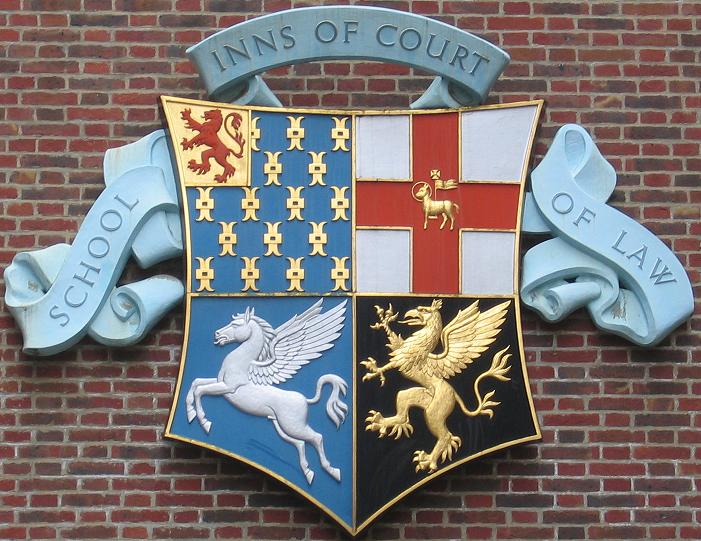
c. 1340sLondon's Inns of Court take shape

Barristers-in-training begin organizing around four residential legal societies in London — Gray's Inn, Lincoln's Inn, Inner Temple and Middle Temple — that combine housing, dining and legal education, and still alone control England's call to the Bar.

1628Coke publishes his Institutes of the Lawes of England

Former Chief Justice Edward Coke publishes the first part of his four-volume Institutes, a systematic treatise on English common law that remains a foundational reference cited in common-law courts centuries later.

1739London solicitors form their first professional body

The Society of Gentlemen Practisers in the Courts of Law and Equity, an early professional association for London attorneys and solicitors, forms to police standards and fees — a direct ancestor of the modern Law Society, founded in 1825.

1869Arabella Mansfield becomes the first US woman lawyer

Arabella Mansfield is admitted to the Iowa bar, becoming the first woman licensed to practice law in the United States, despite an Iowa statute at the time restricting admission to men.

1922Ivy Williams is called to the English Bar

Following the Sex Disqualification (Removal) Act 1919, Ivy Williams becomes the first woman called to the Bar of England and Wales, though Helena Normanton, called shortly after, becomes the first woman to actually practice as a barrister.

2012A US court approves AI-assisted document review

In Da Silva Moore v. Publicis Groupe, a federal magistrate judge approves 'predictive coding' — machine-learning-assisted review of discovery documents — as an acceptable litigation practice, opening the door to today's AI-driven legal document tools.

The eras

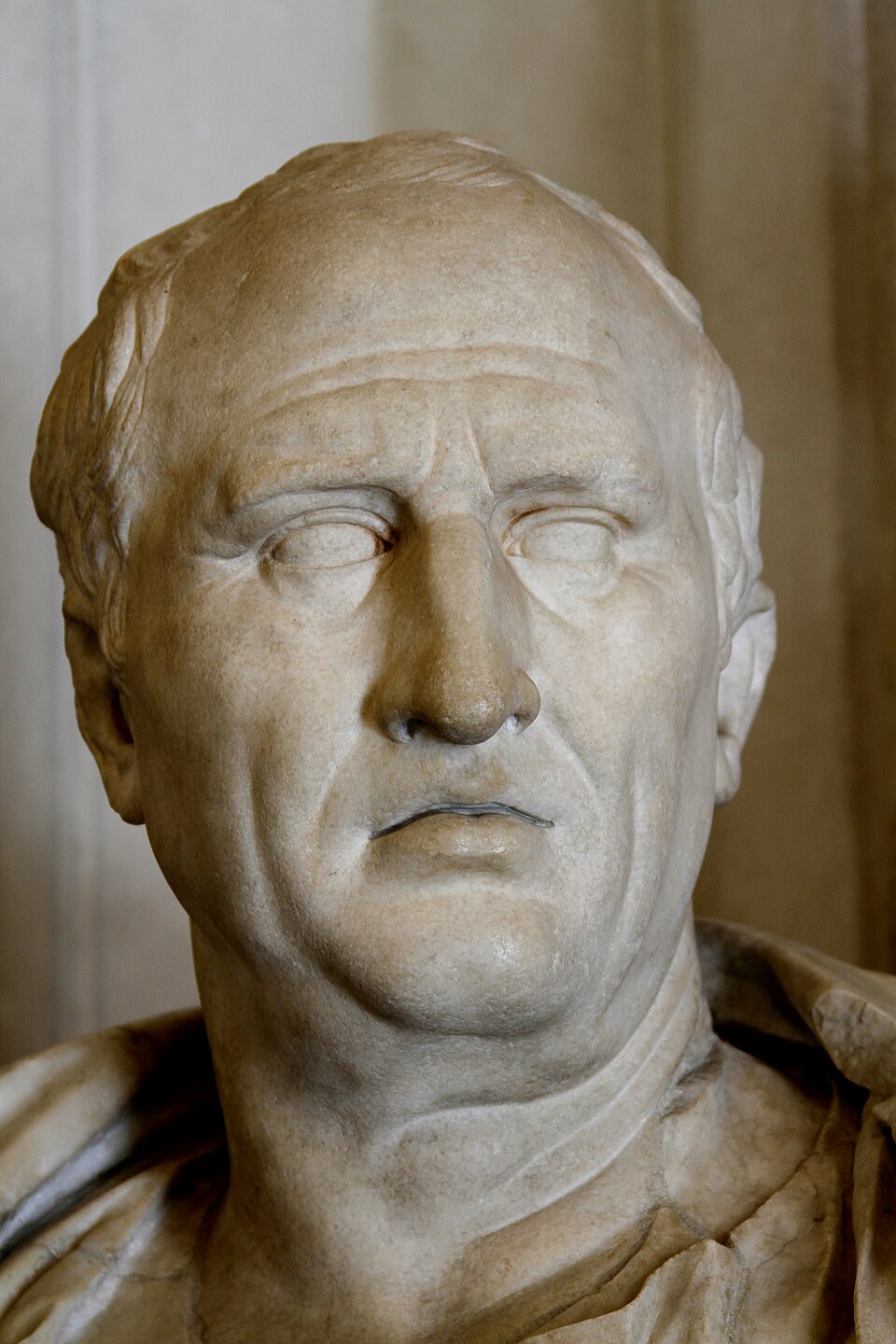
Marble bust of the Roman advocate and orator Cicero
José Luiz · CC BY-SA 4.0 · Wikimedia Commons
c. 200 BCE – 476 CE

Rome: advocati and jurisconsults

Roman legal practice split cleanly in two: advocati argued cases aloud in court, prized for oratory more than legal technicality, while jurisconsults — often wealthy amateurs rather than paid professionals — gave learned legal opinions from home, building the body of interpretation that later jurists like Ulpian and Papinian systematized. Justinian's Corpus Juris Civilis (528–534 CE) preserved this accumulated wisdom and became the direct ancestor of continental Europe's civil-law tradition.

Historic courtyard of the University of Bologna
Vectorized by User:Nandhp · Public domain · Wikimedia Commons
c. 1088–1500

Bologna, the glossators and canon law

Bologna's rediscovery of Justinian's texts turned Roman law into a university subject taught through close textual commentary — the glossators, led by Irnerius, wrote marginal notes ('glosses') that became legal doctrine in their own right. Parallel canon-law courts, run by clergy trained in the same method, handled marriage, inheritance and morality cases across Christian Europe, producing a second, overlapping class of trained legal professionals.

Historic buildings of London's Inns of Court
Marc Baronnet · CC BY-SA 2.5 · Wikimedia Commons
c. 1340–1750

England splits the profession in two

Barristers trained and were called to the bar exclusively by the four Inns of Court, arguing cases and giving specialist opinions, while a separate, lower-status class of attorneys and solicitors prepared cases, managed clients and handled paperwork the barristers would not touch. London solicitors formalized their own standards through the Society of Gentlemen Practisers in 1739, cementing a barrister-solicitor divide that England still keeps today, though most other countries never adopted it.

c. 1850–1950

Bar exams, case method and slow inclusion

Formal bar associations spread — the American Bar Association formed in 1878 — as law shifted from an apprenticeship trade toward a credentialed profession with standardized exams. Harvard's Christopher Columbus Langdell pioneered the Socratic 'case method' of legal teaching from the 1870s, still standard in US law schools, while women and racial minorities won admission to the bar only gradually and against sustained resistance: Charlotte E. Ray became the first Black woman lawyer in the US in 1872.

Glass-tower offices typical of a modern corporate law firm
Keith Evans · CC BY-SA 2.0 · Wikimedia Commons
c. 1950–present

The corporate firm, the billable hour and going digital

Post-war economic growth built today's large corporate law firm, and the hourly billing model — pushed as an efficiency measure by consultants like Reginald Heber Smith from the 1950s — became the industry standard, tying pay directly to hours logged rather than results delivered. Computerized research databases (Lexis in 1973, Westlaw in 1975) and, more recently, AI drafting and e-discovery tools have steadily automated the profession's most repetitive tasks.

What this job replaced

Neighbouring trades that no longer exist — absorbed, automated or regulated away.

The serjeant-at-law

c. 1250–1877

England's most elite legal order for centuries, serjeants-at-law held the exclusive right of audience before the Court of Common Pleas and wore a distinctive white coif; only a serjeant could become a judge of that court. The Judicature Acts of 1873–75 stripped away the order's monopoly, and the last surviving serjeant died in 1921, five decades after the order had already stopped admitting new members.

The scrivener

c. 1373–1900

London's professional scriveners, organized from 1373 and formally chartered as the Worshipful Company of Scriveners in 1617, drafted deeds, bonds, wills and letters for clients who could not write elegant legal English themselves. Rising general literacy and the standardization of legal drafting inside solicitors' own offices absorbed the trade by the late nineteenth century.

The copying clerk

c. 1800–1900s

Before typewriters, law offices employed rooms of clerks whose entire job was to hand-copy documents — contracts, pleadings, correspondence — in fair copy, a role famously fictionalized in Herman Melville's 1853 story Bartleby, the Scrivener. Mass adoption of the typewriter from the 1870s, followed by carbon paper and later photocopiers, eliminated the trade within a few decades.

Trades that vanished →

The lawyer's core tension has barely moved in twenty-four centuries: someone who is skilled with words and precedent stands between an ordinary person and a system too complex for that person to navigate alone, and gets paid, one way or another, for standing there.

What has changed is the technology of the standing — from Antiphon's memorized speeches to Coke's printed Institutes to Westlaw's search engine to today's AI drafting assistant — each new tool handling more of the profession's routine work while leaving the harder, riskier judgment calls to the human holding the license.

Keep exploring

More in Law & Public Service