👔The Greats

Lawyer · Advises clients, drafts the documents that bind them, and argues their case when it reaches court — carrying personal legal liability if the advice is wrong.

Law is unusual among professions in how directly its most famous practitioners fed into political history: several of the names on this list spent decades as working lawyers before the causes they represented in court became causes they led in public life.

Each entry is chosen for a specific, checkable achievement inside the profession rather than general fame, and the list deliberately spans twenty-four centuries and five continents, including women who had to fight the profession itself just to be allowed to practice.

The all-time podium

Tribonian
Tribonian
Byzantine Empire
2
Cicero
Cicero
Roman Republic
1
Edward Coke
Edward Coke
England
3

The eight who reached the top

1
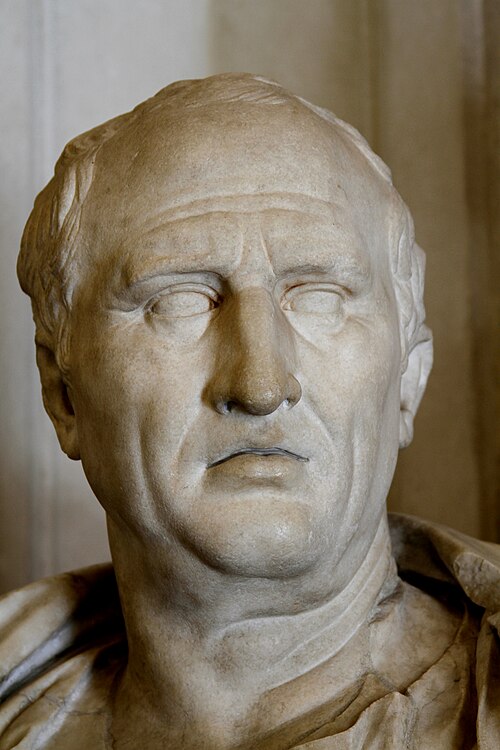
Marble bust of the Roman orator and advocate Cicero José Luiz · CC BY-SA 4.0

Cicero

Roman Republic · 106–43 BCE

Rome's greatest advocate and orator, Cicero built his reputation prosecuting a corrupt provincial governor, went on to defend and prosecute in the Senate and law courts, and served as consul in 63 BCE, codifying rhetorical technique still taught in law schools today.

The story

In 70 BCE, the 36-year-old Cicero prosecuted Gaius Verres, a former governor of Sicily, for extortion and plunder. Verres's defense team, led by the era's leading advocate Hortensius, expected the usual months-long trial where delay favored the wealthy defendant. Cicero instead compressed his case into a devastating nine-day presentation of evidence with almost no oratory, overwhelming Verres before Hortensius could even deliver his planned closing speech; Verres fled into exile before the verdict was announced.

“Overwhelming, well-organized evidence can beat eloquence — sometimes the fastest case is the strongest one.”
Verres prosecution
Won in 9 days
Consul of Rome
63 BCE
Catilinarian Orations
4 speeches, 63 BCE
2
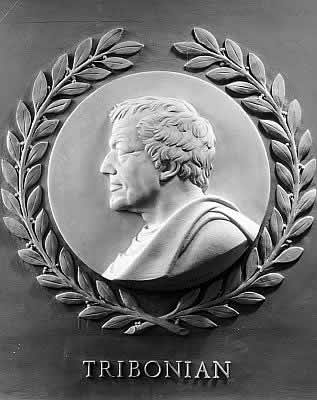
Historic depiction of the Byzantine jurist Tribonian Sculpture by Brenda Putnam; photo by the Architect of the Capitol · Public domain

Tribonian

Byzantine Empire · c. 500–542

Emperor Justinian I's quaestor and chief legal officer, Tribonian led the commission that compiled the Corpus Juris Civilis (528–534 CE) — the codification of Roman law that became the foundation of civil-law systems across continental Europe and Latin America.

The story

During the Nika riots of January 532, when a chariot-racing dispute turned into an uprising that nearly toppled Justinian's throne, the mob demanded the dismissal of Tribonian and the praetorian prefect John of Cappadocia, both widely accused of corruption. Justinian dismissed both men to calm the crowd, but within months quietly reinstated Tribonian to finish the legal codification — evidently judging him too valuable to the project to lose permanently.

“Technical indispensability can outlast a scandal that would end a normal career.”

Corpus Juris compiled in
~6 years (528–534)
Removed then reinstated
532 CE riots
Legal legacy today
Base of civil law
3
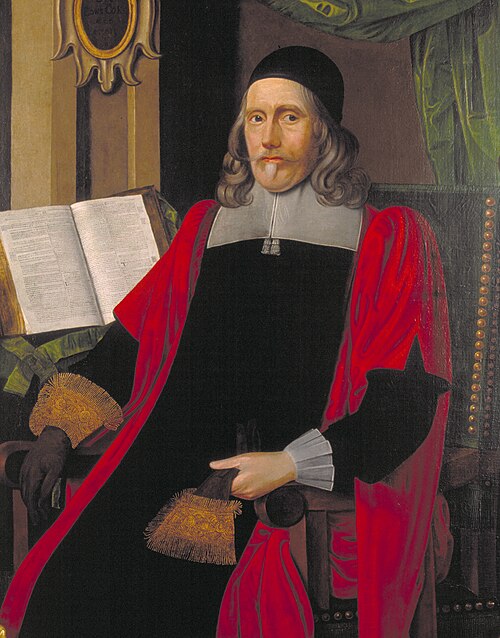
Portrait of Sir Edward Coke in judicial robes Gilbert Jackson · Public domain

Edward Coke

England · 1552–1634

England's most influential common-law judge and writer, Coke served as Attorney General and Chief Justice, prosecuted the Gunpowder Plotters, then turned against royal power to assert that even the king was subject to the common law.

The story

In 1608, as Chief Justice of the Common Pleas, Coke told King James I directly that the king could not personally decide legal cases, because law was 'an art which requires long study and experience' before a person could master it — reportedly enraging the king, who considered the remark an insult to royal authority. Coke was dismissed from the bench in 1616 after further clashes with the crown, and went on to write his four-volume Institutes of the Lawes of England, still cited in common-law courts four centuries later.

“Institutional authority sometimes has to be defended against the very ruler who granted it.”

Institutes volumes
4 volumes
Years as Chief Justice
~8 (1606–1616)
Still cited in court
400+ years later
4
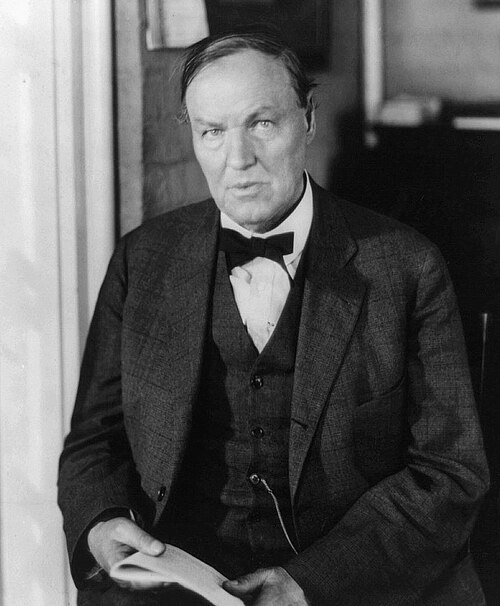
Photograph of the American defense attorney Clarence Darrow Herzog · Public domain

Clarence Darrow

United States · 1857–1938

America's most famous defense attorney of the early twentieth century, Darrow built a career defending unpopular clients and causes — labor organizers, accused murderers, and, in the 1925 Scopes trial, a Tennessee teacher charged with teaching evolution.

The story

In the 1924 Leopold and Loeb case, Darrow's teenage clients had confessed to a calculated thrill-kill murder and faced almost certain execution if a jury heard the case. Darrow instead entered a guilty plea and argued directly to the sentencing judge for twelve hours across two days, focusing entirely on the death penalty's cruelty rather than his clients' innocence — an unusual strategy that persuaded the judge to sentence both young men to life imprisonment instead of hanging.

“Sometimes the winning argument is not about guilt at all, but about which punishment a system should permit itself.”

Leopold-Loeb closing argument
~12 hours
Scopes Trial attention
National, 1925
Career span
~50 years
5
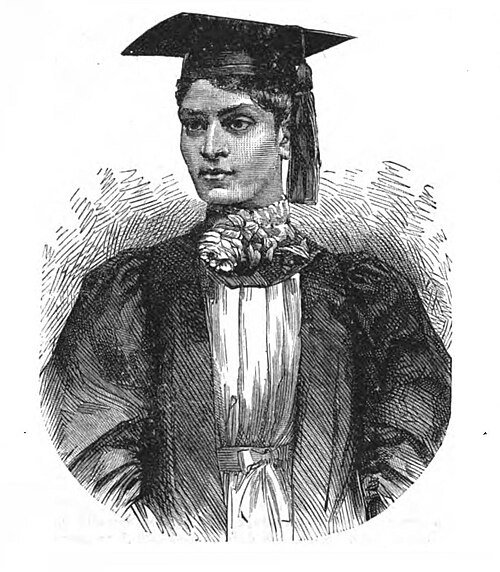
Portrait photograph of Cornelia Sorabji Unknown author Unknown author · Public domain

Cornelia Sorabji

India / United Kingdom · 1866–1954

The first woman to study law at Oxford and the first woman to practice law in India, Sorabji spent decades representing purdahnashin women — those secluded by custom from contact with men — in property and inheritance disputes they could not otherwise bring to court.

The story

Sorabji became the first woman to sit the Bachelor of Civil Law examination at Oxford in 1892, with special permission, since women could not formally graduate there at the time. Back in India she found she could not be enrolled as a barrister because the profession excluded women entirely, and worked for decades as a legal advisor rather than a formally enrolled advocate, personally representing purdahnashin women who needed a woman to argue on their behalf — until India's Legal Practitioners Act was amended in 1923 to finally permit women to enroll.

“A qualification without a title still lets you do the work — and can eventually force the title to follow.”

First woman to study law at Oxford
1892
Years working before formal enrollment
~30 years
Indian bar opened to women
Act amended, 1923
6
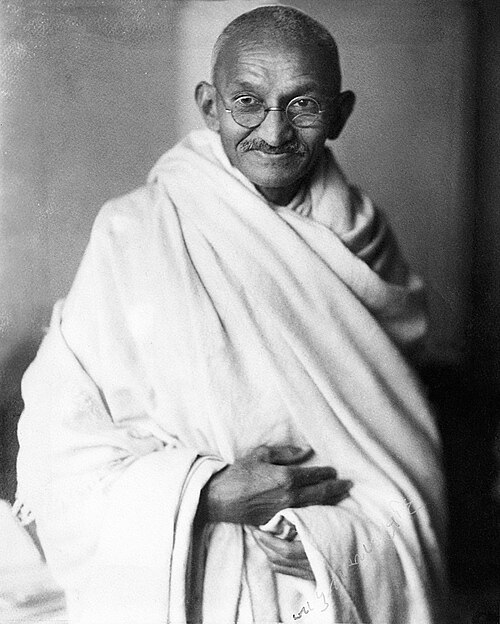
Photograph of Mohandas Gandhi as a young barrister Elliott & Fry · Public domain

Mohandas K. Gandhi

India / South Africa / United Kingdom · 1869–1948

Called to the bar at London's Inner Temple in 1891, Gandhi practiced commercial law in South Africa for two decades, where witnessing and fighting racial discrimination against Indian residents shaped the philosophy of nonviolent resistance he later brought back to India.

The story

In 1893, newly arrived in South Africa to handle a commercial legal dispute, Gandhi was thrown off a first-class train carriage at Pietermaritzburg station despite holding a valid first-class ticket, because railway staff refused to let an Indian passenger travel with white passengers. Gandhi later described spending that cold night on the station platform as the experience that turned him from a working barrister into a civil-rights organizer, and he spent the next two decades in South Africa developing satyagraha, his method of organized nonviolent resistance, before returning to India in 1915.

“A single personal injustice, if it lands on the right person, can redirect an entire career.”

Years practicing law in South Africa
~20 years
Called to the Bar
Inner Temple, 1891
Years before returning to India
21 (1893–1915)
7

Nelson Mandela

South Africa · 1918–2013

Co-founder in 1952 of South Africa's first Black-run law firm, Mandela and fellow lawyer Oliver Tambo represented Black South Africans against the daily injustices of apartheid law before Mandela's own conviction, 27 years' imprisonment, presidency and Nobel Peace Prize.

The story

Mandela and Tambo opened their Johannesburg firm, Mandela & Tambo, in August 1952, deliberately choosing an office close to the courts and the pass-law offices where Black South Africans queued daily to be prosecuted under apartheid's pass laws. Mandela later wrote that clients lined the office stairwell every morning, and that the firm's daily work of contesting evictions, dismissals and pass-law charges did more to reveal apartheid's mechanics to him than any political meeting, directly shaping the strategy he pursued for the rest of his life.

“Routine casework can teach a system's cruelty more precisely than any speech about it.”

Firm founded
1952, Johannesburg
Years imprisoned
27 years
Nobel Peace Prize
1993
8

Ruth Bader Ginsburg

United States · 1933–2020

Co-founder of the ACLU's Women's Rights Project in 1972, Ginsburg argued six gender-discrimination cases before the US Supreme Court and won five, building the legal framework for sex-equality law before her own appointment to that same court in 1993.

The story

In Frontiero v. Richardson (1973), Ginsburg represented a female Air Force officer denied the same automatic housing and medical benefits for her spouse that male officers received automatically. Rather than framing the case around sympathy, Ginsburg built her Supreme Court argument almost entirely around the doctrinal analogy to racial-discrimination law, methodically laying track for future sex-discrimination cases one precedent at a time; the Court struck down the law 8–1, and Ginsburg used the same incremental strategy through five more Supreme Court wins over the following decade.

“Build equality law the way you'd build any precedent — one narrow, winnable case at a time.”

Supreme Court cases argued
6, won 5
Years as Supreme Court Justice
27 (1993–2020)
Frontiero v. Richardson result
Won, 8–1

Bars are scaled to the leader in this list.

Comparison Lab

Toggle names on and off — every bar rescales to the leader of your selection.

5 / 8

The argument

Whether Mohandas Gandhi and Nelson Mandela belong on a list of 'legendary lawyers' at all is genuinely contested: both are remembered overwhelmingly for the political movements they led, and critics note that Gandhi practiced commercial law for two decades and Mandela ran a small partnership for barely a decade before both left law behind entirely — though defenders argue their legal training and courtroom experience directly shaped how each built and argued their later political case.

Classical sources are split on whether Cicero or his older rival Hortensius was Rome's greater advocate; Hortensius was considered the leading orator of his generation until Cicero's Verres prosecution eclipsed him, but almost none of Hortensius's own speeches survive, leaving history's judgment resting heavily on Cicero's own, self-interested account of the rivalry.

Keep exploring

More in Law & Public Service