⚖️The Greats

Judge · The person societies trust to decide: from Hammurabi's stele to AI-scored bail hearings, the hardest disputes still end in front of one accountable human.

Ranking judges is a common-law habit — systems that publish signed, individual judgments create famous judges, while the collegiate, unsigned rulings of France, Germany or Japan hide equally brilliant minds behind institutional anonymity. Any list like this one therefore over-samples the English-speaking bench, and it should be read knowing that.

The eight below span a millennium and six countries, and earned their places differently: by defying a king, by trapping a president, by trapping an informer, by dissenting until a legislature moved, by judging genocide, and in two cases by walking through doors every institution had built to keep them out. Each changed not just outcomes but how the job itself is done.

The all-time podium

John Marshall
John Marshall
United States
2
Sir Edward Coke
Sir Edward Coke
England
1
Bao Zheng
Bao Zheng
China
3

The eight who reached the top

1
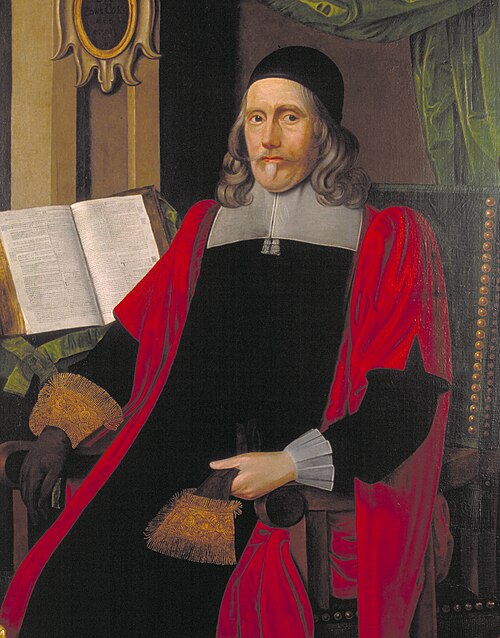
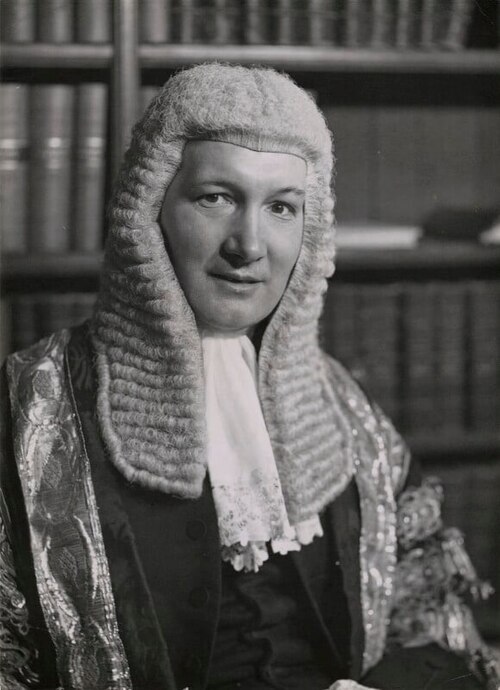
Portrait of Sir Edward Coke, Chief Justice of England under James I. Gilbert Jackson · Public domain

Sir Edward Coke

England · 1552–1634

Chief Justice of England under James I, Coke turned the common law into a weapon against absolute monarchy, insisting that even kings are bound by it. His thirteen volumes of Reports and four-part Institutes trained centuries of lawyers, and his 1628 Petition of Right seeded constitutional rights worldwide.

The story

In November 1608 James I asserted he could withdraw cases from his judges and decide them himself, since judges were merely his delegates. Coke replied that cases must be decided by the "artificial reason and judgment of law," mastered only through long study. When the king raged that this placed him under the law, Coke answered with Bracton's maxim: the king ought to be under no man, but under God and the law. James never forgave it, and dismissed him from the bench in 1616.

“A judge's authority comes from the law itself; the moment it depends on pleasing power, it is worth nothing.”
Law Reports published
13 volumes
Institutes of the Lawes
4 parts
Dismissed for defiance
1616
2
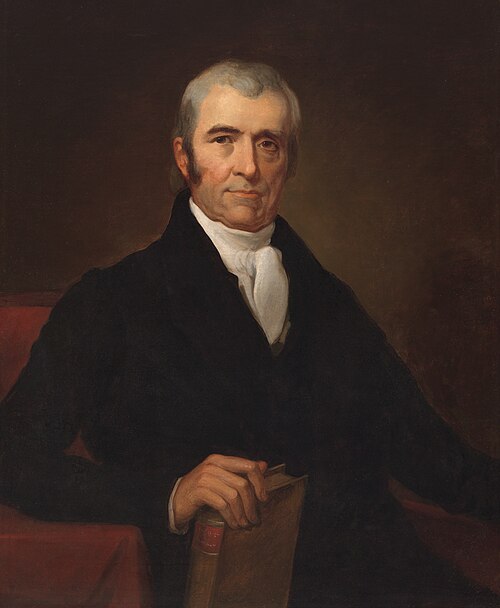
Portrait of John Marshall, fourth Chief Justice of the United States. James Lambdin / Henry Inman · Public domain

John Marshall

United States · 1755–1835

The fourth Chief Justice of the United States served thirty-four years and made the Supreme Court a co-equal branch of government almost single-handedly. Marbury v. Madison (1803) established that courts may strike down unconstitutional laws — the doctrine of judicial review now built into most of the world's constitutions.

The story

Marbury was a trap Marshall built and escaped in one move. William Marbury sued to force delivery of his judicial commission; ruling for him invited President Jefferson to simply ignore the Court, ruling against him looked like surrender. Marshall held Marbury legally entitled to the commission and the administration in the wrong — then ruled the statute under which Marbury had sued unconstitutional, so the Court could not order the remedy. Jefferson won the case; the Court walked away with the power to strike down laws, in a judgment leaving nothing to defy.

“Secure the principle even when you must concede the case in front of you.”

Years as Chief Justice
34 (1801–35)
Opinions delivered
500+
Presidencies spanned
6
3
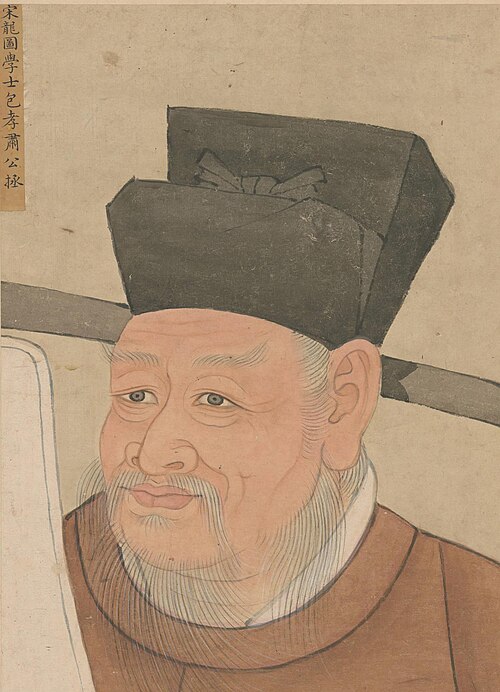
Traditional portrait of the Song-dynasty magistrate Bao Zheng, known as Judge Bao. Unknown author Unknown author · Public domain

Bao Zheng

China · 999–1062

A Song-dynasty official who rose to prefect of the capital, Kaifeng, Bao Zheng punished corrupt relatives of the powerful, opened his court to ordinary petitioners and died with a famously modest estate. Chinese culture turned him into "Judge Bao," the incorruptible magistrate of a thousand years of operas, novels and television.

The story

As a young magistrate of Tianchang county, Bao heard a farmer complain that someone had cut out his ox's tongue in the night. Bao told him to go home, slaughter the ox and sell the meat — technically illegal, since working oxen were protected. When a neighbour promptly appeared to denounce the farmer for illegal slaughter, Bao asked him why he had cut out the animal's tongue and then come to inform on the man he had wronged. The informer confessed. The case, recorded in the History of Song, seeded a millennium of Judge Bao detective stories.

“Design the situation so the guilty reveal themselves; a court can investigate, not merely referee.”

Years in Song service
~30
Cultural afterlife
960+ years
Highest office held
Privy council, 1061
4
Photograph of Lord Denning, Master of the Rolls, in judicial robes. Elliott & Fry · Public domain

Lord Denning

England · 1899–1999

Master of the Rolls for twenty years, Denning was England's most famous and most quotable judge, writing judgments in short plain sentences that began with the human story. He bent doctrine toward fairness so persistently that higher courts reversed him again and again — and Parliament later enacted several of his heresies into law.

The story

In 1946, a new High Court judge of 47, Denning decided a case about a Blitz-emptied London block of flats whose landlord had accepted half rent through the war and then demanded the difference. Orthodox doctrine said the promise to take less was unenforceable — nothing had been given in exchange. Denning revived a neglected 1877 House of Lords dictum and held that a promise intended to be relied on, and actually relied on, binds. High Trees created modern promissory estoppel and is cited across the common-law world to this day.

“Write so the parties understand; begin with the story, and let justice shape the doctrine.”

Master of the Rolls
20 yrs (1962–82)
Age at retirement
83
Years on the bench
38
5
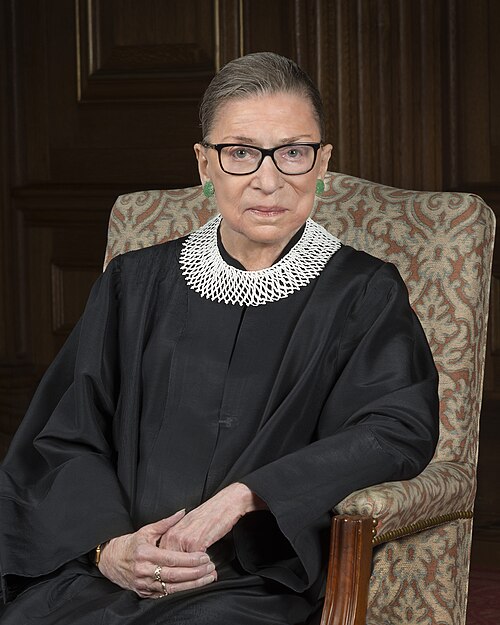
Official portrait of US Supreme Court Justice Ruth Bader Ginsburg. Supreme Court of the United States, Photographer: Steve Petteway [1] · Public domain

Ruth Bader Ginsburg

United States · 1933–2020

Ginsburg spent the 1970s dismantling American sex-discrimination law as an advocate — winning five of the six cases she argued before the Supreme Court — then judged for forty years on the DC Circuit and the Supreme Court, where her late-career dissents made her a global cultural figure in a collar and robe.

The story

In 2007 the Supreme Court threw out Lilly Ledbetter's pay-discrimination case because she had not sued within 180 days of the first unequal paycheck — years before she could have known of it. Ginsburg read her dissent aloud from the bench, a rare act of protest, saying plainly that "the ball is in Congress's court." Congress took the hint: the Lilly Ledbetter Fair Pay Act, restarting the clock with every discriminatory paycheck, became the first bill President Obama signed into law, on 29 January 2009.

“A dissent is not a defeat; it can be a brief addressed to a future Congress or court.”

SCOTUS cases won as advocate
5 of 6
Years on the Supreme Court
27 (1993–2020)
Dissent that became law
Ledbetter, 2009
6
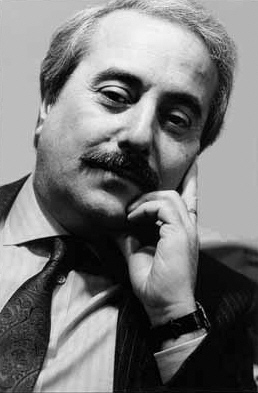
Photograph of Italian anti-mafia judge Giovanni Falcone. Template:Jaydie Putterman · Public domain

Giovanni Falcone

Italy · 1939–1992

A Palermo investigating magistrate, Falcone built the 1986–87 Maxi Trial that convicted 360 members of the Sicilian Mafia and proved in court that Cosa Nostra was a single hierarchical organization. The Mafia killed him with a motorway bomb in 1992; his methods now anchor anti-mafia law worldwide.

The story

In July 1984 Tommaso Buscetta, the first senior mafioso to turn, agreed to talk — but only to Falcone, and opened with a warning: first they will try to kill me, then it will be your turn, until they succeed. Falcone took the depositions anyway and corroborated every claim against bank records, flight manifests and land registries before using it, building an indictment of over 8,000 pages. On 23 May 1992 a bomb of roughly 500 kilograms under the Capaci motorway killed Falcone, his wife Francesca Morvillo — herself a judge — and three police escorts.

“Corroborate testimony with paper; documents cannot be intimidated.”

Maxi Trial defendants
475
Convictions won
360
Combined sentences
2,665 years
7

Navi Pillay

South Africa · born 1941

Daughter of a Durban bus driver, Pillay practised law for twenty-eight years under apartheid — as a non-white woman she could not even enter a judge's chambers — before Nelson Mandela appointed her to the High Court in 1995. She went on to judge genocide in Rwanda and to serve as UN High Commissioner for Human Rights.

The story

At the Rwanda tribunal, Pillay sat on the three-judge chamber trying Jean-Paul Akayesu, mayor of Taba commune. When witnesses began spontaneously describing mass rapes, the judges' own questioning led prosecutors to amend the indictment. The judgment of 2 September 1998 delivered the first international conviction for genocide ever entered — and ruled, for the first time anywhere, that systematic rape committed to destroy a group is itself an act of genocide, permanently changing how tribunals treat sexual violence in war.

“What a court refuses to name, the law cannot punish; naming is part of a judge's power.”

Akayesu genocide ruling
First ever, 1998
Years practising under apartheid
28
UN human rights chief
2008–14
8

M. Fathima Beevi

India · 1927–2023

From a small Kerala town, Beevi topped India's 1950 bar examination — the first woman awarded its gold medal — then climbed every rung of the judiciary over three decades. Her 1989 appointment made her the first woman on the Supreme Court of India and the first Muslim woman in the country's higher judiciary.

The story

Beevi entered the Kerala subordinate judiciary as a munsiff in 1958, when women were scarce even at the bar, and rose through thirty years of unglamorous work — trial courts, tax tribunals, the Kerala High Court — before the Supreme Court called in October 1989, months after she had formally retired. Asked late in life about her legacy, she put it simply: "I opened the door." In 1997 she became Governor of Tamil Nadu, one more first for a Muslim woman in Indian public life.

“Doors open one career at a time; thirty years of quiet competence can end centuries of exclusion.”

First woman, India's Supreme Court
1989
Bar exam gold medal
1950, first woman
Years on the bench
~34

Bars are scaled to the leader in this list.

Comparison Lab

Toggle names on and off — every bar rescales to the leader of your selection.

5 / 8

The argument

Bao Zheng the eleventh-century official and "Judge Bao" the cultural icon are two different people: nearly all the famous cases — the portable guillotines, the executed princes — are inventions of Yuan-dynasty playwrights and later novelists. Historians point out that the documented Bao was a capable, honest administrator, not a detective; whether a legend built on a real reputation belongs on a list of real judges is a fair question.

Falcone's place depends on a translation problem: an Italian investigating magistrate (giudice istruttore) is formally a judge, but his work — running investigations, turning informers — would belong to prosecutors in most other systems. Admirers answer that the Maxi Trial's survival on appeal in 1992 was precisely a triumph of judicial method: evidence corroborated so thoroughly that even Italy's skeptical Court of Cassation upheld it.

The deeper bias is structural. Signed individual judgments make common-law judges famous, while the anonymous collegiate rulings of France, Germany, Japan or Brazil hide their greatest judges from history — no list built on named influence can capture a Conseil d'État rapporteur or a Karlsruhe judge whose doctrines shaped a continent without a byline.

Keep exploring

More in Law & Public Service