💹The Greats

Investment Banker · The dealmaker who prices companies and moves capital — a trade running from Medici Florence to today's pitch decks, paid for trust when billions change hands.

Ranking financiers is harder than ranking surgeons or architects: the work is confidential by design, credit diffuses across whole firms, and the trade's history skews heavily toward the handful of cities whose archives survive. The eight below are chosen because their influence is documented and durable — each changed how the business itself works, not merely how much one house earned.

They span five centuries and five countries: an Augsburg merchant who bought an empire, an Osaka rice-shop heir who invented Japanese securities research, two Americans who broke Wall Street's gender wall from opposite ends, and a Nigerian lawyer whose infrastructure fund sold for $12.5 billion. What they share is the trade's core asset — being believed when the sums become enormous.

The all-time podium

Nathan Mayer Rothschild
Germany / United Kingdom
2
Jakob Fugger
Jakob Fugger
Germany (Augsburg)
1
J. Pierpont Morgan
J. Pierpont Morgan
United States
3

The eight who reached the top

1
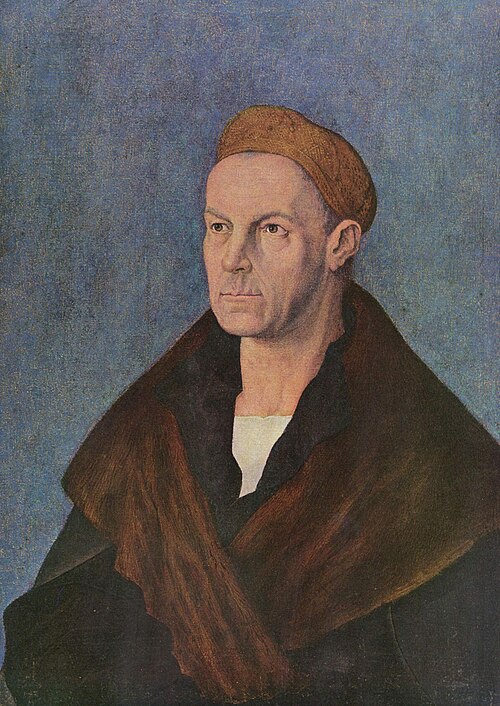
Portrait of Jakob Fugger the Rich by Albrecht Dürer. Albrecht Dürer · Public domain

Jakob Fugger

Germany (Augsburg) · 1459–1525

"Fugger the Rich" built Europe's mightiest financial house from Augsburg, banking the Habsburgs, taking Tyrolean silver and Hungarian copper mines as collateral, and holding papal accounts. His loans decided an imperial election, and his Fuggerei almshouse, founded 1521, still houses Augsburg residents at an unchanged token rent.

The story

When Emperor Maximilian died in 1519, the imperial crown went to auction in all but name: seven electors, two serious bidders — Charles of Habsburg and Francis I of France. Fugger raised roughly 850,000 florins, over half from his own house, to secure the electors for Charles. Four years later, pressing for repayment, he reminded Charles V in writing that without him the emperor "might not have acquired the imperial crown." The letter survives as banking's bluntest statement of leverage over power.

“Lend where power is decided and document everything — the debtor's gratitude fades, but the paper does not.”
Imperial election financed
1519, Charles V
Election funds from his house
~540k of 850k florins
Years his almshouse has run
500+ (since 1521)
2
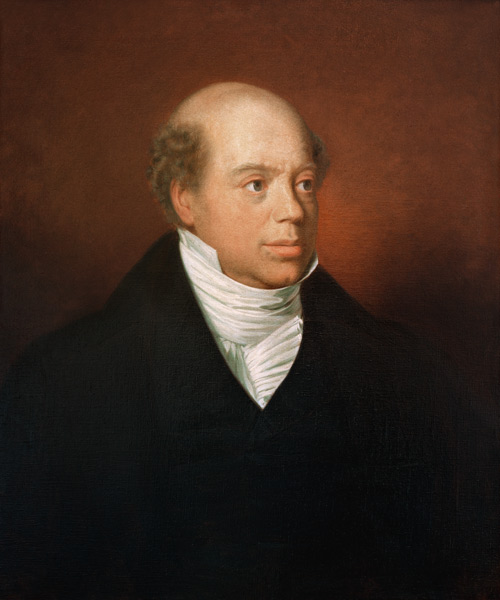
Portrait of Nathan Mayer Rothschild, head of the London Rothschild bank. Moritz Daniel Oppenheim · Public domain

Nathan Mayer Rothschild

Germany / United Kingdom · 1777–1836

Sent from Frankfurt's Judengasse to England at 21, Nathan built the London pillar of the five-brother Rothschild network that dominated European government finance for half a century. His house moved gold for Wellington's armies, underwrote the sovereign bonds of postwar Europe, and made private couriers famously faster than governments' own dispatches.

The story

Rothschild really did learn of Wellington's victory at Waterloo about a day before the British government, via his courier network, and really did inform the Treasury. The legend that he crashed the market with false rumors and bought Britain cheap traces not to 1815 but to an 1846 French pamphlet, and historians have dismantled it. His documented masterstroke was logistics: assembling and smuggling gold through blockaded Europe to pay Wellington's army in 1814–15 — a contract that made the firm's fortune and reputation at once.

“Information networks compound: being reliably first, and reliably discreet, is a franchise governments themselves will pay for.”

Waterloo news lead
~1 day before London
Brothers' branch cities
5 across Europe
Era of sovereign-bond dominance
c. 1815–1860s
3
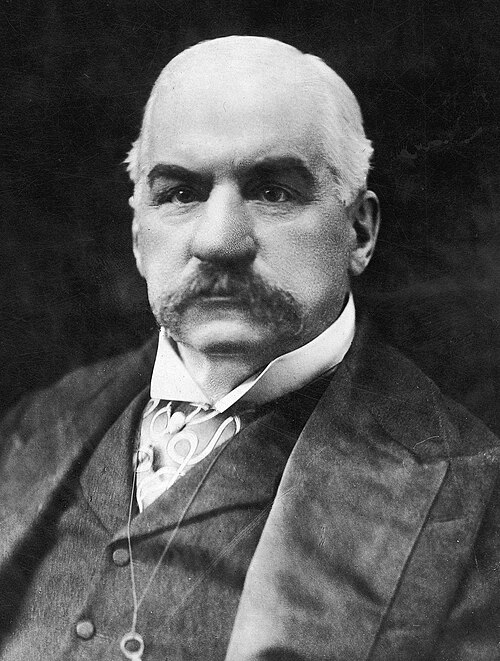
Photograph of financier J. Pierpont Morgan. Unknown author Unknown author · Public domain

J. Pierpont Morgan

United States · 1837–1913

The dominant figure in American finance for four decades, Morgan reorganized bankrupt railroads so systematically the process was called "Morganization," assembled U.S. Steel in 1901 as the first billion-dollar corporation, and twice — in 1895 and 1907 — personally organized rescues of the United States financial system before the country had a central bank.

The story

On the night of 2 November 1907, with trust companies failing across New York and no central bank in existence, the 70-year-old Morgan gathered the city's leading bankers in his private library on East 36th Street, locked the doors, and pocketed the key. By 4:45 a.m. they had committed $25 million to save the tottering trust companies, and the panic broke. Congress drew the obvious conclusion — that no private citizen should ever again hold that role — and created the Federal Reserve six years later.

“In a panic, someone must act as the system's confidence; if no institution exists to do it, a person will be drafted.”

Library rescue organized
$25M, overnight, 1907
First billion-dollar company
U.S. Steel, 1901
Central bank that followed him
Federal Reserve, 1913
4
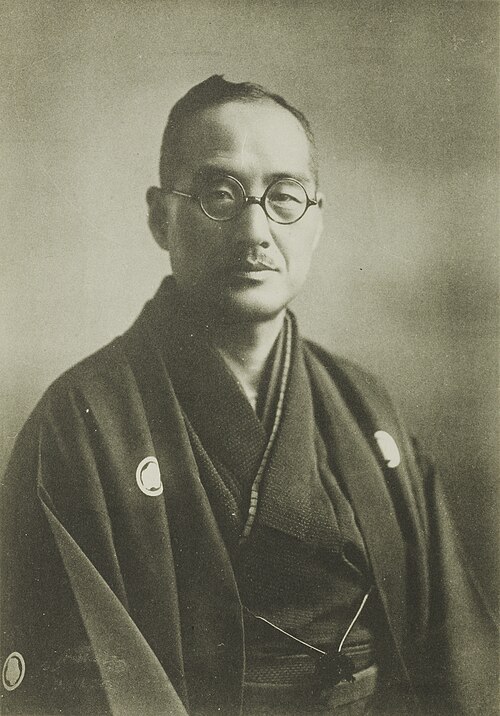
Photograph of Tokushichi Nomura II, founder of Nomura Securities. Unknown author Unknown author · Public domain

Tokushichi Nomura II

Japan · 1878–1945

Heir to an Osaka money-changing shop, Nomura built Japan's securities industry on an imported-sounding but homegrown idea: research. He set up what is commonly called Japan's first securities research department in 1906, founded Osaka Nomura Bank in 1918 and Nomura Securities in 1925, and entered the House of Peers in 1928.

The story

In January 1907, with Osaka's exchange still euphoric from the post-Russo-Japanese-War boom, Nomura took a heavily short position — not on instinct but on weeks of his own price analysis and news reading, a discipline then almost unknown among Japanese brokers. The crash that followed made his fortune and vindicated the research desk he had established at the family shop the year before. The firm he built on that principle grew into Nomura, Japan's largest investment bank, which in 2008 bought Lehman Brothers' Asian and European operations.

“Analysis is an edge precisely when the market around you trades on rumor; institutionalize the edge before competitors copy it.”

Research desk founded
1906, Osaka
Fortune made in the panic
1907 short
Firm founded, still Japan's largest
Nomura, 1925
5
Photograph of banker Siegmund Warburg, founder of S. G. Warburg & Co. Georges Chevalier · CC BY 4.0

Siegmund Warburg

Germany / United Kingdom · 1902–1982

A refugee from Hitler's Germany who founded S. G. Warburg & Co. in London in 1946, Warburg dragged the gentlemanly City into the modern era twice: winning Britain's first contested hostile takeover in 1959, and inventing the Eurobond in 1963 — the offshore capital market that now measures in the trillions.

The story

In the winter of 1958–59, nearly the whole City establishment lined up behind British Aluminium's board to block a bid by Tube Investments and America's Reynolds Metals. Warburg, advising the bidders, ignored the club convention that hostile approaches were simply not done and went over the directors' heads to shareholders, buying stock in the open market. He won in January 1959, was socially frozen out, and within a decade every firm that had shunned him was imitating the "Aluminium War" playbook he wrote.

“Conventions are competitors' habits; serving the client against the club is scandalous exactly once, then becomes the standard.”

First Eurobond led
$15M, Autostrade, 1963
Aluminium War won
January 1959
Offshore market it seeded
Trillions of $ today
6

Isabel Benham

United States · 1909–2013

Wall Street's leading railroad-credit authority for decades, Benham joined the Street in the early 1930s when its analysis rooms hired no women, and in 1964 became the first woman partner of a Wall Street bond house, R. W. Pressprich & Co. Railroad presidents sought her judgment on the industry she outlasted.

The story

Benham built her authority in railroad bonds — the blue-chip securities of the era — while concealing the one fact that would have discredited her with clients: she signed her research "I. H. Benham," so that railroad executives corresponding with the Street's sharpest rail analyst assumed for years they were writing to a man. The 1964 Pressprich partnership made the disguise unnecessary. She kept working past her hundredth birthday, and died at 104 having watched the railroads she analyzed consolidate from dozens into a handful.

“Expertise can be built anonymously when the door is closed; the credential eventually has to acknowledge the record.”

First woman bond-house partner
1964, Pressprich
Career span on the Street
~70 years
Age at death, still an authority
104
7

Muriel Siebert

United States · 1928–2013

"Mickie" Siebert arrived in New York with, by her own account, $500 and a used Studebaker, became a top airline-industry analyst, and in 1967 became the first woman to own a seat on the New York Stock Exchange. She later founded her own brokerage and served as New York State's first woman banking superintendent.

The story

When Siebert sought an NYSE seat in 1967, the first nine of the ten men she asked to sponsor her application declined. The exchange then added a novel condition: a bank letter promising to lend her $300,000 of the record $445,000 seat price — while the banks refused to commit until the exchange admitted her. She broke the catch-22, and on 28 December 1967 became the exchange's first woman member alongside 1,365 men. For nearly a decade, she liked to note, the ladies' room nearest the floor remained a converted phone booth.

“Institutions rarely say no outright; they design loops that say it for them. Breaking the loop is the achievement.”

Women among NYSE members, 1967
1 of 1,366
Seat price paid
$445k (1967)
Sponsors who refused first
9 of 10 asked
8

Adebayo Ogunlesi

Nigeria / United States · b. 1953

From Sagamu, Nigeria, via Oxford and Harvard, Ogunlesi rose to head global investment banking at Credit Suisse First Boston, then founded Global Infrastructure Partners in 2006 — the fund that bought London's Gatwick Airport — and sold the firm to BlackRock in a deal announced in 2024 at roughly $12.5 billion.

The story

Ogunlesi clerked for US Supreme Court Justice Thurgood Marshall in 1980 — widely described as the Court's first non-American clerk — before choosing finance over law. At First Boston, the assignment that made his name was one nobody wanted: years advising on the financing of the Nigeria LNG project, proof that unfashionable, difficult markets build singular franchises. Two decades later his infrastructure fund bought Gatwick Airport for about £1.5 billion in 2009, and BlackRock's 2024 acquisition of GIP made him one of the most powerful investors in world infrastructure.

“Take the mandate no one else wants; expertise concentrated where others refuse to work becomes a monopoly later.”

Gatwick Airport acquired
~£1.5B, 2009
GIP sale to BlackRock
~$12.5B (2024)
Supreme Court clerkship
1980, Marshall

Bars are scaled to the leader in this list.

Comparison Lab

Toggle names on and off — every bar rescales to the leader of your selection.

5 / 8

The argument

Michael Milken is this list's loudest absence: his junk-bond machine at Drexel Burnham Lambert financed a generation of upstart companies and remade corporate finance, but his 1990 guilty plea to securities violations — pardoned in 2020, conviction intact — leaves historians permanently split on whether he belongs on lists of builders or of cautionary tales.

The Rothschild Waterloo legend illustrates a deeper problem: the most famous stories about financiers are often the least true, and the 1846 pamphlet that invented the market-crash version was antisemitic propaganda. Niall Ferguson's archival history replaced the myth with the documented gold-logistics coup — a reminder that in this trade, verifying the anecdote is part of respecting the achievement.

The near-absence of women before the 1960s reflects exclusion, not absence of talent: exchanges, partnerships and clubs were formally closed to them. Benham needed initials to publish and Siebert needed a decade-defying loophole to buy a seat, which is precisely why both belong here — and why any ranking before their era measures access as much as ability.

Keep exploring

More in Business & Finance