📋The Greats

Civil Servant · Government's permanent, exam-selected staff who administer law and deliver public services — the machinery that keeps running as elected officials come and go.

Civil service rarely produces the kind of singular, dramatic breakthrough surgery or engineering does; its legends are usually reformers who redesigned how officials are chosen, or officials whose long, unglamorous tenure quietly reshaped what a government could actually do.

This list runs from fifth-century-BCE China to twenty-first-century Beijing and crosses North Africa, Prussia, Britain and the United States along the way — chosen for one specific, checkable achievement each, including two whose legacies are still actively debated.

The all-time podium

Wang Anshi
Wang Anshi
China (Song)
2
Confucius
Confucius
China (State of Lu)
1
Ibn Khaldun
Ibn Khaldun
North Africa (Tunis / Cairo)
3

The eight who reached the top

1
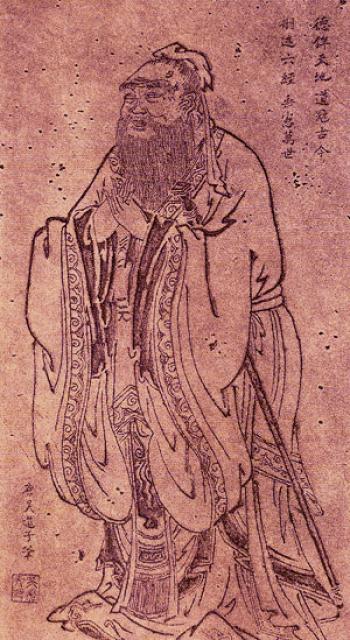
Traditional Chinese portrait of the philosopher Confucius Wu Daozi , 685-758, Tang Dynasty. · Public domain

Confucius

China (State of Lu) · c. 551–479 BCE

Confucius briefly served as a minister in the state of Lu, but his lasting influence on civil service came through ideas: he argued that government posts should go to the virtuous and capable rather than the nobly born, a principle that shaped the examination system China built a millennium later.

The story

Sima Qian's Records of the Grand Historian recounts that as Lu's acting chancellor around 500 BCE, Confucius watched Duke Ding accept a gift of eighty dancing girls and fine horses from the rival state of Qi, then skip court for three days running to enjoy them. Confucius resigned his post over the ruler's neglect of state duty and left Lu to spend the next fourteen years wandering between courts, teaching whichever ruler would listen.

“A leader distracted from the work of governing forfeits the loyalty of the officials meant to serve that work.”
Years serving in Lu's government
~4 yrs
Years the Analects have been studied
~2,400 yrs
Years spent teaching in exile
14 yrs
2
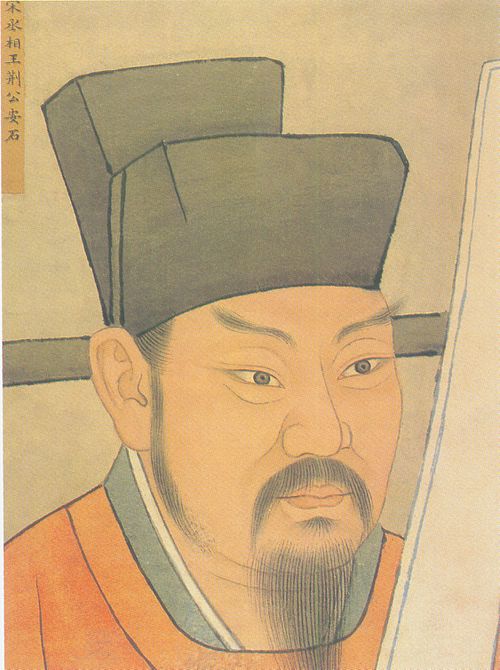
Traditional Chinese portrait of the statesman Wang Anshi Unknown author Unknown author · Public domain

Wang Anshi

China (Song) · 1021–1086

As Song China's chancellor from 1069, Wang Anshi pushed through the New Policies, a sweeping reform package that included rewriting the civil service examination to test practical statecraft and current affairs instead of rote classical composition, redefining what a capable official was expected to know.

The story

Wang's 1071 examination reform dropped the traditional poetry and rhapsody sections that had dominated the jinshi degree for centuries and replaced them with essays on the Confucian classics' meaning and policy questions on real administrative problems — irrigation, taxation, frontier defense. Conservative scholar-officials, some of whom had built entire careers mastering the old poetic forms, protested that the change would produce officials skilled at opinion but ignorant of literature; the reformed curriculum nonetheless stayed largely in place for the rest of the dynasty.

“Testing candidates on the actual problems they'll face in office selects differently than testing them on how elegantly they can write.”

Year exam curriculum reformed
1071
Years as Song chancellor
~7 yrs
New Policies reform edicts issued
Dozens
3
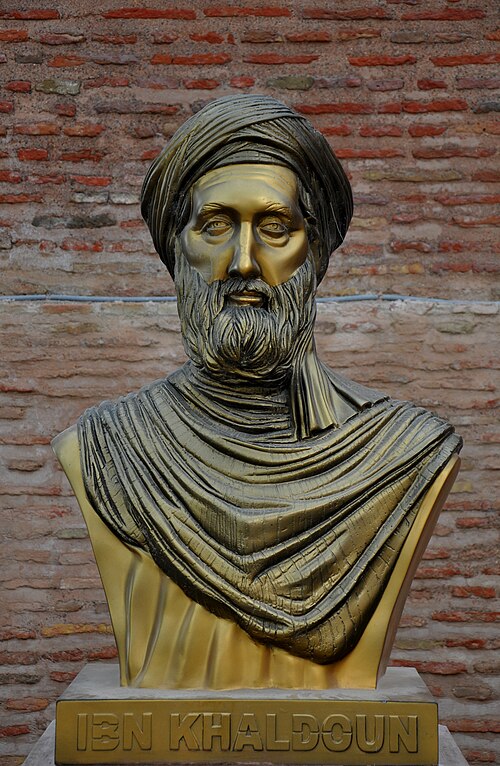
Historical illustration depicting the scholar and administrator Ibn Khaldun Reda Kerbush · CC BY-SA 4.0

Ibn Khaldun

North Africa (Tunis / Cairo) · 1332–1406

A jurist and administrator who served, and was repeatedly dismissed and reappointed by, sultans across Tunis, Fez, Granada and Mamluk Cairo, Ibn Khaldun turned decades spent inside and outside government into the Muqaddimah, a work still read as a founding text of sociology and the study of how states actually function.

The story

In 1401, serving as Cairo's chief Maliki qadi (judge), Ibn Khaldun rode out with the Mamluk sultan's delegation to negotiate with Timur, then besieging Damascus. Ibn Khaldun was lowered over the city walls in a basket to meet the conqueror directly, and the two men spent over a month in conversation, with Timur reportedly questioning him closely about the history and geography of North Africa — an encounter Ibn Khaldun later described in his own autobiography.

“Knowledge built from a career of watching institutions rise and fall can become the one thing a conqueror wants from you.”

Times appointed Cairo's chief judge
~6 times
Muqaddimah's first draft written in
~5 months
Courts and rulers he served
8+ courts
4
Portrait of the Prussian civil servant and scholar Wilhelm von Humboldt Thomas Lawrence · Public domain

Wilhelm von Humboldt

Prussia (Germany) · 1767–1835

As head of Prussia's education section inside the Interior Ministry for barely sixteen months, Wilhelm von Humboldt redesigned the kingdom's school and university system, founding the University of Berlin in 1810 on a model of research-driven, state-salaried scholarship that other countries' civil services later copied.

The story

Appointed in February 1809 after Prussia's defeat by Napoleon convinced the government it needed better-educated officials, Humboldt drafted a national curriculum, founded the University of Berlin, and overhauled teacher training, then resigned in April 1810 after repeated clashes with conservative ministers who thought his reforms too sweeping — leaving office having reshaped Prussian, and eventually German, civil administration for a century, in barely more than a year in the job.

“A reform doesn't need a long tenure to outlast its author — it needs to be built into the institution before you leave.”

Months in the education post
~16 months
University of Berlin founded
1810
Years his model shaped German universities
100+ yrs
5
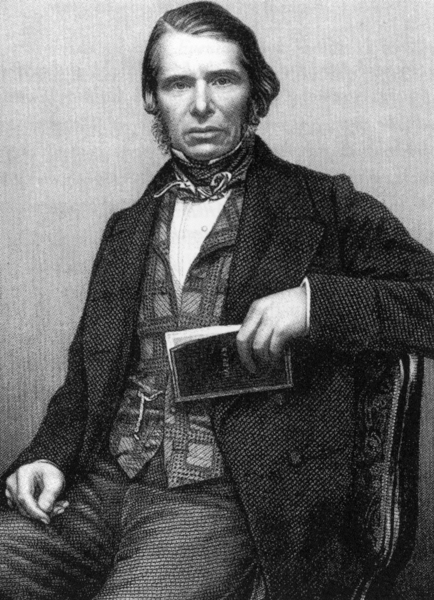
19th-century portrait photograph of British civil servant Charles Edward Trevelyan Unknown author Unknown author · Public domain

Charles Edward Trevelyan

Britain / India · 1807–1886

A career administrator in the East India Company before becoming a senior British Treasury official, Trevelyan co-authored the 1854 Northcote-Trevelyan Report, which recommended recruiting Britain's civil service by open competitive examination rather than patronage — the reform that created the modern professional civil-service model much of the world still uses.

The story

As the Treasury official responsible for Irish famine-relief policy from 1846, Trevelyan insisted relief be limited and tied to strict conditions, warning against aid that might make the Irish poor dependent on government support. Roughly a million people died of starvation and disease during the Great Famine his office administered relief for — a record historians still weigh against his later reform legacy when assessing his career.

“The same administrator who designs an efficient, impartial system can apply it with a rigidity that costs lives — competence and judgment are not the same thing.”

Northcote-Trevelyan Report published
1854
Years in East India Company service
~14 yrs
Deaths during his famine-relief tenure
~1M+ (est.)
6
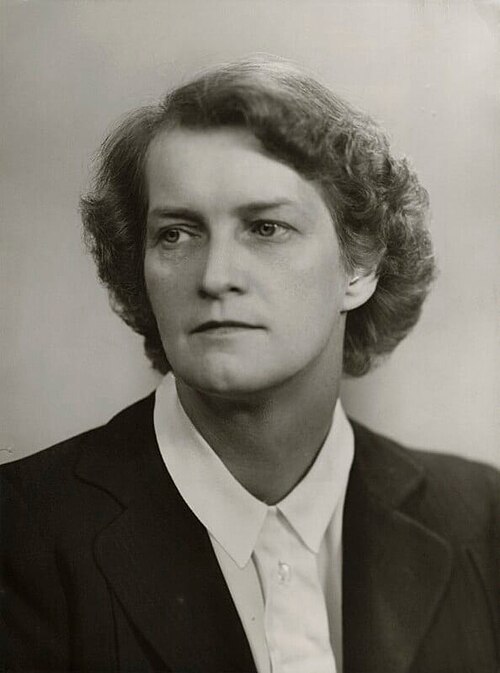
Portrait photograph of British civil servant Evelyn Sharp, Baroness Sharp Elliott & Fry · Public domain

Evelyn Sharp, Baroness Sharp

United Kingdom · 1903–1985

The first woman to reach Permanent Secretary rank in the British civil service, Sharp led the Ministry of Housing and Local Government from 1955 to 1966, driving the country's postwar new-town and slum-clearance programs and becoming, by reputation, one of Whitehall's most formidable operators of either sex.

The story

Sharp joined the civil service in 1926, when married women were routinely barred from permanent posts, and stayed unmarried her entire career rather than face automatic dismissal under the marriage bar then in force. Housing minister Harold Macmillan later credited her, more than himself, with the drive behind the government's pledge to build 300,000 houses a year in the early 1950s, a target the department hit under her direction.

“Institutional rules can force impossible personal trade-offs; changing the rule matters as much as any individual overcoming it.”

Years in the civil service
~40 yrs
Became Permanent Secretary
1955
Annual housing target hit under her
300,000/yr
7

Robert Moses

United States · 1888–1981

Never elected to any office, Robert Moses controlled New York's public authorities for over four decades, using bond-issuing powers largely outside normal democratic oversight to build hundreds of miles of parkways, dozens of bridges and swaths of the city's parks, becoming the paradigm case of unelected administrative power in American government.

The story

Moses used his authority as head of the Triborough Bridge Authority to build the Long Island parkway system with overpasses deliberately built low, according to Robert Caro's Pulitzer Prize-winning 1974 biography The Power Broker, restricting buses — and so, disproportionately, poorer New Yorkers who relied on them — from reaching the public beaches those parkways led to, a claim later contested by some historians but still the most cited illustration of how an unelected official's infrastructure choices can encode social policy.

“Power that never has to face election can build lasting public works, and lasting exclusion, with the same set of decisions.”

Years running NY public authorities
~44 yrs
Public offices ever elected to
0
Bridges and parkways built or overseen
Dozens
8

Wu Yi

China · b. 1938

Trained as a petroleum engineer, Wu Yi rose through China's oil ministry and Beijing's city government to become Vice Premier and the country's chief WTO trade negotiator, earning the nickname 'Iron Lady' for her uncompromising style and her public handling of the 2003 SARS outbreak as acting health minister.

The story

Appointed acting Minister of Health in April 2003 after China's initial SARS cover-up was exposed, Wu Yi publicly acknowledged the government had understated case numbers, replaced the health minister and Beijing's mayor within days, and ordered a rapid, transparent case-count system and the emergency Xiaotangshan hospital built in about a week — a sharp reversal from the secrecy of the outbreak's first months, widely credited with helping bring the epidemic under control.

“Reversing a cover-up in public, quickly and visibly, can rebuild institutional credibility faster than trying to manage the story quietly.”

Years as Vice Premier
~7 yrs
Xiaotangshan hospital built in
~7 days
Forbes 'most powerful women' rankings
Top 5, multiple yrs

Bars are scaled to the leader in this list.

Comparison Lab

Toggle names on and off — every bar rescales to the leader of your selection.

5 / 8

The argument

Trevelyan is the most contested name here: the same administrative reformer who helped create Britain's meritocratic civil service also ran Irish famine relief under a doctrine that treated mass death as an acceptable side effect of fiscal discipline — historians still argue whether to read his career as one story or two.

Robert Moses is debated for the opposite reason: never having faced an election gave him the free hand to complete enormous public works other democracies still can't finish, and the same freedom from accountability to build a parkway system that, by Caro's account, deliberately excluded people who depended on public transit.

Keep exploring

More in Law & Public Service