c. 1500 BCEIron smelting in Hittite Anatolia
Smiths in Anatolia begin smelting iron from ore in charcoal furnaces rather than relying on rare meteoric metal. Hittite kings treat the material as strategic and diplomatic treasure; a letter from king Hattusili III to an Assyrian counterpart discusses iron as a carefully rationed royal export.
c. 1200 BCEThe Iron Age spreads
After the Late Bronze Age collapse disrupts the tin trade that bronze depended on, ironworking spreads across the Mediterranean, Europe, India and, on separate lines of development, sub-Saharan Africa. Iron ore is nearly everywhere, so for the first time any village can afford a smith — and soon cannot function without one.
c. 300 BCEWootz: crucible steel in South India
Smiths in southern India and Sri Lanka begin producing wootz, a high-carbon crucible steel made by sealing iron and plant matter in clay crucibles. Traded in ingots across the Indian Ocean, it becomes the raw material of the patterned "Damascus" blades that Middle Eastern smiths forge for the next two thousand years.
c. 400 CEThe Delhi Iron Pillar
A forge-welded iron pillar over seven metres tall and about six tonnes is erected in India during the Gupta period, inscribed for a king identified with Chandragupta II. Built up from hundreds of hammer-welded blooms, it still stands in Delhi's Qutb complex, its high-phosphorus iron famously almost rust-free after 1,600 years.
c. 800–1000Ulfberht swords in Viking Europe
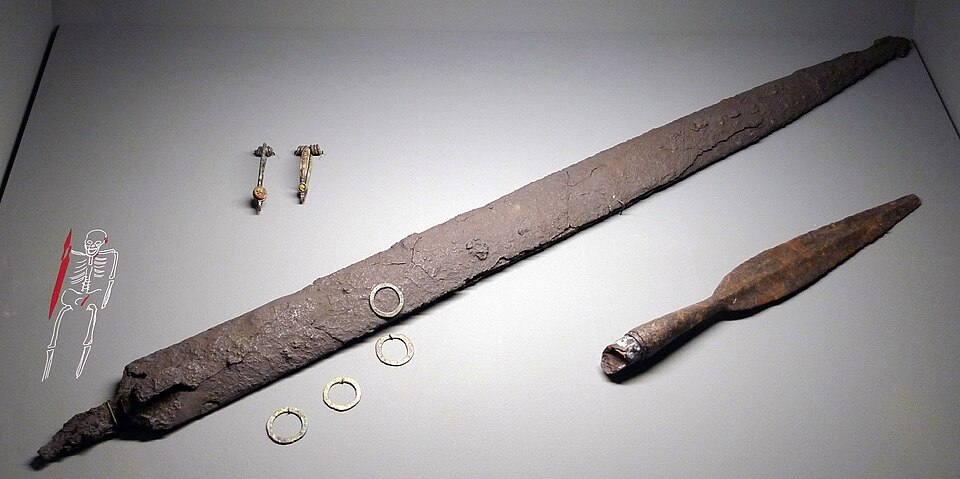
Around 170 surviving Viking Age swords carry the inlaid Frankish maker's mark +VLFBERH+T. The best are forged from unusually clean high-carbon steel, far better than most European metal of the era, and the mark was so valuable that misspelled counterfeits circulated — medieval brand piracy in steel.
1299London's blacksmiths enter the record
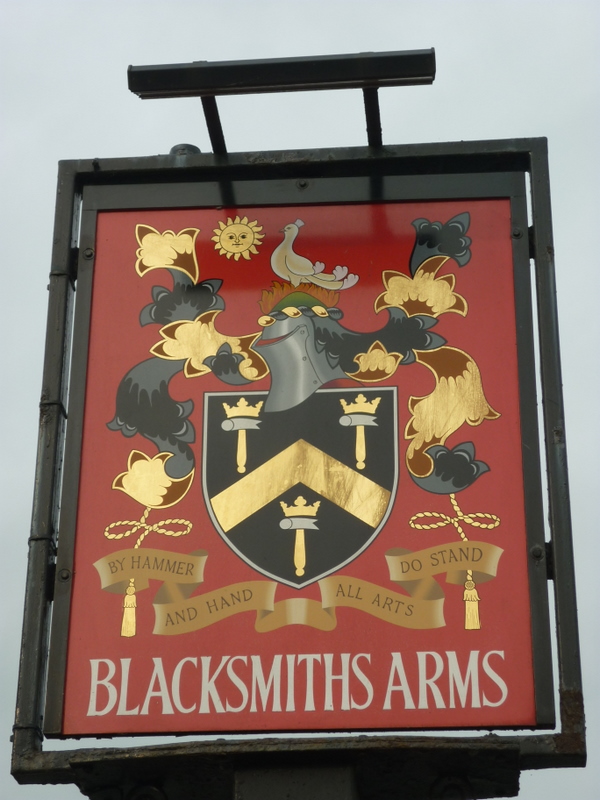
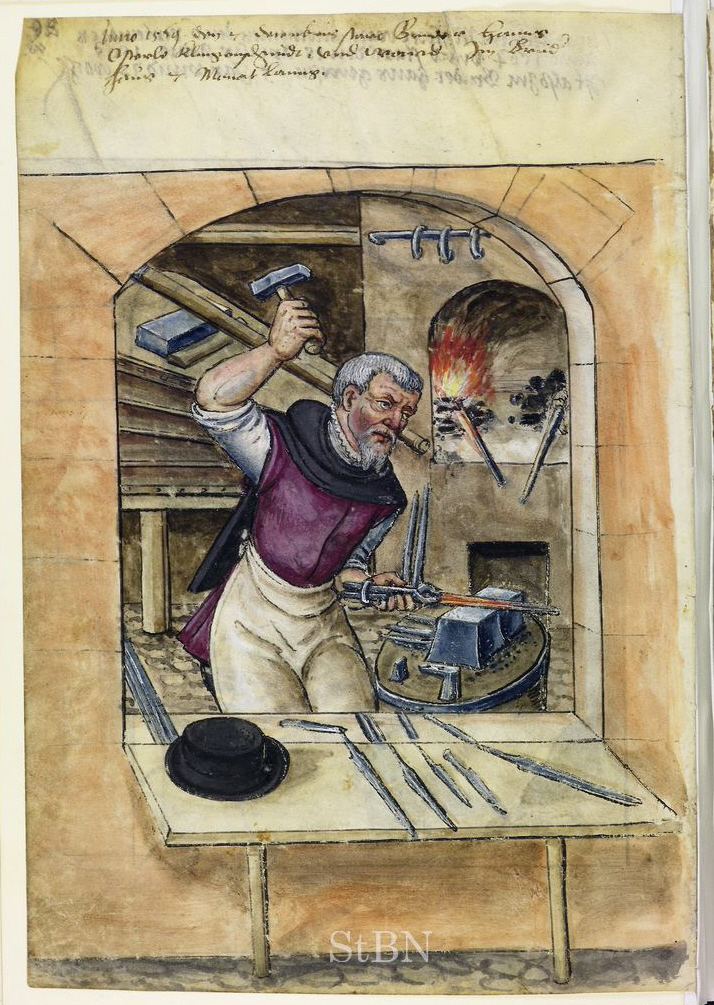
The fraternity that becomes the Worshipful Company of Blacksmiths is first recorded in London in 1299, receiving a royal charter in 1571. Across medieval Europe, guilds fix prices, inspect work, train apprentices and bury their dead — turning the smithy into a regulated, inheritable trade.
c. 1300Masamune forges in Kamakura Japan
In Sagami province, the swordsmith Gorō Nyūdō Masamune perfects the forging and differential hardening of tamahagane steel, producing blades whose crystalline temper lines are still considered the summit of the Japanese sword. His tradition of named, revered master smiths continues unbroken in Japan today.
1856Bessemer makes steel industrial
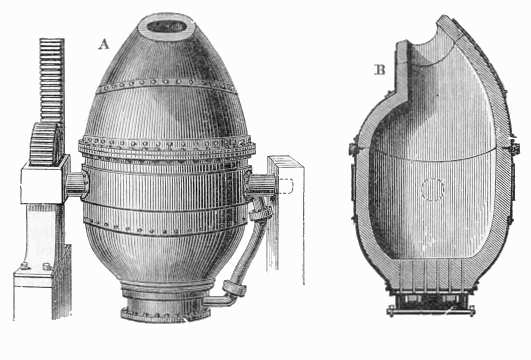
Henry Bessemer's converter, announced in 1856, blows air through molten iron to make cheap steel by the ton. Combined with rolling mills and drop forges, it moves metalworking decisively from the anvil to the factory: within decades, nails, chain, tools and hardware — the smith's bread and butter — are machine-made.
1908The Model T empties the smithy
The US census counted well over 200,000 blacksmiths in 1910, most of them shoeing horses and repairing wagons. The automobile removed the horse from working life within a generation, and by mid-century the American village smithy was effectively extinct — a collapse repeated across the industrial world.
1973The artist-blacksmith revival
The Artist-Blacksmith's Association of North America (ABANA) is founded at a gathering in Lumpkin, Georgia, in 1973, followed by the British Artist Blacksmiths Association in 1978. A trade that industry had discarded reorganises itself around design, sculpture and heritage restoration — the modern profession.