🔥The Greats

Blacksmith · The trade that made every other trade's tools — from Hittite iron and guild forges to the artist-blacksmiths who brought the anvil back in the twenty-first century.

Most of history's great blacksmiths are unrecoverable: the trade's masterpieces — the Delhi pillar, the Ulfberht blades, the great cathedral grilles — mostly carry no maker's name, and the smiths of Africa, Asia and the countryside rarely entered written record at all. Any list of eight is therefore a list of the documented, which is not the same as a list of the best.

The eight below span seven centuries and as many countries, and reached the top by very different roads: a Kamakura sword tradition, a Huguenot's pattern book, a Philadelphia studio of two hundred craftsmen, a Black Country chain hearth, a Scottish village smithy that may have produced the bicycle. Each left something checkable — an object, a technique, a record — that changed what the trade could be.

The all-time podium

Jean Tijou
Jean Tijou
France / England
2
Masamune
Masamune
Japan
1
Samuel Yellin
Samuel Yellin
Poland (Galicia) / United States
3

The eight who reached the top

1
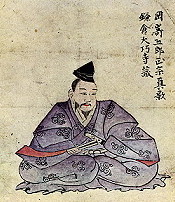
Depiction of the Japanese master swordsmith Gorō Nyūdō Masamune. Unknown author Unknown author · Public domain

Masamune

Japan · c. 1264–1343 (traditional)

Gorō Nyūdō Masamune, working in Sagami province around 1300, is Japan's most celebrated swordsmith. His blades — prized for the misty crystalline structure of their tempered edges — became heirlooms of shoguns and daimyō, several are designated National Treasures, and his name remains the standard of perfection in forged steel.

The story

His most famous blade, the Honjo Masamune, was taken from a battlefield in 1561 by the general Honjō Shigenaga, who survived a stroke from it that split his helmet, and it later passed to the Tokugawa shoguns as an emblem of their dynasty. Designated a National Treasure in 1939, it was handed in to Tokyo police in late 1945 under the Allied occupation's weapons-confiscation orders — and has never been seen since. It remains the most hunted missing sword in the world.

“Make the work well enough and it will carry your name for seven centuries, signature or none.”
Traditional working period
c. 1288–1328
Honjo Masamune missing since
Late 1945
Signed surviving blades
Rarely signed his work
2
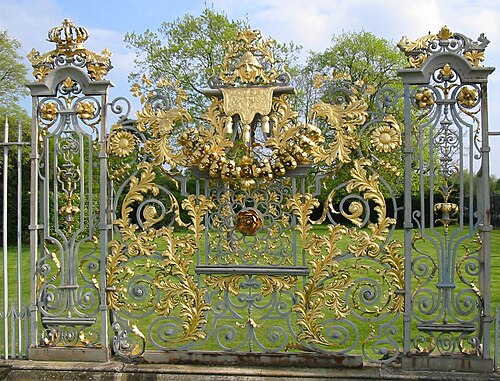
Ornamental wrought ironwork by Jean Tijou at Hampton Court Palace. Man vyi · Public domain

Jean Tijou

France / England · fl. 1689–1712

A French Huguenot smith who arrived in England around 1689, Tijou brought continental baroque ironwork to William and Mary's court. He worked some two decades on St Paul's Cathedral and Hampton Court Palace, and his 1693 pattern book, A New Booke of Drawings, shaped English decorative ironwork for generations.

The story

For Hampton Court's river garden Tijou produced a screen of twelve monumental wrought-iron panels, dense with masks, thistles, fleurs-de-lis and acanthus — repoussé work in iron that few smiths since have matched. The crown was a slow payer, and records show large sums owed him for years after the work was done. After about 1712 he disappears from English records entirely: the greatest ironworker England had employed left no known grave, portrait or documented death.

“Publish your patterns — Tijou's book outlived his debts and made his style a national one.”

Years on St Paul's ironwork
~20 (1690s–1711)
Hampton Court screen
12 wrought panels
Pattern book published
1693, a first in England
3
Portrait of the architectural ironworker Samuel Yellin. Kit from Pittsburgh, USA · CC BY 2.0

Samuel Yellin

Poland (Galicia) / United States · 1884–1940

Apprenticed to a master smith as a boy in Galicia, Yellin emigrated to Philadelphia in 1906 and built the largest architectural ironworking studio in American history — over 200 craftsmen at its late-1920s peak, forging for banks, universities and cathedrals — while insisting his card read simply "Samuel Yellin, Metalworker."

The story

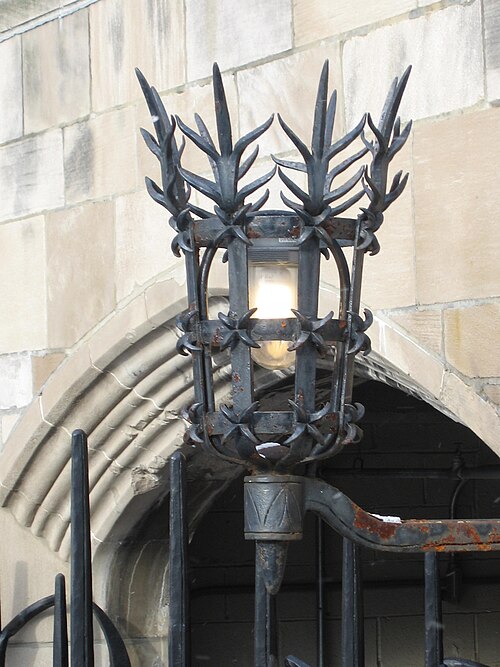
For the Federal Reserve Bank of New York, completed in 1924, Yellin's Arch Street studio forged roughly 200 tons of ironwork — gates, grilles, lanterns and tellers' screens — probably the largest decorative wrought-iron commission ever executed in the United States. When the Depression dried up building work, he kept his best craftsmen on the payroll forging one-off study pieces with no client at all, work now held by museums; he called the shop his laboratory and refused to let the skill disperse.

“Keep the hands trained through the lean years; the skill itself is the business.”

Craftsmen employed at peak
200+ (late 1920s)
Federal Reserve commission
~200 tons, 1924
Philadelphia studio opened
1909, Arch Street
4

Alfred Habermann

Czechoslovakia / Austria · 1930–2008

Czech-born of German descent, Habermann became the central figure of Europe's postwar artist-blacksmith revival, treating forged iron as sculpture rather than ornament. He mentored smiths across Central Europe, helped make Helfštýn castle in Moravia the craft's great gathering place, and spent his late career forging in Ybbsitz, Austria.

The story

At Helfštýn, a ruined castle in Moravia, Habermann was among the masters who from the early 1980s built an annual metalworkers' meeting into Hefaiston — now the largest blacksmithing gathering in the world, drawing hundreds of demonstrating smiths and thousands of visitors behind medieval walls each August. In a communist Czechoslovakia with little room for ornamental craft, a castle courtyard full of forges became the place an isolated trade re-taught itself, with Habermann demonstrating at the anvil.

“A craft survives where its people gather; if the gathering doesn't exist, build it.”

Years at the anvil
~60
Hefaiston's modern draw
Hundreds of smiths a year
Late-career base
Ybbsitz, Austria
5

Elizabeth Brim

United States · b. 1951

Brim trained in printmaking and jewellery before taking up the hammer at Penland School of Craft in North Carolina, where she later ran the iron studio. Her deliberately feminine forged objects — pillows, aprons, tiaras and high-heeled shoes in steel — pushed against a male-coded craft and made her one of its most influential teachers.

The story

Brim's signature came from a question nobody at the anvil had thought to ask: can steel be inflated? She forge-welds two sheets shut around their edges, brings the sealed envelope to forging heat, and blows it up with compressed air so the metal balloons like pastry — producing steel pillows soft enough in appearance that viewers reach out to touch them. Developed at Penland, the "pillow" method is now taught internationally and widely known simply as Brim's technique.

“Bring your own iconography to an old craft; the new technique follows the new idea.”

Signature technique
Inflated steel "pillows"
Teaching base
Penland, North Carolina
Workshops taught
Decades, worldwide
6
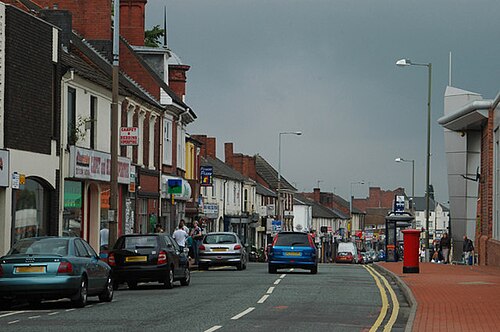
Cradley Heath in England's Black Country, centre of the hand chainmaking trade Lucy Woodall worked in. Row17 · CC BY-SA 2.0

Lucy Woodall

United Kingdom · 1899–1979

Woodall stood for the thousands of Black Country women who forged chain by hand at backyard hearths around Cradley Heath, England. Starting at the fire as a young teenager, she hammered chain link by link for more than half a century and was celebrated late in life as the district's last woman chainmaker.

The story

Woodall began work in 1913, three years after around 800 women chainmakers of Cradley Heath — organised by the union leader Mary Macarthur — won a ten-week strike that roughly doubled their pay under Britain's first minimum-wage law, the Trade Boards Act. She went on forging chain at an open hearth through two world wars and into the machine-chain era, retiring only in 1969; by then oral historians and folk musicians were recording her, and her recollections became a key record of the vanished trade.

“Skill alone never raised the wage; organisation did. Woodall's trade proved both halves.”

Began at the hearth
1913, aged 13
Women in the 1910 strike
~800, Cradley Heath
Years making chain
~56
7

James Black

United States · 1800–1872

Black ran a smithy in Washington, Arkansas, on the road to Texas, and forged knives whose finish and edge frontier customers swore by. Tradition credits him with forging the knife James Bowie carried to fame, which would make Black's small-town forge the birthplace of America's most famous blade.

The story

After Bowie died at the Alamo in 1836, everyone on the frontier wanted "a knife like Bowie's," and Black's blades commanded premium prices — until 1839, when a brutal beating by his former father-in-law left him nearly blind and ended his career. Decades later, old and sightless in the home of Daniel Webster Jones, a future Arkansas governor, Black finally sat down to dictate his secret forging and tempering process — and discovered the memory was gone. Jones recorded his despair: the secret died in that room.

“Write the process down. A secret kept in one head has exactly one point of failure.”

Bowie knife forged
c. 1830, Arkansas
Blinded, out of the trade
1839
Secret lost forever
1870 — memory gone
8

Kirkpatrick Macmillan

Scotland · 1812–1878

A blacksmith at Courthill smithy in Dumfriesshire, Macmillan is widely credited with building the first pedal-driven bicycle around 1839, fitting a hobby-horse velocipede with treadle cranks driving the rear wheel. He never patented it, never manufactured it, and carried on shoeing horses for the rest of his life.

The story

In June 1842 a Glasgow newspaper reported a "gentleman from Dumfries-shire" on a velocipede "of ingenious design" who had ridden some seventy miles into the city, knocked over a small girl in the crowd, and was fined five shillings — by tradition, the world's first bicycle traffic offence. Bicycle historians identify the rider as Macmillan, but the report names nobody, which is exactly why his claim to the invention, assembled decades later by a campaigning relative, is still argued over.

“Invention without record becomes folklore; the smith who never writes it down forfeits the credit.”

Machine built
c. 1839, Courthill
Ride to Glasgow
~70 miles, 1842
Patents filed
None, ever

Bars are scaled to the leader in this list.

Comparison Lab

Toggle names on and off — every bar rescales to the leader of your selection.

5 / 8

The argument

Masamune's biography is almost entirely reconstruction: he rarely signed blades, his dates are traditional rather than documented, and specialists still argue which surviving swords are his hand, his school, or later attribution flattered onto fine anonymous work. His rival-in-legend Muramasa — the "cursed" smith supposedly banned by the Tokugawa — is an even deeper tangle of fact and folklore.

Macmillan's bicycle is the list's most contested claim: the evidence was assembled in the 1890s by a relative, James Johnston, and some cycling historians regard the attribution as unproven, crediting instead the documented 1860s Paris velocipedes of the Michaux workshop. The 1842 newspaper report is real; the name attached to it is inference.

The larger unfairness is structural. The smiths of the Delhi pillar, the Ulfberht workshops and the great African forging traditions left masterpieces but no recorded names, and women at the fire — the norm in trades like Black Country chainmaking — entered the record mainly when they struck, not when they forged. This list reflects the archive, and the archive was never neutral.

Keep exploring

More in Craft & Trade