🎭Origins & Evolution

Actor · From Thespis stepping out of the Athenian chorus to the self-tape era: the professional pretender whose work is to make invented people feel true, take after take.

Acting is one of the oldest professions with a continuous, documented line — from a named performer in sixth-century BCE Athens to today's film sets — and for most of that time it was also one of the most despised. Roman law branded actors with infamia, stripping their civil rights; medieval Christian Europe denied them burial in consecrated ground; Elizabethan England classed unpatronized players with vagabonds. The craft was always wanted; the people who practiced it, rarely.

What changed across twenty-five centuries was not the core act — one person truthfully pretending to be another in front of witnesses — but who was allowed to do it, whether they could be respectable, and how many people could watch a single performance. Each answer reorganized the profession: the actress, the knighthood, the close-up and the algorithm each created a different kind of actor.

Where it began

c. 534 BCEAthens, Greece

Ritual performance is far older — Egyptian texts describe priestly passion plays of Osiris at Abydos nearly two thousand years earlier — but the actor as a distinct professional begins, by tradition, with Thespis of Icaria. The Parian Marble, a Greek chronology carved in 264 BCE, records him winning the first tragedy competition at Athens' City Dionysia around 534 BCE, and later Greek writers credited him with the decisive invention: stepping out of the chorus to speak as a character rather than about one. By the third century BCE, professional actors had organized into the Artists of Dionysus, a guild whose members won safe passage across warring Greek states.

Timeline

c. 534 BCEThespis steps out of the chorus

At Athens' City Dionysia festival, Thespis of Icaria wins the first competition for tragedy, according to the Parian Marble chronology. Tradition credits him with separating a single masked performer from the chorus to impersonate a character — the move that created the actor, and gave the profession the word thespian.

c. 200 BCE–200 CEThe Natya Shastra codifies acting in India

The Sanskrit treatise attributed to the sage Bharata Muni, running to roughly 6,000 verses, lays out abhinaya — systematic expression through body, voice, costume and inner state — and the rasa theory of how performance produces emotion in an audience. No other ancient civilization left so detailed an acting manual.

1545The first professional troupe contract

In Padua on 25 November 1545, eight men led by Ser Maphio sign a notarized contract to form a touring playing company, sharing costs and profits — the earliest surviving legal document of a commedia dell'arte troupe, and a milestone in acting becoming a contracted, year-round livelihood rather than a festival sideline.

1603Okuni invents kabuki on a Kyoto riverbed

A shrine dancer known as Izumo no Okuni begins performing sensational dance-dramas on the dry bed of Kyoto's Kamo River, founding kabuki. Its popularity alarms the shogunate, which bans women from the stage in 1629 — creating the onnagata, male specialists in female roles, a living tradition four centuries later.

1660Actresses take the English stage

On 8 December 1660, a professional actress — probably Margaret Hughes — plays Desdemona in Othello in London, the first documented instance on the English public stage, where boys had played all women's parts. Charles II's 1662 royal patent goes further, requiring that female roles be played by women.

1741Garrick's Richard III changes acting style

David Garrick debuts at London's unlicensed Goodman's Fields theatre, billed only as "a gentleman who never appeared on any stage," playing Richard III in a quick, natural style that made the era's stately declamation sound false overnight. Within a season he was the most famous performer in Britain; Alexander Pope came three times.

1898The Moscow Art Theatre opens

Konstantin Stanislavski and Vladimir Nemirovich-Danchenko, after a legendary eighteen-hour planning meeting in 1897, open the Moscow Art Theatre and stage Chekhov's The Seagull in December 1898. Stanislavski's rehearsal discipline grows into his "system" — the root of virtually every formal actor-training method used today.

1910The first movie star is named

Film producers had kept actors anonymous to keep salaries down, until Carl Laemmle poached Biograph's most popular player, planted a false newspaper story that she had been killed by a streetcar, then bought ads crying "We nail a lie" and revealing her name: Florence Lawrence. The star system — and star salaries — date from the stunt.

1927The Jazz Singer ends the silent era

Warner Bros. premieres The Jazz Singer on 6 October 1927, and synchronized speech becomes the industry standard within three years. Voice tests end the careers of stars whose accents or voices disappointed, elocution coaches flood Hollywood, and acting for the camera becomes, permanently, a speaking trade.

2023Actors strike over streaming and AI

SAG-AFTRA's 118-day strike (14 July – 9 November 2023), the first time actors and writers struck together since 1960, halts Hollywood production over streaming residuals and artificial intelligence. The settlement requires informed consent and compensation before a performer's digital replica can be created or used.
The eras

The ancient Greek theatre at Epidaurus, with tiered stone seating around a circular playing space.
Anonymous ( Greece ) Unknown author · Public domain · Wikimedia Commons
c. 534 BCE – 476 CE

The classical stage: honored art, dishonored artists

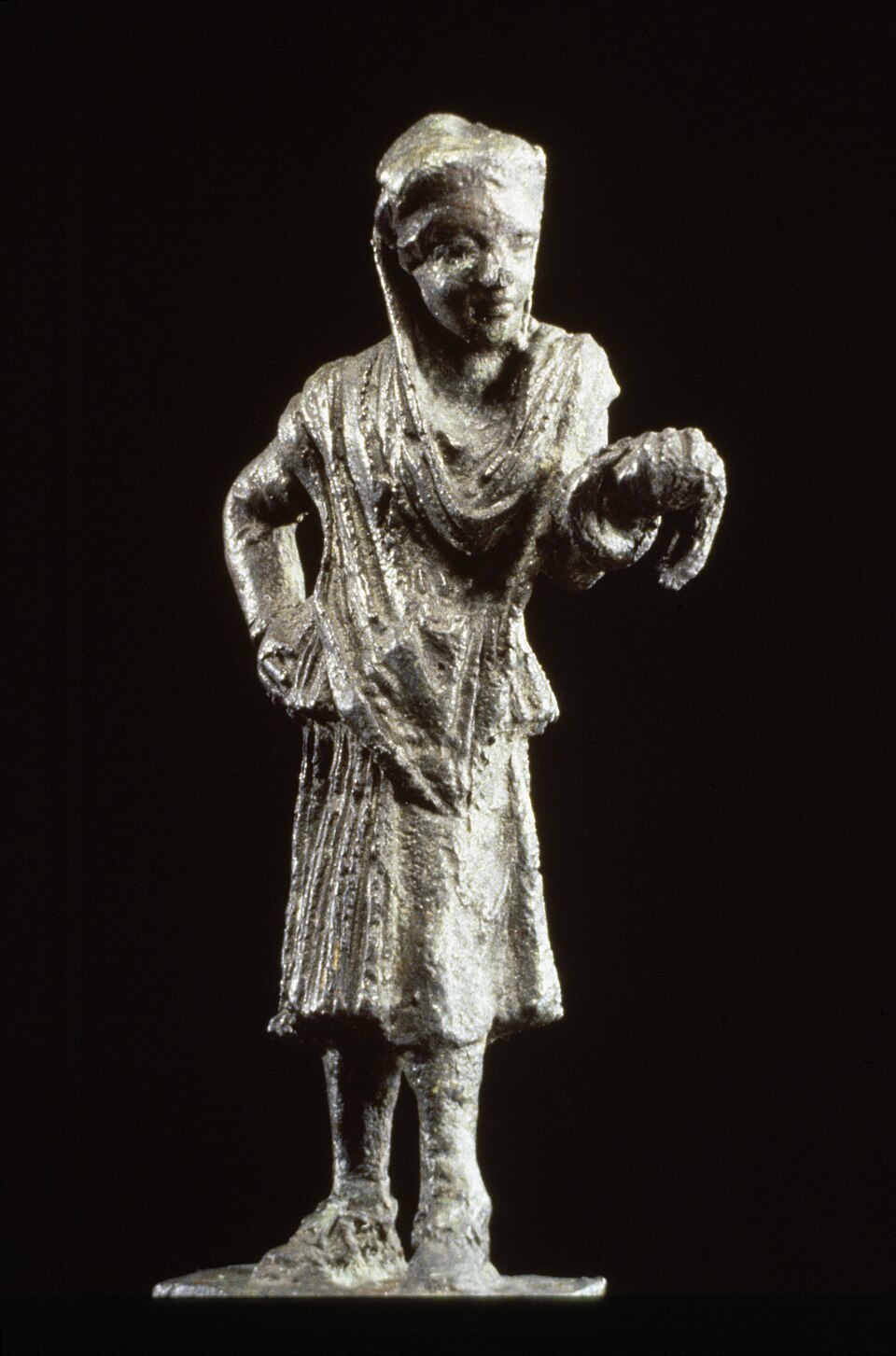
Greek actors performed masked in vast open-air theatres, competing at civic festivals; the profession carried enough standing that the actor Aristodemus served on Athenian embassies to Philip of Macedon, and the Artists of Dionysus guild won its members safe passage between warring states. Rome inverted the bargain: acting was infamia — performers, often enslaved or freed, forfeited civil rights — yet the comic actor Roscius grew so celebrated that ancient sources report the dictator Sulla granted him the gold ring of equestrian rank.

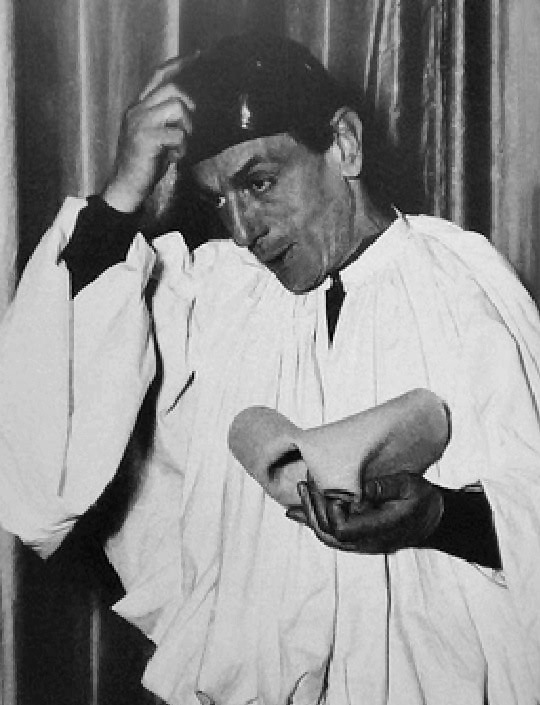
Commedia dell'arte performers in masks and stock costumes on an outdoor stage.
IlSistemone · Public domain · Wikimedia Commons
476 – 1595

Mysteries, guilds and strolling players

After Rome's theatres fell silent, acting in Europe survived in church drama and the great guild-staged mystery cycles of cities like York, performed by amateur craftsmen. Professionals re-emerged as strolling players on the legal margins — England's 1572 Vagabonds Act classed unpatronized actors with rogues and beggars — while Italy's commedia dell'arte built the modern acting company: contracted, touring, improvising from stock characters, and employing celebrated actresses such as Isabella Andreini a century before England allowed women on stage.

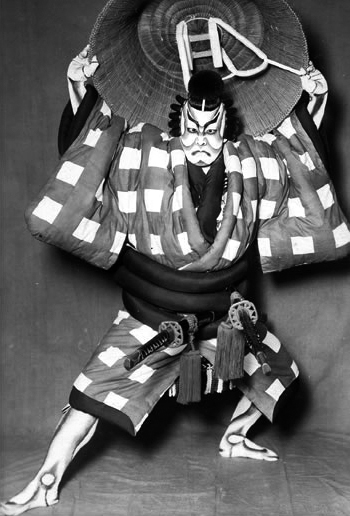
Kabuki actors in elaborate costume and makeup performing on a traditional Japanese stage.
Unknown author Unknown author · Public domain · Wikimedia Commons
1595 – 1895

Playhouses, actresses and the slow climb to respectability

Purpose-built playhouses — London's Globe from 1599, kabuki theatres in Edo, Paris's royal stages — turned acting into a settled urban profession. Women joined it unevenly: Okuni founded kabuki in 1603 only for women to be banned from it in 1629, while England admitted actresses from 1660. David Garrick's naturalism and celebrity made an actor a gentleman; by 1895, when Queen Victoria knighted Henry Irving, the profession that once shared laws with vagabonds had reached the establishment's front table.

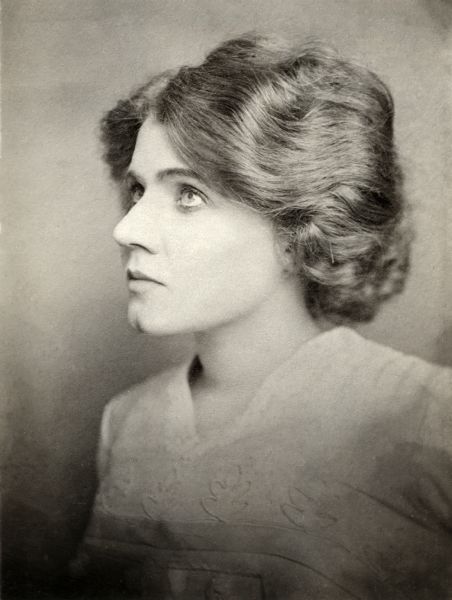
Portrait of Florence Lawrence, the first film actor to be publicly named as a star.
Wisconsin Center for Film and Theater Research · Public domain · Wikimedia Commons
1895 – 1950

The camera makes the star

Film multiplied an actor's audience from hundreds a night to millions, and after Florence Lawrence was publicly named in 1910 the star system industrialized fame itself: seven-year studio contracts, manufactured biographies, fan magazines. The 1927 arrival of sound re-sorted the entire profession by voice, and stage-trained actors flooded in. Meanwhile in Moscow, Stanislavski turned rehearsal into a discipline with a written method — the system that, carried to New York by his former actors, became the foundation of American screen acting.

1950 – present

Television, the Method and the global screen

The 1948 Paramount antitrust decree and television's rise dismantled the studio contract system, making nearly every actor a freelancer — the precarious, audition-driven career structure that still defines the trade. Acting industries multiplied worldwide: Bombay's film industry became the world's most prolific, Nigeria's Nollywood grew from the 1992 video hit Living in Bondage into a global force, and streaming platforms turned Korean and Spanish-language performances into worldwide hits, while self-tapes and AI replicas rewrote how actors are cast and what they must protect.

What this job replaced

Neighbouring trades that no longer exist — absorbed, automated or regulated away.

Boy player

c. 1576–1660

On the English Renaissance stage, women's roles belonged by custom to apprenticed boys with unbroken voices — the first Juliet, Ophelia and Lady Macbeth were all teenage boys trained within companies like Shakespeare's. The trade died in a single decade: the theatres reopened at the 1660 Restoration with professional actresses, Charles II's 1662 patent required women's parts to be played by women, and the boy player's entire specialty vanished.

Benshi

c. 1897–1930s

Japan's silent cinemas employed benshi — live narrator-performers who stood beside the screen voicing every character, explaining the plot and improvising commentary. Star benshi out-earned the film actors they voiced and drew audiences on their own names; at the trade's peak in the 1920s thousands worked across Japan. Synchronized sound made them redundant within a few years, and a 1932 benshi strike against the talkies failed to slow the technology.

Vaudeville performer

c. 1880s–1932

For half a century, North America's vaudeville circuits offered performers something acting has rarely provided since: steady, scheduled, year-round employment, playing the same polished act across hundreds of theatres. Radio and talking pictures drained its audience through the 1920s, and when New York's Palace Theatre — the circuit's summit — dropped two-a-day vaudeville in 1932, the trade collapsed, sending its survivors (among them Cary Grant and the Marx Brothers) into film.

Trades that vanished →

The profession has already survived transitions that looked terminal from inside them: the loss of civic religious festivals, a millennium of church hostility, the death of the silent film, the collapse of the studio contract. Each time, the tools and the economics changed completely while the job description barely moved.

What has not changed since Thespis answered the chorus is the transaction at the center: a live human being lends their body, voice and nerve to an invented person, and other humans agree to believe it. Every era has renegotiated who may do this and what they are paid; none has found a substitute for the person doing it.

Keep exploring

More in Media & Performance