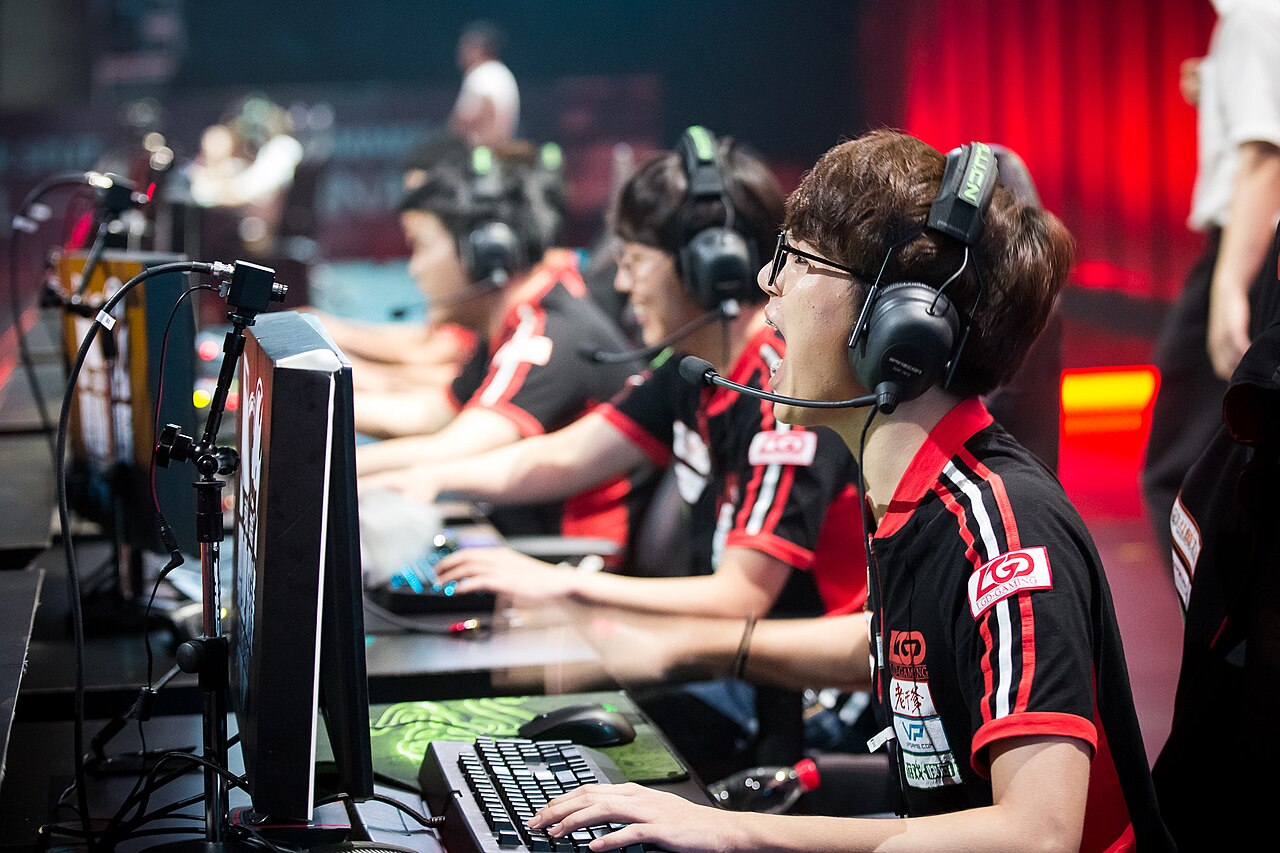
Competitive video gaming turned global spectator sport, where reactions measured in milliseconds decide million-dollar prizes in front of millions of viewers.
At a glance
All-time shape
#1 Faker (Lee Sang-hyeok)
Worlds titles5
MSI titles2
LCK titles10
Career earnings$1.6M+
#2 s1mple (Oleksandr Kostyliev)
Major titles1
HLTV #1 seasons2
HLTV MVP medals21
Career earnings$2.1M+
#3 N0tail (Johan Sundstein)
TI titles2
Back-to-back TIsYes
Career earnings$7.4M+
Valve Majors4
Timeline
Milestones in order. This is history, not a weekly activity grid.
Approaching $2B in annual global revenue (2025)Market size
Dota 2: over $340M awarded all-time, the most of any titleMost prize money
Esports is organized, competitive video gaming played for spectators, prize money and world titles, contested by professional teams and individuals across dozens of distinct games. Unlike a single traditional sport, it is an umbrella over radically different disciplines: five-versus-five MOBAs like League of Legends and Dota 2, tactical shooters like Counter-Strike 2 and Valorant, real-time strategy such as StarCraft, and one-versus-one fighting games. What unifies them is a competitive structure of league play, seasonal circuits and LAN finals in arenas, watched on Twitch and YouTube by the millions. The playing field is a server, the referee is code, and mastery is measured in reactions of a few hundred milliseconds.
The grip of esports comes from watching human skill pushed to the very edge of what a game engine allows. Elite players execute hundreds of precise actions per minute, land pixel-perfect shots under pressure, and read opponents the way a chess grandmaster reads a board, only at speed. Because the games are ones tens of millions already play, viewers understand exactly how hard a play is, so a single clutch round or a base-race comeback detonates a live crowd. Add nation-versus-nation rivalries, storied franchises, and a genuinely global talent map running from Seoul to Stockholm to Shanghai, and the drama rivals any stadium sport.
What makes esports unique is that the arena itself is software, redesigned by the developer every few weeks. A traditional sport's rules are near-static; an esports title is patched constantly, buffing and nerfing characters, weapons and economies, so the optimal strategy, the meta, is a moving target that teams must relearn perpetually. The games are also privately owned: Riot, Valve and their peers control the rules, the biggest tournaments, and even who may compete, an arrangement with no parallel in football or tennis. That fusion of athletic reflex, strategic depth and a living, publisher-controlled ruleset gives esports a character all its own.
It depends on your definition, but esports meets many of the criteria: organized competition, professional athletes on salaries, governing rules, world championships and enormous audiences. Elite players train for hours daily, and the physical demands of reaction speed, precision and endurance under pressure are genuine, even if they differ from traditional athletics. Institutional recognition has grown, esports was a medal sport at the 2022 Asian Games, and the International Olympic Committee has backed Olympic esports competition. Critics point out that the games are privately owned and change constantly, unlike static traditional sports. Whether or not one calls it a sport, esports functions as a professional competitive discipline with a global industry around it, and the debate matters less than that reality.
How do esports players make money?
Professional players earn from several streams. Team salaries provide a base, and tournament prize money can be enormous in games with large pools, Dota 2's The International has paid over $40M across a single event. Beyond competition, many players earn substantial income from live streaming on Twitch and YouTube, from sponsorships and personal brand deals, and from content creation, which for some exceeds their competitive earnings. Top players in major titles can earn millions annually across these sources, though the majority of pros make far more modest sums, and careers are often short. The financial gap between the elite handful and the wider professional field is wide, and income beyond prize money is frequently the larger and more stable part.
What are the most popular esports games?
The leading titles by audience and prestige are League of Legends, whose World Championship draws the largest viewership in esports, and Counter-Strike, whose Majors anchor the tactical-shooter scene. Dota 2 commands attention for its record prize pools, and Valorant has grown rapidly into a major franchised circuit since 2020. In Asia and the global South, mobile titles including Mobile Legends: Bang Bang, PUBG Mobile, Free Fire and Honor of Kings command some of the biggest live audiences of all. Fighting games centered on EVO and real-time strategy like StarCraft II retain devoted followings. The mix shifts constantly as games rise and fade, but MOBAs and tactical shooters have been the most durable pillars of competitive PC esports.
Who is the highest-earning esports player?
By tracked tournament prize money, the top earners are overwhelmingly Dota 2 players, because that game's Internationals feature by far the largest prize pools in esports. Johan 'N0tail' Sundstein, the OG captain who won back-to-back Internationals in 2018 and 2019, long held the record with career earnings above $7M. Several of his OG teammates and other Dota professionals also rank near the top. It is important to note these figures track prize money only, not salaries, streaming income or sponsorships, so they understate total earnings and skew heavily toward Dota. A League of Legends star like Faker, whose prize money is far lower, likely earns more overall once salary and endorsements are counted.
Why is South Korea so important to esports?
South Korea effectively invented modern professional esports. The late-1990s combination of the game StarCraft, a national broadband rollout and PC bang internet-cafe culture created the world's first true esports ecosystem, complete with televised leagues, salaried players and genuine celebrities like BoxeR. The Korea e-Sports Association, founded in 2000, gave the scene formal governance years before anywhere else. That head start built a deep infrastructure and competitive culture that carried into later games, especially League of Legends, where Korea's LCK became the strongest league in the world and produced Faker and a long line of world champions. Korea's disciplined, systematic approach set the competitive standard the rest of the world spent years trying to match, and its influence remains foundational.
What was the biggest esports prize pool ever?
The largest prize pool for a single esports event is Dota 2's The International 2021, which reached $40,018,195. Dota's Internationals are crowdfunded: Valve funnels a share of in-game cosmetic purchases into the pool, which is how the game's championships have repeatedly set records unmatched by any other title. The 2021 winners, Team Spirit, took home roughly $18.2M, the biggest payout a single team has claimed from one event. For multi-title events, Saudi Arabia's Esports World Cup, launched in 2024, offers an even larger total prize pool exceeding $60M, but that is spread across many games rather than one competition. The International's single-tournament figure remains the benchmark for a lone event.
Is esports in the Olympics?
Not yet as a full Olympic Games sport, but it is moving in that direction. Esports was contested for medals at the 2022 Asian Games in Hangzhou, held in 2023, with seven official medal events, a significant step toward institutional recognition. The International Olympic Committee has engaged with esports for years, holding Olympic Esports Weeks and backing plans for a dedicated Olympic Esports Games in partnership with Saudi Arabia. Obstacles remain, including which titles qualify, discomfort over violent shooters, and the awkward fit between privately owned games and the Olympic framework. So while esports is not part of the traditional Summer Olympics, it has gained real institutional standing and a plausible path toward Olympic-sanctioned competition in the coming years.
How young do pro esports players start and retire?
Esports careers skew remarkably young. Many players turn professional in their mid-to-late teens, and some win world titles before turning twenty, Faker won his first Worlds at seventeen, and Fortnite's Bugha took a $3M solo prize at sixteen. Peak reaction speed and the sheer hours of practice required favor the young, and rosters routinely feature teenagers. Retirement often comes early too, frequently in the mid-twenties, as reflexes, motivation or health decline under intense schedules; Uzi retired at twenty-three partly due to health problems. Many transition into coaching, streaming, management or content creation rather than leaving the industry entirely. The result is a competitive life cycle far shorter and earlier than most traditional sports, compressing entire careers into a handful of years.