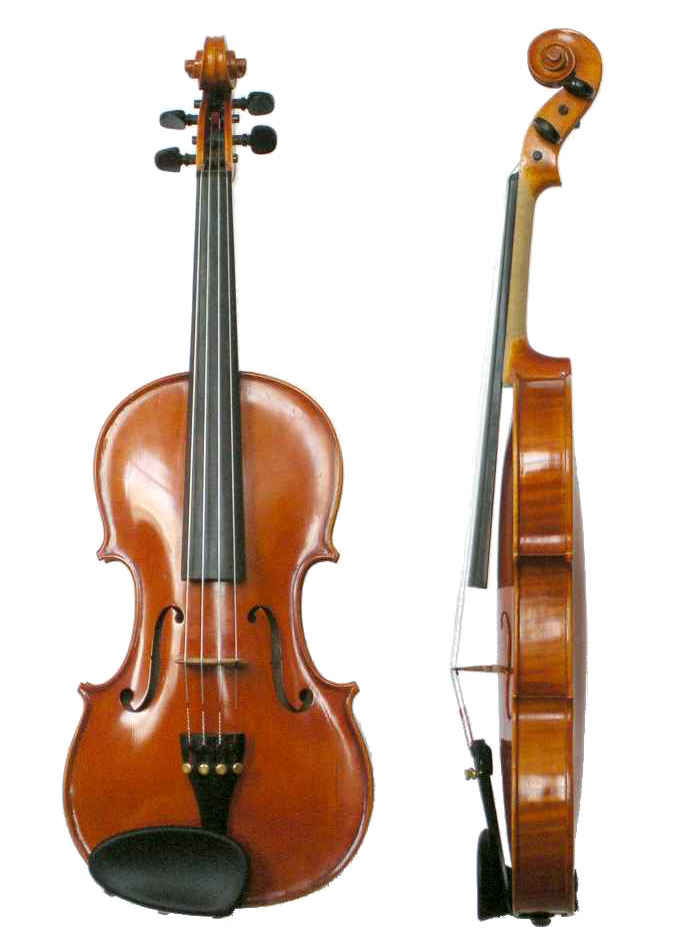
Deliberate practice is K. Anders Ericsson’s name for work that is designed, effortful, feedback-rich and aimed at weaknesses — not hours of pleasant repetition.
Malcolm Gladwell’s Outliers (2008) popularised “10,000 hours” as a threshold. Ericsson’s Berlin violin study never claimed that any domain yields to a single hour count, and he later objected to the slogan.
Brooke Macnamara, David Hambrick and colleagues’ 2014 meta-analysis found that deliberate practice explains a minority of variance in performance: about 26% in games, 21% in music, 18% in sports, 4% in education. Those are rounded published bands, not a new folk number.
How this talent is seen here
English-speaking systems · US, UK, Canada, Australia and related school markets
Deliberate practice shows up here through tests, conservatories, academies and workplace stories — windows that already mix training with starting points.
What follows is a map of institutions, not a diagnosis. Selection usually measures current performance.
Mark last practice-loop quality and this one using labels already on the topic. Teaching note — no group IQ.
Not a 10,000-hour promise, training prescription, diagnosis or group ability ranking.
Last loop quality (topic labels)
This loop quality (topic labels)
Deliberate-practice loop - labels, not group IQ
Does last versus this loop mark group IQ?
No. The pin uses practice-loop labels already on this topic. Pathways stay individual. Group IQ, race, or nation rankings are forbidden.
Which loop labels can I pin?
Six published steps: Drop the slogan; Pick one failure; Write the drill; Record one attempt; Adjust once; Stop while attending. Checklist items such as Target named and Feedback in the hour sit beside them.
Does this loop promise 10000 hours?
No. Step one is Drop the slogan: strike 10000 from the plan. Gladwell is not a syllabus. The page cites Macnamara et al. 2014 domain bands, not a new hour ticket.
Is this a coaching plan or a diagnosis?
Educational illustration only. Not a training prescription, diagnosis, or group ability ranking.
Walk the six-step loop once as a session card
On Deliberate practice, read the first three published loop labels in order — a session card, not a 10,000-hour promise.
Step one on the card — Start with Drop the slogan as the page lists it.
Step two on the card — Next mark Pick one failure — still from the published loop.
Step three on the card — Then Write the drill before you close the card.
Last-versus-this is a device mark — The last-vs-this pin records two labels on this device. It is not a coaching plan.
Labels are not group IQ — These loop names stay individual pathways. No group IQ, race, or nation ranking.
One pass through Drop the slogan, Pick one failure, and Write the drill is enough for a teaching card on Deliberate practice.
Educational illustration only. Not training prescription or diagnosis.
Rest-constraint curve after the session card
On Deliberate practice, after the first three loop labels, walk the next published steps under a rest-day cap — still no group IQ.
Name the next loop steps — Continue with Record one attempt, then Adjust once and Target named as the page lists them.
Cap the week with rest days — Treat rest days as a hard constraint on weekly practice hours. Recovery is part of the curve, not optional garnish.
Read trainability as a browsing mark — Trainability is 92/100 here — an editorial atlas mark for individuals, never a group IQ score.
Labels stay individual pathways — Rest-capped practice still refuses race, nation, or group IQ rankings. Education only.
One rest-capped pass through Record one attempt, Adjust once, and Target named completes the second teaching card on Deliberate practice.
Educational illustration only. Not training prescription or diagnosis.
Rest-constraint curve after the session card
On Deliberate practice, after the first three loop labels, walk the next published steps under a rest-day cap — still no group IQ.
Name the next loop steps — Continue with Record one attempt, then Adjust once and Target named as the page lists them.
Cap the week with rest days — Treat rest days as a hard constraint on weekly practice hours. Recovery is part of the curve, not optional garnish.
Read trainability as a browsing mark — Trainability is 92/100 here — an editorial atlas mark for individuals, never a group IQ score.
Labels stay individual pathways — Rest-capped practice still refuses race, nation, or group IQ rankings. Education only.
One rest-capped pass through Record one attempt, Adjust once, and Target named completes the second teaching card on Deliberate practice.
Educational illustration only. Not training prescription or diagnosis.
Where rest sits
Practice design only. Not an IQ claim.
Deep introduction
Deep dive: Deliberate practice
Deliberate practice mapped for mechanisms, locale notes and limits.
Deliberate practice
Deliberate practice sits in the science atlas — mechanisms, locale notes and limits, not slogans.
Adoption and meaning follow schools, clubs and labs as much as peak specs.
Expert note
selection systems without group rankings.
coaches, teachers and clinics.
Local lens
schools, clubs and labs.
conservatories, gyms and classrooms.
Caveat
No group IQ rankings; no race hierarchies.
Editorial scores help browsing; they are not certificates.
Teaching talentSame atlas neighbourhood as Deliberate practice (science).
Key terms
Corridor
Route, season or institution that sets access.
Envelope
Safe operating band — speed, depth, load or dose.
Certification
Agency or type-approval gate before public use.
Transfer
Skill carry-over across domains; usually limited.
Era bound
Figures valid only inside a dated window.
Local lens
Country/language notes that must not stay English under a local URL.
Local lens
schools, clubs and labs.
selection systems without group rankings.
Field note
coaches, teachers and clinics.
conservatories, gyms and classrooms.
Caveat
Prefer dated bands over current live figures.
Scores here are browsing aids.
28innateWeightEditorial 0-100 browsing score
92trainabilityEditorial 0-100 browsing score
50earlyWindowEditorial 0-100 browsing score
82evidenceEditorial 0-100 browsing score
Deliberate practice: concrete atlas depth on Tool-Lifes.
Frequently asked questions
Does this atlas rank groups by IQ, race or nation?
No. Pathways and evidence stay individual. Scores are browsing aids — never group biological or racial ranks.
What did Gladwell change?
He turned a research contrast into a catchy threshold. The book is popularisation. It is not the methods paper.
What did Macnamara et al. 2014 find?
Across domains, deliberate practice accounted for a minority of performance variance — roughly 26% games, 21% music, 18% sports, 4% education in their coding.
Does that mean practice is weak?
A minority of variance can still be the largest controllable lever. It does mean practice is not the whole story — Howe, Hambrick and others have pressed this against strong environmentalism.
What makes practice “deliberate”?
A specific goal, a task beyond current comfort, immediate feedback, and repetition with adjustment. Playing the pieces one already owns is not the same activity.
Is Bloom’s 1985 study the same claim?
Benjamin Bloom’s Developing Talent in Young People described families and teachers around high achievers. It is complementary history, not the violin hour-log.
Can adults use deliberate practice?
Ericsson argued the method is not only for children. Windows differ by domain; the design of the hour still matters.
Should schools post 10,000-hour posters?
They should post feedback design. An hour counter without a weakness target is occupancy.