Widely regarded as the greatest esports player of all time, Faker is a League of Legends mid laner who has defined the sport for over a decade. Debuting for SK Telecom T1 as a teenager in 2013, he won the World Championship that year and again in 2015 and 2016, then returned to the summit with titles in 2023 and 2024, giving him a record five Worlds crowns. He also won the Mid-Season Invitational in 2016 and 2017 and roughly ten domestic LCK titles. Nicknamed the Unkillable Demon King, he combined flawless mechanics, an unmatched champion pool and preternatural composure in the biggest moments. His 2024 triumph, coming years after his supposed peak, silenced any doubt: no athlete has dominated an esport for as long, or through as many roster and meta changes, as Faker.
#1 Faker (Lee Sang-hyeok)
#2 s1mple (Oleksandr Kostyliev)
#3 N0tail (Johan Sundstein)
Last reviewed Sources & creditsMedia creditsMethodology
Quick answers
Is esports a real sport?
It depends on your definition, but esports meets many of the criteria: organized competition, professional athletes on salaries, governing rules, world championships and enormous audiences. Elite players train for hours daily, and the physical demands of reaction speed, precision and endurance under pressure are genuine, even if they differ from traditional athletics. Institutional recognition has grown, esports was a medal sport at the 2022 Asian Games, and the International Olympic Committee has backed Olympic esports competition. Critics point out that the games are privately owned and change constantly, unlike static traditional sports. Whether or not one calls it a sport, esports functions as a professional competitive discipline with a global industry around it, and the debate matters less than that reality.
How do esports players make money?
Professional players earn from several streams. Team salaries provide a base, and tournament prize money can be enormous in games with large pools, Dota 2's The International has paid over $40M across a single event. Beyond competition, many players earn substantial income from live streaming on Twitch and YouTube, from sponsorships and personal brand deals, and from content creation, which for some exceeds their competitive earnings. Top players in major titles can earn millions annually across these sources, though the majority of pros make far more modest sums, and careers are often short. The financial gap between the elite handful and the wider professional field is wide, and income beyond prize money is frequently the larger and more stable part.
What are the most popular esports games?
The leading titles by audience and prestige are League of Legends, whose World Championship draws the largest viewership in esports, and Counter-Strike, whose Majors anchor the tactical-shooter scene. Dota 2 commands attention for its record prize pools, and Valorant has grown rapidly into a major franchised circuit since 2020. In Asia and the global South, mobile titles including Mobile Legends: Bang Bang, PUBG Mobile, Free Fire and Honor of Kings command some of the biggest live audiences of all. Fighting games centered on EVO and real-time strategy like StarCraft II retain devoted followings. The mix shifts constantly as games rise and fade, but MOBAs and tactical shooters have been the most durable pillars of competitive PC esports.
Who is the highest-earning esports player?
By tracked tournament prize money, the top earners are overwhelmingly Dota 2 players, because that game's Internationals feature by far the largest prize pools in esports. Johan 'N0tail' Sundstein, the OG captain who won back-to-back Internationals in 2018 and 2019, long held the record with career earnings above $7M. Several of his OG teammates and other Dota professionals also rank near the top. It is important to note these figures track prize money only, not salaries, streaming income or sponsorships, so they understate total earnings and skew heavily toward Dota. A League of Legends star like Faker, whose prize money is far lower, likely earns more overall once salary and endorsements are counted.
Why is South Korea so important to esports?
South Korea effectively invented modern professional esports. The late-1990s combination of the game StarCraft, a national broadband rollout and PC bang internet-cafe culture created the world's first true esports ecosystem, complete with televised leagues, salaried players and genuine celebrities like BoxeR. The Korea e-Sports Association, founded in 2000, gave the scene formal governance years before anywhere else. That head start built a deep infrastructure and competitive culture that carried into later games, especially League of Legends, where Korea's LCK became the strongest league in the world and produced Faker and a long line of world champions. Korea's disciplined, systematic approach set the competitive standard the rest of the world spent years trying to match, and its influence remains foundational.
What was the biggest esports prize pool ever?
The largest prize pool for a single esports event is Dota 2's The International 2021, which reached $40,018,195. Dota's Internationals are crowdfunded: Valve funnels a share of in-game cosmetic purchases into the pool, which is how the game's championships have repeatedly set records unmatched by any other title. The 2021 winners, Team Spirit, took home roughly $18.2M, the biggest payout a single team has claimed from one event. For multi-title events, Saudi Arabia's Esports World Cup, launched in 2024, offers an even larger total prize pool exceeding $60M, but that is spread across many games rather than one competition. The International's single-tournament figure remains the benchmark for a lone event.
Ranking the greatest esports players of all time means comparing across radically different games, eras and business models, from Brood War stars of the early 2000s to modern MOBA and shooter icons. No single metric travels cleanly between a fighting game and a five-versus-five MOBA, so this list weighs the pinnacle titles of each discipline, world championships, Majors and The International, alongside dominance, longevity and historical significance within a scene.
The result is necessarily cross-disciplinary and debatable, but a genuine consensus surrounds the summit. Faker's five League of Legends world titles across a decade make him the sport's defining athlete, and a handful of names, s1mple in Counter-Strike, N0tail in Dota 2, the Brood War pioneers, are fixtures on any serious list. The stat bars are scaled within this group, with career prize earnings, tracked from public tournament records, the one figure that compares directly across every game.
All-time podium
Comparison Lab
Toggle athletes on and off — every bar rescales to the leader of your selection.
Peak keeps each athlete’s strongest metrics; Career averages the full published set. Both stay editorial teaching marks.
Drag only reorders the cosmetic shortlist — it does not change teaching scores.
Default shortlist below works without JavaScript. Toggle chips after load to rebuild bars.
Compare · in selection · Career
- 1N0tail (Johan Sundstein)100
- 2Faker (Lee Sang-hyeok)81
- 3Flash (Lee Young-ho)77
- 4Daigo Umehara76
- 5s1mple (Oleksandr Kostyliev)63
TI titles
Back-to-back TIs
Career earnings
Valve Majors
Worlds titles
MSI titles
LCK titles
Individual league titles
Golden Mouse
Grand Slam year
EVO titles
Career span
Guinness record
Major titles
HLTV #1 seasons
HLTV MVP medals
The top 10
Oleksandr Kostyliev, known as s1mple, is the most acclaimed Counter-Strike player in history, a hybrid rifler and AWPer whose individual skill ceiling redefined what was possible. Playing for Natus Vincere, he was named the HLTV number-one player of the year in 2018 and again in 2021, and holds the record for the most HLTV MVP medals of any player. His crowning team achievement came at the PGL Major Stockholm 2021, where he led Na'Vi to their first Major title and was named the event's most valuable player after a dominant run. For years he was the benchmark against whom every other player was measured, capable of single-handedly winning rounds that seemed lost. Even as CS transitioned to CS2, his peak remains the standard for individual brilliance in the tactical-shooter genre, and his highlight reel is the most celebrated in the game.
Johan Sundstein, captain and support known as N0tail, is the most successful figure in Dota 2 history and long held the record for the highest career prize earnings in all of esports, above $7M. As the leader and co-founder of OG, he did what no one had before: won back-to-back Internationals, at TI8 in 2018 and TI9 in 2019, the only captain to hoist the Aegis of Champions twice consecutively. The 2018 run was a fairytale, a reshuffled underdog roster toppling the favorites, and it made OG a legend of the game. A converted Heroes of Newerth pro, he was celebrated less for raw mechanics than for leadership, positivity and the ability to bind a team into a champion. His trophy haul and earnings, built on the sport's largest prize pools, place him at the very top of Dota's pantheon.
Lee Young-ho, nicknamed Flash and 'The Ultimate Weapon,' is regarded by many as the greatest StarCraft: Brood War player ever, the peak of the sport's foundational era. A Terran famed for mechanical perfection and an almost unbeatable macro game, he dominated Korean professional leagues at their most competitive, winning multiple OSL and MSL individual championships and earning the Golden Mouse awarded for three Starleague titles. In 2010 he achieved the rare Grand Slam of the era, holding several major individual crowns simultaneously, and posted a career win rate that stood among the highest in the game's history. Brood War was played before large international prize pools, so his tracked earnings understate his stature; within Korea he was a national sporting figure. When the scene transitioned to StarCraft II, he continued to compete, but his Brood War peak remains a byword for total dominance of a discipline.
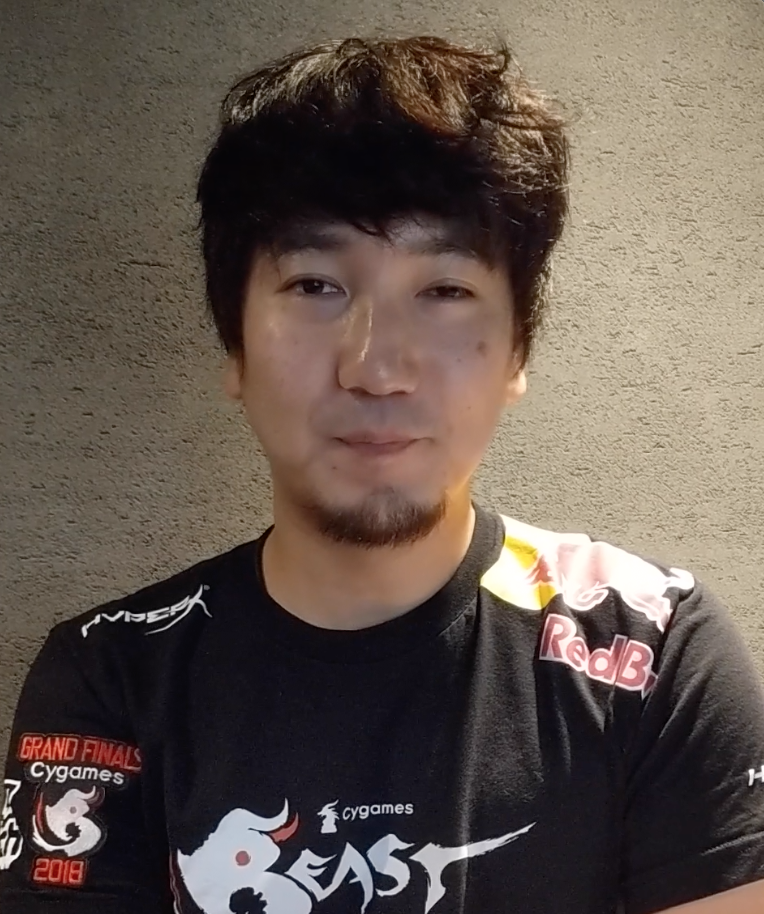
Daigo Umehara, 'The Beast,' is the most iconic figure in fighting-game history and the closest thing the genre has to a living legend. His full-parry comeback against Justin Wong in Street Fighter III: Third Strike at Evo 2004, universally known as EVO Moment 37, is the single most famous clip in esports. Across a career spanning arcades to the streaming age, he won multiple EVO championships in different Street Fighter titles and remained an elite competitor for over two decades, longevity unmatched in any esport. In 2018 he was recognized by Guinness World Records as the longest-serving professional fighting-game player. His prize earnings are modest because fighting games run small pools compared with team esports, but his cultural impact is immense: he embodies the reading, mind-games and clutch execution at the heart of the genre and inspired a generation of players worldwide.
Nicolai Reedtz, the AWPer known as device, was the anchor of Astralis, the most dominant team in Counter-Strike history. He won four Majors, ELEAGUE Atlanta 2017, FACEIT London 2018, IEM Katowice 2019 and StarLadder Berlin 2019, a total matched by no one before his generation, and captured the first Intel Grand Slam during a period when Astralis simply dwarfed the field. Astride a disciplined, utility-driven system, device was the consistent star sniper who converted his team's structural edge into rounds, ranking among the world's top players year after year without ever chasing the flashiest highlight. Where s1mple represented individual genius, device represented ruthless team-built excellence, and the two defined opposite poles of the same era. His four Majors and sustained top-tier consistency make him one of the most decorated shooter players ever and the emblem of Counter-Strike's greatest dynasty.
Marcelo David, known as coldzera, was the world's best Counter-Strike player at the height of Brazil's golden generation. Playing for Luminosity and then SK Gaming alongside FalleN and fer, he won consecutive Majors in 2016, MLG Columbus and ESL One Cologne, and was named the HLTV number-one player of the year in both 2016 and 2017, back-to-back seasons of individual supremacy. His jumping, no-scope quad kill against Team Liquid at MLG Columbus 2016 was voted the play of the year and remains one of the most replayed moments in CS. A cerebral, positionally brilliant rifler, he made the game look easy during a peak few have matched. Later roster moves diluted his form, but for two years he was untouchable, and his double HLTV crown and two Majors secure his place among the very best the shooter has produced.
Kuro Takhasomi, the German-Iranian captain and support known as KuroKy, is one of Dota 2's most enduring and decorated figures. He reached three Grand Finals of The International across his career, finishing runner-up with Natus Vincere in the early years before finally lifting the Aegis as captain of Team Liquid at TI7 in 2017, one of the most complete tournament runs in the game's history. Renowned for his strategic mind and encyclopedic hero knowledge, he holds the record for the most professional Dota 2 matches ever played, a testament to a longevity almost unheard of in esports. His career earnings, above $5M, rank among the highest in the sport thanks to Dota's enormous prize pools. As both a champion and a symbol of the game's competitive depth, KuroKy occupies a revered place in Dota's history.
Lim Yo-hwan, 'The Emperor,' was the first true superstar of esports and the player who made professional gaming a mainstream phenomenon in South Korea. A StarCraft: Brood War Terran celebrated for creative, aggressive micro that rewrote how the race was played, he won back-to-back OSL championships in 2000 and 2001 and took gold at the World Cyber Games in 2001 and 2002. His fame transcended the game: his fan club numbered in the hundreds of thousands, believed the largest for any esports figure of his time, and he drew stadium crowds and mainstream media in an era when the idea of a pro gamer was still novel. Though later players surpassed his raw results, BoxeR's cultural impact is unmatched, he proved a video game could produce a national sporting icon, and the entire professional scene that followed was built in the space he opened.
Joona Sotala, the Finnish Zerg known as Serral, is the greatest non-Korean StarCraft II player and the man who broke Korea's monopoly on the game's world title. In 2018 he swept an undefeated run through the WCS Circuit and won the WCS Global Finals at BlizzCon, becoming the first player from outside South Korea to be crowned StarCraft II world champion, a landmark result that reshaped the game's competitive geography. He backed it up with sustained dominance of the Western scene across the ESL Pro Tour era, amassing dozens of premier titles and remaining a top contender for years. His mechanical precision and macro control drew comparisons with the Korean elite he outperformed. In a discipline long defined by Korean supremacy, Serral's 2018 world title stands as one of the most significant individual achievements in esports and made him a national sporting figure in Finland.
Anathan Pham, the Australian carry known as ana, was the young star at the heart of OG's back-to-back Internationals, winning TI8 in 2018 and TI9 in 2019 alongside N0tail. Still a teenager for his first title, he was the mechanical engine of the underdog run that stunned the Dota world, famed for game-defining performances on signature heroes like Io, Ember Spirit and Spectre in the sport's biggest finals. Two Aegis wins on the largest stage, with prize earnings around $6M placing him among the top earners in all of esports, mark an extraordinarily concentrated peak. He stepped away from competition at a young age, but his impact is disproportionate to his short career: he proved that a carry could carry, quite literally, two world titles, and his highlight plays remain among the most celebrated in Dota 2 history.
Jian Zi-Hao, the marksman known as Uzi, was the greatest League of Legends ADC of his generation and the face of Chinese esports for the better part of a decade. He burst onto the world stage as a teenager, reaching the Worlds final in both 2013 and 2014, and became renowned for a hyper-aggressive carry style that let him single-handedly win games. His long-awaited breakthrough came in 2018, when he won the Mid-Season Invitational with Royal Never Give Up and took gold as part of China's team at the Asian Games. The one prize that always eluded him was the World Championship, a defining absence in an otherwise legendary career. Chronic injury and health problems forced his retirement in 2020 at just 23. Beloved across China and respected worldwide, Uzi remains the standard against which aspiring bot-lane carries are measured.
Bars are scaled to the leader in this list.
The debate
The debate over the esports GOAT is complicated by the fact that no two players on this list even played the same game. Faker's case for the top spot is the strongest that exists in any esport: five world titles across eleven years, sustained through complete overhauls of his team, his role's meta and the game itself, a longevity and peak that no rival in any title can match. Below him, comparison fractures by discipline. Is s1mple's individual genius worth more than device's four Majors? Does N0tail's back-to-back Internationals and record earnings outweigh a single-game legend like Flash, who dominated Brood War before global prize pools existed?
The honest answer is that cross-game ranking is partly a matter of what you value: pinnacle-title count, peak dominance, cultural impact or pure mechanical brilliance. Prize earnings tilt heavily toward Dota players because of that game's uniquely massive pools, not because those players are objectively better, which is why the figure is context, not verdict. Pioneers like BoxeR shaped the sport's very possibility, and Serral's world title carries weight far beyond its prize money. Reasonable observers will reorder everyone below the top few. But Faker at the summit, as the athlete who has dominated a major esport longer and more completely than anyone, is the closest thing the field has to a settled question.
Keep exploring
More sports
Soccer
The simplest game on Earth, played by hundreds of millions and argued over by half the planet.
🏀Basketball
Five players, 24 seconds, and geometry at full sprint — the city game that conquered the world.
⚾Baseball
The clockless chess match where a round bat meets a round ball and the best hitters on earth still fail seven times out of ten.
🎾Tennis
The loneliest duel in sport: no clock, no teammates, no place to hide until the last point is won.
🏎️F1
Twenty drivers, a thousand horsepower, and the most expensive engineering arms race in sport.
⛳Golf
A six-century test of nerve where the only opponent is the ground, the wind, and yourself.
🏈Football
Four downs, ten yards, one end zone: the ultimate game of territory, collision, and coaching.
🏏Cricket
The bat-and-ball contest where a single match can last five days and still turn on one ball.