🗺️Origins & Evolution

Product Manager · Decides what a company should build next, and why — turning customer needs, business goals and engineering limits into one shared plan nobody else fully owns.

Product management is a genuinely young profession wearing a business idea nearly a century old. Procter & Gamble began assigning a single executive to own one brand's entire success in 1931, decades before any software existed to manage, and the technology industry only borrowed and reshaped the title from the 1980s onward.

Its story runs through a Procter & Gamble memo writer who later ran the Pentagon, a Sony chairman who overruled his own market research, a Silicon Valley executive whose internal rant about bad product managers is still assigned reading, and a Harvard Business Review paper about rugby that gave software teams the word 'sprint'.

Where it began

1931Cincinnati, Ohio, United States

Neil McElroy, a 27-year-old brand promotion manager at Procter & Gamble, writes a three-page internal memo proposing that the company assign a single 'brand man' to each product — Camay soap, say — who tracks its sales, controls its advertising budget, and is held responsible for its results as if running an independent business competing against P&G's own other brands. The memo becomes the founding document of brand management, and its logic — one person owning one product's fate end to end — is the direct ancestor of the modern product manager.

Timeline

1931Neil McElroy's 'brand man' memo at P&G

McElroy's three-page memo proposes that each Procter & Gamble product get one accountable owner tracking its sales and advertising, competing even against the company's own other brands — the founding document of brand management.

1950sToyota's chief-engineer system takes shape in Japan

Toyota begins assigning a single 'shusa', or chief engineer, full authority over a vehicle's entire development from concept to production, a model later studied and cited by Silicon Valley product-management writers as proof that one person should own a product end to end.

1986Takeuchi and Nonaka describe teams like a rugby scrum

Hirotaka Takeuchi and Ikujiro Nonaka publish "The New New Product Development Game" in Harvard Business Review, describing small, self-organizing teams at Honda, Canon and Fuji-Xerox — the paper that later gives Scrum its name and its rugby metaphor.

1995Sutherland and Schwaber present Scrum, and the product owner

Jeff Sutherland and Ken Schwaber present the Scrum framework publicly for the first time at the OOPSLA conference, formalizing a 'product owner' role responsible for ordering a team's backlog — a template many software product managers still use.

1997Ben Horowitz writes "Good Product Manager, Bad Product Manager"

As a product executive at Netscape, Horowitz writes an internal memo contrasting product managers who take full ownership of an outcome with ones who make excuses; forwarded for years afterward, it becomes one of the field's most widely read texts.

2001The Agile Manifesto is signed at Snowbird, Utah

Seventeen software developers formalize a reaction against heavy, document-driven planning in favor of shorter, iterative cycles, cementing the working style that had already begun reshaping how product managers plan and ship.

2002Google launches its Associate Product Manager program

Championed inside the company by early product leader Marissa Mayer, Google's APM program begins hiring recent graduates directly into a two-year rotational product role, becoming the closest thing the industry has to an elite entry credential.

2006Google acquires YouTube for $1.65 billion

Product executive Susan Wojcicki is among those who push Google's leadership to buy the then-struggling video site, a deal she goes on to run for nearly a decade as YouTube's CEO from 2014.

2008Marty Cagan founds the Silicon Valley Product Group

After product leadership roles at HP, Netscape and eBay, Cagan founds SVPG and publishes "Inspired", codifying practices — dual-track discovery, empowered teams — that become standard vocabulary across the software industry.

2011Eric Ries publishes "The Lean Startup"

Ries formalizes the minimum viable product and the build-measure-learn loop, developed while building the virtual-goods company IMVU, turning fast, cheap validation into a core product-management discipline.

The eras

Procter & Gamble's headquarters building in Cincinnati, Ohio, birthplace of brand management
Procter & Gamble. The original uploader was KarimKoueider at English Wikipedia .. Later version(s) were uploaded by Cristianocampo93 , JJMC89 , Ridwan97 at en.wikipedia . · Public domain · Wikimedia Commons
1931–1949

Brand management is born at P&G

Neil McElroy's 1931 memo takes hold quickly inside Procter & Gamble: within a generation, dozens of 'brand men' each track one product's sales, advertising and profit as though running an independent business. McElroy himself rises through the company, becoming its president in 1948. Other American consumer-goods firms, including General Foods, begin copying the structure, but the idea stays confined to marketing departments selling soap, food and household goods — nothing resembling software yet exists for anyone to manage.
1950s–1969

A parallel model takes shape in Japan

While P&G's brand-manager idea spreads slowly among American consumer-goods firms, Toyota develops its own version for physical products: a single 'chief engineer' with authority over a vehicle's entire development, from concept through to the factory floor. Neither tradition yet uses the words 'product manager', and the two barely interact, but both are independently arriving at the same core idea — that a product needs one accountable owner rather than a committee.

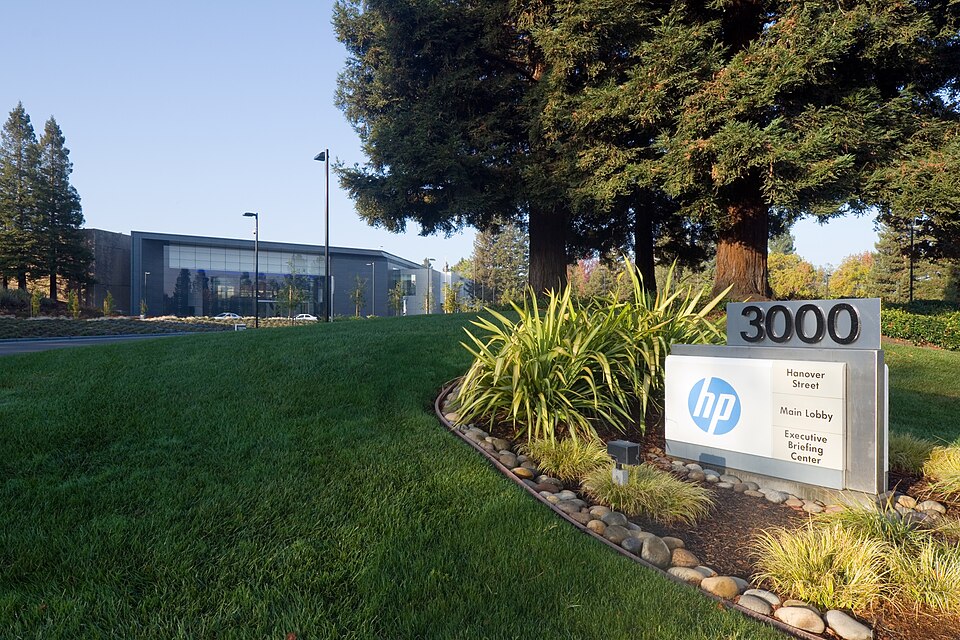
An early Hewlett-Packard instrument, from the era when technology firms first adopted the product-manager title
LPS.1 · CC0 · Wikimedia Commons
1970–1994

The title moves into technology

As electronics and early computing firms grow, some borrow the consumer-goods industry's 'product manager' title for the executives who decide what a hardware or software line should include, sitting between engineering and sales. The job carries little prestige in this era — engineers often see product managers as salespeople in a different suit — and the discipline has no shared playbook of its own, borrowing ad hoc from marketing on one side and engineering management on the other.

1995–2007

Agile and Scrum reshape the job

Scrum's 1995 debut, the Agile Manifesto in 2001, and Ben Horowitz's 1997 Netscape memo together give software product management its first real professional identity, distinct from the marketing role it borrowed its name from. Google's 2002 Associate Product Manager program turns the job into a recruiting draw for new graduates, and specification-heavy waterfall planning starts giving way to shorter cycles built around constant feedback from engineers and customers alike.

2008–present

Lean, growth and AI-assisted product work

Marty Cagan's Silicon Valley Product Group and Eric Ries's 2011 lean-startup movement push the discipline toward rapid experimentation and minimum viable products, and a dedicated 'growth' specialization emerges around fast, metric-driven testing. By the early 2020s, generative AI tools have moved from novelty to daily habit for many product managers, drafting specifications and summarizing user research — reshaping the job's daily texture again, just as agile did two decades earlier.

What this job replaced

Neighbouring trades that no longer exist — absorbed, automated or regulated away.

Brand man

1931–1950s

Neil McElroy's original title for P&G's product-owning executives never spread far under that exact name. By the 1950s it had split in two: 'brand manager', which stayed inside marketing departments, and the newer 'product manager', which technology companies began applying to a broader, less advertising-focused job.

Systems analyst

1960s–2000s

In waterfall-era corporate software, a systems analyst spent months interviewing stakeholders and writing a lengthy requirements document before a single line of code was written, then handed it to engineers with little further involvement. Agile and Scrum's arrival in the 1990s and 2000s collapsed that handoff, and much of the analyst's job was absorbed into the modern product manager and product owner roles.

Product marketing engineer

1970s–1990s

Growing hardware and semiconductor companies once hired engineers who doubled as the public face of a product line, writing technical specifications and pitching customers in the same job. As software product management matured into its own discipline in the 1990s, the role split into a product manager, who owns the roadmap, and a product marketing manager, who owns positioning and launch.

Trades that vanished →

Every split in this history follows the same pattern: a role gets too big for one person, or a new way of working makes an old handoff unnecessary, and the job quietly divides or gets renamed. Brand man became brand manager and product manager; systems analyst dissolved into product owner and business analyst; product marketing engineer became product manager and product marketing manager.

The people reading this profile now are inheriting a title still mid-split: 'product manager' at a five-person startup and 'product manager' at a bank with a regulatory compliance team barely resemble each other. The rest of this profile treats the job as it is practiced at technology companies today, the context in which the modern title took its clearest shape.

Keep exploring

More in Business & Finance