🗺️The Greats

Product Manager · Decides what a company should build next, and why — turning customer needs, business goals and engineering limits into one shared plan nobody else fully owns.

Product management's canon is younger than most on this site, and it was written less by a single guild than by a scattered set of executives, engineers and founders who each solved the same problem — who should own a product's fate — in different industries and different countries, decades apart.

The eight people here span a Procter & Gamble memo writer who later ran the Pentagon, a Sony chairman who overruled his own market research, and product leaders from Google, Netscape and Canva across four countries and more than a century.

The all-time podium

Akio Morita
Akio Morita
Japan
2
🥇
Neil H. McElroy
United States
1
Ben Horowitz
Ben Horowitz
United States
3

The eight who reached the top

1

Neil H. McElroy

United States · 1904–1972

As a 27-year-old brand promotion manager at Procter & Gamble, McElroy wrote the 1931 memo proposing that a single 'brand man' own one product's entire success — the founding document of brand and, eventually, product management. He later became P&G's president and US Secretary of Defense.

The story

McElroy's three-page memo, dated May 13, 1931, proposed hiring young 'brand men' who would each track one product's sales and advertising, essentially competing against P&G's own other brands as if they were outside rivals. The idea took hold immediately inside the company; McElroy rose through P&G's ranks to become its president in 1948. In 1957, President Eisenhower appointed him US Secretary of Defense, a job he held during the Sputnik crisis and NASA's creation in 1958.

“Give one person full ownership and accountability for a single product's outcome, and let them compete even against their own colleagues.”


Memo written
1931, age 27
P&G president
1948–1957
US Secretary of Defense
1957–1959
2
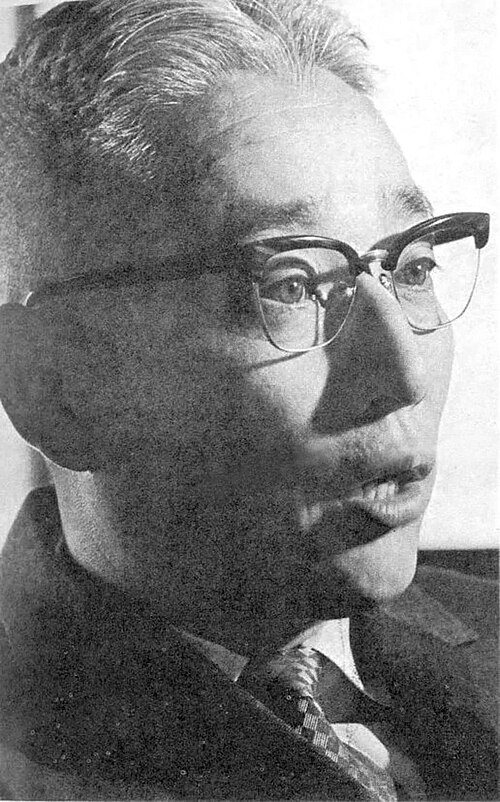
Photograph of Akio Morita プレジデント社 撮影者不明 · Public domain

Akio Morita

Japan · 1921–1999

Co-founded Sony in 1946 and personally championed some of its most consequential product bets, most famously insisting the company build the Walkman in 1979 despite market research suggesting no one wanted a tape player without a recording function or speakers. It became one of the best-selling gadgets in history.

The story

In 1979, Sony's product planning staff tested the idea of a portable tape player with no recording button and no speakers, and market research came back skeptical: why would anyone buy a tape recorder that couldn't record? Morita overruled the consensus, wanting a way to listen to music while walking. The Walkman launched in July 1979, sold out its first production run within weeks, and went on to sell over 200 million units worldwide across later decades.

“Sometimes a customer cannot describe a product they have never seen — trust a clear product instinct over cautious market research.”

Sony co-founded
1946
Walkman launched
July 1979
Walkman units sold (est.)
200M+ worldwide
3
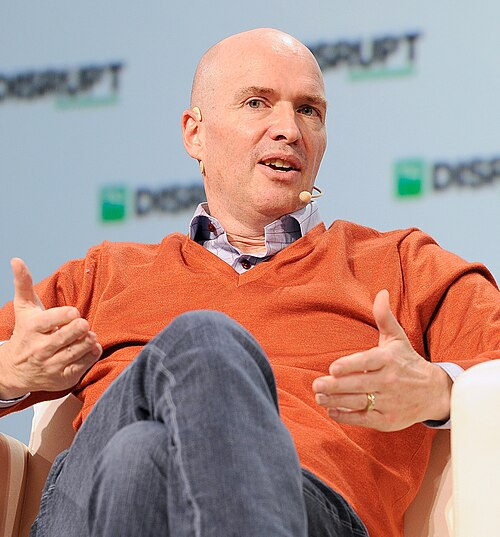
Photograph of Ben Horowitz TechCrunch · CC BY 2.0

Ben Horowitz

United States · b. 1966

As a product executive at Netscape in the 1990s, Horowitz wrote an internal memo contrasting 'good' and 'bad' product managers that circulated informally for years before being published; it remains one of the most widely assigned texts in the field. He later co-founded the venture firm Andreessen Horowitz in 2009.

The story

Frustrated by product managers who blamed engineering, sales or 'the market' whenever a product underperformed, Horowitz wrote a short internal memo at Netscape around 1997 arguing that a good product manager takes full responsibility for a product's success and operates like a company's CEO, while a bad one makes excuses and waits for direction. Employees kept forwarding it long after Horowitz left Netscape, and he eventually republished it on his own blog, where it remains one of the field's most shared texts.

“Take full responsibility for the outcome, not just the parts of the job that were clearly assigned to you.”

Netscape memo written
c. 1997
Andreessen Horowitz founded
2009
Years as a tech CEO
Loudcloud/Opsware, 1999–2007
4
Photograph of Jeff Sutherland Anders Wegge Keller · CC BY-SA 3.0

Jeff Sutherland

United States · b. 1941

A former US Army fighter pilot and later software executive, Sutherland ran the first team using what he called 'Scrum' at Easel Corporation in 1993, then formalized the framework with Ken Schwaber at a 1995 conference. Scrum's 'product owner' role became a template for how many software product managers work today.

The story

In 1993, at Easel Corporation, Sutherland pulled together a small team and structured their work in short, fixed cycles with a single person responsible for ordering what got built next — borrowing the term 'scrum' from a 1986 Harvard Business Review paper by Hirotaka Takeuchi and Ikujiro Nonaka comparing fast product teams to a rugby scrum. He and Ken Schwaber presented the resulting framework at the OOPSLA conference in 1995, the first time it was described in public.

“Give one accountable person a short, fixed cycle and a single ordered list of what matters most right now.”

First Scrum team run
1993, Easel Corp.
Scrum presented publicly
1995, OOPSLA
Scrum Guide co-authored
With Ken Schwaber, ongoing
5
Photograph of Marissa Mayer World Economic Forum · CC BY-SA 2.0

Marissa Mayer

United States · b. 1975

Google's first female engineer and its twentieth employee, Mayer led product management and user experience for Google's core search products through the 2000s, championing rigorous data testing over instinct. She later became CEO of Yahoo in 2012, a far harder turnaround than her Google years.

The story

As Google's VP of Search Products and User Experience, Mayer became known for testing minute design details with real user data rather than opinion — most famously ordering a 2009 test of 41 different shades of blue for search-result links to see which generated more clicks. The winning shade was reportedly adopted, an anecdote still cited in product-management courses as an extreme, sometimes mocked example of how far data-driven product decisions can go inside a large technology company.

“Test the smallest details with real data before trusting a strong personal opinion about what users prefer.”

Joined Google as employee
#20, 1999
Shades of blue tested
41, 2009
Yahoo CEO
2012–2017
6
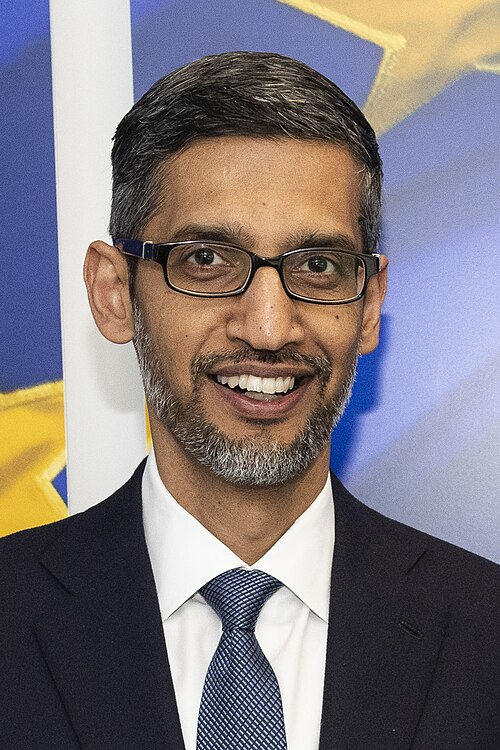
Photograph of Sundar Pichai Photographer: Lukasz Kobus (European Commission) · CC BY 4.0

Sundar Pichai

India / United States · b. 1972

Joined Google in 2004 to work on the Google Toolbar, then led product management for Google Chrome, pushed through internal skepticism about building a browser at all, and later for Gmail, Google Drive and Android. He became CEO of Google in 2015 and of Alphabet in 2019.

The story

Google's leadership had already debated and set aside building a browser once, wary of a costly fight with Microsoft, before Pichai and colleagues pitched it again with a specific product idea: a browser fast and simple enough to act as a launchpad for web applications rather than just a viewer. Chrome shipped in September 2008; within a few years it had overtaken Internet Explorer to become the world's most-used browser, evidence inside Google that a persistent product manager can revive an idea leadership had already turned down once.

“A rejected idea can still be right — bring it back with a sharper, more specific version of the product.”

Joined Google
2004
Chrome shipped
September 2008
Became Alphabet CEO
2019
7

Susan Wojcicki

United States · 1968–2024

Rented her Menlo Park garage to Larry Page and Sergey Brin in 1998, joined Google as its first marketing manager in 1999, and went on to lead product for Google Images and AdWords before proposing Google's 2006 acquisition of YouTube. She became YouTube's CEO in 2014.

The story

In September 1998, Wojcicki rented her garage in Menlo Park, California, to two Stanford graduate students, Larry Page and Sergey Brin, who used it as Google's first office. She joined the company the following year as its first marketing manager and helped launch AdWords, Google's advertising product. In 2006, she was among the executives who pushed Google's leadership to acquire the then-struggling video site YouTube for $1.65 billion, a deal she later ran as YouTube's CEO from 2014 to 2023.

“Being close to a product's earliest, messiest days gives an advantage no amount of later analysis can replace.”

Garage rented to Google
1998
YouTube deal proposed
$1.65B, 2006
YouTube CEO
2014–2023
8

Melanie Perkins

Australia · b. 1987

As a design tutor at university in Perth, Perkins watched classmates struggle for weeks to learn professional design software just to make a poster. That direct observation led her to co-found Canva in 2012, a browser-based design tool built around the opposite bet: that design software should need no training at all.

The story

While tutoring university classmates in graphic design software in Perth, Australia, Perkins noticed students spending entire semesters just learning where the buttons were in professional tools, long before they designed anything good. She and Cliff Obrecht first tested that insight with Fusion Books, an online yearbook-design tool, in 2007, then pitched a broader version — Canva — to more than 100 investors, many in Silicon Valley, before securing funding; Canva launched publicly in 2013.

“The real product opportunity is often the gap between what a tool can do and what an ordinary user can actually manage.”

Fusion Books founded
2007, age 19
Investor pitches before funding
100+
Canva launched publicly
2013

Bars are scaled to the leader in this list.

Comparison Lab

Toggle names on and off — every bar rescales to the leader of your selection.

5 / 8

The argument

Whether Neil McElroy's 1931 memo really 'invented' product management is disputed by some historians, who point out that similar single-owner brand structures were emerging informally at other consumer-goods firms around the same time; P&G's own internal archives are the primary source for the exact date and authorship.

Inside the industry, there is no agreement on whether Marty Cagan or Ben Horowitz did more to define modern product management as a craft — Cagan's writing and consulting shaped how thousands of teams structure the job day to day, while Horowitz's shorter, older memo is more widely quoted, even though far fewer of its readers have read his complete original text.

Keep exploring

More in Business & Finance