🚓Origins & Evolution

Police Officer · The sworn officer who patrols, investigates and keeps the peace, from Vidocq's undercover detectives and Peel's 1829 constables to today's contested public trust.

Policing's real turning points are less about individual bold arrests than about who got paid to keep order, and on what terms. For most of history, the answer was: no one in particular, or whoever profited from catching the right person, which produced a system riddled with the corruption that eventually forced its own replacement.

What changed across three thousand years was not the basic idea — that a community needs someone watching for harm and answering it — but who that someone answered to: a king, a parish, a paying victim, or, from 1829 onward, an explicit bargain with the public itself.

Where it began

6 CE – 1285Rome & Anglo-Saxon England

Augustus created Rome's vigiles in 6 CE, seven cohorts of freedmen who patrolled the city by night watching for fires and thieves under a praefectus vigilum — the closest the ancient world came to a standing, salaried police force. Medieval England took a communal path instead: the Anglo-Saxon tithing system bound groups of households to keep the peace and raise the "hue and cry" after a wrongdoer, formalized into a parish watch-and-ward duty by the 1285 Statute of Winchester, which remained the basic model of English law enforcement for over five centuries.

Timeline

1285Statute of Winchester

England codifies the watch-and-ward system into law: every town must keep an armed night watch, and any citizen who witnesses a crime must raise the "hue and cry" and join the pursuit. It remained the legal framework for English law enforcement until Peel's reforms, over five centuries later.

1667Paris creates a lieutenant-general of police

Louis XIV appoints Nicolas de la Reynie to a new post overseeing Paris's streets, lighting, sanitation and criminal investigation together — one of Europe's first centralized, salaried police administrations, more than a century and a half before London's equivalent.

1725Jonathan Wild hanged at Tyburn

London's self-styled "Thief-Taker General," who had spent years both organizing thefts and collecting reward money for returning the same stolen goods, is convicted and publicly hanged — exposing the corruption built into England's private, reward-driven policing system.

1749Bow Street Runners founded

Novelist and London magistrate Henry Fielding organizes a small paid group of constables working out of his Bow Street court, London's first semi-professional detective force; his half-brother John Fielding expands it after Henry's death in 1754.

1812Vidocq founds the Sûreté

Former convict Eugène François Vidocq is appointed to head a new Paris criminal-investigation brigade staffed largely with ex-offenders, pioneering plainclothes surveillance and systematic criminal record-keeping that influences detective policing across Europe.

1829Peel's Metropolitan Police Act

British Home Secretary Robert Peel establishes London's Metropolitan Police, a full-time, uniformed, centrally organized civilian force. Commissioners Charles Rowan and Richard Mayne issue instructions built on the idea that officers must earn public cooperation, later distilled into the "nine principles of policing."

1892First fingerprint murder conviction

In Necochea, Argentina, police apply Juan Vucetich's new fingerprint classification system to a bloody thumbprint left at a double child murder, matching it to the children's own mother, Francisca Rojas, who confesses — the world's first murder solved using fingerprint evidence.

1905Vollmer modernizes Berkeley policing

Elected town marshal of Berkeley, California, August Vollmer begins rebuilding the department around bicycle and later radio-car patrols, fingerprint records, psychological screening of recruits and college-level training — a template later copied across the United States.

1966Miranda v. Arizona

The US Supreme Court rules that suspects must be informed of their right to remain silent and to an attorney before police interrogation, creating the "Miranda warning" that becomes a defining, globally recognized symbol of American policing.

2020George Floyd's murder and global protests

The killing of George Floyd by a Minneapolis police officer, recorded on video and viewed worldwide, triggers the largest protest movement in US history and intensifies a global reckoning over police use of force, accountability and public trust that remains unresolved.
The eras

6 CE – 1667

Communal watch and the ancient world

Rome's vigiles patrolled for fire and theft under an imperial appointee, while Anglo-Saxon and later medieval England relied on unpaid citizens: tithings bound to raise the hue and cry, and parishes drafting reluctant watchmen under the 1285 Statute of Winchester. Almost nowhere was policing yet a distinct, trained, salaried occupation.

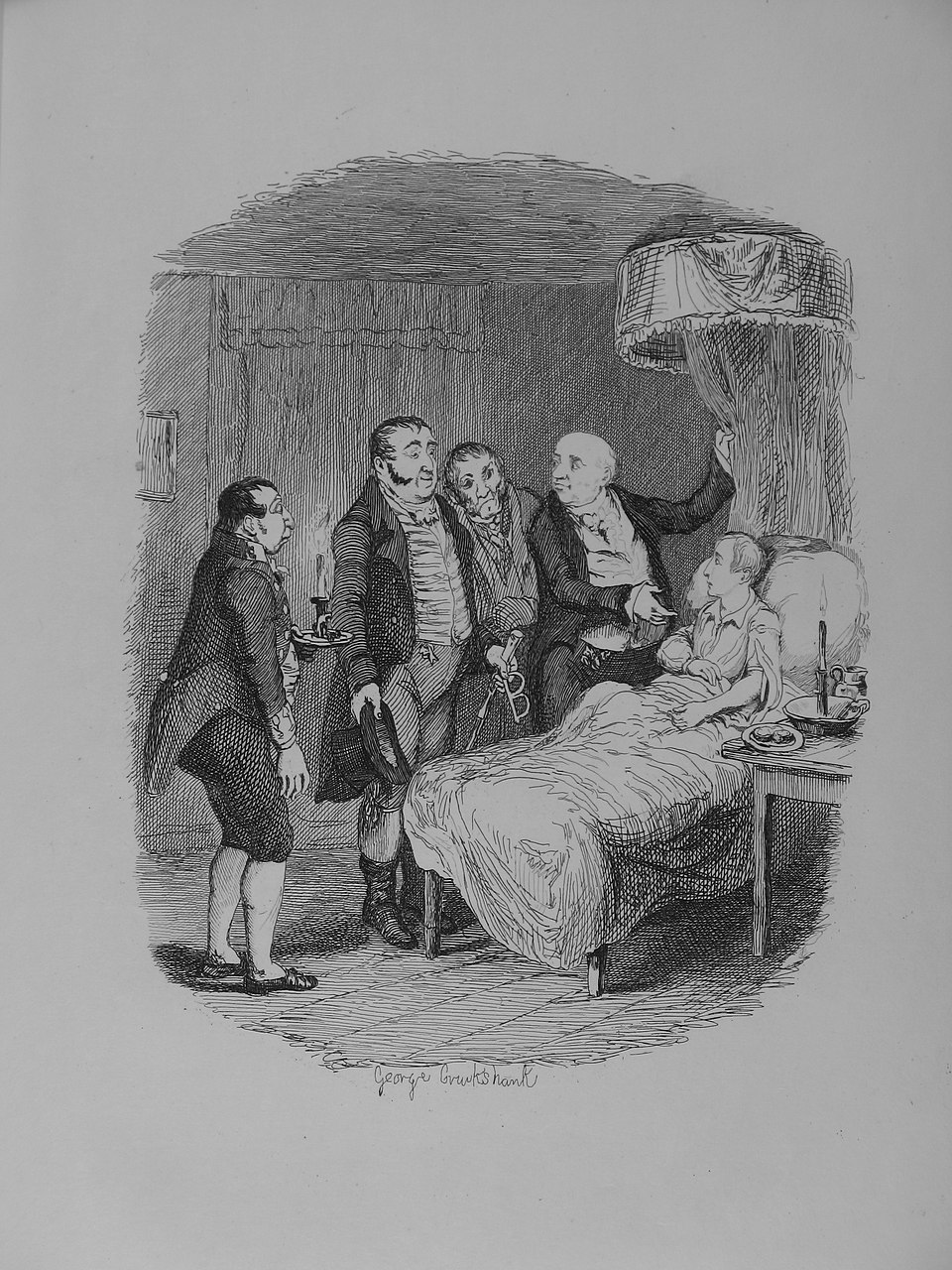
An illustration of London's Bow Street Runners, one of the first organized police detective forces.
George Cruikshank , published by Houghton, Mifflin and Company · Public domain · Wikimedia Commons
1667 – 1829

Thief-takers, magistrates and the first detectives

Paris centralized policing under a royal lieutenant-general, while London filled the gap with private, reward-driven thief-takers — a trade so easily corrupted that its most famous practitioner, Jonathan Wild, secretly ran the theft rings he was paid to solve. Henry Fielding's Bow Street Runners and Vidocq's Paris Sûreté pointed toward something more accountable, but no country yet had a full-time civilian police force.

Early Metropolitan Police constables in London, part of Robert Peel's newly professionalized force.
Unknown author · CC BY-SA 4.0 · Wikimedia Commons
1829 – 1879

Peel's professional police and its global spread

London's Metropolitan Police introduced a uniformed, salaried civilian force explicitly built on public consent; jeered and stoned as "Peel's bloody gang" at first, it gradually won grudging public acceptance. Dublin, Boston, New York and cities across the British Empire adopted variations of the model within a few decades, though women remained entirely excluded from sworn roles.

A set of classified fingerprint records, the identification method that displaced Bertillon's earlier system.
Cyrillic at English Wikipedia · CC BY-SA 3.0 · Wikimedia Commons
1879 – 1950s

Fingerprints, forensics and the science of identification

Alphonse Bertillon's anthropometric measurements, Juan Vucetich's fingerprint breakthrough in Argentina, and Scotland Yard's 1901 fingerprint bureau turned criminal identification from guesswork into a repeatable method. August Vollmer's laboratory-based reforms in Berkeley and the FBI's 1932 crime lab extended the same logic to ballistics, chemistry and recruit training.

A police officer wearing a body camera, now standard equipment in many departments since the 2010s.
Pattymooney · CC BY-SA 3.0 · Wikimedia Commons
1960s – present

Rights, radios and the modern legitimacy crisis

Miranda rights, fully motorized radio patrol and, later, community policing revisited Peel's consent-based philosophy after decades of more confrontational tactics. Body-worn cameras spread rapidly after 2014, turning individual encounters into reviewable evidence, even as trust in the institution itself came under sustained scrutiny after high-profile killings, most visibly George Floyd's in 2020.

What this job replaced

Neighbouring trades that no longer exist — absorbed, automated or regulated away.

Thief-taker

c. 1690–1829

Before any public police force existed, theft victims in England paid private "thief-takers" a reward to recover stolen goods or catch the culprit — a system so easily corrupted that London's most notorious thief-taker, Jonathan Wild, secretly ran the theft rings he was paid to solve, until he was hanged in 1725. The role withered once Bow Street's paid constables, and later Peel's salaried force, removed the financial incentive to profit from crime instead of preventing it.

Bow Street Runner

1749–1839

London's first semi-professional detective force, founded by magistrate Henry Fielding and expanded by his half-brother John, investigated crimes for a fee paid by victims or the court, alongside foot and horse patrols covering the city's main roads. Absorbed into the Metropolitan Police's growing detective branch through the 1830s, the Runners were formally disbanded in 1839, their functions folded into the new civil force.

Parish constable

1285–1829

Under the Statute of Winchester, every English parish had to supply an unpaid, rotating watchman — an ordinary tradesman or laborer serving a term of duty he neither trained for nor particularly wanted — to patrol at night and answer the hue and cry. Widely mocked as incompetent by the eighteenth century (Shakespeare's bumbling constable Dogberry drew directly on the type), the role disappeared once Peel's paid, trained constables took over the same streets.

Trades that vanished →

None of this history is finished. A profession built out of corrupt private bounty-hunting, then rebuilt around a consent-based bargain with the public, is now absorbing body cameras, fingerprint databases turned digital, and predictive software as the latest tools in a very long line.

What has not changed since the Statute of Winchester is the underlying tension: someone has to be given the legal power to use force against fellow citizens, and every era has had to renegotiate how that power is earned, checked and, when abused, withdrawn.

Keep exploring

More in Law & Public Service