🚓The Greats

Police Officer · The sworn officer who patrols, investigates and keeps the peace, from Vidocq's undercover detectives and Peel's 1829 constables to today's contested public trust.

Choosing eight names from a role performed on every continent for centuries is necessarily unfair to countless capable officers who left no written record, especially outside the handful of countries whose police histories were written down and translated. The eight below are chosen because their influence is well documented and still visible in how policing works today.

They span more than two centuries and six countries, and reached the top by very different routes: a former convict turned detective chief, a barrister who wrote a founding doctrine, a former samurai who studied abroad, a records clerk, a small-town marshal, and a woman who towed a prime minister's car. What they share is that policing today is measurably different because of what each one did.

The all-time podium

Richard Mayne
Richard Mayne
England
2
Eugène François Vidocq
France
1
Kawaji Toshiyoshi
Kawaji Toshiyoshi
Japan
3

The eight who reached the top

1
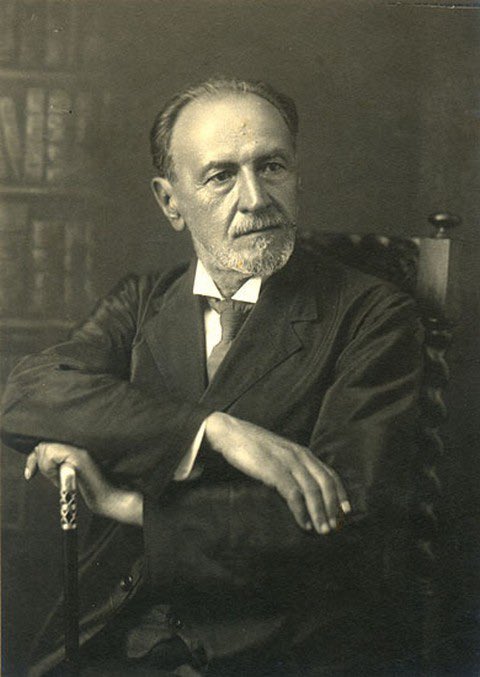
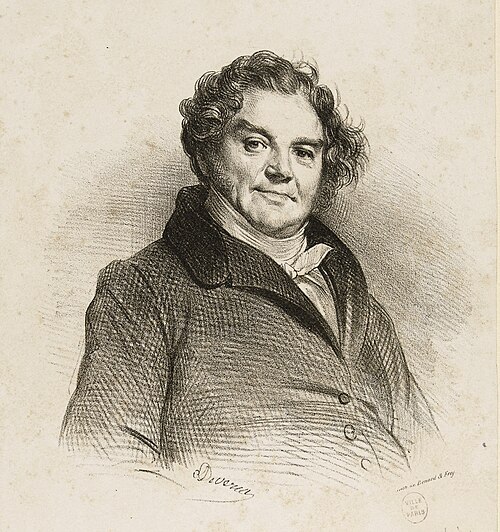
Portrait of Eugène François Vidocq, founder of France's Sûreté. Achille Devéria · Public domain

Eugène François Vidocq

France · 1775–1857

A former soldier, duelist and convicted criminal, Vidocq turned informant and in 1812 was appointed to head Paris's new Brigade de Sûreté, staffing it largely with ex-offenders like himself. He pioneered plainclothes surveillance and systematic criminal records, then, after leaving the force, ran the first known private detective agency.

The story

In 1809, still a prisoner, Vidocq offered Paris's police chief information on fellow inmates in exchange for release; instead he was smuggled back into prison under a false identity to gather intelligence from within, "escaping" months later with names and evidence that launched his career as the state's most effective informant against the underworld he had just left behind.

“The person who best understands a system's weaknesses may be the one who once exploited them.”
Sûreté command tenure
1812–1827
Private detective agency founded
1833, Paris
Memoirs published
1828, bestseller
2
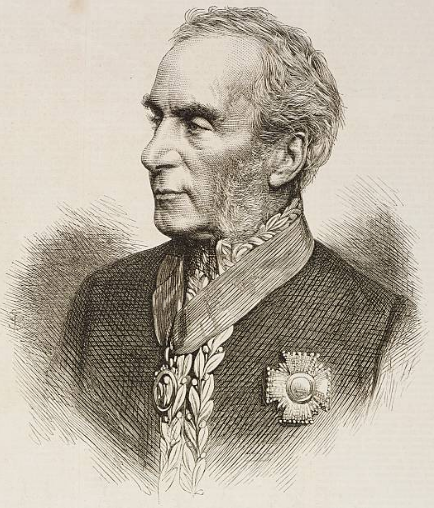
Portrait of Richard Mayne, first joint Commissioner of London's Metropolitan Police. Unknown author Unknown author · Public domain

Richard Mayne

England · 1796–1868

A barrister with no policing background, Mayne was appointed one of the Metropolitan Police's first two joint Commissioners in 1829 and effectively wrote the force's founding instructions, including the doctrine that officers must earn public cooperation rather than compel it. He served an unmatched 39 years.

The story

When London's new blue-coated constables first patrolled in September 1829, crowds jeered them as "Peel's bloody gang" and threw stones, convinced they were a French-style spy force; Mayne insisted his men respond with patience rather than force, training them to talk crowds down instead — a policy that, within a decade, turned hostile mobs into bystanders who called constables for help.

“Legitimacy is earned through restraint under provocation, not asserted through force.”

Years as Commissioner
39 yrs (1829–68)
Metropolitan Police at founding
~1,000 constables
Principles still cited today
9 principles, 1829
3
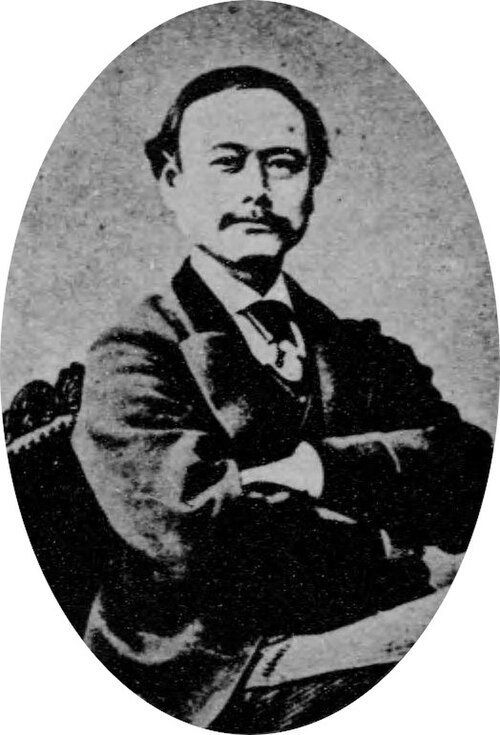
Portrait of Kawaji Toshiyoshi, founder of Japan's modern police force. published by 東洋文化協會 (The Eastern Culture Association) · Public domain

Kawaji Toshiyoshi

Japan · 1834–1879

A former samurai from Satsuma domain, Kawaji led an 1872–73 study mission to Paris and London, adopted Vidocq's investigative methods and Peel's disciplined patrol model, and built Japan's first modern police force as founding head of the Tokyo Metropolitan Police Department from 1874.

The story

During the 1877 Satsuma Rebellion — an uprising led by his own former mentor Saigō Takamori — Kawaji organized police officers, many former samurai like himself, into a special sword unit to fight alongside the imperial army, since many newly conscripted peasant soldiers had never trained with a blade; the civil police force he had built ended up proving itself in a civil war against the old warrior class it had partly replaced.

“Institutions built on a foreign model still have to prove themselves against the country's own crises.”

Tokyo Metropolitan Police founded
1874
European study mission
1872–73, France & UK
Years leading Tokyo police
1874–79 (5 yrs)
4
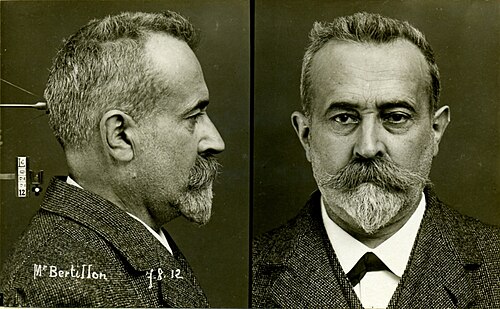
Portrait of Alphonse Bertillon, creator of the anthropometric identification system. Jebulon · CC0

Alphonse Bertillon

France · 1853–1914

A records clerk from a family of statisticians, Bertillon was frustrated by Paris police files that offered no reliable way to identify repeat offenders under false names, and in 1879 designed an eleven-measurement anthropometric system that became the world's first scientific method of criminal identification.

The story

Bertillon's system faced skepticism from his superiors until February 1883, when he used it to catch a prisoner who had given a false name — matching the man's measurements to an existing file and proving he was a previously arrested repeat offender under a different alias. The success made headlines, and within years, Bertillonage identification bureaus spread to police departments across Europe and the Americas.

“A tedious clerical process, proven once in public, can spread across an entire profession within years.”

Measurements per record
11 body measurements
First confirmed identification
Feb 1883, Paris
Regions adopting Bertillonage
Europe & Americas by 1900
5
Portrait of Juan Vucetich, developer of an early practical fingerprint classification system. Unknown author Unknown author · Public domain

Juan Vucetich

Argentina · 1858–1925

Born in Croatia and emigrating to Argentina, Vucetich worked as a police statistician in La Plata and in 1891 developed a practical fingerprint classification system, which the following year gave the world its first criminal conviction based on fingerprint evidence — years before Scotland Yard adopted the method.

The story

In June 1892, in Necochea, Francisca Rojas accused a neighbor of murdering her two children, but a police officer applying Vucetich's new method found a bloody thumbprint on a doorpost that matched only Rojas's own finger, not the accused man's; confronted with the print, she confessed. It became the first murder in history solved by fingerprint evidence.

“A new forensic method only becomes trusted once it settles a real case, correctly, in public.”

Fingerprint system developed
1891, La Plata
First fingerprint murder conviction
June 1892, Argentina
Years ahead of Scotland Yard
~9 years earlier
6
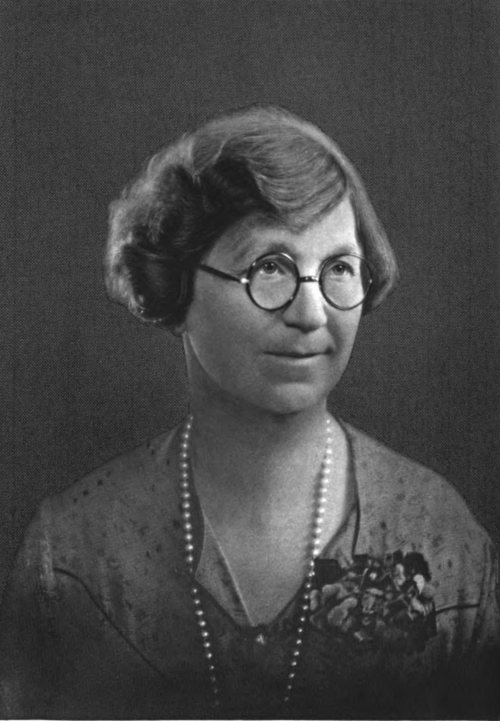
Portrait of Alice Stebbins Wells, the first sworn policewoman in the United States. J.R. Finnell & Sons Publishing Co. · Public domain

Alice Stebbins Wells

United States · 1873–1957

A social worker and ordained minister, Wells petitioned the Los Angeles city council directly for a police commission and was sworn into the LAPD in 1910 as the first woman in the United States with full arrest powers, then toured the country urging other departments to hire policewomen too.

The story

To win her badge, Wells collected a petition signed by roughly one hundred prominent Angelenos and presented it personally to the city council and police commission, arguing that a policewoman's role should focus on protecting women and children rather than replicate a patrolman's beat; the council granted her request, and within a decade dozens of US cities had followed Los Angeles's example.

“Redefining what a job should look like can be as effective as simply demanding entry to the existing one.”

Signatures on her petition
~100 citizens
Year sworn into LAPD
1910
US cities with policewomen by 1915
25+ departments
7

August Vollmer

United States · 1876–1955

A former soldier turned small-town mail carrier, Vollmer was elected Berkeley, California's town marshal in 1905 and spent decades rebuilding policing around science and education: bicycle and later radio-car patrols, fingerprint files, a crime lab, psychological screening of recruits and college-level criminology training.

The story

As Berkeley's marshal, Vollmer put his officers on bicycles in 1905 to cover more ground than beat-walking allowed, and by the early 1920s had built one of the first American police forces to patrol by car and coordinate through two-way radio — a change so effective at cutting response times that departments nationwide copied it within a decade.

“Small, practical changes in how officers move and communicate can outperform grand policy reform.”

Years leading Berkeley PD
1905–32 (27 yrs)
Radio patrol adopted
Early 1920s, Berkeley
Future chiefs he trained
Incl. future LAPD, SFPD chiefs
8

Kiran Bedi

India · b. 1949

The first woman to join the Indian Police Service, in 1972, Bedi built a four-decade career highlighted by reforming New Delhi's notorious Tihar Jail into a rehabilitation-focused institution as its Inspector General from 1993 to 1995, before retiring to public service and later state politics.

The story

As a junior Delhi traffic police officer in 1982, Bedi ordered Prime Minister Indira Gandhi's official car towed for illegal parking outside a restricted zone, unmoved by the driver's protests that it belonged to the PM — an act so unusual for an Indian civil servant confronting political power that colleagues nicknamed her "Crane Bedi" for years afterward.

“Applying the same rule to the most powerful person in the room is what actually proves a rule is real.”

Year joined IPS
1972 (first woman)
Years leading Tihar Jail reform
1993–95
Ramon Magsaysay Award
Won 1994

Bars are scaled to the leader in this list.

Comparison Lab

Toggle names on and off — every bar rescales to the leader of your selection.

5 / 8

The argument

Vidocq's own legacy is contested: he ghost-wrote and dramatized his own exploits for a paying readership, and some of his most famous escapes and disguises are known chiefly from his own self-mythologizing memoirs, which historians treat with real caution.

August Vollmer is celebrated as a scientific reformer, but historians note he also championed eugenics-influenced psychological screening of recruits — a less comfortable part of his legacy that professional histories increasingly acknowledge alongside his technical innovations.

Whether Bedi's traffic-enforcement record is best remembered as principled rule-of-law or as career-building theater remains debated in India, where critics of her later political career argue the "Crane Bedi" story became a brand as much as a policing anecdote.

Keep exploring

More in Law & Public Service