🖌️The Greats

Painter · The oldest image-making trade on record — from 45,000-year-old cave walls to the contemporary studio, still practiced one brushstroke at a time.

Choosing eight painters from a trade practiced on every inhabited continent for forty-five millennia is indefensible by design: whole traditions — Byzantine icon writers, Persian miniaturists, the anonymous masters of Ajanta and Lascaux — left no names to rank. The eight below are chosen because their work and their working lives are unusually well documented, and because each changed what the profession itself could be.

They span five centuries and six countries: a Florentine polymath, a Roman woman who out-painted her assailant's century, a Dutch miller's son who died bankrupt, a Japanese printmaker who signed himself mad about drawing, a preacher's son who sold one documented painting in his life, a Spaniard who industrialized reinvention, a Mexican who painted from bed, and a Chinese carpenter who became his country's most beloved artist.

The all-time podium

Artemisia Gentileschi
Italy
2
Leonardo da Vinci
Leonardo da Vinci
Italy
1
Rembrandt van Rijn
Rembrandt van Rijn
Netherlands
3

The eight who reached the top

1
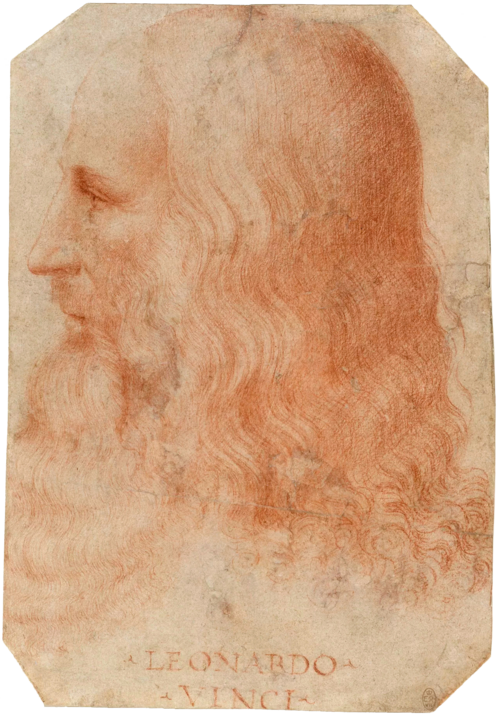
Presumed self-portrait drawing of Leonardo da Vinci in red chalk. Attributed to Francesco Melzi · Public domain

Leonardo da Vinci

Italy · 1452–1519

The Renaissance's argument that painting is a science of observation made flesh: Leonardo brought anatomy, optics and geology into the studio, perfected sfumato modeling, and left fewer than twenty finished paintings — among them the most famous painting on earth — alongside thousands of notebook pages on how seeing works.

The story

According to Vasari, the young Leonardo, apprenticed in Andrea del Verrocchio's Florence workshop, painted one of the angels in his master's Baptism of Christ — now in the Uffizi — so beautifully that Verrocchio resolved never to touch color again, ashamed a boy had surpassed him. The story is likely embellished, but the painting survives, and the angel's soft modeling really does sit apart from the harder figures around it.

“Study the underlying causes — light, anatomy, structure — and the surface takes care of itself.”
Surviving finished paintings
Fewer than 20
Record auction price
$450M (Salvator Mundi, 2017)
Years kept the Mona Lisa
~16, until death
2
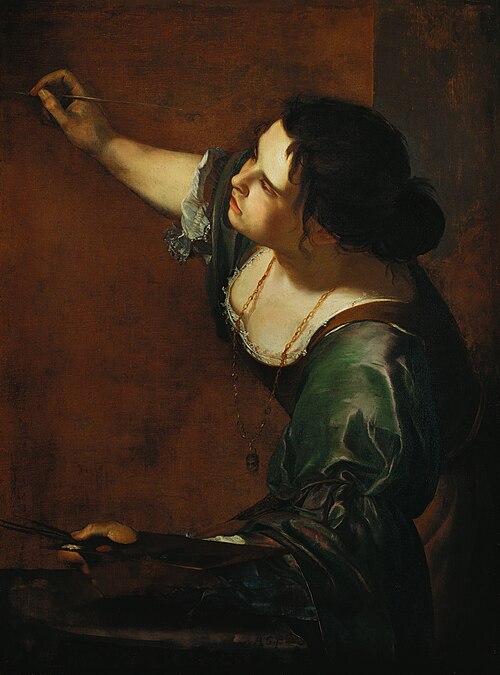
Self-portrait by the Baroque painter Artemisia Gentileschi. Artemisia Gentileschi · Public domain

Artemisia Gentileschi

Italy · 1593–c. 1656

The most celebrated woman painter of the Baroque, trained by her father Orazio in Caravaggio's dramatic manner. Her Judith Slaying Holofernes canvases turned biblical violence into something painted from the inside, and in 1616 she became the first woman admitted to Florence's Accademia delle Arti del Disegno.

The story

At the 1612 Rome trial of Agostino Tassi, the painter who had raped her, the 18-year-old Artemisia was tortured with thumbscrews — the sibille — while testifying, the court's method of verifying her word. The transcript records her repeating "It is true, it is true" as the cords tightened around a painter's fingers. Tassi was convicted; she moved to Florence, signed her Judith canvases, and built a career her century could not ignore.

“The work can outlast the injustice, and be the record that wins the argument.”

First woman in Florence's academy
1616
Attributed surviving works
~60 paintings
Age at the Tassi trial
18 years old
3
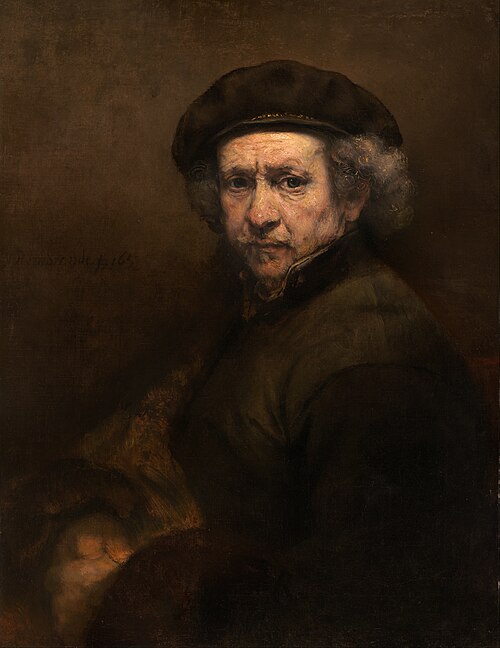
Self-portrait painting by Rembrandt van Rijn. Rembrandt · Public domain

Rembrandt van Rijn

Netherlands · 1606–1669

The Dutch Golden Age's supreme painter of human interiority, who ran Amsterdam's busiest workshop, trained some fifty pupils, and painted or etched around eighty self-portraits — an unmatched sustained record of one face aging. His late, rough-brushed manner was criticized in his lifetime and canonized ever after.

The story

In 1656, overextended on his grand house and outspent on his obsessive collecting, Rembrandt was declared insolvent; the court inventory listed hundreds of items — paintings, Roman busts, weapons, natural curiosities — auctioned off over the following years. He kept painting through the wreckage, producing late masterpieces like The Jewish Bride, and was buried in 1669 in an unmarked rented grave in Amsterdam's Westerkerk.

“Market failure and artistic failure are different things; only one of them is final.”

Self-portraits, all media
~80
Pupils trained
~50
Year declared insolvent
1656
4
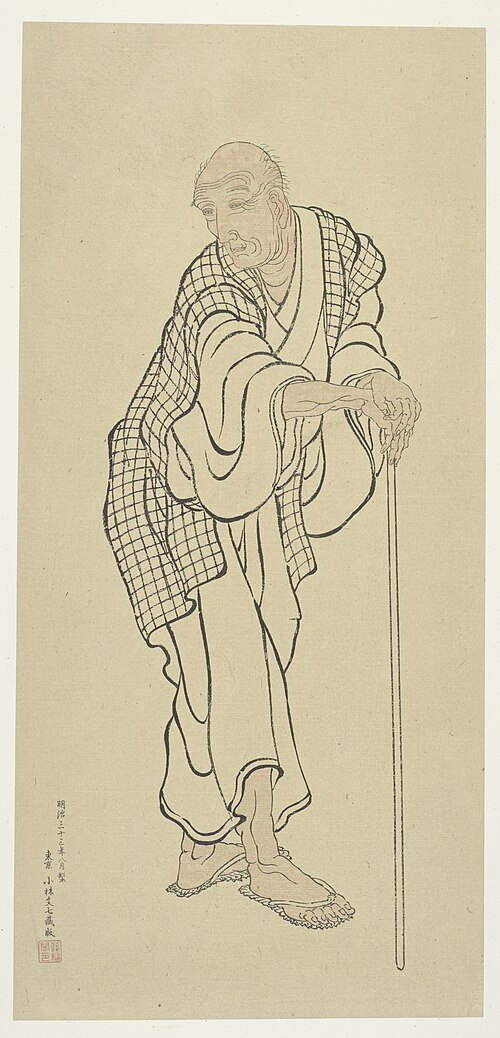
Portrait of the Japanese artist Katsushika Hokusai. missing name · CC0

Katsushika Hokusai

Japan · 1760–1849

The ukiyo-e master whose Great Wave off Kanagawa, from the Thirty-six Views of Mount Fuji begun around 1830, became probably the most reproduced image in art history. Restlessly prolific across some 30,000 works, he changed his art name more than a dozen times and signed his late work "the old man mad about drawing."

The story

Hokusai understood spectacle as marketing. In 1817, in the grounds of a Nagoya temple, he painted a portrait of the Buddhist patriarch Daruma the size of 120 tatami mats — roughly 200 square meters — wielding a broom-sized brush over paper laid across the ground, before an enormous festival crowd, assistants hauling tubs of ink. Prints commemorating the stunt circulated afterward: the celebrity artist's public performance, invented in Edo-period Japan.

“Keep changing — name, style, scale — and treat every decade as an apprenticeship for the next.”

Estimated total works
~30,000
Art names used
30+
Age at the Great Wave
About 70
5
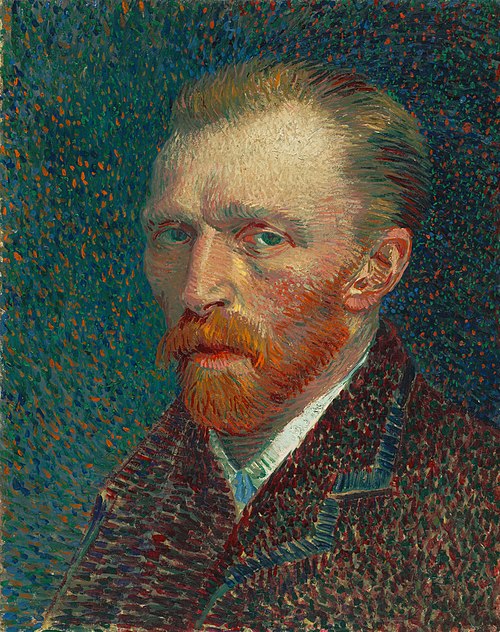
Self-portrait painting by Vincent van Gogh. Vincent van Gogh · Public domain

Vincent van Gogh

Netherlands / France · 1853–1890

The profession's defining cautionary tale and posthumous triumph: he began painting seriously at 27, produced roughly 900 paintings in a single decade — most in his final three years — and died at 37 having reached almost no market at all. Within a century his canvases set world auction records.

The story

In early 1890, months before his death, Van Gogh's The Red Vineyard was shown with Les XX in Brussels and bought for 400 francs by the Belgian painter and collector Anna Boch — the one clearly documented sale of a painting in his lifetime. A hundred years later, in May 1990, his Portrait of Dr. Gachet sold at Christie's New York for $82.5 million, then the highest price ever paid for any painting at auction.

“The market's verdict in your lifetime is data, not truth — though no one should be asked to live on that.”

Paintings in one decade
~900
Documented lifetime sales
1 painting, 400 francs
Dr. Gachet at auction, 1990
$82.5M
6
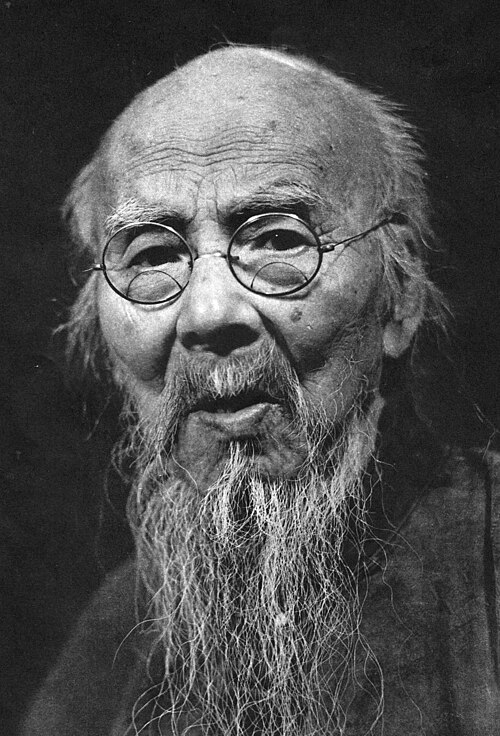
Photograph of the Chinese painter Qi Baishi in old age. Zheng Jingkang · Public domain

Qi Baishi

China · 1864–1957

Born to a poor farming family in Hunan and apprenticed as a carpenter, Qi taught himself painting and rose — mostly after age 55, in Beijing — to become modern China's most beloved artist, famous for shrimp, crabs and gourds painted in a few perfect ink strokes. In 2017 his Twelve Landscape Screens sold for about $140 million.

The story

As a young carpenter in his twenties, Qi borrowed a customer's copy of the Mustard Seed Garden Manual of Painting, the classic Qing-dynasty woodblock course in brush technique, and spent months copying it page by page at night by oil lamp onto thin paper. That borrowed book was his art school. Decades later Picasso, shown his work in Paris, reportedly told the visiting painter Zhang Daqian he did not understand why Chinese artists came to study art in the West.

“A masterclass can be a borrowed book, if the copying is done with total attention.”

Auction record (2017)
$140.8M
Age fame arrived (Beijing)
~55
Estimated works produced
8,000–15,000
7

Pablo Picasso

Spain · 1881–1973

The century's dominant painter and its most complete professional: co-inventor of Cubism with Braque, serial reinventor across seven decades, and the artist who made reinvention itself the mark of greatness. His estimated 50,000 works and shrewd management of dealers made him painting's first fully modern career.

The story

After German bombers destroyed the Basque town of Guernica on 26 April 1937, Picasso abandoned his planned commission for the Spanish Republic's pavilion at the Paris International Exposition and painted the 3.5-by-7.8-meter Guernica in roughly five weeks, photographed at stages by Dora Maar. During the occupation of Paris, so the story he encouraged goes, a German officer looking at a photograph of it asked "Did you do that?" — and Picasso answered, "No, you did."

“Mastery is a starting position; the career is what you dare to do with it repeatedly.”

Estimated total works
~50,000
Weeks to paint Guernica
~5
Career span
7 decades
8

Frida Kahlo

Mexico · 1907–1954

Mexico's most famous painter, who began painting while immobilized after a 1925 bus crash shattered her spine and pelvis, using a mirror rigged over her bed. Of her roughly 143 paintings, 55 are self-portraits — a sustained inquiry into pain, identity and Mexican culture that grew into a global iconography after her death.

The story

In April 1953, Kahlo finally received her first solo exhibition in Mexico, at Lola Álvarez Bravo's gallery in Mexico City. Her doctors forbade her to leave bed, so she sent the bed: her four-poster was installed in the gallery, and Kahlo arrived by ambulance, was carried in on a stretcher, and held court from the bed all evening among her paintings. She died the following year, at 47.

“If the body cannot come to the work, rebuild the work — and the exhibition — around the body.”

Self-portraits
55 of ~143 works
Auction record (2021)
$34.9M (Diego y yo)
Age at first Mexican solo show
45, in 1953

Bars are scaled to the leader in this list.

Comparison Lab

Toggle names on and off — every bar rescales to the leader of your selection.

5 / 8

The argument

Every list like this inherits the canon's blind spots. The painters of Ajanta, the Byzantine and Russian icon masters, the Persian and Mughal miniaturists and the workshop hands inside every famous studio left no signatures to rank — and comparing an ink-and-paper tradition like Qi Baishi's with Western oil painting on one scale is a category mistake this format quietly commits.

Women's absences here are partly manufactured: Judith Leyster was a celebrated Haarlem master in the 1630s, yet within decades her works were being sold as Frans Hals — the misattribution was only exposed in 1893 — and similar reattributions have restored paintings to Artemisia Gentileschi and others within living memory. The record ranks what the record kept.

Even inside the canon, attribution stays contested. The $450 million Salvator Mundi is accepted as autograph Leonardo by some scholars and as a heavily restored workshop picture by others, and Vasari's founding anecdotes — including Verrocchio abandoning color — are Renaissance PR as much as biography. This profession's history was partly painted by its historians.

Keep exploring

More in Arts & Creation