📣The Greats

Marketer · The professional who creates demand — from Pompeii's painted walls and P&G's 1931 brand-man memo to the auction-driven feeds of the digital era.

A list like this skews toward advertising's famous names, because advertising leaves a public record while most great marketing — pricing, distribution, product decisions — leaves only market share. It also skews toward the twentieth-century Atlantic world, where the trade press wrote everything down. The eight below are chosen because their techniques, not just their fame, are still in daily professional use.

They include an academic who systematized the field, three agency founders, a propagandist the profession is still arguing about, two women who broke and remade the industry's rules, and an Indian cricketer-turned-copywriter who proved world-class brand craft speaks Hindi. Between them they invented brand management's canon: testing, positioning, the creative team, and the modern pitch.

The all-time podium

Philip Kotler
Philip Kotler
United States
2
🥇
David Ogilvy
United Kingdom / United States
1
Bill Bernbach
Bill Bernbach
United States
3

The eight who reached the top

1

David Ogilvy

United Kingdom / United States · 1911–1999

A former Paris hotel cook, Aga cooker salesman and Gallup researcher, Ogilvy founded his New York agency in 1948 at 37 with no American clients and built it into a global network. His research-driven creative doctrine — and Confessions of an Advertising Man (1963) — made him the profession's most quoted teacher.

The story

Preparing the 1951 campaign for Hathaway, a small Maine shirtmaker that had not advertised in over a century, Ogilvy stopped at a drugstore on the way to the shoot and bought a $1.50 eyepatch for the model, Baron George Wrangell. "The Man in the Hathaway Shirt," running only in The New Yorker on a tiny budget, gave an unknown brand instant intrigue and national sales — and gave advertising its textbook lesson in the power of a single arresting detail, which Ogilvy called "story appeal."

“One concrete, curious detail can outsell pages of claims — give the reader a story to finish.”
Age founding his agency
37 (1948)
Hathaway's years unadvertised
116 years
Confessions copies sold
1M+ copies
2
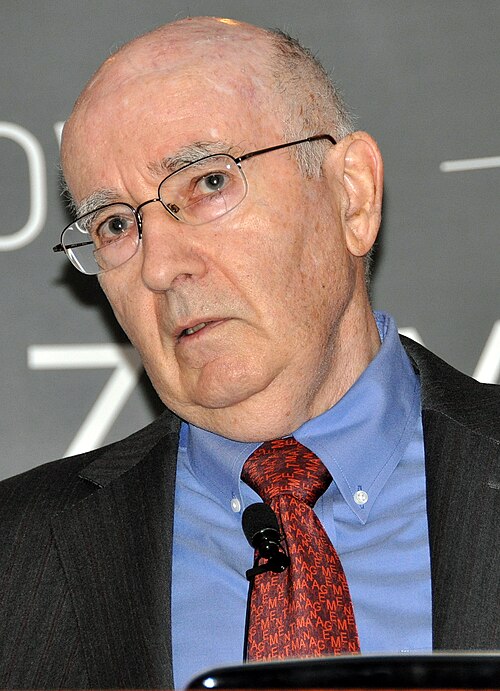
Portrait of marketing academic Philip Kotler. Jack11 Poland · CC BY-SA 3.0

Philip Kotler

United States · b. 1931

Kotler turned marketing from a trade taught by apprenticeship into an academic discipline taught in every business school on earth. Marketing Management (1967), now in its sixteenth edition, defined the field's canon — segmentation, targeting, positioning, the marketing mix — and he taught at Northwestern's Kellogg School from 1962 for six decades.

The story

Kotler trained as an economist under Milton Friedman at Chicago and Paul Samuelson at MIT — three of his teachers won Nobel Prizes — before concluding that economics treated demand as a given when demand was precisely the interesting problem. He switched to the unfashionable field of marketing to study how demand is actually created, applying economic and behavioral rigor to a discipline then dominated by war stories, and rewrote it into a science taught from his textbook.

“A field becomes a profession when someone organizes its folklore into teachable, testable theory.”

Marketing Management editions
16 and counting
Years teaching at Kellogg
60+ (from 1962)
Books authored or co-authored
80+
3
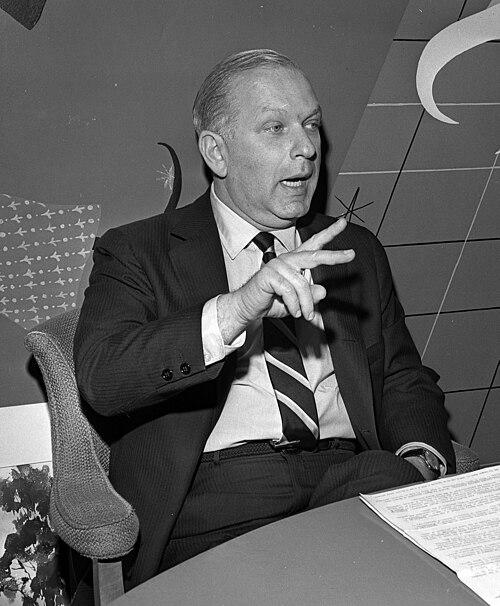
Portrait of advertising creative pioneer Bill Bernbach. Jack Carrick, Los Angeles Times · CC BY 4.0

Bill Bernbach

United States · 1911–1982

Co-founding Doyle Dane Bernbach in 1949, Bernbach led the creative revolution: he paired copywriters with art directors as permanent teams — now the industry's universal structure — and replaced repetition with wit, honesty and restraint. Ad Age named his Volkswagen "Think Small" the greatest advertising campaign of the twentieth century.

The story

In 1959 DDB had to sell Americans a small, odd-looking German car designed under the Nazi regime, barely a decade after the war, in a market worshipping tail fins. Instead of hiding the Beetle's weaknesses, Helmut Krone's stark layout and Julian Koenig's copy led with them: a tiny car photographed in an ocean of white space under the headline "Think small." Self-deprecating honesty did what bombast could not — the campaign made the Beetle an American icon and rewrote advertising's rules of tone.

“Admitting the obvious objection first buys the credibility every other claim then rides on.”

Ad Age campaign of the century
#1: Think Small
Avis's unprofitable years before 'We Try Harder'
13 straight
Copy-art team model
Industry standard
4
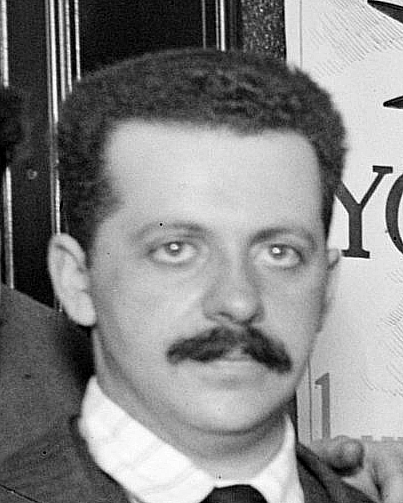
Portrait of public relations pioneer Edward Bernays. Bain News Service · Public domain

Edward Bernays

Austria / United States · 1891–1995

Sigmund Freud's nephew applied psychoanalytic ideas to mass persuasion, effectively inventing public relations as a profession and writing its founding texts, Crystallizing Public Opinion (1923) and Propaganda (1928). His campaigns — orchestrated events reported as news — remain the template for publicity stunts, and the core case study in marketing ethics.

The story

Hired by the American Tobacco Company, Bernays staged the 1929 "Torches of Freedom" march: he arranged for young women to light Lucky Strikes while walking in New York's Easter parade, having tipped off photographers that suffragette-style protesters would defy the taboo on women smoking in public. Newspapers nationwide reported the choreographed moment as spontaneous news. Sales to women rose, the taboo eroded — and Bernays, who lived to 103, spent his later decades campaigning against the tobacco industry he had served.

“An idea planted as news persuades far more powerfully than the same idea bought as advertising.”

Lifespan
103 years
Torches of Freedom
Easter 1929
Life's 100 most important Americans of the century
Named, 1990
5
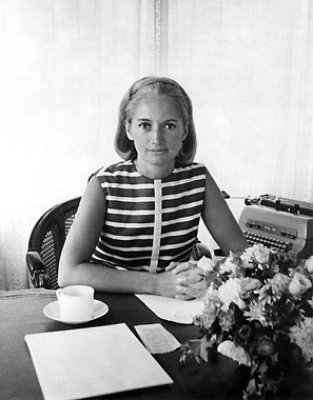
Photograph of advertising executive Mary Wells Lawrence. Wells Rich Greene · CC BY-SA 3.0

Mary Wells Lawrence

United States · 1928–2024

Founding Wells Rich Greene in 1966 at 37, Wells Lawrence became the first woman to found, run and take public a major advertising agency — and in 1968, the first female CEO of a company listed on the New York Stock Exchange. Her campaigns treated entire businesses, not just their ads, as the creative material.

The story

For struggling Braniff International Airways in 1965 she rejected the industry's polite jingles and rebuilt the product itself as the advertisement: "The End of the Plain Plane" had the fleet painted in seven bright colors by designer Alexander Girard and hostesses dressed by Emilio Pucci. A decade later, with New York near bankruptcy and its streets a byword for danger, her agency's 1977 "I Love New York" campaign — with Milton Glaser's logo, famously sketched in a taxi, and Steve Karmen's jingle — helped talk a city back into existence.

“When the product is the message, change the product — marketing's remit is bigger than the ad.”

First female CEO on the NYSE
1968, WRG
Age founding her agency
37 (1966)
I Love New York campaign
1977, still running
6
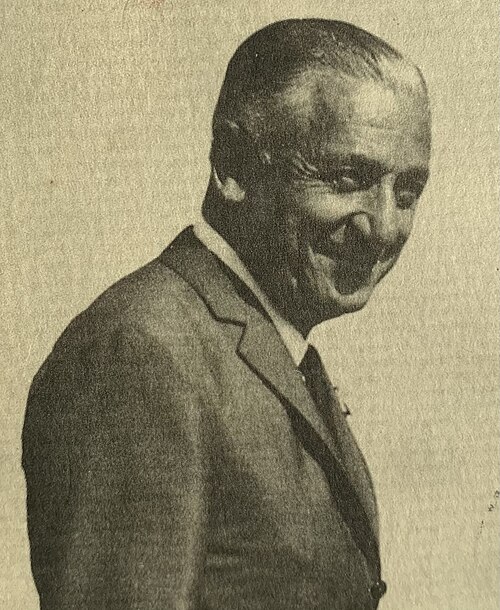
Portrait of Publicis founder Marcel Bleustein-Blanchet. Cgraysonwatson1996 · CC BY-SA 4.0

Marcel Bleustein-Blanchet

France · 1906–1996

At twenty, the son of a Jewish furniture dealer founded Publicis in a Paris apartment in 1926, then pioneered French radio advertising with his own station, Radio Cité, in the 1930s. He rebuilt the firm from nothing after the war into what is today one of the world's three largest advertising groups.

The story

When the Vichy regime's anti-Jewish statutes stripped Bleustein-Blanchet of his businesses in 1940, he escaped through Spain and joined the Free French forces as an airman. Returning to a liberated Paris in 1944 with his advertising empire confiscated and gone, he started Publicis again from zero — adding a market-research arm inspired by American methods, winning back French industry client by client, and in 1958 planting the flagship Publicis Drugstore on the Champs-Élysées as a statement that the firm, and French advertising, were back.

“A business built once on relationships and nerve can be built twice; the founder is the asset.”

Age founding Publicis
20 (1926)
Publicis Groupe today
Top-3 ad group
Radio Cité acquired
1935, Paris
7

Shirley Polykoff

United States · 1908–1998

The only woman copywriter at Foote, Cone & Belding when she took the Clairol account in 1955, Polykoff wrote "Does she… or doesn't she?" — the campaign credited with transforming hair coloring from a mark of fast women into an ordinary American habit, and one of the most effective lines in advertising history.

The story

The line was nearly killed twice. It came from Polykoff's own life — her mother-in-law had once asked in Yiddish whether Shirley colored her hair — and Life magazine initially refused the ad, hearing sexual innuendo. Clairol's response was pure Hopkins: Life polled its own female staff, none of whom detected the double meaning, and the magazine relented. In the campaign's first decade, the share of American women coloring their hair rose from roughly one in fifteen to nearly half, and Clairol's sales multiplied.

“Write the line the customer already says at home — then test your way past the gatekeepers.”

US women coloring hair, before → after
1 in 15 → ~1 in 2
Campaign launched
1956, Clairol
Advertising Hall of Fame
Inducted 1980
8

Piyush Pandey

India · 1955–2025

A former Ranji Trophy cricketer and tea taster who joined Ogilvy's Bombay office in 1982, Pandey led Indian advertising out of English-language imitation and into vernacular Hindi storytelling. His Fevicol campaigns made an industrial adhesive a national in-joke, and in 2018 he and his brother Prasoon became the first Asians awarded the Cannes Lion of St Mark.

The story

Pandey's Fevicol work turned a glue sold to carpenters into Indian popular culture: the celebrated "Bus" film showed an impossibly overloaded rural bus — passengers clinging to every surface, nobody falling off — over the tagline "Fevicol ka jod hai, tootega nahin" ("It's a Fevicol bond, it won't break"), a joke every Indian understood without a product shot in sight. In 2014 his slogan "Ab ki baar, Modi sarkar" became the spine of a winning national election campaign, proof of how far his colloquial register carried.

“Speak the audience's own idiom and humor; borrowed sophistication persuades nobody.”

Cannes Lion of St Mark
2018, 1st Asians
Years at Ogilvy India
40+ (from 1982)
Padma Shri awarded
2016

Bars are scaled to the leader in this list.

Comparison Lab

Toggle names on and off — every bar rescales to the leader of your selection.

5 / 8

The argument

Bernays is the list's permanent controversy: the same techniques that sold bacon breakfasts and bank accounts also sold cigarettes to women and, in 1954, helped the United Fruit Company build US public support for the coup in Guatemala. Historians still argue whether he belongs in a profession's hall of fame or its cautionary tales — the honest answer is both, which is why marketing ethics courses teach him first.

Kotler's inclusion is contested from the opposite direction: he never ran a brand, and practitioners from the Ehrenberg-Bass school argue parts of his canon — heavy segmentation, loyalty focus — are contradicted by buyer-behavior data. His defenders answer that every critic frames the argument in vocabulary Kotler standardized, which is its own kind of victory.

The deeper bias is structural: this history overweights advertising's famous campaigns because they were public, while the marketers who built demand through pricing, distribution and product decisions — many of them outside the Atlantic world entirely — left results but no showreel. The list's two women and one Indian are a correction; they are not the completion of one.

Keep exploring

More in Business & Finance