🎬The Greats

Film Director · Turns a screenplay into a finished film by deciding every shot, performance and cut, then persuades a producer, a studio and an audience the vision was worth the budget.

Directing became a recognizable profession only around the time Georges Méliès started building fantasy worlds out of stopped cameras in a Paris suburb; this list runs from his glass-walled 1897 studio to a South Korean director thanking his hero from the stage of the Academy Awards in 2020.

Each entry is chosen for a specific, checkable achievement rather than general fame, and the list deliberately crosses continents, decades and the persistent gap between celebrated men and the women who shaped the medium from its earliest years while receiving a fraction of the credit.

The all-time podium

Alice Guy-Blaché
Alice Guy-Blaché
France / United States
2
Georges Méliès
Georges Méliès
France
1
Sergei Eisenstein
Sergei Eisenstein
Russian Empire / Soviet Union
3

The eight who reached the top

1
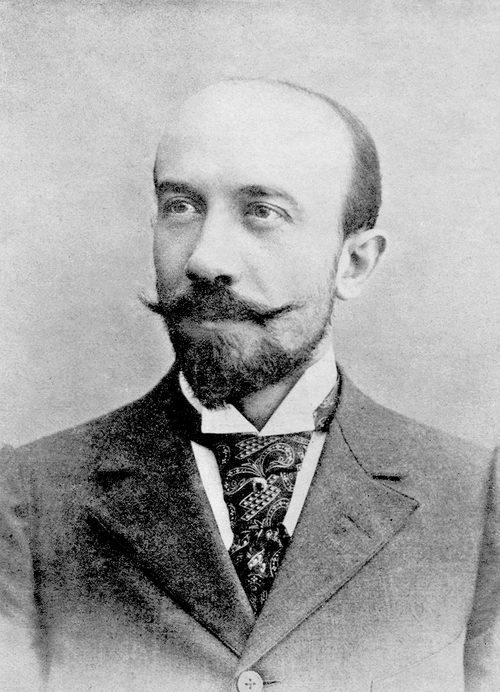
Portrait photograph of Georges Méliès Georges Méliès · Public domain

Georges Méliès

France · 1861–1938

A former stage magician who bought a movie camera in 1896, Méliès built cinema's first true studio and treated the camera as a magic-trick machine, inventing the stop trick and hand-tinted colour; A Trip to the Moon (1902) is film's first true special-effects blockbuster.

The story

According to Méliès's own account, the trick came from an accident: filming a Paris street from a stalled tram around 1896, his camera jammed for a few seconds; when he developed the film, a horse-drawn hearse had seemingly transformed into an omnibus, because traffic had moved on while the camera sat still. Méliès recognized what had happened and began stopping the camera deliberately mid-shot to make objects vanish, appear or transform, the substitution splice underlying nearly every trick effect since.

“A technical accident, closely observed, can become an entire visual grammar; treat every glitch as a possible technique.”
Films directed
~520 (1896–1913)
Studio founded
1897, Montreuil
A Trip to the Moon
1902, 14 min
2
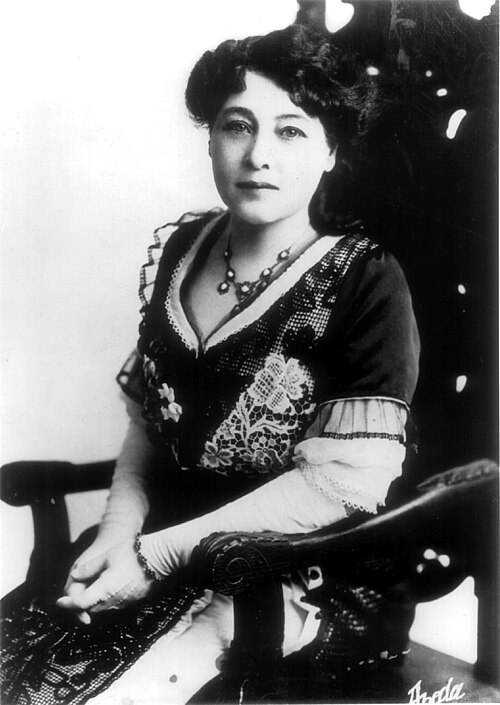
Portrait photograph of Alice Guy-Blaché Apeda Studio New York · Public domain

Alice Guy-Blaché

France / United States · 1873–1968

Hired as a secretary at Gaumont in 1894, Guy-Blaché became one of cinema's first fiction directors around 1896, ran Gaumont's production department for a decade, then built and ran her own studio, Solax, in the United States before film history largely erased her.

The story

At her own Solax Studio in Fort Lee, New Jersey, which she ran from 1910, Guy-Blaché is said to have hung a large sign reading 'BE NATURAL' above the stage, instructing actors trained in exaggerated stage technique to drop theatrical gestures for the more intimate scale the camera required, a directing philosophy so central to her method that a 2018 documentary about her rediscovery took the phrase as its title.

“The instruction you repeat to every actor becomes your directing style; hers was two words on a sign.”

Films directed (many lost)
Est. 700+
Solax Studio founded
1910, New Jersey
Career span
~24 yrs (1896–1920)
3
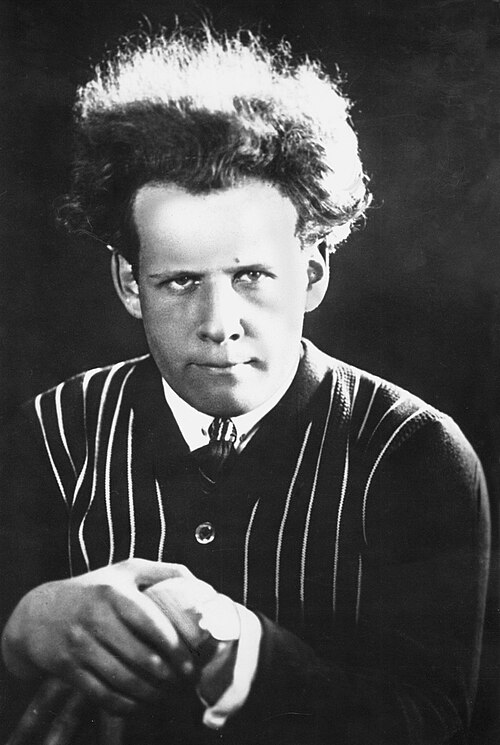
Portrait photograph of Sergei Eisenstein Unknown author Unknown author · Public domain

Sergei Eisenstein

Russian Empire / Soviet Union · 1898–1948

A Soviet director and film theorist whose Battleship Potemkin (1925) turned montage, the collision of shots to generate meaning beyond either image alone, into a rigorous, teachable system that reshaped how directors everywhere think about editing.

The story

For Battleship Potemkin's Odessa Steps sequence, Eisenstein built the massacre almost entirely in the cutting room: he shot the scene with local Odessa residents as extras over several days in 1925, then intercut close-ups, mid-shots and a runaway baby carriage in a rhythm designed to accelerate the viewer's pulse rather than record events in real time, a fictional massacre assembled so persuasively through editing that many viewers have mistaken it for a historical record ever since.

“Meaning can be built in the cutting room, not just in front of the camera; editing decides a sequence's true rhythm.”

Odessa Steps sequence
~6 minutes
Completed features
7 (1925–1946)
Ivan the Terrible, Part II
Banned until 1958
4
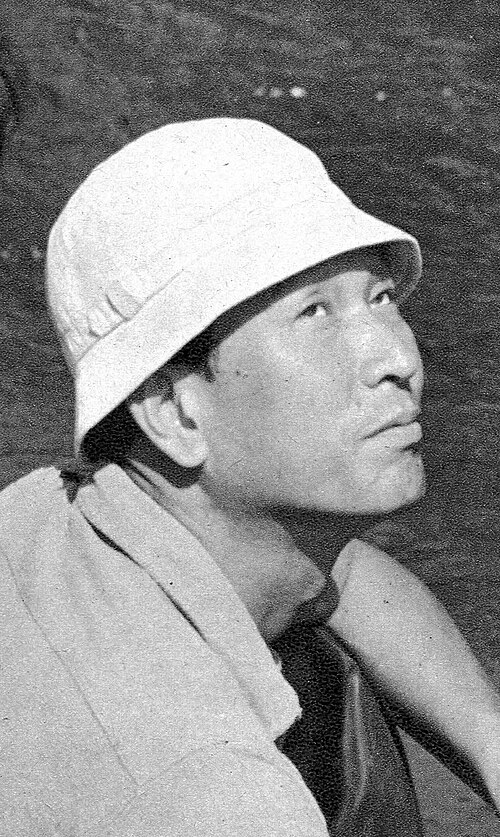
Portrait photograph of Akira Kurosawa 映画の友 (Eiga no tomo) · Public domain

Akira Kurosawa

Japan · 1910–1998

Kurosawa directed 30 features across fifty years, from Rashomon (1950), whose structure of contradictory eyewitness accounts gave film theory the term 'Rashomon effect,' to Seven Samurai (1954), whose ensemble-heist structure has been remade and imitated across world cinema ever since.

The story

The three assistant directors on Rashomon reportedly went to Kurosawa's home together to ask him to explain the confusing, contradictory script, since even they couldn't follow it. According to Kurosawa's own memoir, he reread it and told them human beings are unable to be honest about themselves, and that the script simply depicted people embellishing the truth about their own lives; the explanation convinced them, and shooting proceeded as written.

“If your own crew doesn't understand a story's structure, explain the human truth underneath it rather than simplifying the plot.”

Features directed
30 (1943–1993)
Rashomon, Venice Golden Lion
1951
Seven Samurai runtime
207 minutes
5
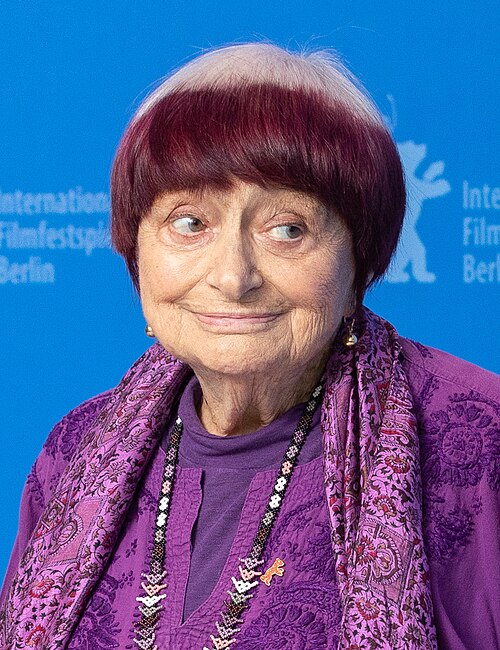
Portrait photograph of Agnès Varda Martin Kraft · CC BY-SA 4.0

Agnès Varda

Belgium / France · 1928–2019

Often called the 'grandmother of the French New Wave' though she began before it, Varda's La Pointe Courte (1954) anticipated the movement's location shooting years before Truffaut or Godard, and she kept directing radically personal films for six decades, into her final year of life.

The story

Varda made her first feature, La Pointe Courte, in 1954, five years before Truffaut's The 400 Blows is usually credited with starting the French New Wave, filming professional actor Philippe Noiret alongside non-professional local fishermen in the town of Sète, financed with money from her own family. She later said she had seen barely a handful of films before directing it, coming from still photography rather than a cinephile background, and cut the film with editor Alain Resnais, not yet a director himself.

“You do not need a cinephile's training to reinvent film form; direct observation can substitute for it.”

Career span
63 yrs (1954–2017)
Honorary Palme d'Or
2015, 1st woman
Honorary Oscar
2017, age 89
6
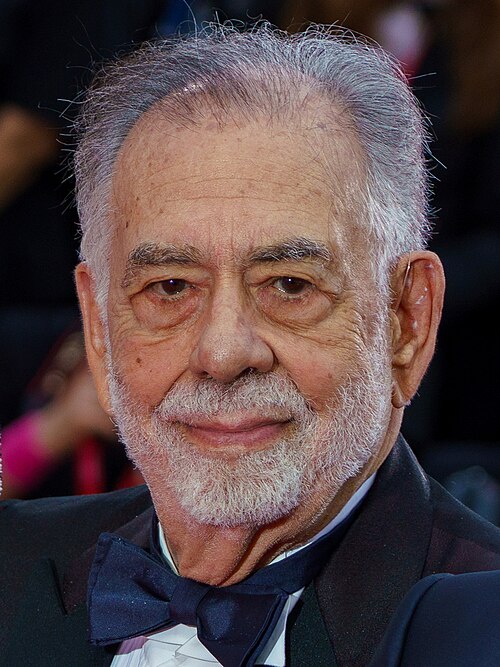
Portrait photograph of Francis Ford Coppola Colleen Sturtevant · CC BY-SA 4.0

Francis Ford Coppola

United States · b. 1939

A UCLA-trained New Hollywood director who won three Oscars for The Godfather Part II (1974) alone, director, picture, screenplay, then nearly destroyed himself making Apocalypse Now (1979), a production so disastrous it became its own famous documentary.

The story

When Marlon Brando arrived in the Philippines to play Colonel Kurtz on Apocalypse Now, he had not read Joseph Conrad's Heart of Darkness, the novel the role was loosely based on, and had gained significant weight, forcing Coppola to shoot him mostly in shadow and improvise Kurtz's dialogue with him night after night as the production, delayed by a typhoon and Martin Sheen's on-set heart attack, stretched from a planned six weeks to well over a year.

“When a production spirals outside your control, adapt the film's very form to the disaster rather than fighting it.”

Godfather Part II Oscars
3 in one film, 1975
Apocalypse Now production
~16 mo, planned 6 wks
Palme d'Or wins
2 (1974, 1979)
7

Kathryn Bigelow

United States · b. 1951

The first woman to win the Academy Award for Best Director, for The Hurt Locker (2010), Bigelow built a career directing tense, physically demanding action and war films, a genre Hollywood had almost never handed to a woman director before her.

The story

At the 2010 Academy Awards, Bigelow's low-budget Iraq War drama The Hurt Locker won Best Picture and Best Director over Avatar, the highest-grossing film ever made at the time, directed by her former husband James Cameron, a rare instance of two ex-spouses facing off for the same top prizes, decided in her favor, and the first time in the Academy's 82-year history a woman had won the directing award.

“A story told with discipline and restraint can beat spectacle built on a hundred times the budget.”

Best Director Oscar
2010, 1st woman
The Hurt Locker budget
~$15M
vs. Avatar box office
$15M vs. ~$2.7B
8

Bong Joon-ho

South Korea · b. 1969

Bong's class-conflict thriller Parasite (2019) became the first non-English-language film to win the Academy Award for Best Picture, capping a career that moved fluidly between Korean-language films and international productions like Snowpiercer (2013) and the Netflix-backed Okja (2017).

The story

Accepting the Best Director Oscar for Parasite in 2020, becoming only the second Asian filmmaker ever to win the award, Bong said through his interpreter that he had learned as a film student to live by a quote from fellow nominee Martin Scorsese, 'the most personal is the most creative,' prompting the ceremony's audience to rise and applaud Scorsese, sitting in the room having lost the award to the director who had just credited him.

“Even the night you beat your own hero, publicly crediting them costs nothing and can define the room.”

Best Picture Oscar
2020, 1st non-English
Parasite Oscars won
4 of 6 nominations
Cannes Palme d'Or
2019, unanimous

Bars are scaled to the leader in this list.

Comparison Lab

Toggle names on and off — every bar rescales to the leader of your selection.

5 / 8

The argument

D. W. Griffith remains the profession's most uncomfortable canonical figure: the close-up, cross-cutting and feature-length structure he pioneered still shape how films are edited, yet his most technically influential film, The Birth of a Nation (1915), is explicit Ku Klux Klan propaganda that helped fuel the Klan's 1915 revival, and film schools still argue over how, or whether, to teach his technique separately from what he used it for.

Whether a director deserves primary authorial credit for a film at all is a live argument, not settled history: critic Pauline Kael's 1971 essay 'Raising Kane' claimed screenwriter Herman J. Mankiewicz, not director Orson Welles, deserved the greater share of credit for Citizen Kane, a dispute historians still revisit whenever a director's singular genius is used to explain what was, on every film, a collaborative production.

Keep exploring

More in Arts & Creation