🐾The Greats

Veterinarian · Treats patients from goldfish to horses that cannot describe a symptom, and carries the legal power to end their suffering by euthanasia.

Veterinary medicine's roll of honor runs from an army horse doctor riding with a Roman emperor to a Ugandan wildlife vet still practicing today, by way of a woman who practiced for twenty-two years before her own college would call her a veterinary surgeon.

Each entry is chosen for a specific, checkable achievement rather than general fame, and the list deliberately crosses continents, centuries and the divide between the celebrated men who dominate the profession's early written record and the women who were, for most of that history, shut out of its schools altogether.

The all-time podium

Claude Bourgelat
Claude Bourgelat
France
2
Absyrtus
Absyrtus
Byzantine Empire (Bithynia, modern Turkey)
1
Daniel Elmer Salmon
Daniel Elmer Salmon
United States
3

The eight who reached the top

1
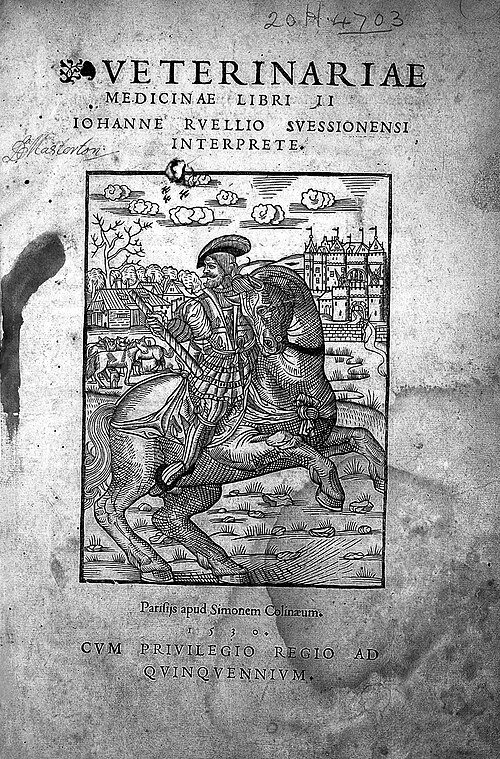
Illuminated manuscript depiction of a Byzantine-era horse doctor at work Unknown author · CC BY 4.0

Absyrtus

Byzantine Empire (Bithynia, modern Turkey) · c. 280 – c. 360 CE

The earliest veterinary author known by name, Absyrtus served as chief horse doctor to Emperor Constantine's cavalry and wrote case notes on contagious equine disease that later Byzantine scribes compiled into the Hippiatrica, the standard veterinary reference of the medieval Greek-speaking world.

The story

In 322 CE, Absyrtus rode with Constantine's cavalry against the Sarmatians on the Danube frontier, serving as the army's senior horse doctor while also drilling ordinary cavalrymen in basic veterinary care, since the empire could not spare a specialist for every unit. His notes on contagious horse diseases were copied, translated and recopied by Byzantine scribes for centuries, eventually forming the core of the Hippiatrica, still consulted by horse doctors a thousand years after he wrote it.

“When you can't be everywhere yourself, teach the basics widely — Absyrtus trusted ordinary soldiers with care he couldn't personally provide.”
Historical priority
Earliest known vet author
Time depth
~1,700 years ago
Hippiatrica influence
Cited for 1,000+ years
2
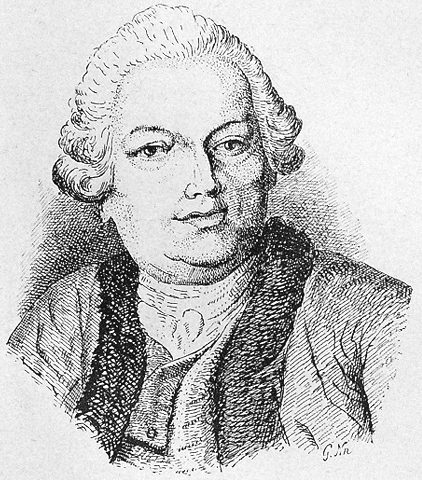
Portrait engraving of Claude Bourgelat Unknown author Unknown author · Public domain

Claude Bourgelat

France · 1712–1779

A lawyer turned riding-academy director, Bourgelat spent a decade lobbying the French crown before opening the world's first veterinary school at Lyon in 1761, followed by a second at Alfort in 1765 — the moment animal medicine became a taught science rather than a craft.

The story

Bourgelat trained as a lawyer and held no medical degree; his authority came from years running Lyon's royal riding academy, where he grew frustrated watching farriers treat sick horses and cattle by guesswork. He published his case for a veterinary school in 1750 and spent a decade courting Louis XV's minister Henri-Léonard Bertin, a physiocrat convinced healthier livestock meant a healthier French economy, before the Lyon school finally opened in 1761. He founded a second school at Alfort, near Paris, four years later.

“Institutional change often takes a decade of patient lobbying before the right political moment and the right patron arrive together.”

Veterinary schools founded
2 (Lyon 1761, Alfort 1765)
Years ahead of London's RVC
30 years (1761→1791)
Years spent lobbying first
~10 years (1750–61)
3
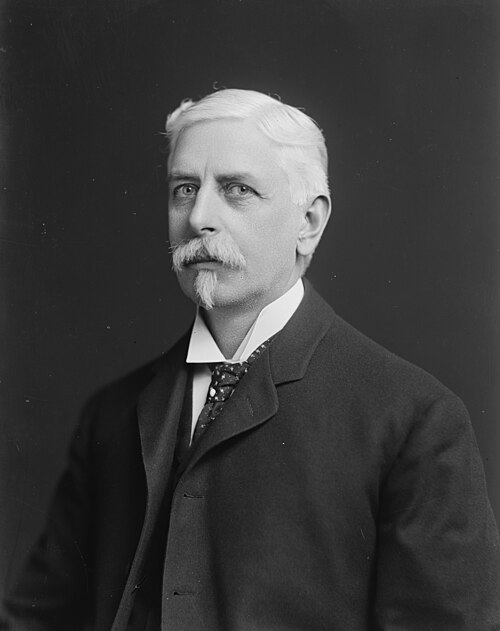
Portrait photograph of Daniel Elmer Salmon C. M. Bell Studio · Public domain

Daniel Elmer Salmon

United States · 1850–1914

The first American to earn a veterinary degree, Salmon built and led the US Bureau of Animal Industry from 1884 to 1905, eradicating contagious bovine pleuropneumonia nationwide and creating the federal meat-inspection system — with the bacterium Salmonella named in his honor.

The story

In 1885, a young scientist in Salmon's own Bureau of Animal Industry laboratory, Theobald Smith, isolated the bacterium behind hog cholera. Following the era's convention that a laboratory's director received credit for work done under him, the organism was published and named Salmonella after Salmon rather than Smith, even though later historians agree Smith did the defining research himself. Salmon spent those same years building the federal meat-inspection system and eradicating contagious bovine pleuropneumonia from the entire country — real achievements a bacterium's name would eventually overshadow.

“A boss's name on a discovery isn't proof of whose insight it was — check who actually did the work.”

First US veterinary degree
1st DVM in the US, 1876
Bureau of Animal Industry tenure
21 years as chief
Bacterial genus named after him
Salmonella, 1900
4
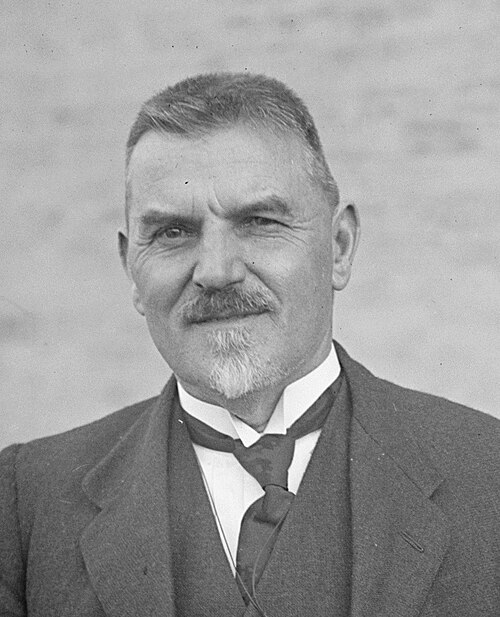
Portrait photograph of Arnold Theiler National Photo Company · Public domain

Arnold Theiler

Switzerland / South Africa · 1867–1936

Appointed South Africa's state veterinarian in 1896 during a catastrophic rinderpest outbreak, the Swiss-trained Theiler helped develop an effective vaccine within a year and went on to found the Onderstepoort Veterinary Institute in 1908, the continent's leading veterinary research center.

The story

When rinderpest reached the Transvaal in 1896, killing cattle fast enough that some farmers lost entire herds within days, President Paul Kruger's government appointed the 29-year-old Theiler state veterinarian and told him to find a solution. He worked alongside Robert Koch, sent from Germany, and researchers from France's Pasteur Institute, refining a serum-and-virus inoculation that protected cattle without the high death rate of earlier, cruder methods. The technique became the template for the Onderstepoort Institute he founded in 1908, which later developed vaccines against East Coast fever, bluetongue and blackquarter as well.

“The best answer to a crisis often comes from pulling in outside experts fast, not from working alone.”

Onderstepoort founding
Founding director, 1908
Major diseases addressed
4 (rinderpest, ECF & more)
Parasite genus named after him
Theileria
5
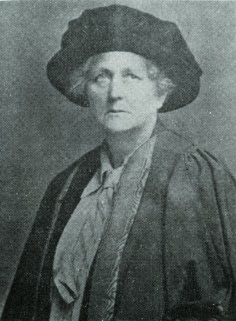
Portrait photograph of Aleen Cust Unknown author Unknown author · Public domain

Aleen Cust

Ireland / United Kingdom · 1868–1937

The first woman to practice veterinary medicine in Britain and Ireland, Cust finished top of her class at Edinburgh in 1897 but was barred from formal recognition for twenty-two years, finally receiving her diploma in 1922 after wartime equality legislation forced the Royal College's hand.

The story

Cust finished top of her class at Edinburgh's New Veterinary College in 1897, but the Royal College of Veterinary Surgeons refused to examine her, ruling its charter's word 'student' meant male student only. She practiced anyway for over twenty years as an uncredentialed assistant to veterinary surgeon William Byrne in Roscommon, Ireland, treating farm animals well enough that local farmers stopped caring what the RCVS called her. Only after the 1919 Sex Disqualification (Removal) Act forced the college's hand did Cust receive her diploma, on 21 December 1922 — twenty-two years after completing her training.

“Competence proven in the field can outrun formal recognition by decades — keep practicing while you fight for the title.”

Years practising before recognition
22 years (1900–1922)
First woman MRCVS
UK & Ireland, 1922
Scholarship endowed to women vets
£5,000 bequest
6

James Herriot

England · 1916–1995

The pen name of Yorkshire practitioner Alf Wight, Herriot turned decades of country-vet work into memoirs that sold over 80 million copies worldwide, giving the profession its single most influential public image and, by most accounts, drawing a generation of readers into veterinary careers.

The story

Alf Wight had practised as a country vet in Thirsk, Yorkshire, for over twenty years before he wrote a word for publication, and professional rules treated a vet's byline as advertising, so he needed a pseudonym. Watching Match of the Day the night before mailing his first manuscript, he saw Birmingham City's goalkeeper, Jim Herriot, have a strong game, and borrowed the name on the spot. Writing as James Herriot, his memoirs went on to sell more than 80 million copies in 36 languages.

“A pen name forced by red tape can still carry a true story further than the real name ever would have.”

Books sold worldwide
80 million+ copies
Languages translated
36 languages
Years in Thirsk practice
~50 years
7

James Harlan Steele

United States · 1913–2013

Called the 'father of veterinary public health', Steele built the CDC's first Veterinary Public Health Division in 1947, became the US Public Health Service's first assistant surgeon general for veterinary affairs, and spent seven decades linking animal disease to human health before 'One Health' was a named movement.

The story

When Steele proposed a Veterinary Public Health Division inside the young Communicable Disease Center in 1947, most American public-health officials had never worked alongside a veterinarian and saw little reason to start. He built the division anyway, then spent years personally investigating diseases that jump between animals and people — brucellosis in dairy herds, Q fever among slaughterhouse workers, psittacosis traced to imported parrots — compiling the case-by-case evidence that made zoonotic disease a recognized public-health category rather than a veterinary curiosity.

“A discipline can start as one person doing the unglamorous case-tracing work nobody else thinks is their job.”

CDC veterinary public health division
Founded 1947, 1st of its kind
Career span
~70 years, until 2013
Age at death
100 years old
8

Gladys Kalema-Zikusoka

Uganda · b. 1970

Uganda's first wildlife veterinarian, Kalema-Zikusoka built the Uganda Wildlife Authority's veterinary department in 1996 and founded Conservation Through Public Health in 2003, protecting endangered mountain gorillas by treating the human and livestock disease risks living alongside them.

The story

In the mid-1990s, as Uganda Wildlife Authority's first staff veterinarian, Kalema-Zikusoka investigated an outbreak of scabies among Bwindi's mountain gorillas and traced it to mites carried by people living at the park's edge — evidence that human illness could directly threaten a population numbering only a few hundred individuals. The finding, unusual at the time for treating gorilla and human health as one problem rather than two, led her to found Conservation Through Public Health in 2003, training nearby communities in hygiene and livestock care specifically to protect the gorillas living next door.

“Protecting an endangered species can mean treating the humans and livestock beside it, not just the animal itself.”

Uganda's first wildlife vet dept.
Founded 1996
Conservation org founded
CTPH, 2003
Indianapolis Prize recognition
2023 finalist

Bars are scaled to the leader in this list.

Comparison Lab

Toggle names on and off — every bar rescales to the leader of your selection.

5 / 8

The argument

Whether Daniel Salmon deserves Salmonella's name is still debated: bureau records and later historians credit the actual bacterial identification to his subordinate Theobald Smith, working in Salmon's own laboratory in 1885 — a credit dispute typical of an era when a lab director's name routinely eclipsed the researcher who did the work.

Credit for the 1896 rinderpest vaccine is genuinely contested: Theiler worked alongside Robert Koch and researchers from France's Pasteur Institute, all independently testing similar serum-based methods in South Africa the same year, and historians still disagree how much of the final technique was Theiler's own refinement versus a synthesis several scientists were converging on at once.

Keep exploring

More in Medicine & Life