🏫The Greats

Teacher · The world's largest profession: from Sumerian tablet houses to AI-era classrooms, one adult tasked with turning thirty strangers into a room that learns.

Teaching hides its legends. A surgeon's triumph is an event; a teacher's is distributed across decades of other people's lives, which is why history mostly recorded teachers only when a famous student, a new method or a public fight made them visible. The eight below are chosen because their teaching itself — not merely their writing about it — is documented and still shapes classrooms.

They span two and a half millennia and seven countries: a wandering master in Bronze-Age-old China, a barefoot questioner in Athens, a refugee bishop, a teenage girl defying caste in Pune, a half-blind governess in Alabama, a physician in a Roman slum, a Brazilian in exile, and a Bolivian immigrant in East Los Angeles. Each demonstrates the same claim from a different angle: taught well, people learn far more than anyone predicted.

The all-time podium

Socrates
Socrates
Greece
2
Confucius
Confucius
China
1
Jan Amos Comenius
Jan Amos Comenius
Czech lands (Moravia)
3

The eight who reached the top

1
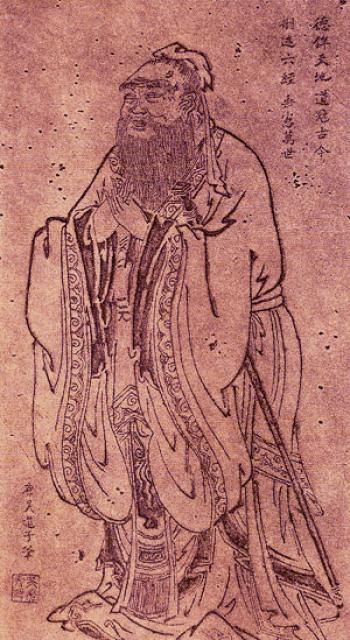
Traditional portrait of the Chinese teacher and philosopher Confucius. Wu Daozi , 685-758, Tang Dynasty. · Public domain

Confucius

China · 551–479 BCE

Kong Qiu of the state of Lu became civilization's model teacher: the Analects, compiled by his students after his death, records a master who accepted pupils regardless of birth, charged whatever they could bring, and tuned every answer to the learner in front of him. Chinese education rested on his texts for two millennia.

The story

In Analects 11.22, two students ask Confucius the identical question: should I put what I learn into practice at once? He tells the bold Zilu to consult his father and elder brother first, and the hesitant Ran You to act immediately. When a third student asks why the same question earned opposite answers, Confucius explains: Ran You holds back, so I urged him forward; Zilu has the energy of two men, so I held him back. It remains the classic statement of teaching the student, not the lesson.

“The right answer depends on who is asking: teach the person in front of you, not the abstract class.”
Disciples, traditional count
3,000 (72 masters)
Years wandering between states
14 (497–484 BCE)
Exam canon built on his texts
~1,300 yrs (605–1905)
2
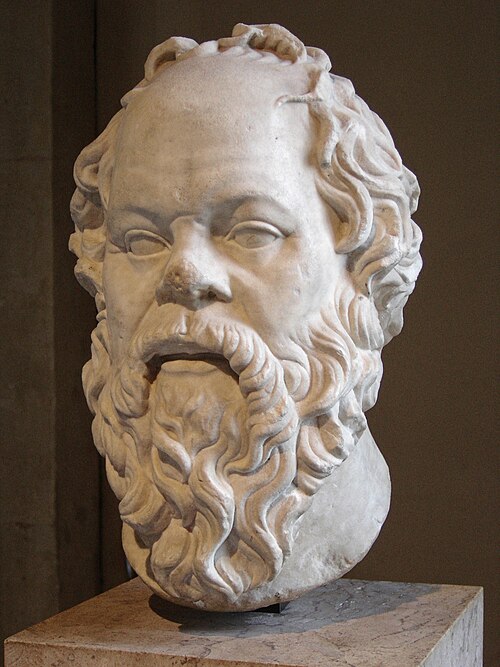
Marble bust of the Athenian philosopher Socrates. Copy of Lysippos (?) · Public domain

Socrates

Greece · c. 470–399 BCE

Socrates wrote nothing, charged nothing, and founded no school, yet the method carrying his name — teaching by disciplined questioning rather than telling — is practiced daily in law schools and seminar rooms 2,400 years later. Everything we know of his teaching comes through his students, above all Plato.

The story

In Plato's Meno, Socrates puts a chain of questions about a drawn square to Meno's uneducated enslaved boy and, without stating a single fact himself, leads him first into a confident wrong answer, then into open puzzlement, then into correctly doubling the square's area. Socrates then turns to Meno and presses the demonstration's real point: the boy's moment of confusion was progress, not failure, because discovering you are wrong is the beginning of learning — a defense of productive struggle still cited by educators.

“A well-sequenced question teaches what a lecture cannot: it lets learners watch themselves find out.”

Written works left behind
0
Students who founded schools
4+ (incl. Plato)
Method still bearing his name
2,400+ years
3
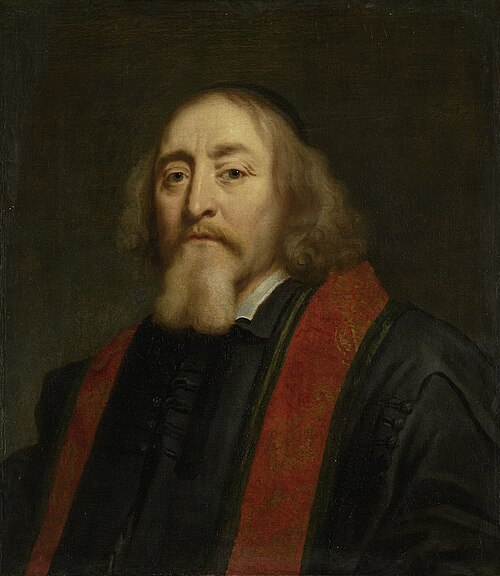
Portrait of Jan Amos Comenius, the Moravian bishop and educational reformer. Jürgen Ovens · Public domain

Jan Amos Comenius

Czech lands (Moravia) · 1592–1670

A Moravian bishop driven into permanent exile after the Battle of White Mountain in 1620, Comenius argued in his Great Didactic that everything should be taught to everyone — girls as well as boys, poor as well as rich, in the vernacular, in graded steps — and then built the tools to do it.

The story

In 1658 Comenius published Orbis Sensualium Pictus, "The Visible World in Pictures": 150 numbered woodcuts pairing images with Latin and vernacular words, on the then-radical theory that children learn through their senses rather than by rote. It stayed in European classroom use for roughly two centuries. He wrote it as a refugee who two years earlier had lost his house, library and manuscripts — including a Czech dictionary forty years in the making — when the Polish town of Leszno burned. Cotton Mather later recorded that Comenius had been invited to lead Harvard.

“Meet the learner's senses first; abstraction only sticks to experience.”

Orbis Pictus in classroom use
~200 years
Years lived in exile
42 (1628–1670)
First picture textbook
1658, Nuremberg
4
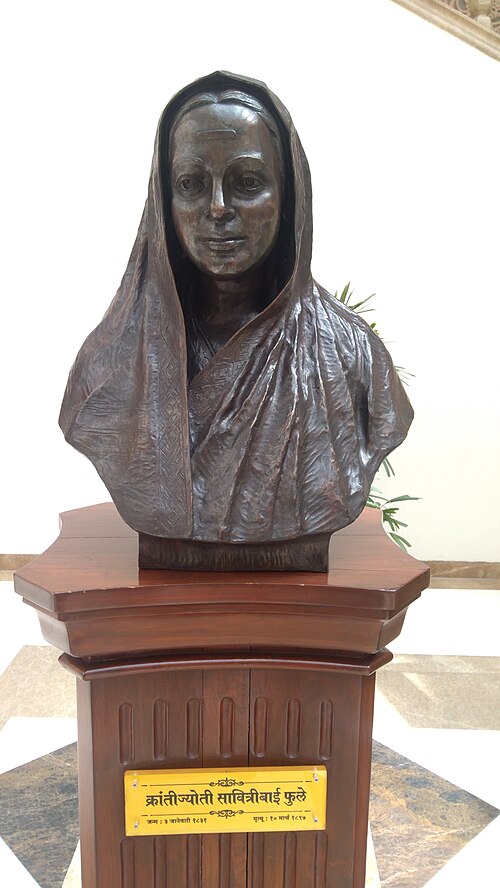
Portrait of Savitribai Phule, pioneer of girls' education in India. आशीष भटनागर · CC BY-SA 3.0

Savitribai Phule

India · 1831–1897

Married at nine and taught to read by her husband Jyotirao, Savitribai Phule trained as a teacher and became modern India's first female headmistress, opening a school for girls at Bhide Wada in Pune in January 1848 in defiance of caste and gender orthodoxy. The couple eventually ran eighteen schools.

The story

On her daily walk to the Bhide Wada school, opponents of educating girls pelted Phule with stones and cow dung, so she carried a second sari and changed on arrival before teaching. The same stubbornness ran five more decades: schools for girls and for children of castes then called untouchable, a shelter for widows and their children, and finally plague-relief work in Pune in 1897, during which she carried a sick child to the clinic herself, contracted the plague, and died of it in March that year.

“Where custom bars the door, walking through it daily — visibly, repeatedly — is itself the teaching.”

First girls' school opened
1848, Pune
Schools founded with Jyotirao
18
Age when she began teaching
17
5
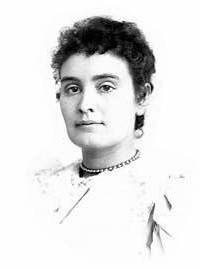
Photograph of Anne Sullivan, teacher of Helen Keller. unknown; User Hans Dunkelberg der Jüngere on de.wikipedia · Public domain

Anne Sullivan

United States · 1866–1936

Half-blind from childhood trachoma and raised in a Massachusetts almshouse, Sullivan graduated valedictorian of the Perkins School for the Blind and, at twenty, took a post in Alabama teaching Helen Keller, a deaf-blind six-year-old no one had reached. She remained Keller's teacher and companion for forty-nine years.

The story

On 5 April 1887, a month after arriving in Tuscumbia, Sullivan held one of Helen Keller's hands under the spout of a water pump and spelled w-a-t-e-r into the other as the water ran over it. Keller later wrote that the living word wakened her soul; that same day she demanded the finger-spelled name of everything she touched, learning around thirty words by nightfall. Sullivan went on to spell entire university lectures into Keller's hand through her Radcliffe degree, completed in 1904.

“Find the one channel that works, then pour the whole world through it.”

Days from arrival to breakthrough
33 (Mar–Apr 1887)
Words Helen learned that day
~30
Years teaching Keller
49 (1887–1936)
6
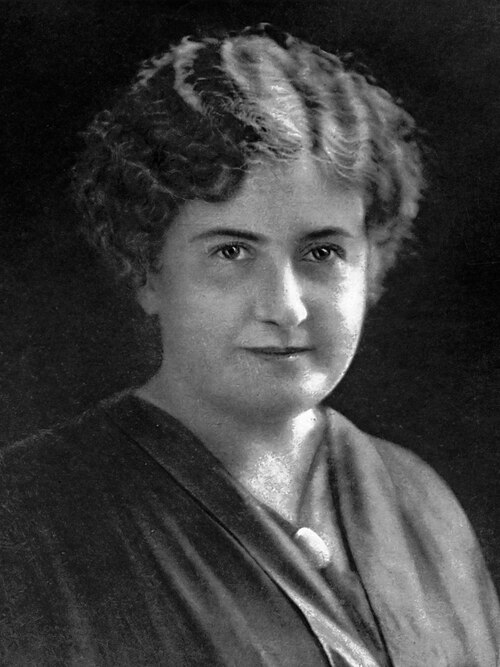
Photograph of Maria Montessori, physician and founder of the Montessori method. Unknown author Unknown author · Public domain

Maria Montessori

Italy · 1870–1952

One of Italy's first women to qualify as a physician, Montessori opened the Casa dei Bambini in Rome's San Lorenzo slum on 6 January 1907 and watched poor three- to six-year-olds teach themselves through prepared materials. The method she systematized from those observations now runs in thousands of schools on every continent.

The story

Mussolini's government initially embraced Montessori's internationally famous schools, but when the regime pressed to fold her classrooms into its fascist youth organizations she refused, and in 1934 the Montessori schools in Italy were closed and she left the country. Interned in India as an enemy alien during the war, she spent those years training thousands of Indian teachers instead. She was nominated for the Nobel Peace Prize in 1949, 1950 and 1951, and Italy later printed her portrait on its 1,000-lire banknote.

“Prepare the environment, then get out of the way; the child does the constructing.”

First Casa dei Bambini
1907, Rome
Nobel Peace Prize nominations
3 (1949–51)
Montessori schools worldwide
15,000+
7

Paulo Freire

Brazil · 1921–1997

A lawyer turned adult-literacy educator from Recife, Freire taught reading through words drawn from learners' own working lives and argued in Pedagogy of the Oppressed (1968) that education is never neutral — it either domesticates or liberates. The book became one of the most-cited works in the social sciences.

The story

In 1963 in Angicos, in Brazil's arid northeast, Freire's team taught roughly 300 sugarcane workers and farmhands to read and write in about forty-five days, building lessons from "generative words" like brick and wage taken from the learners' own vocabulary. The national literacy program modeled on Angicos died in the 1964 military coup: Freire was jailed for seventy days and spent sixteen years in exile in Chile, at Harvard and in Geneva before returning in 1980, later serving as São Paulo's municipal secretary of education.

“Start from words the learner already lives; literacy lands fastest when it explains the learner's own world.”

Workers in the Angicos course
~300
Days to basic literacy
~45
Years in exile after 1964
16
8

Jaime Escalante

Bolivia / United States · 1930–2010

A physics teacher from La Paz who emigrated in 1963 and requalified in California while working as a busboy and cook, Escalante built an Advanced Placement calculus program at Garfield High in East Los Angeles that made a struggling school a national argument about expectations.

The story

In 1982, eighteen of Escalante's Garfield students passed the AP Calculus exam — and the Educational Testing Service, suspicious of similar answers from a poor, largely Latino school, invalidated fourteen of the scores. Twelve students agreed to retake the exam under tightened supervision, and every one passed again, several with higher scores. The vindication became the 1988 film Stand and Deliver, with Edward James Olmos earning an Oscar nomination as Escalante, and by the late 1980s Garfield produced more AP calculus candidates than all but a handful of American public schools.

“Students rise or sink to the expectation set for them; ganas — the will to learn — can be taught.”

Students passing AP Calculus, 1982
18
Retested students who passed again
12 of 12
Year of Stand and Deliver
1988

Bars are scaled to the leader in this list.

Comparison Lab

Toggle names on and off — every bar rescales to the leader of your selection.

5 / 8

The argument

Socrates is on every list of great teachers, yet everything attributed to him was written by his students — chiefly Plato, who used him as a character for decades. How much of the "Socratic method" belongs to the historical teacher and how much to Plato's authorship is a genuinely open scholarly question.

Escalante's story is contested from the other direction: after he left Garfield in 1991, the calculus program he built declined sharply, which education researchers cite as evidence that heroic individual teachers cannot substitute for systems — a reading that complicates, without erasing, what he demonstrated about expectations.

The deeper bias is documentation. Teaching's history was made overwhelmingly by village schoolmasters, madrasa and temple teachers, mission-school teachers and millions of women in primary classrooms who left no books and had no famous students to memorialize them. A list like this records the visible eight; the profession's real monument is anonymous.

Keep exploring

More in Education & Humanities