🩺Origins & Evolution

Physician · Diagnoses illness and manages health for years afterward through examination and evidence, not a single operation — medicine's generalist and long-term guide.

Long before medicine could reliably cure much of anything, it had physicians: people trusted to observe a sick body, name what ailed it, and prescribe a course of action. For most of history that trust rested on inherited theory more than proven results — a confident diagnosis and a plausible-sounding remedy often mattered more than whether the treatment actually worked.

This page follows the physician from Hippocratic Greece through the Islamic Golden Age, the birth of clinical observation, the 1910 reform that turned medical schools into laboratories, and the evidence-based movement that still defines the job today — plus three roles the profession left behind along the way.

Where it began

c. 400 BCEKos and the Greek world

Hippocrates of Kos and his followers produced the Hippocratic Corpus, roughly sixty texts arguing that disease came from natural, bodily causes — an imbalance of humors — rather than the anger of gods, and that a physician's job was to observe it methodically. The Epidemics books record individual patient histories almost day by day, including the case of Philiscus, who lived by the town wall at Thasos and died on the sixth day of a fever the text tracks symptom by symptom — one of the earliest detailed clinical case notes in Western medicine. Not every text in the Corpus was written by Hippocrates himself, but the collection fixed his name to the idea that medicine should be a rational craft, not a religious one.

Timeline

c. 400 BCEThe Hippocratic Corpus takes shape

Physicians on Kos and elsewhere compile roughly sixty texts arguing that disease has natural causes, not divine ones, and record some of the first detailed clinical case histories, including patients tracked almost day by day in the Epidemics.

169 CEGalen becomes the emperor's physician

Having built his reputation treating gladiators' wounds in Pergamon and demonstrating anatomy in Rome, Galen is summoned by Marcus Aurelius to serve as imperial physician, cementing a physiological system that will dominate Western and Islamic medicine for the next 1,400 years.

1025Ibn Sina completes the Canon of Medicine

Working in Hamadan, the Persian physician and polymath Ibn Sina (Avicenna) finishes a five-volume encyclopedia of diagnosis, drug testing and disease that becomes the standard medical textbook of the Islamic world and, after its 12th-century Latin translation, of European universities for over 500 years.

1347The Black Death overwhelms Europe's physicians

Bubonic plague kills an estimated one-third of Europe's population over four years; academically trained physicians, working from humoral theory, can do little beyond urging quarantine and flight, exposing the gap between learned medical theory and any real ability to cure.

1619The plague doctor's beaked mask appears

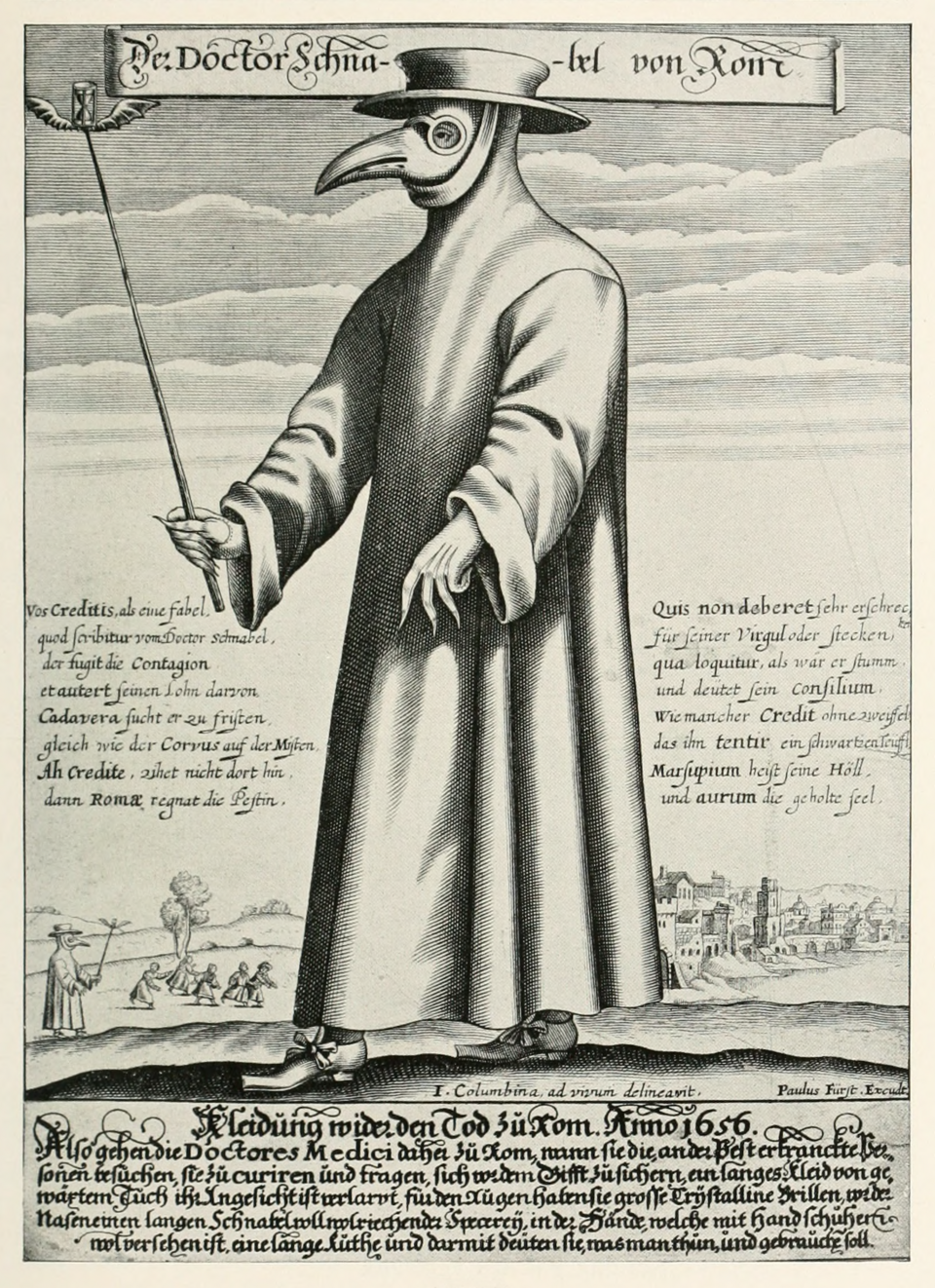
French physician Charles de Lorme designs a head-to-toe protective costume with a beak-shaped mask packed with aromatic herbs, worn against the belief that disease spread through 'bad air'; the outfit becomes the visual symbol of plague-era medicine across Europe.

1676Sydenham publishes Observationes Medicae

London physician Thomas Sydenham argues diseases should be classified by their observed symptoms and course rather than humoral theory, distinguishing scarlet fever from measles and pioneering a cooling treatment for smallpox; the book stays a standard reference for two centuries.

1704English apothecaries win the right to treat patients

The House of Lords rules for apothecary William Rose against the Royal College of Physicians, letting apothecaries prescribe as well as dispense medicine — the ruling that lets the apothecary evolve, over the following century, into Britain's general practitioner.

1889Osler brings students to the bedside at Johns Hopkins

Founding physician William Osler moves medical training out of the lecture hall at the new Johns Hopkins Hospital, creating the first formal residency system and teaching that a physician should learn primarily from examining patients, not textbooks.

1910The Flexner Report remakes medical education

Commissioned by the Carnegie Foundation, Abraham Flexner's survey of 155 US and Canadian medical schools finds most dangerously inadequate; within a generation roughly three-quarters close or merge, and surviving schools are tied to universities, laboratories and teaching hospitals.

1991'Evidence-based medicine' is named

McMaster University's Gordon Guyatt coins the term in a journal editorial, then formalizes it with colleagues in 1992: physicians should rank randomized trial evidence above personal experience or authority when deciding how to treat a patient — now the field's dominant standard.

The eras

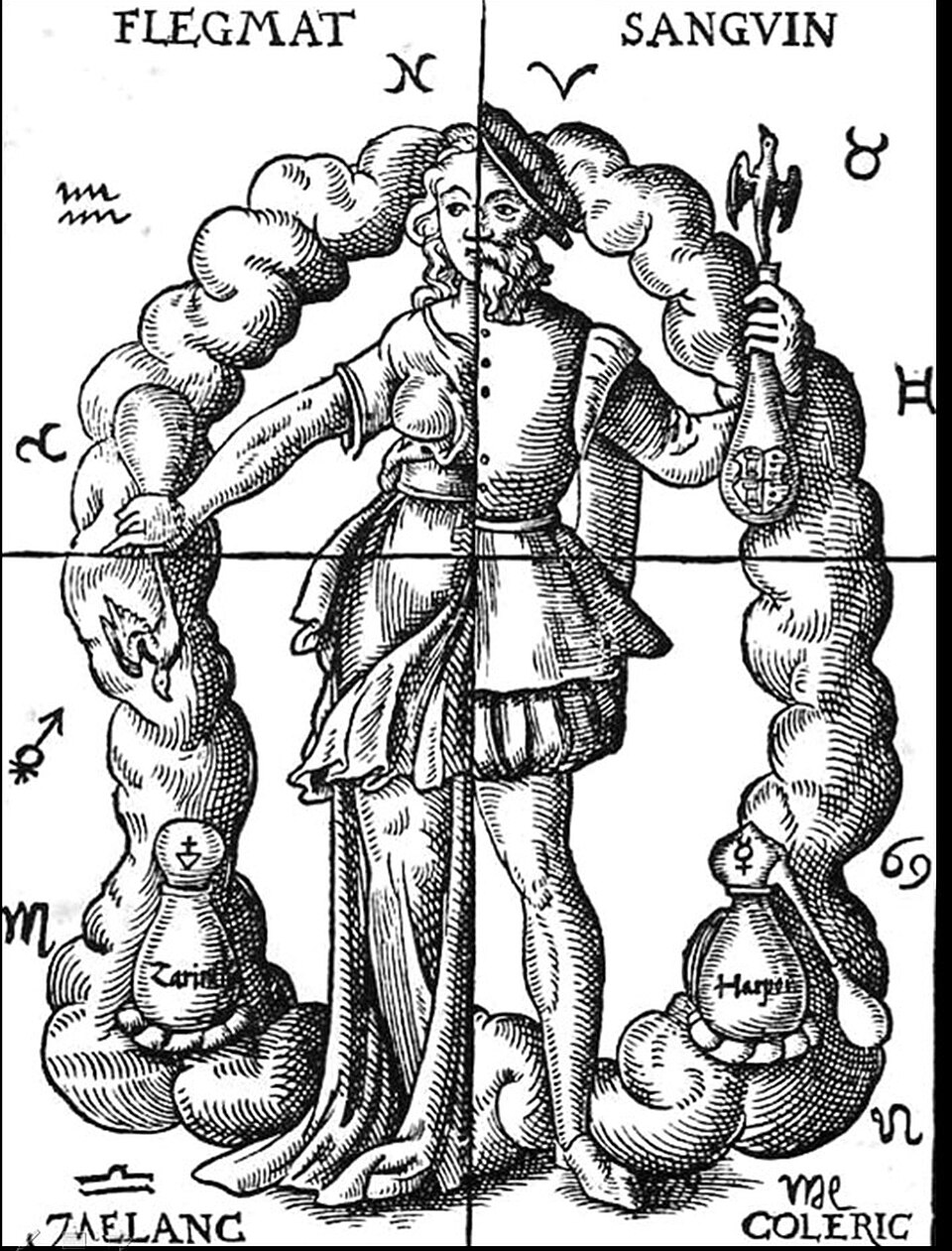
Historical diagram illustrating the four humors of ancient and medieval medicine
Unknown author Unknown author · Public domain · Wikimedia Commons
c. 400 BCE – 200 CE

Humoral theory and the rational physician

Greek and Roman physicians replaced divine explanations of illness with a theory of four bodily humors — blood, phlegm, black bile and yellow bile — whose balance supposedly determined health. Hippocrates and, four centuries later, Galen systematized this into a coherent, teachable medical framework that any trained physician across the Mediterranean world could apply, even though the underlying theory was wrong.
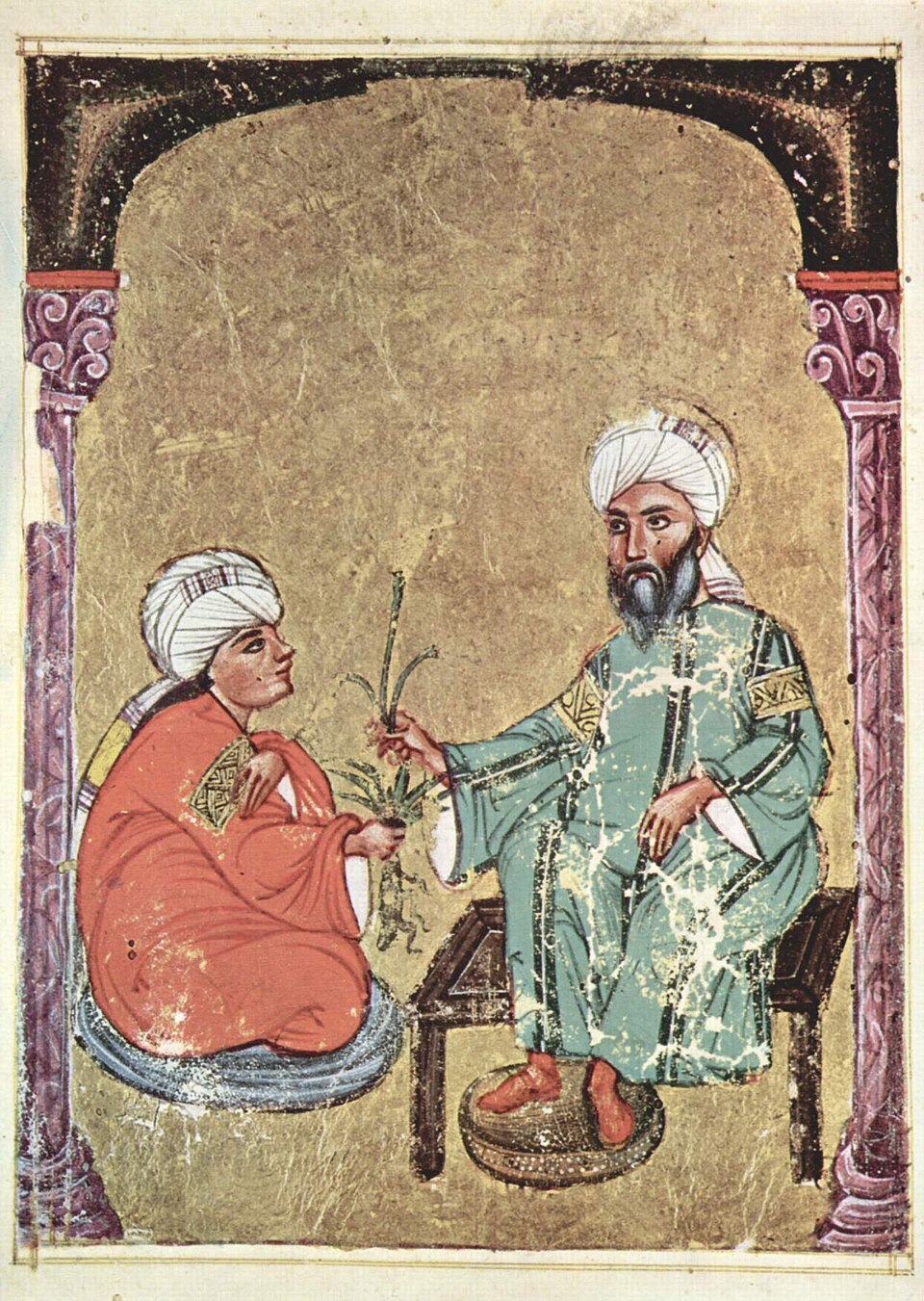
Page from a medieval Islamic medical manuscript with illustrations
Arabischer Maler des Kräuterbuchs des Dioskurides · Public domain · Wikimedia Commons
c. 800–1200

The Islamic Golden Age systematizes medicine

Physicians in Baghdad, Cairo and Córdoba translated, corrected and expanded Greek medicine, built some of the earliest structured teaching hospitals, and produced encyclopedic texts — al-Razi's clinical case notes and Ibn Sina's Canon of Medicine chief among them — that Latin Europe would rely on for the next five centuries.

Illustration of a plague doctor wearing a beaked mask and protective robes
I. Columbina, ad vivum delineavit. Paulus Fürst Excud〈i〉t. · Public domain · Wikimedia Commons
c. 1200–1650

University physicians and plague-era limits

European universities such as Salerno, Bologna and Padua turned medicine into a formal academic degree, placing the university-trained physician above the barber-surgeon and apothecary in status even though therapy still leaned on bleeding, purging and humoral theory. The Black Death of 1347–1351 exposed the gap starkly: physicians could describe plague symptoms precisely but do almost nothing to stop it, and by the 17th century some worked outbreaks in the beaked mask and robes of the 'plague doctor.'

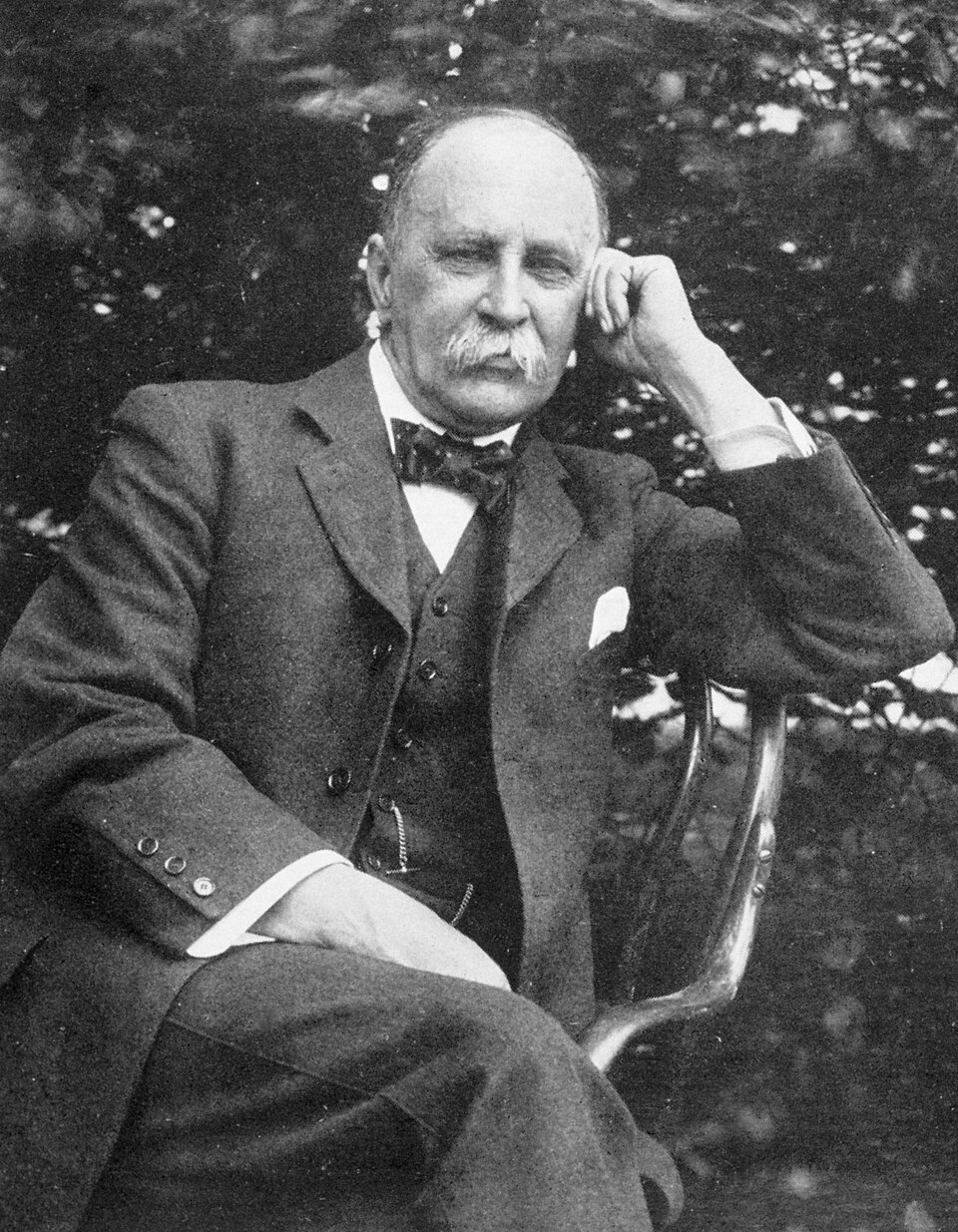
Portrait photograph of physician William Osler
Unknown author Unknown author · CC BY 4.0 · Wikimedia Commons
c. 1650–1910

From bedside observation to the laboratory

Thomas Sydenham's insistence on watching how disease actually behaved, rather than deducing it from humoral theory, opened two centuries that ended with germ theory replacing humors entirely. William Osler then rebuilt medical training around the patient's bedside at Johns Hopkins, and Abraham Flexner's 1910 report forced American and Canadian medical schools to adopt that same scientific, laboratory-based model or close.

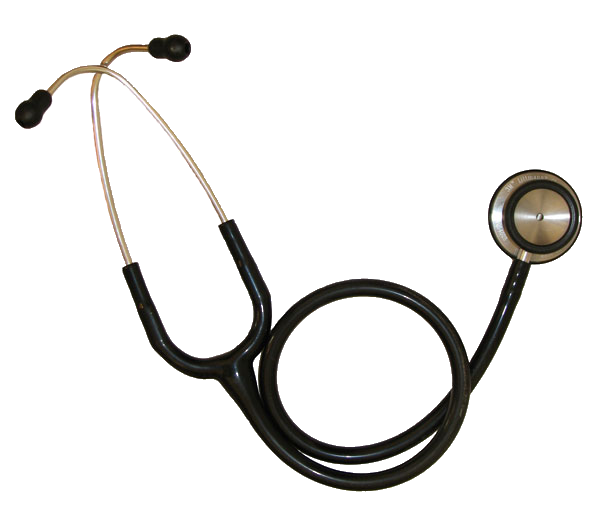
A modern stethoscope resting on a physician's patient notes
this version: Sonarpulse . origenal: Huji · Public domain · Wikimedia Commons
1948–present

Evidence, global standards and specialization

Since the Second World War, medicine has built formal ethical and scientific scaffolding around the physician: the World Medical Association's 1948 Declaration of Geneva, national licensing exams, randomized controlled trials, and, from 1991, the explicit doctrine of evidence-based medicine. Internal medicine itself has fragmented into cardiology, endocrinology, gastroenterology and dozens of other subspecialties, even as diagnostic software now starts to compete with the generalist physician on the case-based reasoning Hippocrates pioneered.

What this job replaced

Neighbouring trades that no longer exist — absorbed, automated or regulated away.

The physician-apothecary split

c. 1200–1704

For centuries a physician diagnosed and prescribed while a separate apothecary compounded and sold the remedy, a division European guilds enforced strictly to protect both trades' income. England's 1704 Rose case let apothecaries prescribe as well as dispense, and over the following century they evolved into a distinctly British role — the general practitioner — that fused diagnosis and dispensing back into one person, roughly the shape primary care still takes today.

The barber-surgeon

c. 1100–1745

Barbers doubled as surgeons throughout medieval Europe, pulling teeth, setting bones, letting blood and cutting hair with the same set of tools, organized in England under the Company of Barber-Surgeons from 1540. University-trained physicians, humoral theorists who considered cutting flesh beneath their status, looked down on them as tradesmen. An Act of Parliament split the company in 1745, the surgeons breaking away to found what became the Royal College of Surgeons, finally separating the profession this page covers from the one it works alongside today.

The plague doctor

c. 1348–1720s

Towns hit by recurring plague outbreaks hired physicians, sometimes with little formal training, specifically to treat the afflicted poor once established doctors fled; many wore the head-to-toe leather costume and beaked mask, stuffed with aromatic herbs, that French physician Charles de Lorme designed in 1619 to guard against 'bad air.' The role and its costume vanished once quarantine, sanitation and eventually germ theory brought epidemic plague under control in Europe.

Trades that vanished →

The physician's authority has moved twice in twenty-five centuries: once from priests to rational theory with Hippocrates, and once from theory to evidence with Sydenham, Flexner and the randomized trial. Both shifts took decades and cost the profession real prestige along the way.

What has stayed constant is the basic transaction: a patient describes what is wrong, a physician tries to work out why, and the two of them keep meeting until it is resolved, managed or outlived — a relationship no textbook, however good, has yet replaced on its own.

Keep exploring

More in Medicine & Life