🩺The Greats

Physician · Diagnoses illness and manages health for years afterward through examination and evidence, not a single operation — medicine's generalist and long-term guide.

Unlike surgery, whose breakthroughs tend to be a single dramatic operation, the physician's greatest achievements are usually a way of thinking that outlives its inventor: a method of watching a disease, a textbook other physicians trusted for centuries, or the discipline to keep a hospital's patients at the actual center of medical education.

This list runs from ancient Greece to twentieth-century North America and crosses Rome, China, Persia, England and India along the way — chosen for one specific, checkable achievement each, not general fame.

The all-time podium

Galen
Galen
Roman Empire (Pergamon, modern Turkey)
2
Hippocrates
Hippocrates
Greece (Kos)
1
Zhang Zhongjing
Zhang Zhongjing
China (Eastern Han)
3

The eight who reached the top

1
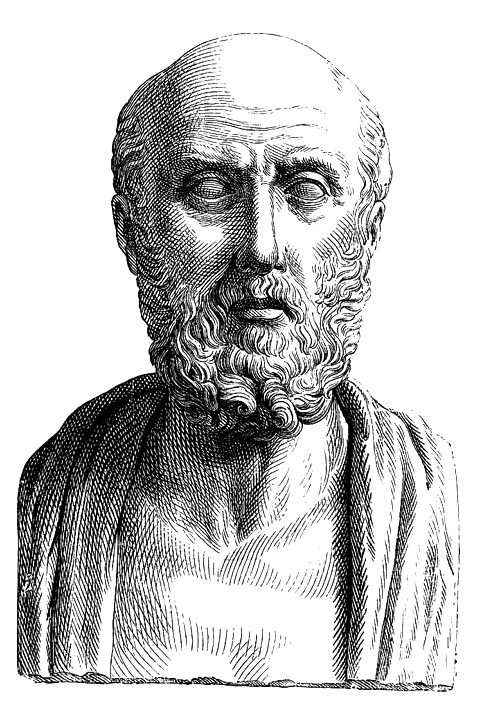
Ancient bust believed to depict Hippocrates of Kos Unidentified engraver · Public domain

Hippocrates

Greece (Kos) · c. 460 – c. 370 BCE

Traditionally called the father of Western medicine, Hippocrates and the physicians who wrote in his name produced the Hippocratic Corpus, the first body of medical writing to argue disease had natural causes a physician could observe and reason about, rather than divine ones.

The story

The Hippocratic text Epidemics Book 1 records the case of Philiscus, who lived by the wall at Thasos: fever on day one, a brief remission, then worsening with dark urine and delirium, tracked almost hourly until he died on the sixth day. It is one of the earliest surviving detailed clinical case histories in Western medicine — proof the Hippocratic school valued watching one real patient's course as closely as it valued any general theory.

“Write down exactly what you observe in one real patient before you trust any theory about patients in general.”
Hippocratic Corpus size
~60 texts
Years still cited
~2,400 yrs
Epidemics case books
7 volumes
2
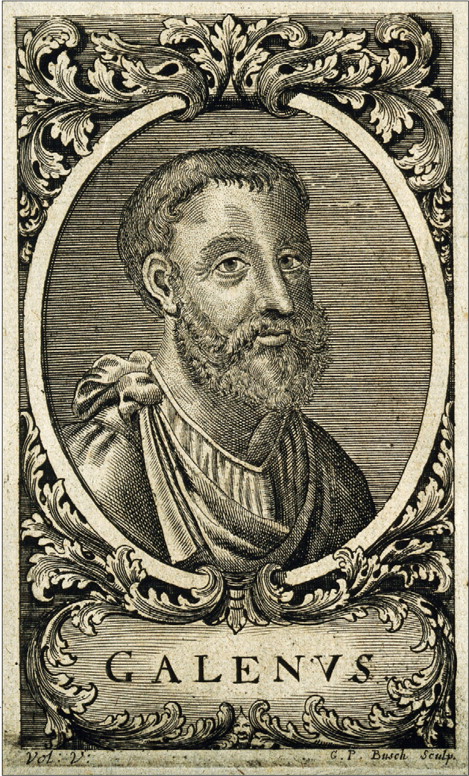
Historical engraved portrait of the physician Galen of Pergamon Georg Paul Busch (engraver) · Public domain

Galen

Roman Empire (Pergamon, modern Turkey) · 129 – c. 216 CE

Physician to Roman emperors Marcus Aurelius, Commodus and Septimius Severus, Galen built on Hippocratic theory to create a complete system of anatomy, physiology and treatment that remained the unquestioned foundation of Western and Islamic medicine for roughly 1,400 years.

The story

Before treating emperors, the young Galen spent about four years, from 157 CE, as physician to the gladiators of his native Pergamon — a role that gave him an unmatched education in traumatic injury, since he could examine torn muscle, severed vessels and open joints in men who were otherwise healthy, then track who lived and who didn't. He later credited that brutal, practical apprenticeship, more than his formal philosophical training, with teaching him anatomy no dissection could show as clearly.

“The clearest lessons in anatomy and physiology often come from treating real injury under pressure, not from studying theory in isolation.”

Years his theory dominated
~1,400 yrs
Surviving written pages
~20,000 pages
Roman emperors served
3
3
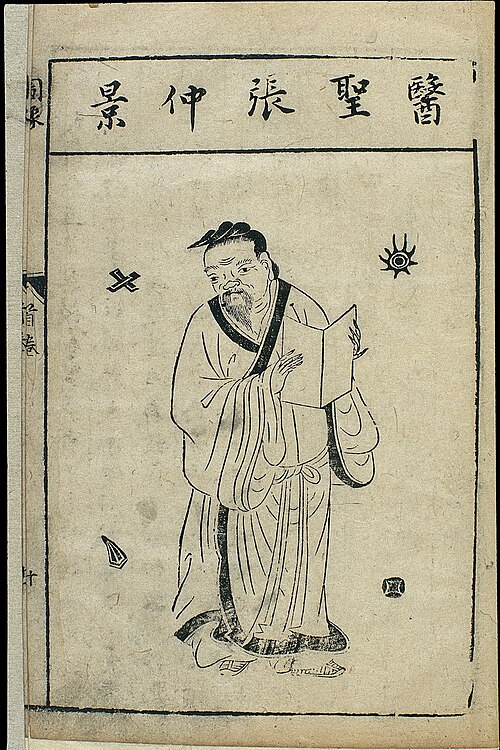
Traditional Chinese portrait of the physician Zhang Zhongjing Gan Bozong (Tang period, 618-907) · CC BY 4.0

Zhang Zhongjing

China (Eastern Han) · c. 150 – c. 219 CE

A Han-dynasty government official turned physician, Zhang systematized the diagnosis and treatment of fever-based epidemic disease in the Treatise on Cold Damage Disorders, still regarded as the single most influential internal-medicine text in Chinese history.

The story

Zhang wrote in his own preface that a devastating epidemic killed more than two-thirds of his roughly 200-member clan within about a decade, seven in ten of them from 'cold damage' fevers — and that watching physicians of his time fail to treat it systematically was what drove him to leave public office and compile a rigorous, stage-by-stage account of how such fevers actually progress and how to treat each stage.

“A personal catalogue of loss can be redirected into the most useful thing you're capable of building for everyone who comes after.”

Clan members lost to epidemic
~2/3 in ~10 yrs
Years his text has been used
~1,800 yrs
Treatment stages classified
6 stages
4
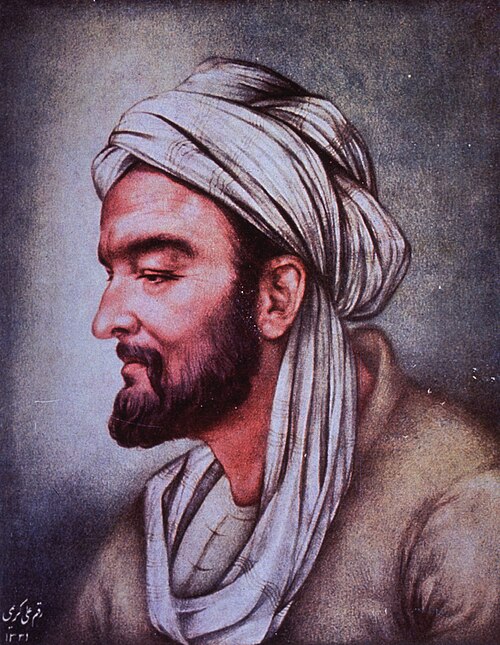
Historical portrait of the physician and philosopher Ibn Sina, known as Avicenna National Library of Medicine · No restrictions

Ibn Sina (Avicenna)

Persia / Central Asia (Bukhara, modern Uzbekistan) · 980–1037

A physician and polymath who reportedly mastered medicine by his late teens, Ibn Sina compiled the five-volume Canon of Medicine, an encyclopedic synthesis of Greek, Islamic and his own clinical knowledge that became the standard medical textbook of the Islamic world and, after translation into Latin, of European universities for over 500 years.

The story

As a teenager, Ibn Sina reportedly cured the Samanid emir Nuh ibn Mansur of an illness the ruler's own court physicians had failed to treat. Instead of money, the young physician asked only for access to the Samanid royal library in Bukhara, one of the best-stocked in the Islamic world — and later wrote in his autobiography that reading freely through its books on every subject shaped the rest of his scholarly life.

“When you're rewarded for solving one problem, ask for the resource that lets you solve the next hundred instead.”

Volumes in the Canon
5 books
Years as standard textbook
500+ yrs
Age he reportedly cured the emir
~17 yrs old
5
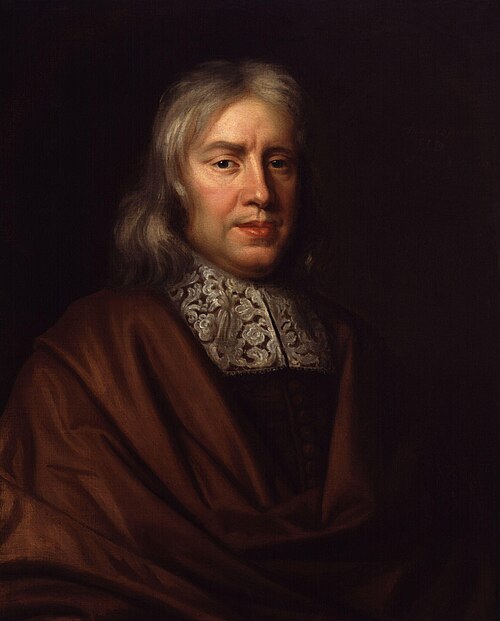
17th-century portrait of the physician Thomas Sydenham Mary Beale · Public domain

Thomas Sydenham

England · 1624–1689

Known as 'the English Hippocrates,' Sydenham insisted physicians classify disease by careful, repeated observation of symptoms rather than inherited theory, distinguishing scarlet fever from measles and pioneering a cooling, fresh-air treatment for smallpox that broke with centuries of practice.

The story

Standard 17th-century smallpox treatment kept patients sealed in overheated rooms piled with blankets, on the theory that sweating out the 'poison' aided recovery — a practice that likely killed people the disease itself would have spared. Sydenham, after years of bedside observation, argued for the opposite: light bedding, cool rooms and moderate treatment. His 1666 findings, expanded into the Observationes Medicae of 1676, became a standard medical reference for two centuries.

“When inherited practice makes a patient worse and careful observation says otherwise, trust what you've actually watched happen.”

Years Observationes Medicae stayed standard
~200 yrs
Publication of collected observations
1676
Diseases newly distinguished
Scarlet fever vs. measles
6
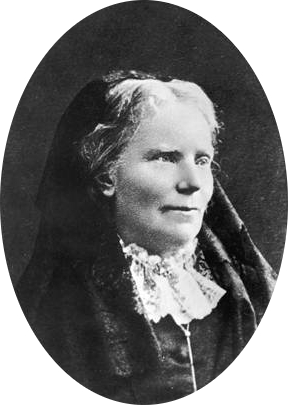
Portrait photograph of physician Elizabeth Blackwell Unknown photographer · Public domain

Elizabeth Blackwell

United Kingdom / United States · 1821–1910

The first woman to earn a medical degree in the United States, Blackwell graduated top of her class from Geneva Medical College in 1849 after nearly every other school had rejected her, then co-founded a hospital and later a medical college dedicated to training women physicians.

The story

Geneva Medical College's students were asked to vote on whether to admit a woman at all, and, by most accounts, approved Blackwell's application partly as a joke, assuming the request was itself a prank by a rival school. Blackwell arrived anyway, endured professors and townspeople who treated her as an inconvenience or a scandal, and graduated first in her class of 1849 — turning the 'joke' into a genuine medical degree.

“Sometimes a door only opens because no one on the other side believed you would actually walk through it — walk through it anyway.”

Class rank, 1849
1st in class
Rejections before admission
Dozens of schools
Women's infirmary founded
1857, NYC
7

Anandibai Joshi

India / United States · 1865–1887

The first woman from India to earn a degree in Western medicine, Joshi traveled alone to Philadelphia at nineteen and graduated from the Woman's Medical College of Pennsylvania in 1886, driven by the death of her own infant son for want of adequate medical care.

The story

Before leaving India, Joshi delivered a public address defending her decision to study medicine abroad despite fierce social and religious opposition, arguing India needed women physicians to treat women patients who could not, by custom, be examined by men. Queen Victoria sent her a message of congratulation on her 1886 graduation, and her thesis on obstetrics among Hindu women drew on the medical customs she had grown up inside. She returned to India to practice but died of tuberculosis within a year, before her degree ever became a long career.

“A single credential can matter as proof of possibility, even if illness cuts short the chance to ever use it.”

Age on arrival in the US
19 years old
Graduation year
1886
Years of practice after graduating
<1 year
8

William Osler

Canada / United States / United Kingdom · 1849–1919

One of the four founding physicians of Johns Hopkins Hospital, Osler moved medical training out of the lecture hall and onto the hospital ward, creating the first formal residency system and writing The Principles and Practice of Medicine, a textbook that shaped internal medicine training for decades.

The story

Osler occasionally published anonymous hoax case reports under the invented name 'Egerton Yorrick Davis,' a fictional retired army surgeon. In 1884 he used the pseudonym to submit a fabricated, medically outlandish case to the Philadelphia Medical News, apparently to embarrass a colleague who had just published a self-important article — and the invented case was cited as genuine medical fact in journals for the next century before it was traced back to Osler's prank.

“Rigor and reputation don't require humorlessness — but a joke told convincingly enough can outlive the joke.”

Founding physicians of Johns Hopkins
1 of 4
Years the hoax was cited as real
~100 yrs
Formal residency system
Est. 1889

Bars are scaled to the leader in this list.

Comparison Lab

Toggle names on and off — every bar rescales to the leader of your selection.

5 / 8

The argument

Galen's authority is itself a cautionary tale: his physiology, based partly on animal dissection because Roman custom restricted human dissection, contained serious errors that were not seriously challenged in Europe for over a thousand years — a reminder that a text's longevity is not proof of its accuracy.

Historians still debate how many of the roughly sixty texts in the Hippocratic Corpus Hippocrates himself actually wrote, since the collection was assembled by later editors from multiple authors across generations of the Kos medical school; 'Hippocratic medicine' is really a tradition, not the output of one man.

Keep exploring

More in Medicine & Life