
🪚The Greats

Carpenter · The builder in wood — a trade older than Homo sapiens, still measuring twice and cutting once from Nara's ancient temples to Norway's timber towers.

Eight names from a trade that has existed for half a million years is an absurd ratio, and the record is stacked: most of history's greatest carpenters left buildings but not names. The eight below are chosen because their work is documented, checkable, and still standing — or still being argued about.

They span roughly 2,500 years and six countries: a deified Chinese inventor, a Baekje temple builder whose firm lasted 1,428 years, an English joiner who solved longitude, a woman who passed the Royal Navy's shipwright examination in disguise, and the twentieth century's great restorers and rule-breakers in wood.

The all-time podium

Kongō Shigemitsu
Kongō Shigemitsu
Baekje (Korea) / Japan
2
Lu Ban
Lu Ban
China
1
John Harrison
John Harrison
England
3

The eight who reached the top

1
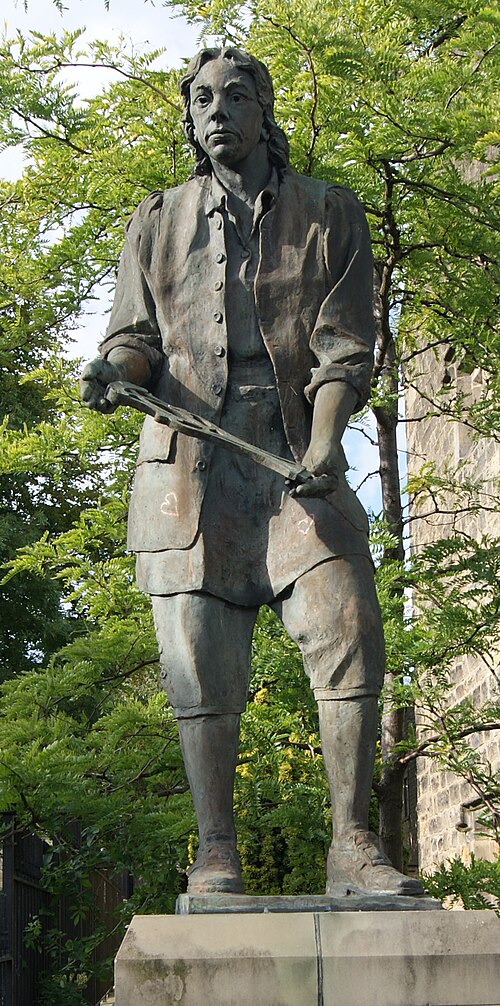
Traditional depiction of Lu Ban, the deified patron of Chinese carpenters and builders. Rolfmueller · CC BY-SA 3.0

Lu Ban

China · c. 507–444 BCE (traditional)

China's patron of carpenters and builders, Lu Ban lived in the State of Lu in the fifth century BCE, a contemporary of the philosopher Mozi. Tradition credits him with the saw, the plane, the ink-line and more; temples across China deified him, and builders still invoke his name.

The story

The Mozi, compiled in the centuries after both men lived, records that Lu Ban carved a magpie of bamboo and wood that flew for three days without landing, and counted it his masterpiece. Mozi retorted that the linchpin he himself could whittle in a moment carried a cart's load of grain, while the bird carried nothing: skill that serves people is craft, skill that does not is cleverness. The exchange is still quoted in Chinese arguments about technology's purpose.

“A craftsman is judged by what the work carries, not by how cleverly it flies.”
Inventions tradition credits him
Saw, plane, ink-line
China's top construction award
Luban Prize, since 1987
Still proverbial after
~2,500 years
2
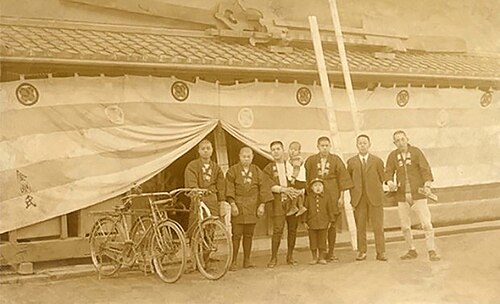
Shitennō-ji temple in Osaka, built and maintained by the carpenters of Kongō Gumi since 578 CE. 撮影者 不明 http://www.kongogumi.co.jp/enkaku.html · Public domain

Kongō Shigemitsu

Baekje (Korea) / Japan · fl. 578 CE

A master temple carpenter invited from the Korean kingdom of Baekje in 578 CE by Prince Shōtoku to build Shitennō-ji, Japan's first great state Buddhist temple. The firm he founded to maintain it, Kongō Gumi, stayed in his family's hands for roughly forty generations — the longest-lived company ever documented.

The story

Kongō Gumi outlasted every dynasty, war and fire that touched Osaka, rebuilding Shitennō-ji again and again — including after American incendiary raids leveled it in 1945. In the twentieth century the firm was even headed by a woman, Yoshie Kongō, who took over as the thirty-eighth-generation leader in an industry that barely admitted women on site. Only in 2006, weighed down by bubble-era debts, did it become a subsidiary of Takamatsu Construction Group — after 1,428 years in business, still repairing the same temple.

“Tie your craft to something people will always rebuild, and the work never ends.”

Continuous operation
578–2006 (1,428 yrs)
Generations of one family
~40
Female head, 38th generation
Yoshie Kongō
3
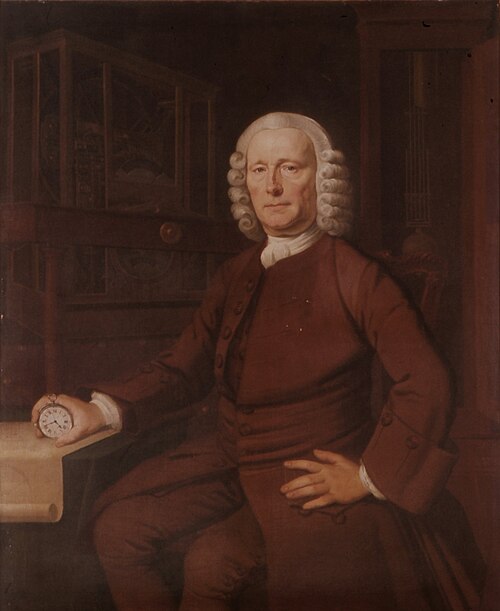
Portrait of John Harrison, the joiner turned clockmaker, with his marine timekeeper. Thomas King († circa 1796 date QS:P,+1796-00-00T00:00:00Z/9,P1480,Q5727902 ) · Public domain

John Harrison

England · 1693–1776

A self-taught joiner from Barrow upon Humber who built his first pendulum clocks almost entirely of wood, using dense lignum vitae for self-lubricating bearings. His carpenter's feel for how materials move led to the marine chronometers that solved the eighteenth century's greatest technical problem: longitude at sea.

The story

Parliament's 1714 Longitude Act offered £20,000 — a fortune — for a practical way to fix a ship's east–west position. Harrison, with no clockmaking training, spent five decades on the problem. On the 1761–62 trial voyage to Jamaica his H4 sea watch lost only about five seconds in 81 days at sea, yet the Board of Longitude paid out in grudging fractions; he received his final award in 1773, at eighty, only after King George III personally took up his case.

“Mastery of one material can carry you into fields its gatekeepers thought closed.”

H4 error, 1761 Jamaica trial
~5 s in 81 days
Years chasing longitude
~50
Final award secured
1773, aged 80
4
Portrait associated with Thomas Chippendale, the London cabinetmaker whose name became a furniture style. Mtaylor848 · CC BY-SA 4.0

Thomas Chippendale

England · 1718–1779

A Yorkshire joiner's son who moved to London and in 1754 published The Gentleman and Cabinet-Maker's Director — the first comprehensive furniture pattern book issued by a working craftsman. It made Chippendale the first furniture style named after a maker rather than a monarch.

The story

The Director was a commercial gamble: 160 engraved plates sold by subscription at a price aimed at aristocrats. It worked — subscribers ranged from dukes and earls to fellow cabinetmakers, and copies reached Catherine the Great's Russia and Louis XVI's France. Yet Chippendale remained a tradesman to his clients: at Harewood House, where his workshop supplied the marquetry Diana and Minerva commode for £86 in 1773 — several years of a laborer's wages — he still had to chase the aristocracy for payment like any village joiner.

“Publishing your craft can turn a workshop's name into a style that outlives it.”

Director plates, 1754
160 engravings
One commode's price, 1773
£86, Harewood House
Style bears his name after
270+ years
5

Mary Lacy

England · 1740–1801

In 1759 a nineteen-year-old Kent servant ran away dressed as a man, enlisted under the name William Chandler, and in 1770 passed the Royal Navy's shipwright examination at Portsmouth — the only woman known to have qualified as a shipwright in the eighteenth-century Royal Dockyards.

The story

Lacy served through the Seven Years' War as a carpenter's servant aboard HMS Sandwich, then completed a seven-year shipwright apprenticeship in the royal yards, keeping her identity secret through shared quarters and brutal timber work. When rheumatism ended her career in 1771, she petitioned the Admiralty for a pension — in her own name, as Mary Lacy. Remarkably, the Admiralty granted it, £20 a year, effectively acknowledging a woman's service in a trade that legally excluded her. Her 1773 memoir, The History of the Female Shipwright, told the story publicly.

“Institutions can be argued into recognizing work they would never have permitted.”

Years in the yards disguised
12 (1759–71)
Shipwright exam passed
Portsmouth, 1770
Admiralty pension granted
£20/yr, own name
6
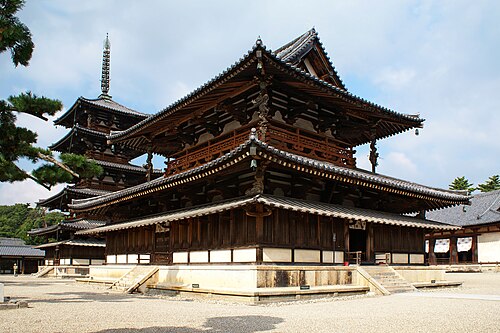
The pagoda and Golden Hall of Hōryū-ji, the world's oldest wooden buildings, in Nishioka's care for decades. 663highland · CC BY-SA 4.0

Tsunekazu Nishioka

Japan · 1908–1995

The last hereditary master carpenter of Hōryū-ji temple, guardian of the world's oldest wooden buildings. Nicknamed the demon of Hōryū-ji for his exactness, he led the twentieth-century restoration of Hōryū-ji and the rebuilding of Yakushi-ji's Golden Hall and West Pagoda using Asuka-period techniques.

The story

For the Yakushi-ji rebuilding, Nishioka insisted on hinoki cypress more than a thousand years old — trees Japan no longer had — and sourced them from Taiwan's mountains. He had blacksmiths reforge the yariganna, a spear-shaped plane obsolete for centuries, by studying the tool marks on Asuka-era timbers. Against skeptical engineers he argued that thousand-year timber was still alive, still moving, and could serve a thousand years more. His precepts came down orally: buy the mountain, not the timber; assemble the trees as they grew.

“Match the lifespan of your materials to the lifespan you intend for the work.”

Age of buildings in his care
~1,300 years
Timber sought for Yakushi-ji
1,000-yr hinoki
Formal apprentices accepted
1 — Mitsuo Ogawa
7

George Nakashima

United States · 1905–1990

An MIT-trained architect who became one of the twentieth century's most influential woodworkers, treating each plank as a biography — live edges kept, cracks stitched with butterfly keys. His New Hope, Pennsylvania studio and his 1981 book The Soul of a Tree reshaped how the world values imperfect wood.

The story

In 1942 Nakashima, his wife and infant daughter were interned with other Japanese Americans at the Minidoka camp in Idaho. There he met Gentaro Hikogawa, a carpenter trained in Japan, and used the imprisonment to learn traditional joinery and tool discipline. Sponsored out of the camp in 1943 by architect Antonin Raymond, he settled in New Hope, Pennsylvania, and built the studio his family still runs. Late in life he began the Altars for Peace — enormous walnut altars placed on several continents, the first at New York's Cathedral of St. John the Divine in 1986.

“Even a stolen year can become an apprenticeship if you find the right teacher.”

Trade deepened in internment
Minidoka, 1942–43
Studio running continuously
New Hope, since 1943
Peace altars installed
3 continents
8

Wendy Maruyama

United States · b. 1952

One of the first two women to earn a master's degree in furniture making in the United States, in 1980, Maruyama spent some three decades teaching at San Diego State University while building fiercely expressive work — proof that studio furniture could carry feminist and political argument.

The story

For The Tag Project, completed in 2012, Maruyama and hundreds of volunteers hand-replicated the paper identification tags issued to the roughly 120,000 Japanese Americans interned during the Second World War — her own relatives among them. Strung into ten hanging bundles, one for each camp, the tags toured American museums alongside her carved cabinets. She built that body of work while adapting her shop practice around the cerebral palsy and partial hearing loss she has had since birth — and around a field that had told her generation the workshop was no place for women.

“The workshop can argue history and politics as loudly as any gallery.”

First women's furniture MFA (RIT)
1980, with Gail Fredell
Tags replicated, Tag Project
~120,000
Years teaching at SDSU
~30

Bars are scaled to the leader in this list.

Comparison Lab

Toggle names on and off — every bar rescales to the leader of your selection.

5 / 8

The argument

Lu Ban's inventions are legend as much as history: saws and planes appear in the archaeological record across cultures without a single inventor, and Chinese scholarship treats him as a name onto which centuries of accumulated craft were projected. His place here stands for the tradition, not a verified biography.

The list's boundary is contestable: Chippendale, Nakashima and Maruyama were bench woodworkers rather than site carpenters, a distinction the trades themselves have policed since London's joiners split from the carpenters in 1571. This list treats the building and bench branches as one lineage; many working carpenters would not.

Above all, the list favors written traditions. The master carpenters of medieval cathedral roofs, of West African mosque frames, of Ottoman, Khmer and Polynesian building all left work that outclasses most named figures here — but not names a reader can look up, which is the standard this page holds itself to.

Keep exploring

More in Craft & Trade