Why do Americans call it soccer when everyone else says football?
Soccer is a British word. In 1880s England, university slang shortened Association football — the game of the Football Association — to assoc and then soccer, distinguishing it from rugby football, shortened to rugger. The term was common in Britain for decades and only fell from favor there in the later twentieth century. Countries with a competing domestic code of football kept the word out of necessity: the United States (gridiron football), Canada, Australia (Australian rules), Ireland (Gaelic football). So American usage is not an invention but a preservation — the sport's full legal name remains association football, and FIFA's own name is the Fédération Internationale de Football Association.
What is the offside rule in simple terms?
A player is in an offside position if, at the moment a teammate plays the ball forward, any part of their head, body or feet is nearer the opponents' goal line than both the ball and the second-last opponent (usually the last defender, since the goalkeeper is normally the other). Being in the position is not itself an offence — the flag comes only if the player then becomes involved in play: touching the ball, obstructing an opponent, or gaining an advantage from a rebound. There is no offside from a goal kick, corner or throw-in, and none in your own half. The rule exists to prevent permanent goal-hanging and is what makes the defensive line, the offside trap and the timed run central arts of the game.
Which country has won the most World Cups?
Brazil leads the men's tournament with five titles — 1958, 1962, 1970, 1994 and 2002 — and remains the only nation to have played in every World Cup since the first in 1930. Germany and Italy follow with four each, Argentina has three (1978, 1986, 2022), and Uruguay and France have two apiece; England and Spain have one each. In the Women's World Cup, the United States lead with four titles (1991, 1999, 2015, 2019), followed by Germany with two; Norway, Japan and Spain have one each, Spain's coming in 2023. Brazil's five, combined with producing Pelé, Ronaldo and the 1970 team, anchors its identity as the tournament's reference nation.
Who is the greatest soccer player of all time?
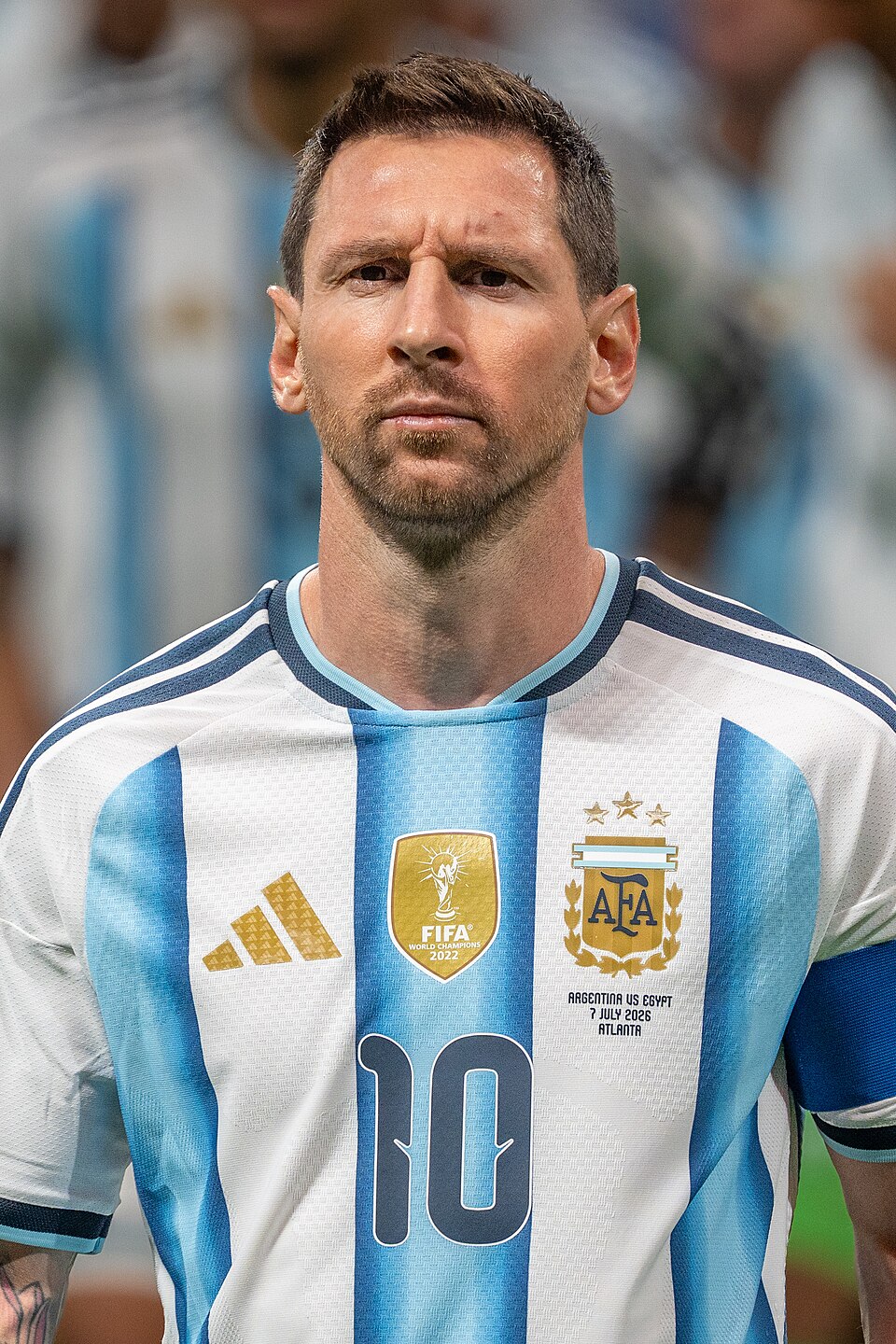
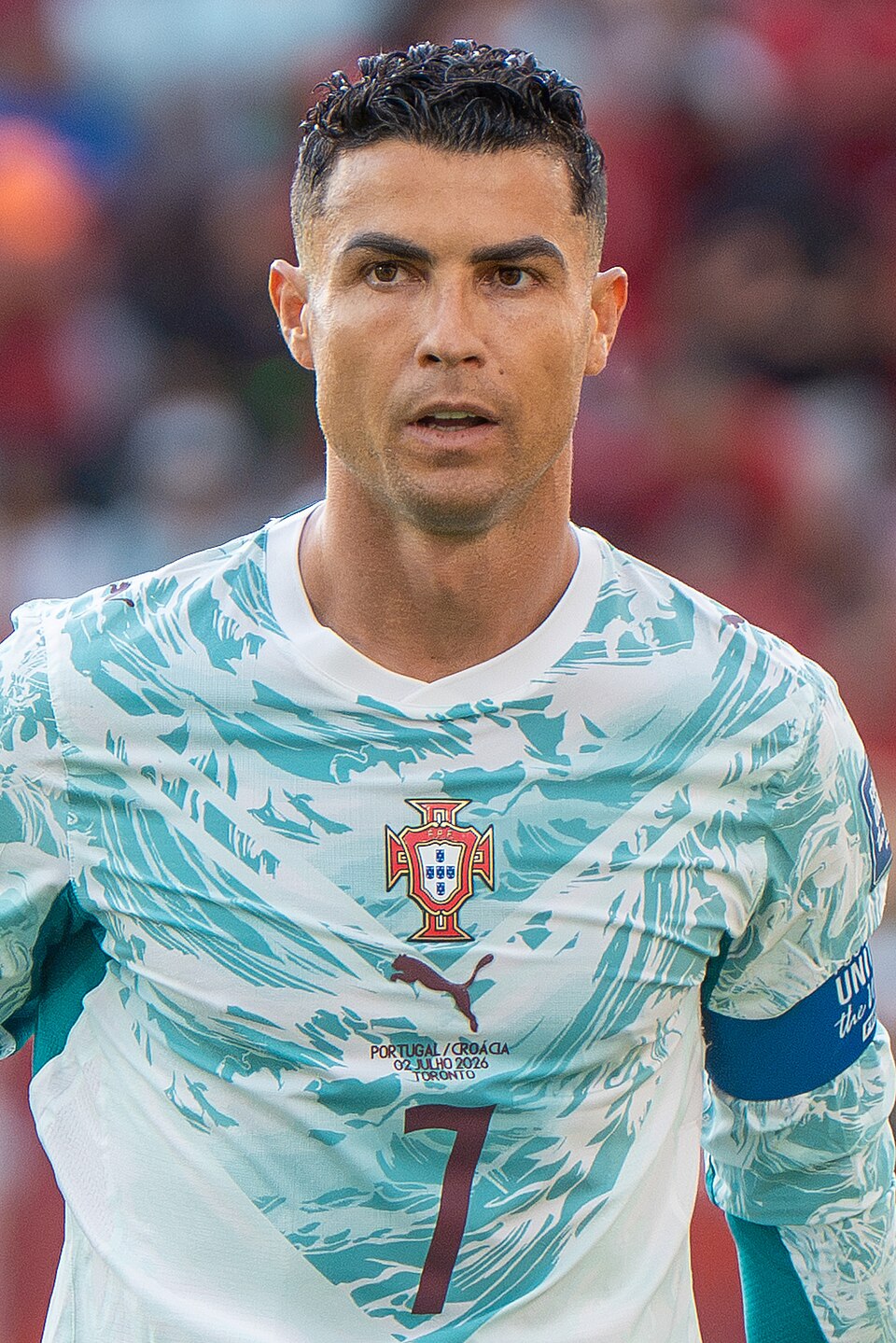
There is no objective answer, but the modern consensus has narrowed to Lionel Messi, particularly since Argentina's 2022 World Cup win removed the last major gap in his record. His case rests on the broadest statistical dominance ever recorded: 8 Ballons d'Or, 850+ goals plus 380+ assists, and 45+ trophies including four Champions Leagues and the 2022 World Cup, where he won an unprecedented second Golden Ball. The traditional alternatives remain serious: Pelé is the only three-time World Cup winner, Maradona's 1986 tournament is the greatest individual campaign on record, and Cristiano Ronaldo leads all-time in career goals (900+) and Champions League goals. The answer usually reveals which you value most: peak, trophies, longevity or influence.
How long is a soccer match, and why is stoppage time added?
A match lasts 90 minutes in two 45-minute halves, but the clock never stops, so referees add stoppage time to compensate for interruptions: substitutions, injuries, goal celebrations, VAR reviews and time-wasting. The fourth official displays the minimum added minutes at the end of each half. Since the 2022 World Cup, where FIFA instructed referees to account fully for lost time and first halves ran ten-plus added minutes, stoppage allowances have grown across most leagues. In knockout competitions, a draw after 90 minutes usually leads to two 15-minute periods of extra time and then a penalty shoot-out. Effective playing time — the ball is typically in play for only 55 to 60 of the 90 minutes — remains a live debate, with periodic proposals for a stopped clock.
What is VAR and what can it actually review?
VAR — the video assistant referee — is a qualified official watching camera feeds who can intervene only for clear and obvious errors in four match-changing situations: goals (including offsides and fouls in the build-up), penalty decisions, straight red cards, and mistaken identity. The on-field referee retains final authority and can consult a pitchside monitor before deciding. Introduced experimentally in the mid-2010s and at the World Cup in 2018, VAR was joined at Qatar 2022 by semi-automated offside technology, which uses limb-tracking cameras and a sensor in the ball to generate offside calls in seconds. It cannot review second yellow cards, corner awards or general fouls. Accuracy has measurably improved; the ongoing controversy is about delay, the erosion of spontaneous celebration, and millimetric offside decisions.
Ranking soccer's greatest players means comparing men who never shared a pitch, playing under different laws, on different surfaces, against defenders permitted different levels of violence. Pelé faced tackles from behind that would draw straight reds today; Messi faced defensive structures coordinated by video analysis Pelé's markers could not imagine. This list weighs four things: peak level (how good was the best version), longevity (how long did they sustain greatness), achievement (what did they win and how central were they to winning it), and influence (did they change how the game is played or understood).
The top of the list hardened after December 18, 2022. Messi's World Cup — seven goals, three assists and a second Golden Ball at 35 — removed the last structural argument against him, and the 2020s consensus among players, coaches and historians has largely followed. But the order below the summit remains genuinely contested, and the cases for Pelé's three World Cups, Maradona's 1986 and Cristiano Ronaldo's brute accumulation are made here at full strength, with numbers rather than nostalgia.
All-time podium
🥈
Pelé
Brazil
2
🥇
Lionel Messi
Argentina
1
🥉
Diego Maradona
Argentina
3
Comparison Lab
Toggle athletes on and off — every bar rescales to the leader of your selection.
Peak keeps each athlete’s strongest metrics; Career averages the full published set. Both stay editorial teaching marks.
5 / 12
Drag only reorders the cosmetic shortlist — it does not change teaching scores.
Default shortlist below works without JavaScript. Toggle chips after load to rebuild bars.
Compare · in selection · Career
1Cristiano Ronaldo93
2Lionel Messi91
3Pelé85
4Diego Maradona47
5Johan Cruyff47
Career goals
Cristiano Ronaldo900+
Lionel Messi850+
Diego Maradona≈350
Ballons d'Or
Lionel Messi8
Cristiano Ronaldo5
Johan Cruyff3
Champions League titles
Cristiano Ronaldo5
Lionel Messi4
Champions League goals
Cristiano Ronaldo140
International goals
Cristiano Ronaldo135+
Lionel Messi110+
Pelé77 in 92
Career assists
Lionel Messi380+
World Cup titles
Pelé3
Diego Maradona1
Official career goals
Pelé757
Goals incl. friendlies
Pelé1,279
1986 WC goal involvements
Diego Maradona5 G + 5 A
Serie A titles with Napoli
Diego Maradona2
European Cups
Johan Cruyff3 in a row
League titles as player
Johan Cruyff8
Netherlands record
Johan Cruyff33 in 48
Axis verdict on this selection
Pick one published scoring axis already on the GOAT lab. The leader is whoever is ahead among the athletes you keep selected — editorial teaching marks, not live stats.
Not a live box score, betting line, or a universal ranking. Bars stay scaled teaching marks from this sport’s published list.
The most complete statistical résumé the sport has produced, attached to its most aesthetically singular player. Messi holds the records for Ballons d'Or (8), goals for a single club (672 for Barcelona in 778 games), goals in a calendar year (91 in 2012), and assists in La Liga history, alongside 850+ career goals and 380+ assists as of the 2024-25 season — meaning he has been the best passer and the best scorer of his era simultaneously. He won four Champions Leagues and ten La Liga titles with Barcelona, anchoring the 2009 sextuple side and the 2011 team many rate the best in club history. The old asterisk — nothing with Argentina — was demolished by the 2021 Copa América, the 2022 World Cup, where his 7 goals and second Golden Ball made him the first player to win the award twice, and the 2024 Copa América. With 45+ senior trophies, he is also the most decorated player ever. Peak, longevity, achievement, influence: he leads on every axis but pure goal volume.
The only player with three World Cups — and he announced himself at 17 with a semifinal hat-trick against France and two goals in the 1958 final against Sweden, then bookended his international career by orchestrating the 1970 side widely considered the greatest team ever assembled. In between, Santos built a global brand on his shoulders, touring the world and twice winning the Copa Libertadores and Intercontinental Cup (1962, 1963). His 757 goals in 831 official matches stood as the benchmark for decades, and his 643 for Santos was the single-club record until Messi passed it in 2020; counting friendlies — which for touring Santos were often full-strength fixtures — Guinness credits him with 1,279. His 77 goals in 92 Brazil games remained the national record until 2023. Skeptics note the untelevised opposition and the era's chaotic defending; his answer was delivered against the best available, in three World Cups, at a goals-per-game rate no modern great matches.
The strongest peak-over-career case in sport. At Mexico 1986 Maradona produced the most dominant individual World Cup on record — 5 goals and 5 assists, direct involvement in 10 of Argentina's 14 goals — including the Hand of God and the Goal of the Century within four minutes of the England quarterfinal. Then he did the club version: Napoli, never champions in their history, won their only two Scudetti (1987, 1990) and the 1989 UEFA Cup with Maradona as the entire creative apparatus, in the strongest league era Italy ever staged, against the defences of Sacchi's Milan and the Milan-Inter-Juve axis. Twice the world's record transfer — to Barcelona in 1982 and Napoli in 1984 — he finished with around 350 career goals, a modest total that misses the point: no player has ever lifted mediocre teams so far above their level. The self-destruction that followed shortens the résumé but sharpens the legend; judged on best-version-of-a-footballer, many still place him first.
The greatest accumulator in the history of the sport, and its most relentless big-stage scorer. Ronaldo passed 900 career goals in September 2024 and has continued adding to a total no player has approached; he owns the Champions League records for goals (140) and titles among modern forwards (5, one with Manchester United and four with Real Madrid, including the 2016-18 three-peat in which he was top scorer every season), and the all-time international record with 135+ goals in 215+ appearances for Portugal, whom he led to Euro 2016 and two Nations League titles (2019, 2025). He won league championships in England, Spain and Italy and the Ballon d'Or five times, finishing second to Messi in the award more often than anyone. The case against him is the case for him inverted: less a creator or orchestrator than a finishing machine of unmatched consistency, whose remade body and self-management extended a world-class peak from age 21 to nearly 40. On durability and output, he has no rival on this list.
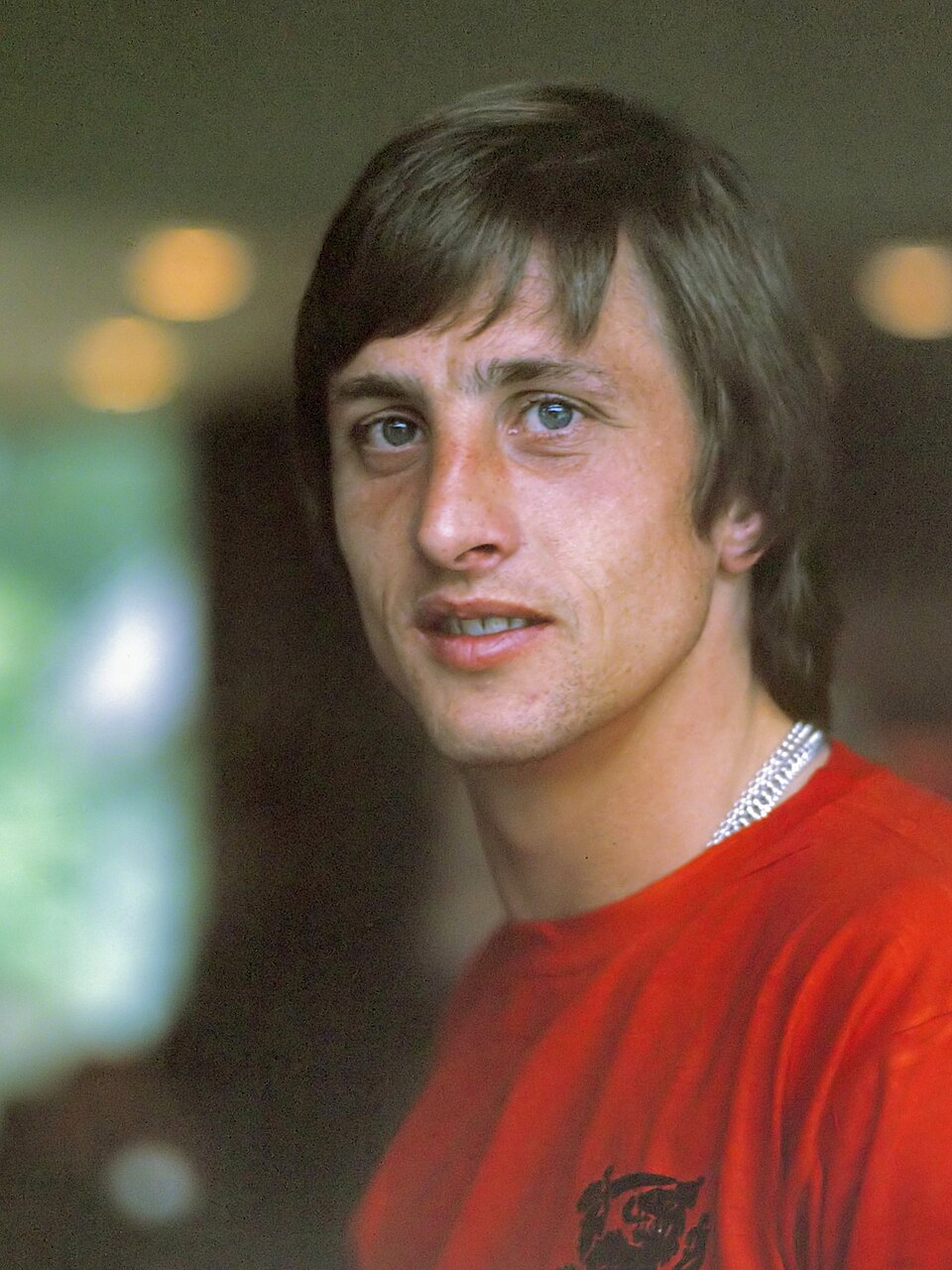
The most influential footballer who ever lived, and a top-five player before you count the influence. Cruyff won three Ballons d'Or (1971, 1973, 1974) and led Ajax to three consecutive European Cups from 1971 to 1973 as the on-pitch conductor of Total Football, then carried the idea to Barcelona — ending their 14-year league drought in 1974 — and to the 1974 World Cup, where his Golden Ball performance and the Cruyff turn against Sweden outlived the final defeat to West Germany. He scored over 290 league goals and 33 in 48 for the Netherlands, but goals understate a player whose genius was spatial: he directed the positions of all ten teammates while playing. His second act settled the argument about influence — as Barcelona coach he won four straight titles and the club's first European Cup (1992), built the Dream Team, championed La Masia, and created the lineage that runs through Guardiola to the modern positional game. Most great players master the game; Cruyff redesigned it.
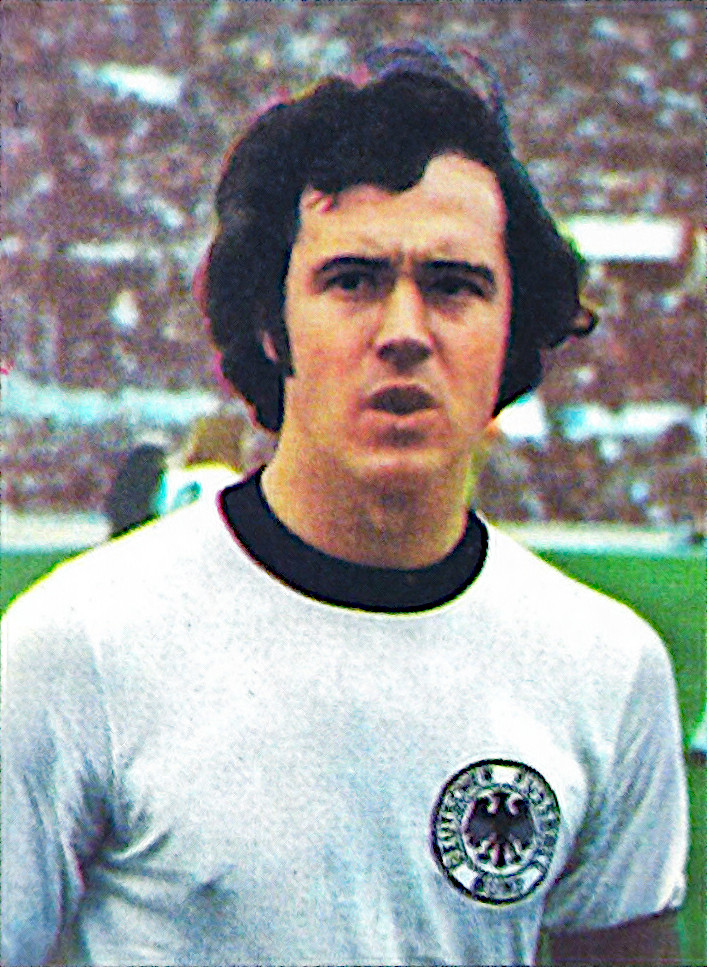
The greatest defender ever, ranked here because he invented the position he mastered. Beckenbauer took the sweeper role — until then a purely destructive job — and turned it into the attacking libero, striding out of defence to become an extra midfielder, a concept that echoes in every modern ball-playing center-back and every full-back inverting into midfield. The honors are staggering: European champion with West Germany in 1972 (a side often rated the best European international team of its era), World Cup-winning captain in 1974, three consecutive European Cups with Bayern Munich from 1974 to 1976, and the only defender with two Ballons d'Or (1972, 1976). He then managed West Germany to the 1990 World Cup, joining Mário Zagallo (and later Didier Deschamps) in the tiny club of men who won it as player and coach. Over 103 caps he combined elegance with ruthless game-management; his duel with Cruyff in the 1974 final — pragmatism against poetry, 2-1 — remains the sport's great philosophical argument in ninety minutes.
The sport's supreme big-game player. Zidane's résumé concentrates its weight in finals: two headed goals to beat Brazil 3-0 in the 1998 World Cup final in Paris, the player-of-the-tournament run as France added Euro 2000, and the left-footed volley against Bayer Leverkusen at Hampden Park in 2002 — arguably the greatest Champions League final goal — that delivered Real Madrid's ninth European Cup. He won the Ballon d'Or in 1998 and the FIFA World Player award three times (1998, 2000, 2003), took Serie A titles with Juventus and La Liga with Madrid, and moved between them in 2001 for a world-record fee that stood for eight years. Even his exit was monumental: at 34 he dragged an ordinary France to the 2006 final, won the tournament's Golden Ball, and ended his career with the headbutt on Materazzi — genius and combustibility inseparable to the last. His raw numbers (around 125 club goals) are the lowest here; nobody who watched him control a final's tempo considers that the measure.
The engine of the greatest dynasty in club history. Real Madrid won the first five European Cups, 1956 through 1960, and Di Stéfano scored in all five finals — seven goals in total, including a hat-trick in the 7-3 demolition of Eintracht Frankfurt at Hampden Park that many older critics still call the finest club performance ever staged. He was the total footballer before the term existed: nominally a center-forward, he defended, built play from deep, dictated tempo and finished, prefiguring Cruyff by fifteen years. His Madrid totals — 308 goals in 396 matches, eight league titles — came alongside two Ballons d'Or (1957, 1959), and in 1989 France Football awarded him its only Super Ballon d'Or as the outstanding winner of the award's first three decades. The gap in his record is circumstantial: caught between Argentine, Colombian and Spanish federations amid transfer disputes, he never played a World Cup match. Judged by what he controlled — every club competition of his era — he bows to no one.
The best pure striker of the modern era, and the game's great what-if. Before his right knee twice gave way, Ronaldo was a phenomenon without precedent: 54 goals in 58 games for PSV, then 47 in 49 in his single Barcelona season (1996-97), where his sprint-and-finish against Compostela remains the definitive image of a striker outrunning an entire defensive concept. He became the youngest Ballon d'Or winner at 21 in 1997 and won FIFA World Player three times (1996, 1997, 2002). After the convulsion that shadowed the 1998 final, his 2002 World Cup redemption — 8 goals, including both in the final against Germany — completed a second title (he was part of the 1994 winning squad) and pushed his World Cup total to 15, the record until Miroslav Klose passed it in 2014. Two Ballons d'Or, two World Cups, and a peak that defenders of the era, from Maldini down, routinely name as the hardest they ever faced: the injuries stole volume, never the verdict.
The deadliest left foot the game has known, and the star of its greatest lost team. Puskás scored 84 goals in 85 internationals for Hungary — a strike rate no modern player approaches — captaining the Aranycsapat through an Olympic gold in 1952, the 6-3 and 7-1 destructions of England in 1953-54, and a four-year unbeaten run that ended only in the 1954 World Cup final, where an injured Puskás scored and had a late equalizer disallowed in the 3-2 loss to West Germany. After the 1956 uprising he left Hungary, was banned for two years, and joined Real Madrid at 31 — supposedly overweight and finished. He then won four Pichichi trophies, scored 156 league goals in 180 games, struck four in the 1960 European Cup final against Eintracht Frankfurt (still the record for a final) and a hat-trick in the 1962 final in defeat. Career total: 700+ goals across two lives, either of which would justify this ranking. FIFA's award for the year's best goal fittingly bears his name.
The most dominant individual run of the 1980s: three consecutive Ballons d'Or from 1983 to 1985, a feat matched only by Messi and Cruyff at the time. An attacking midfielder with a striker's instinct for arriving late in the box, sublime vision and dead-ball mastery, Platini was the creative fulcrum of a golden French generation and of Juventus, whom he led to the 1985 European Cup — the trophy forever marked by the Heysel disaster that preceded it. His defining team achievement was Euro 1984 on home soil, where he scored an astonishing nine goals in just five matches, including two hat-tricks, a scoring feat at a major tournament never remotely approached. He finished with three Serie A top-scorer titles, around 350 career goals, and 41 in 72 for France, redefining what a midfielder could contribute to the scoresheet. His later career as a disgraced UEFA administrator clouds the legacy off the pitch, but on it he was, for three years, simply the best player in the world.
Der Bomber der Nation — the most ruthlessly efficient goalscorer the sport has produced. Squat and unspectacular but impossible to mark in the six-yard box, Müller scored 68 goals in just 62 internationals for West Germany, including the winner in the 1974 World Cup final and the golden-boot-topping 10 goals of the 1970 tournament. His single-season Bundesliga record of 40 goals in 1971-72 stood for nearly fifty years, until Robert Lewandowski managed 41 in 2020-21, and his 365 Bundesliga goals remain the competition's all-time mark by a distance. He won the 1970 Ballon d'Or, the 1972 European Championship, and three consecutive European Cups with Bayern Munich from 1974 to 1976, finishing with over 600 goals in senior club and international football. Not a dribbler or a creator — a finisher of pure, remorseless instinct, whose economy in front of goal set the template every poacher since has been measured against.
International goals
68 in 62
Career goals
600+
European Cups
3 in a row
World Cup titles
1
Bars are scaled to the leader in this list.
The debate
Honest era comparison starts by admitting what cannot be normalized. Pelé and Puskás played on ploughed-field pitches with a ball that gained a kilogram in rain, protected by referees who tolerated assault; their goal totals must be read against defending that was more violent but less organized, in an era before global scouting concentrated all the world's talent in a few leagues. Messi and Ronaldo faced deeper, fitter, video-prepared defences — but with protective refereeing, perfect surfaces, sports science extending their peaks, and in Messi's case a Barcelona structure built around him for a decade. Neither direction of adjustment is neutral; anyone who claims the comparison is easy is choosing a side first and a methodology second.
The remaining questions are definitional, not factual. If greatness means the highest peak, the argument is Maradona 1986 against Messi 2009-12. If it means career accumulation, Ronaldo's 900-plus goals and Messi's 45-plus trophies close the discussion between them. If it means changing the sport itself, Cruyff and Beckenbauer outrank several players who beat them on statistics. And if it means doing the most with the least — dragging Napoli and a limited Argentina to titles — Maradona's case never dies. This list weights all four lenses and lands on Messi because he alone is top-two through every one of them; but the debate endures precisely because the question hides four different questions, and reasonable people rank the lenses differently.
Walk through this GOAT ranking once
A static pass over the published Soccer list on this page — teaching marks, not live stats.
Open the ranking block — Scroll to the numbered GOAT table below the lab. Order is editorial; bars are teaching percentages tied to each athlete card.
Read Peak vs Career as labels — The Career / Peak toggle reshapes which bars the comparison lab shows. It does not fetch new statistics — it switches published teaching marks.
Compare Lionel Messi and Pelé on Ballons d'Or — Find both names in the table and read the first published axis (Ballons d'Or). Note who leads on that axis only; other axes can disagree.
Use the axis-verdict picker second — After you have read the table, the axis-verdict block is a second pass on the same published stats — a teaching check, not a trophy ceremony.
On Soccer, Lionel Messi vs Pelé on Ballons d'Or is the smallest honest comparison the page offers before you open VS links.
Editorial teaching ranks only. Not betting advice, fantasy scoring or a live leaderboard.
Second pass: Peak toggle and another axis
After the first-axis walk on Soccer, use Peak vs Career and a second published axis already on this page.
Flip Career to Peak once — On the comparison lab, switch from Career to Peak. Bars reshape from published peak marks — no live fetch.
Read Lionel Messi and Pelé on Career goals — In the GOAT table, leave the first axis behind and read the second published axis (Career goals) for both names.
Note if the leader flips — If Peak or Career goals reverses Lionel Messi vs Pelé from the first-axis pass, keep both results as teaching marks, not a trophy.
Axis-verdict as a check — Optionally set the axis-verdict picker to Career goals and confirm the same published numbers.
On Soccer, Peak plus Career goals for Lionel Messi vs Pelé is a second honest decision using only marks already printed here.
Editorial teaching only. Not betting, fantasy scoring or a live board.
Pick the published mark
Teaching read only. Not a trophy, a bet, or a live board.
How to read this GOAT list
Are these live rankings or betting odds?
No. The bars are editorial teaching marks scaled to the leader already published on this sport’s GOAT page. They are not live box scores, transfer values, or a betting line.
What is the difference between Peak and Career?
Peak keeps each athlete’s strongest published metrics. Career averages the full published set on this page. Both stay teaching marks — switch the era buttons on the lab to rescale the same list.
How do I see who leads on one published axis?
Open the axis verdict on this page, pick one scoring axis already in the lab, and keep the athletes you want selected. The line names whoever is ahead on that axis among that selection.
How do VS pages relate to this list?
A VS page uses the same published numbers as this ranking. It does not invent a new score. Open Compare if you want to rescale a custom subset.