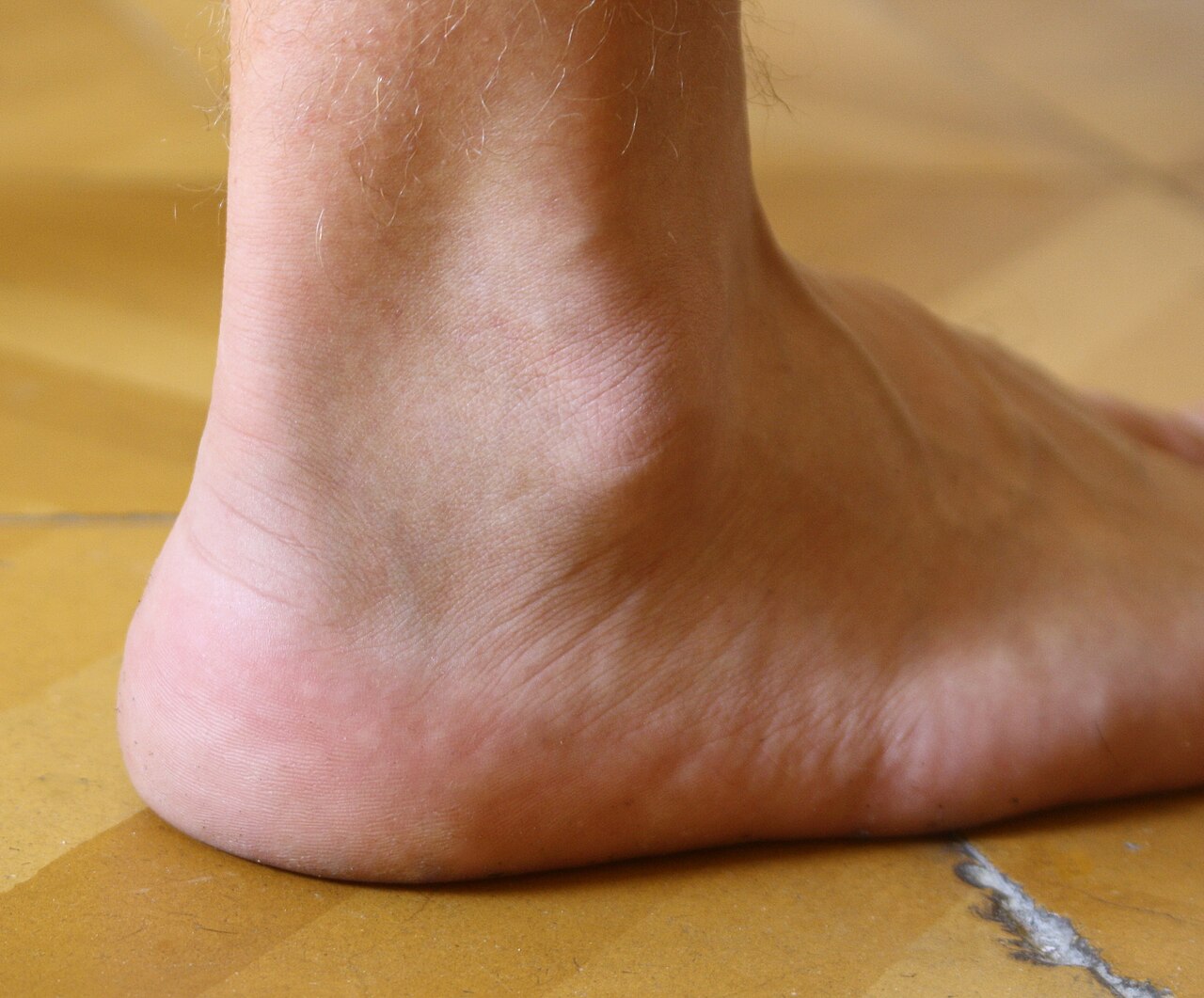
The ankle and foot absorb and redirect the full force of body weight with every step, making sprains and overuse injuries among the most common in sport and daily life.
Also called: Foot and Ankle Complex · Talocrural Region
The ankle and foot together form a complex system of joints and arches that absorbs the full impact of body weight with every step while also acting as a rigid lever to propel the body forward during walking and running.
Ankle sprains are among the most common musculoskeletal injuries in both sport and everyday life, most often occurring when the foot rolls inward and stresses the ligaments on the outer ankle. The region is also a frequent site of overuse conditions such as Achilles tendinopathy and plantar fasciitis, particularly among runners and people who spend long periods on their feet.
Despite how common ankle sprains are, a substantial proportion of people report ongoing instability or recurrent sprains if the initial injury is not adequately rehabilitated, which is part of why structured recovery is emphasized even for seemingly minor injuries. This page covers the region's anatomy, common conditions, assessment approaches, and general exercise and recovery patterns.
The profile
Pain frequency70
Recovery length25
Exercise load45
Clinician need35
Self-care fit75
Recurrence risk65
Clinician need
The ankle and foot absorb and redirect the full force of body weight with every step, making sprains and overuse injuries among the most common in sport and daily life.
The ankle and foot together form a complex system of joints and arches that absorbs the full impact of body weight with every step while also acting as a rigid lever to propel the body forward during walking and running.
When should I stop and seek care for Ankle & Foot?
Inability to bear weight after injury — An inability to take even a few steps immediately after an ankle injury, combined with specific bony tenderness, raises concern for fracture and typically warrants imaging.
What is a starter exercise for Ankle & Foot?
Ankle alphabet — 2 × 1 full set each foot — Trace the letters of the alphabet in the air with the foot, moving only at the ankle.
How does Ankle & Foot load progression usually start?
Protection and early motion — 0–1 weeks — Brief protection alongside early gentle range-of-motion work aims to manage swelling while avoiding prolonged immobilization.
What should I avoid with Ankle & Foot?
Prolonged immobilization — Extended use of a rigid boot or complete avoidance of movement beyond the first few days is generally discouraged, since early protected motion tends to support better outcomes than prolonged immobilization.
What is the most common type of ankle sprain?
The large majority of ankle sprains are inversion injuries affecting the ligaments on the outer side of the ankle, most often the anterior talofibular ligament.
How long does a typical ankle sprain take to heal?
Mild sprains often improve substantially within two to three weeks, while moderate to severe sprains can take four to eight weeks or longer for a full return to sport-level activity.
Does a sprained ankle need an X-ray?
Clinical decision rules such as the Ottawa ankle rules help determine when an X-ray is needed, generally reserving imaging for cases with specific bony tenderness or an inability to bear weight.
Neighbouring regions
Neighbouring topics share region literacy — not a severity ranking.