3 min read
If you only read one thing
Cheek · guanciale · pork collar
Key takeaways
Match anatomy and cooking behavior across naming systems. Use current local safety guidance and a thermometer.
Jump to section
Next
Shoulder
Read first Safe temperature depends on species, cut, preparation and local guidance. Prevent cross-contamination, thaw safely, and use an instant-read thermometer. Sourcing and waste choices also affect the footprint.
How to use this guide Shop by method Tell the butcher the dish, heat level and cooking time, then confirm trim and weight.Cut across the grain Rest cooked meat, find the fiber direction and slice across it with a sharp knife.Expert voices A useful substitute matches muscle use, connective tissue and fat, not just price or color. Working butcher — Cut selection Quick answers Why does the same cut have several names? Countries divide carcasses differently, while retailers also use regional and marketing names.
Does searing seal in juices? No. Searing builds flavor and color; moisture retention depends more on final temperature, time and resting.
Key data Safety point Practical check Temperature Follow current local authority guidance for the species and preparation. Storage Keep cold, separate raw foods and label dates.
Share this cut map before the market trip or holiday cook.
Local systems
IMPS/NAMP US institutional cut codes; retail names still diverge at the case.
EU carcass EU cutting lines and class stamps; shop labels are local vernacular.
Compare abroad Hanwoo grades and Wagyu BMS are reference systems — map anatomy first. Local examples Ask for trim weight and cooking method at the counter. Holiday rails: galbi sets, osechi/roast, asado cuts. Offal aliases connect gopchang, chitterlings and andouillette by tissue, not translation. Local FAQ Why does my recipe cut not match the supermarket label? Countries cut carcasses differently and retailers add marketing names — match by anatomy and cooking behavior.
Which doneness word should I use at the counter? Use the local vernacular and confirm internal temperature guidance.
Language note Localized meat URLs must keep navigation, labels and CTAs in the page language — no English chrome on /meat/ko/ or peers.
Local systems
Butchery map Primal to retail names by market.
Grade stamp Marbling/yield signals — dated schemes.
Retail label Packed names can hide swaps. Local examples KO: hanwoo grades + jeongyuk cut vernacular. JP: wagyu grades + supermarket pack names. EU: carcass classification + butcher counter talk. Best answers Can I swap cuts? Sometimes — match collagen and thickness.
Grade vs tenderness? Related but not identical.
Fridge thaw time? Plan ahead; cold thaw is safer than counter.
Local terms
Primal
Doneness
Grain
Tuna as meat Primary references National grade / inspection authorities (dated) Food-safety temperature guidance Butchery textbooks / trade maps where cited Local systems
Butchery map Primal to retail names by market.
Grade stamp Marbling/yield signals — dated schemes.
Retail label Packed names can hide swaps. Local examples KO: hanwoo grades + jeongyuk cut vernacular. JP: wagyu grades + supermarket pack names. EU: carcass classification + butcher counter talk. Best answers Can I swap cuts? Sometimes — match collagen and thickness.
Grade vs tenderness? Related but not identical.
Fridge thaw time? Plan ahead; cold thaw is safer than counter.
Local terms
Primal
Doneness
Grain
Tuna as meat Primary references National grade / inspection authorities (dated) Food-safety temperature guidance Butchery textbooks / trade maps where cited Key takeaways Same English cut may map to different muscles abroad. Doneness targets differ by species and safety rules. Grade stamps are quality signals, not recipes. Thaw and storage rules beat improvisation. Local lens Cut names, grading, trim and sale units change across butchery systems. Match anatomy and cooking behavior, not the translated name alone.
Print this page
Shoulder Picnic shoulder Loin Tenderloin Not medical advice Allergy, pregnancy and pathogen guidance belong to clinicians and agencies.
Key terms
BMS Beef Marbling Standard — Japanese scale; not 1:1 with USDA.
LocalLens How the cut is sold and named in this market.
Doneness Culinary color/feel bands — pair with species safety temps.
Primal Large wholesale division before retail cuts. How to use this atlas Pick a path — Grill, braise or sashimi — start-here cards match the question.Open the cut chart — Beef and tuna atlases sit above grades and doneness tools.Check safety and storage — Agency temps and thaw notes beat viral hacks.Swap or compare — Spectrum and swap matrix before English aliases.Practical tools Open cut spectrum
Doneness by animal
Cut swaps
Find a cut by cooking
What should I buy?
Meat questions people search
Print this cut sheet
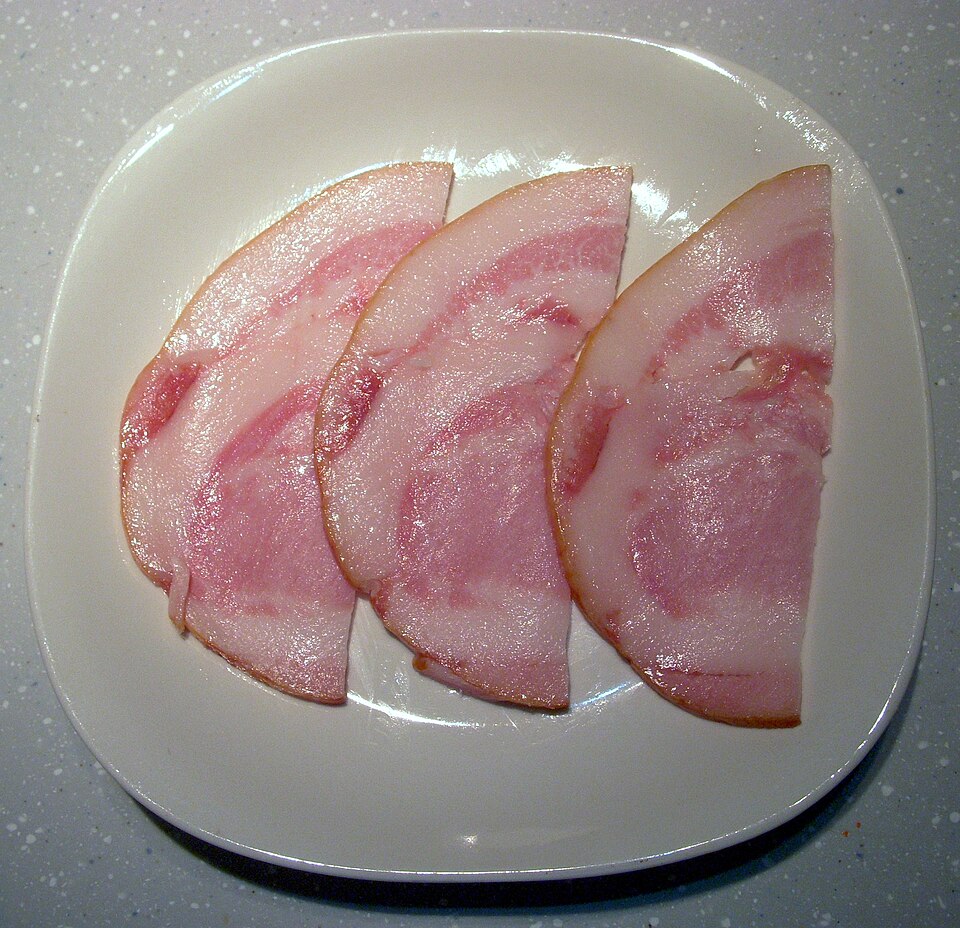
Drmies at English Wikipedia (Later version(s) were uploaded by Hohum at en.wikipedia.) · CC BY-SA 3.0 The cheek and throat, worked constantly by chewing, so lean muscle and fat end up laced through each other rather than stacked in layers. Cured it becomes guanciale, the fat that makes a carbonara; grilled fresh it is the cut Korean barbecue calls hangjeongsal, and a whole pig yields only a few hundred grams of it.
Pork Primals
TOOL-LIFES / MEAT ATLAS
JOWL Jowl
SHOULDER Shoulder
PICNIC Picnic shoulder
LOIN Loin
TENDERLOIN Tenderloin
BELLY Belly
LEG Leg
Hock & trotter
Profile Tenderness 70
Marbling 88
Umami 84
Price 62
Pairs with Grilling 92
Curing 80
Braising 55
Recommended cooking
High heat, briefJust past pink
The fat here renders faster than you expect. Take it off while the centre still looks faintly moist and let carry-over finish the job.
How to pick it Look for a marbled cross-section rather than one solid fat seam — the laced pieces are the ones worth the price.
Grading & naming
Often ungraded at retail — buy on firm white fat and a fresh, sweet smell, not a stamp.
Grading systems →
Nutrition · Per 100 g raw edible portion
331kcal Calories
15g Protein
30g Fat
11g Saturated fat
Calories & protein →
Next
Shoulder
Temperatures are guidance for whole-muscle cuts. Ground meat and poultry need 71°C / 160°F throughout.