Side by side
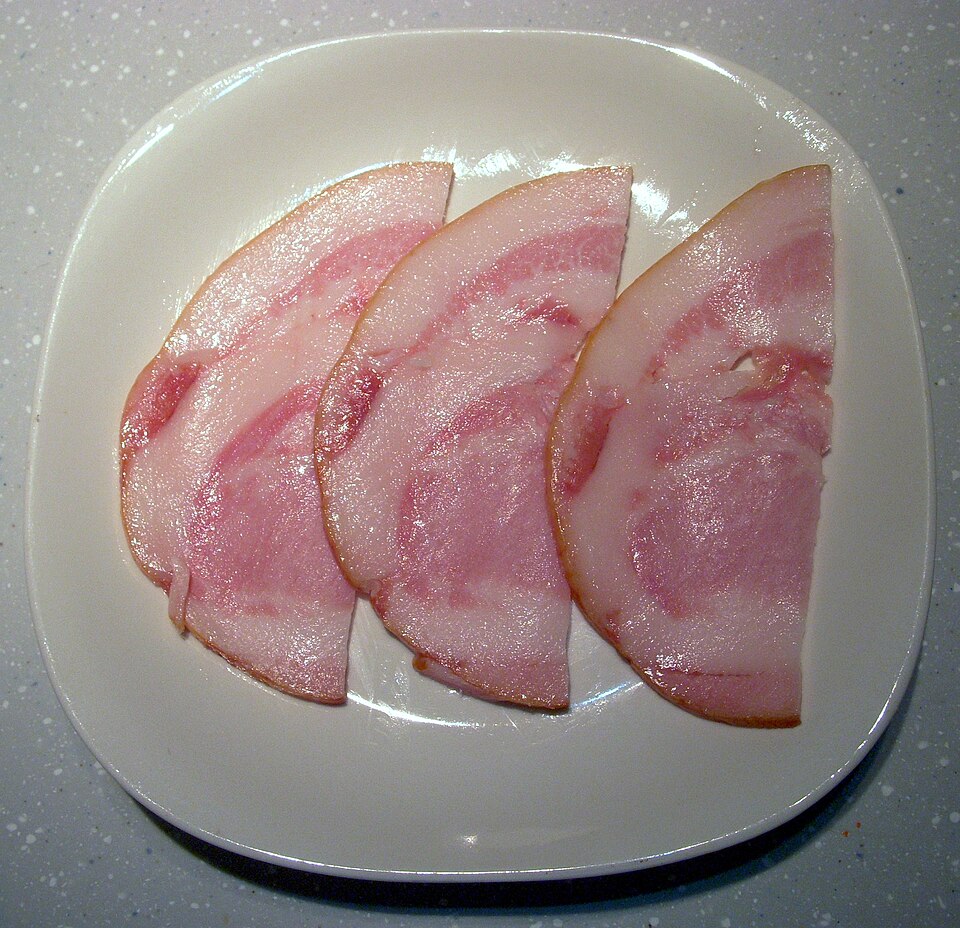
Jowl
Cheek · guanciale · pork collar
The cheek and throat, worked constantly by chewing, so lean muscle and fat end up laced through each other rather than stacked in layers. Cured it becomes guanciale, the fat that makes a carbonara; grilled fresh it is the cut Korean barbecue calls hangjeongsal, and a whole pig yields only a few hundred grams of it.
Look for a marbled cross-section rather than one solid fat seam — the laced pieces are the ones worth the price.
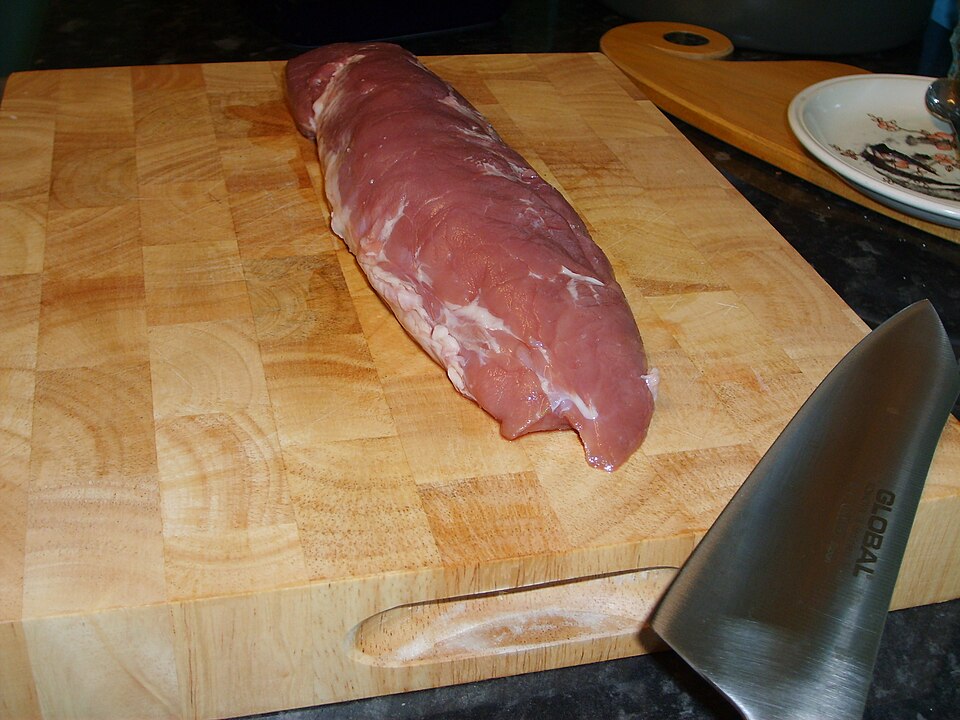
Loin
Back · centre-cut chop · karree
The long muscle running along the back, barely worked and therefore very lean. Nearly every breaded cutlet in the world comes from here — schnitzel, tonkatsu, milanesa — because a lean, even muscle is exactly what a coating needs to protect.
A thin, even fat cap along one edge keeps the muscle from drying; a fully trimmed loin cooks noticeably tougher.
Which one to buy
- Better forJowl : Loin
- GrillingJowl92 : 72
- CuringJowl80 : —
- BraisingJowl55 : —
- CutletsLoin— : 92
- RoastingLoin— : 80
Other comparisons
All cuts
Beef Primals
Chicken Portions
Bluefin Tuna Cuts
Temperatures are guidance for whole-muscle cuts. Ground meat and poultry need 71°C / 160°F throughout.