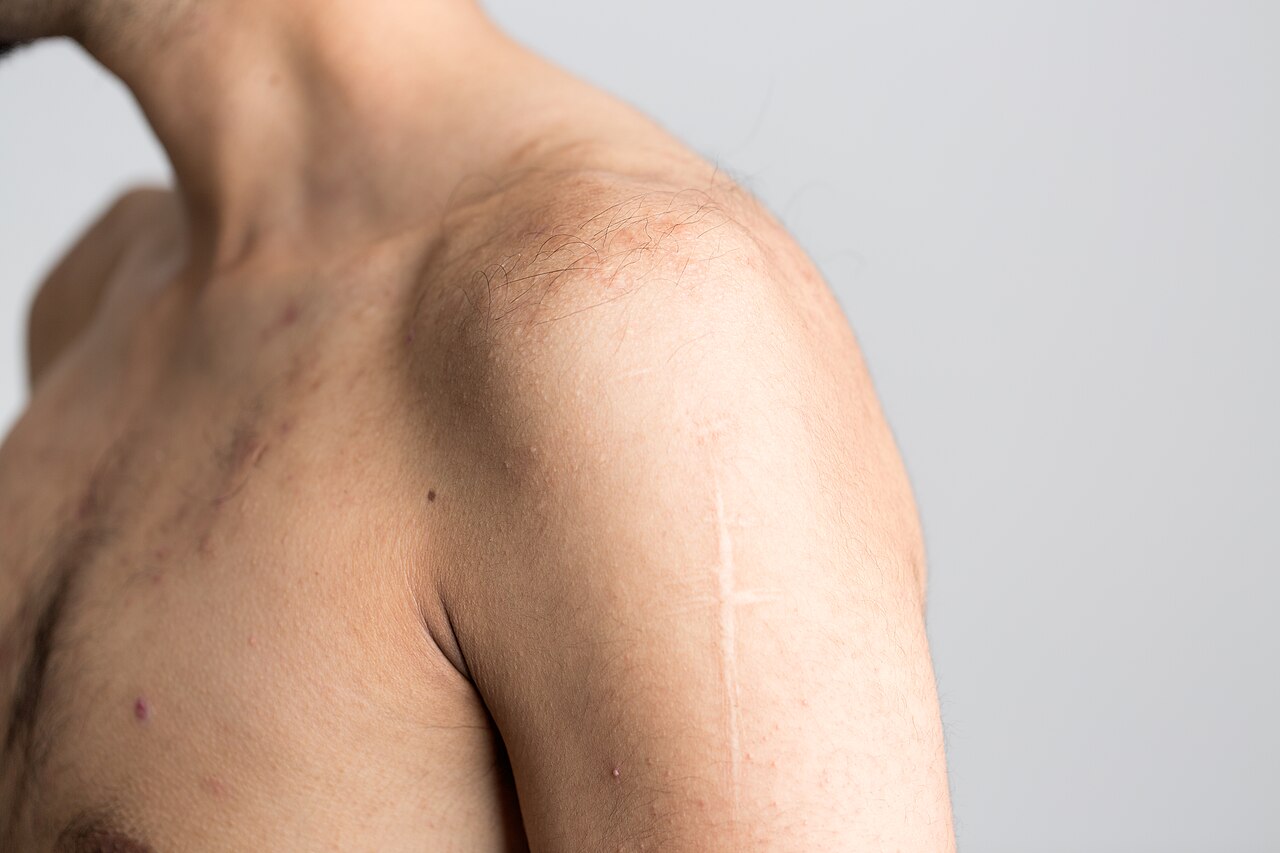
The shoulder trades stability for the greatest range of motion of any joint in the body, relying heavily on the rotator cuff muscles rather than bone to stay centered.
Also called: Glenohumeral Joint · Rotator Cuff Region
Rotator cuff overload, impingement, instabilityCommon cause
6–12 weeks for tendinopathyTypical recovery
Supraspinatus, infraspinatus, deltoidKey muscles
Sudden loss of motion, trauma with deformityRed-flag signs
The shoulder is the most mobile joint in the human body, formed where the ball of the upper arm bone sits in a shallow socket of the shoulder blade. This shallow fit allows an exceptional range of motion but provides little inherent bony stability, so the joint depends heavily on the surrounding rotator cuff muscles, ligaments, and labrum to stay centered during movement.
Shoulder pain is among the most common musculoskeletal complaints, particularly among adults over 40 and those in occupations or sports involving repeated overhead motion. Rotator cuff-related conditions account for a large share of cases, ranging from irritation of the tendons to partial or full tears.
Because the shoulder relies so much on muscular control, rehabilitation plays a central role in recovery for most conditions, whether managed conservatively or after surgery. This page covers the joint's anatomy, common conditions, assessment methods, and general exercise and recovery patterns.
The profile
Pain frequency60
Recovery length55
Exercise load60
Clinician need60
Self-care fit50
Recurrence risk60
Clinician need
The shoulder trades stability for the greatest range of motion of any joint in the body, relying heavily on the rotator cuff muscles rather than bone to stay centered.
The shoulder is the most mobile joint in the human body, formed where the ball of the upper arm bone sits in a shallow socket of the shoulder blade. This shallow fit allows an exceptional range of motion but provides little inherent bony stability, so the joint depends heavily on the surrounding rotator cuff muscles, ligaments, and labrum to stay centered during movement.
When should I stop and seek care for Shoulder?
Sudden, complete loss of motion after trauma — An inability to move the arm following a fall or collision raises concern for fracture or dislocation and should be evaluated urgently.
What is a starter exercise for Shoulder?
Pendulum swing — 2 × 30s — Lean forward and let the arm hang, gently swinging it in small circles using body momentum rather than active muscle effort.
How does Shoulder load progression usually start?
Pain and motion management — 0–3 weeks — Gentle range-of-motion and pain-relief strategies aim to reduce irritation without allowing the shoulder to stiffen.
What should I avoid with Shoulder?
Sustained overhead activity early in recovery — Prolonged reaching or working overhead before rotator cuff strength is restored is generally discouraged, since it can aggravate irritated tendons.
What is the rotator cuff?
The rotator cuff is a group of four muscles — supraspinatus, infraspinatus, teres minor, and subscapularis — whose tendons wrap around the shoulder joint and help keep the arm bone centered in its socket while allowing rotation.
Does a rotator cuff tear always need surgery?
Many partial and even some full-thickness tears, especially in less active or older individuals, are managed successfully with structured exercise; surgery is more often considered for larger tears, significant weakness, or failed conservative care.
What is shoulder impingement?
Shoulder impingement describes irritation of rotator cuff tendons or the bursa as they pass through a narrow space beneath the tip of the shoulder blade, often provoked by repeated overhead activity.