🔌The Greats

Semiconductor Engineer · Designs and fabricates the transistors inside every computer, phone and weapon, using machines precise enough that only a few factories on Earth can run them.

The semiconductor industry's canon spans a countess's opposite: engineers who built the physical machine first and only later had to invent the words and institutions to describe what they had done. The eight people here worked across the United States, Taiwan, Italy, the United Kingdom and South Korea, and cover both halves of the profession — designing circuits and manufacturing them.

What connects them is less a shared background than a shared willingness to restructure how the whole industry worked, whether that meant a new circuit, a new manufacturing process, a new business model, or simply insisting a textbook could teach thousands of engineers what only a handful understood.

The all-time podium

Robert Noyce
Robert Noyce
United States
2
Morris Chang
Morris Chang
Taiwan
1
Jack Kilby
Jack Kilby
United States
3

The eight who reached the top

1
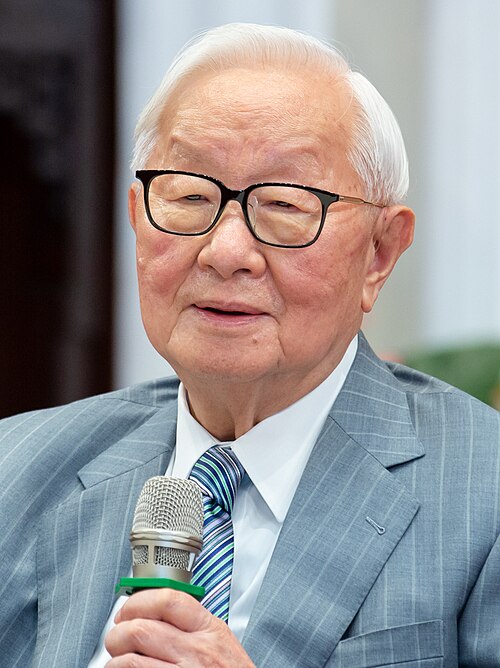
Photograph of Morris Chang 總統府 · CC BY 2.0

Morris Chang

Taiwan · b. 1931

Founded TSMC in Hsinchu in 1987 after 25 years at Texas Instruments, inventing the 'pure-play foundry' model: a fab that manufactures chips designed by other companies and competes with none of them. That single structural idea now underpins most of the global chip-design industry.

The story

In 1985, after being passed over for the top job at Texas Instruments despite running its semiconductor group, Chang accepted an invitation from Taiwan's government to lead the Industrial Technology Research Institute. Two years later he founded TSMC with funding from the Taiwanese government and a technology-licensing deal with the Dutch electronics firm Philips, which took an equity stake — a foundry built almost entirely on capital and know-how borrowed from elsewhere.

“Giving up owning the whole stack can let a company outgrow rivals who insist on controlling every layer themselves.”

TSMC founded
1987, Hsinchu
Years at Texas Instruments first
25 years
TSMC's global foundry share (2024)
~62%
2
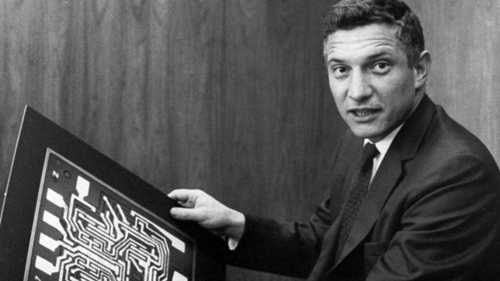
Photograph of Robert Noyce Intel Free Press · CC BY-SA 2.0

Robert Noyce

United States · 1927–1990

Co-invented the integrated circuit at Fairchild Semiconductor in 1959, then co-founded Intel in 1968. His 'planar' silicon process — printing an entire circuit's wiring directly onto a chip instead of hand-wiring it — became the manufacturing basis for nearly every chip made since.

The story

In 1957, Noyce and seven Shockley Semiconductor colleagues — later nicknamed the 'traitorous eight' by their furious founder William Shockley — quit together to start Fairchild Semiconductor after Shockley's management became unbearable. Two years later, working independently of Texas Instruments' Jack Kilby, Noyce filed his own integrated-circuit patent using a manufacturable planar process; the two are now jointly credited as co-inventors after a lengthy legal battle over priority.

“Being second to invent something matters less than being the version that can actually be manufactured at scale.”

Fairchild Semiconductor co-founded
1957
Planar IC patent filed
1959
Intel co-founded
1968
3
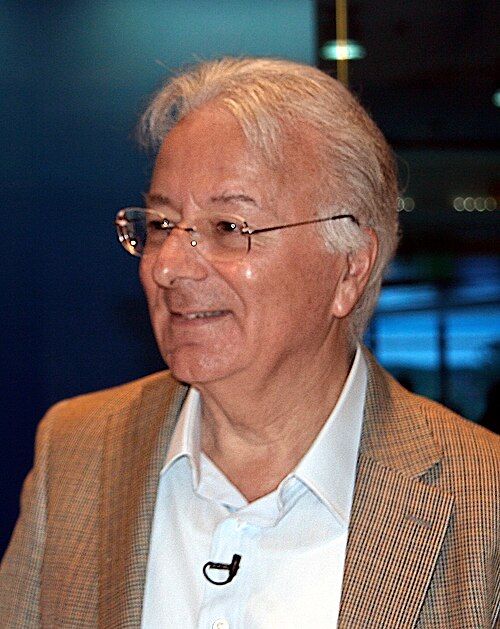
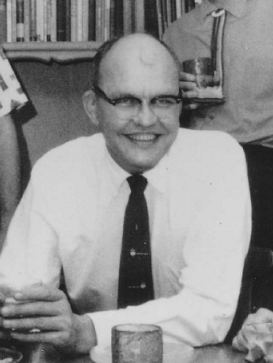
Photograph of Jack Kilby James R. Biard · CC BY-SA 4.0

Jack Kilby

United States · 1923–2005

Built the first working integrated circuit at Texas Instruments in 1958, wiring a transistor, resistors and a capacitor together on a single sliver of germanium and proving an entire circuit could exist on one piece of semiconductor. Awarded the Nobel Prize in Physics in 2000 for the invention.

The story

Having just joined Texas Instruments in the summer of 1958, Kilby had not yet earned any vacation days, so he was left largely alone in the lab during the company's traditional two-week shutdown. He used the quiet weeks to work out how an entire circuit could be built from a single piece of germanium, and on September 12, 1958, demonstrated it working to skeptical colleagues.

“The enforced quiet of being new and overlooked can be exactly what a hard problem needs.”

Nobel Prize in Physics
2000
First working IC demonstrated
Sept 12, 1958
US patents held
60+
4
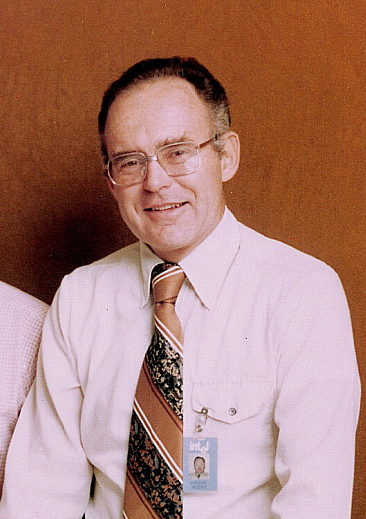
Photograph of Gordon Moore Intel Free Press · CC BY-SA 2.0

Gordon Moore

United States · 1929–2023

Co-founded Fairchild Semiconductor and later Intel, but is best known for a 1965 magazine article observing that the number of components on a chip was doubling roughly every year — a forecast the industry itself turned into 'Moore's Law', a target it has spent sixty years fulfilling.

The story

In a 1965 article for Electronics magazine, Moore plotted just five data points on chip component counts and extrapolated a doubling every year, a projection he meant to hold for only a decade. Engineers and executives began treating the curve as a target to hit rather than a mere observation, planning multi-billion-dollar fabs years in advance to keep pace with a forecast Moore himself later called more a self-fulfilling prophecy than a law of physics.

“A confident forecast, repeated by an entire industry as a plan, can bend reality to match it.”

Moore's Law article published
1965
Intel co-founded
1968
Presidential Medal of Freedom
2002
5
Photograph of Lynn Conway Charles Rogers · CC BY-SA 2.5

Lynn Conway

United States · 1938–2024

Co-authored 'Introduction to VLSI Systems' with Carver Mead in 1980, creating a structured design methodology that let ordinary engineers, not just specialists, design complex chips, and founded the MOSIS shuttle service that let universities fabricate their students' own designs.

The story

In 1968, IBM fired Conway after she told management she intended to transition, and she rebuilt her career from scratch under a new identity, eventually landing at Xerox PARC, where she and Carver Mead wrote the textbook that reshaped chip-design education. Her earlier, uncredited contributions to IBM's superscalar computer architecture research were only publicly reconnected to her decades later; in 2020, more than fifty years after firing her, IBM formally apologized.

“A single accessible textbook can open a field to thousands of engineers faster than any one chip design.”

Introduction to VLSI Systems published
1980
MOSIS chip shuttle founded
1981
IBM's formal apology
2020
6
Photograph of Federico Faggin Intel Free Press · CC BY-SA 2.0

Federico Faggin

Italy / United States · b. 1941

Led the design and layout of the Intel 4004, the first commercial single-chip microprocessor, in 1971, applying the silicon-gate process he had invented at Fairchild to make it manufacturable. Later co-founded Zilog, whose Z80 became one of the best-selling processors of the early personal-computer era.

The story

Faggin led the 4004's logic design and physical layout in 1970–71, applying the silicon-gate process he had developed at Fairchild two years earlier to make the design dense enough to fit on one chip. When the finished die came back from the fab, he had quietly etched his initials, 'F.F.', into a corner of the layout — a widely documented early instance of a chip designer signing their own microprocessor.

“A process innovation that makes a design manufacturable can matter as much as the design itself.”

Intel 4004 released
1971
Silicon-gate MOS process developed
1968, Fairchild
Zilog co-founded
1974
7

Sophie Wilson

United Kingdom · b. 1957

Designed the instruction set for the original ARM processor at Acorn Computers in 1985, prioritizing simplicity and low power over raw speed. That RISC design now runs, in descendant form, inside the overwhelming majority of the world's smartphones.

The story

Before Acorn's small team could afford dedicated chip-simulation hardware, Wilson wrote the ARM1's instruction-set simulator in BBC BASIC, running on a BBC Micro she had helped design years earlier. When the first ARM1 silicon came back from fabricator VLSI Technology in April 1985, the team plugged it in and it worked correctly on the first try, drawing so little power that a design fault initially seemed more likely than success.

“Designing for simplicity and low power, not maximum speed, can win an entire market decades later.”

First ARM chip (ARM1)
1985
Devices shipped with ARM-based chips
Billions annually
BBC Micro co-designed
1981
8

Hwang Chang-gyu

South Korea · b. 1953

As head of Samsung Electronics' semiconductor business, proposed 'Hwang's Law' in 2002 — that memory-chip density would double every year, faster than Moore's Law's two — while leading Samsung's flash-memory division past rivals to become the world's largest NAND flash maker.

The story

At the 2002 International Electron Devices Meeting, Hwang presented data suggesting Samsung's memory-chip density was doubling annually, a faster pace than the two-year cadence Gordon Moore had described for logic chips decades earlier; the trade press quickly dubbed it 'Hwang's Law'. Skeptics later noted the pace slowed within a few years, but the claim helped cement Samsung's reputation as the aggressor setting memory-chip pace, around the time it overtook Toshiba to lead the global NAND flash market.

“A bold, well-timed technical claim can shape an industry's narrative even after it stops holding true.”

'Hwang's Law' proposed
2002, IEDM
Samsung overtakes Toshiba in NAND
~2002–03
Later chairman, KT Corporation
2014–2017

Bars are scaled to the leader in this list.

Comparison Lab

Toggle names on and off — every bar rescales to the leader of your selection.

5 / 8

The argument

Whether Kilby or Noyce deserves primary credit for inventing the integrated circuit is still argued: Kilby built a working device first, in 1958, using germanium and external wiring, but Noyce's 1959 planar silicon design, with printed metal interconnects, was the version that could actually be mass-manufactured. The companies fought a patent battle for over a decade before courts split the credit, and because Noyce died in 1990 and Nobel Prizes are never awarded posthumously, only Kilby lived to receive the Nobel Prize for it, in 2000.

Whether Moore's Law was ever a discovery about silicon physics, rather than a coordination target the whole supply chain agreed to hit, is contested among historians of the industry — a growing number now describe it primarily as an economic and organizational achievement rather than a scientific one.

Keep exploring

More in Engineering & Technology