🚒The Greats

Firefighter · The trade that runs toward what everyone else flees — from Rome's vigiles and Edo's matoi bearers to today's wildfire crews and 24-hour rescue shifts.

Firefighting is the most collective of trades — its greatest acts are performed by crews, most of them anonymous, and its deadliest days are remembered by numbers like 343 rather than by names. Any list of eight individuals therefore stands in for multitudes: the tobi on Edo's burning roofs, the insurance brigademen, the volunteers of a thousand small towns, none of whom got a biography.

The eight below are chosen because each permanently changed what the job is: who does it, how it is organized, what techniques it uses, or whom it is willing to include. They span Scotland, Ireland, Japan, the United States and the Soviet Union, and twenty-two centuries of the same walk toward the flames.

The all-time podium

🥈
Eyre Massey Shaw
Ireland / United Kingdom
2
James Braidwood
James Braidwood
Scotland / United Kingdom
1
Ōoka Tadasuke
Ōoka Tadasuke
Japan
3

The eight who reached the top

1
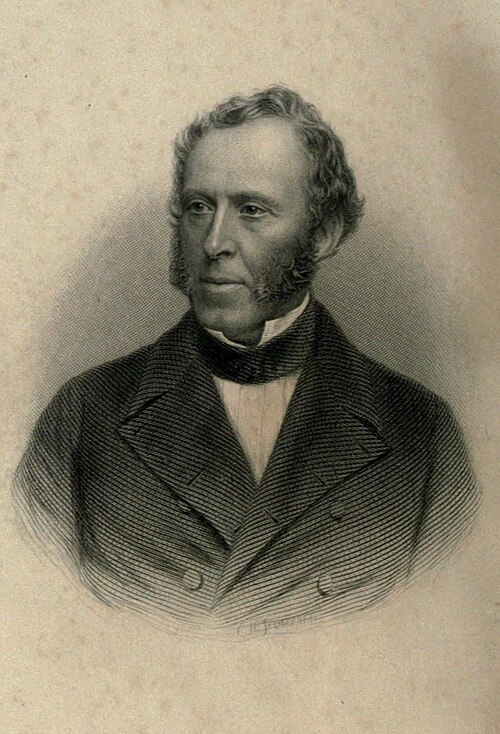
Portrait of James Braidwood, founder of the Edinburgh fire brigade and London's fire service. Unknown Illustrator; book by James Braidwood · Public domain

James Braidwood

Scotland / United Kingdom · 1800–1861

Appointed at 24 to lead Edinburgh's new municipal brigade in 1824 — often called the world's first — Braidwood invented the modern professional firefighter: trained, drilled, uniformed, and taught to enter buildings and attack a fire's seat rather than spray from the street. His 1830 manual codified the trade for the first time.

The story

On 22 June 1861, Braidwood — by then commander of London's fire service for nearly three decades — was working at the enormous Tooley Street warehouse fire, handing refreshments to his exhausted men near the riverfront, when a warehouse wall collapsed and killed him instantly. The fire burned for two weeks. London shut down for his funeral: the cortege stretched around a mile and a half, and church bells tolled across the city for the man who had made firefighting a profession.

“A trade becomes a profession when someone writes down its craft and drills people in it before the emergency.”
Age given command in Edinburgh
24 (1824)
Years leading London's firemen
28 (1833–61)
First firefighting manual
Published 1830
2

Eyre Massey Shaw

Ireland / United Kingdom · 1830–1908

Taking over London's brigade after Braidwood's death, the Irish-born Shaw led the transition from an insurance-funded force to the public Metropolitan Fire Brigade in 1866 and commanded it for thirty years, building stations, steam fleets and street escape ladders while becoming Victorian London's most recognizable public servant — 'the Skipper.'

The story

Shaw was such a celebrity that Gilbert and Sullivan wrote him into Iolanthe: at the 1882 premiere at the Savoy Theatre, the Fairy Queen sang 'Oh, Captain Shaw! Type of true love kept under!' directly at Shaw, who was sitting in the stalls as the audience roared. A fire chief had become a figure of West End opera — a measure of how completely the Victorian city had fallen for its firemen.

“Public services survive on public affection; Shaw understood spectacle and discipline are not opposites.”

Years commanding London's brigade
30 (1861–91)
Brigade made public
MFB, 1866
Immortalized on stage
Iolanthe, 1882
3
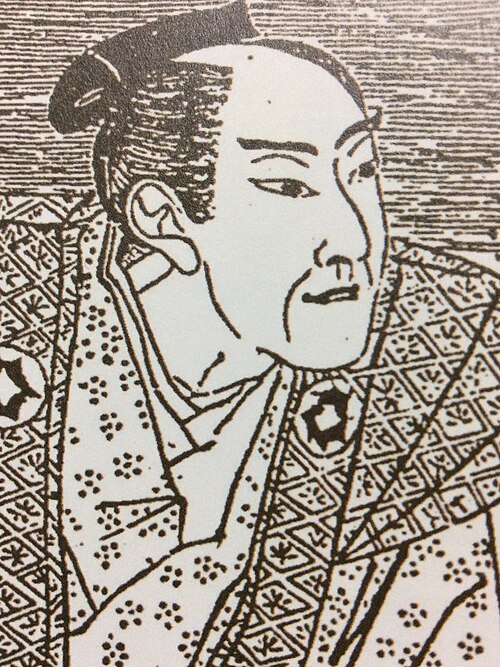
Depiction of Ōoka Tadasuke, the Edo magistrate who organized the city's townsman fire brigades. 不詳 · Public domain

Ōoka Tadasuke

Japan · 1677–1752

As Edo's south magistrate under shogun Tokugawa Yoshimune, Ōoka organized the townsman fire companies — the machibikeshi — grouping the city's commoner districts into 47 iroha-named brigades from 1720. He gave the world's largest city a fire service drawn from its own roofers and builders, decades before European capitals managed anything comparable.

The story

Ōoka's insight was to recruit the tobi — the steeplejacks and construction workers who built Edo's roofs — because in a city of paper and timber, firefighting meant demolition: tearing down houses ahead of the flames faster than the fire could reach them. Each company planted its matoi standard on a roof at the fire's edge, its bearer holding position in the smoke as a claim of honor, while the crews stripped the buildings below him. The system fought Edo's fires for a century and a half.

“Recruit the people who already own the terrain: the best firefighters of a wooden city were the men who built it.”

Town fire companies organized
47 iroha-gumi (1720)
Townsmen enrolled
~10,000
Years as Edo magistrate
~19
4

Molly Williams

United States · fl. c. 1818

An African American woman held in slavery by a New York merchant, Williams worked with Oceanus Engine Company No. 11 in Lower Manhattan and is the first woman known to have fought fires in the United States — called 'Volunteer No. 11' by the company's men, in an era when both her sex and her status excluded her from membership.

The story

During the blizzard of 1818, with influenza laying up most of Oceanus No. 11's male volunteers, Williams answered a call, took her place on the drag ropes, and hauled the heavy pumper through deep snow to the fire — reportedly in a calico dress and checked apron. The company men said she was as good a fire laddie as any of them; the story survived precisely because everything about her doing it was supposed to be impossible.

“The people barred from a job's title have always done the job anyway; recognition lags contribution by generations.”

First known US woman firefighter
c. 1818
Company served
Oceanus No. 11, NYC
FDNY's first women hired
1982 — 164 yrs later
5

Edward F. Croker

United States · 1863–1951

FDNY's chief from 1899 to 1911, Croker preached that firefighting's real work was prevention, warning for years that New York's high loft buildings lacked sprinklers and fire drills. The Triangle Shirtwaist fire proved him right at the cost of 146 lives, and his words about the fireman's calling remain the trade's most quoted creed.

The story

Croker stood in the street at the Triangle Shirtwaist fire on 25 March 1911 while his ladders, which reached only the sixth floor, stood short of workers trapped above the eighth. Within weeks he resigned one of the most powerful jobs in American firefighting to campaign full time for sprinklers, fire drills and factory codes — telling audiences that the dead had been killed not by fire but by buildings that had been allowed to be built.

“The honest endpoint of firefighting is making itself unnecessary: prevention outranks heroics.”

Years as FDNY chief
12 (1899–1911)
Resigned after Triangle
May 1911
Cause championed
Sprinklers & drills
6
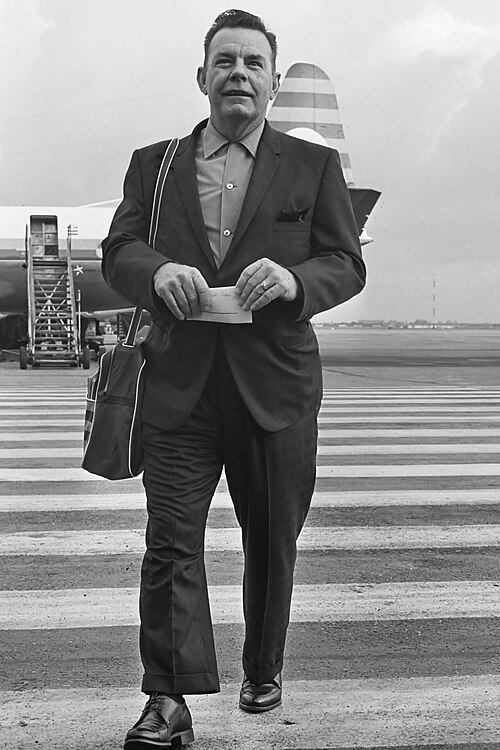
Photograph of Red Adair, the oil well firefighter. Harry Pot · CC BY-SA 3.0 nl

Red Adair

United States · 1915–2004

A Houston oil-well firefighter who made the most extreme corner of the trade his own, Adair and his company killed thousands of well blowouts and fires across five decades — using explosives to snuff burning wells — and became the only firefighter Hollywood cast John Wayne to play, in 1968's Hellfighters.

The story

In 1962 Adair extinguished the 'Devil's Cigarette Lighter,' a Saharan gas well at Gassi Touil, Algeria, that had burned for months with a flame hundreds of feet high — bright enough that John Glenn reported seeing it from orbit. Adair's crew snuffed it with a precisely placed explosive charge that consumed the fire's oxygen. Nearly thirty years later, aged 75, he was in Kuwait after the Gulf War, where his company capped 117 of the hundreds of wells Iraqi forces had set alight.

“Specialize in the fires no one else will touch and the world will have no choice but to call you.”

Kuwait wells his team capped
117 (1991)
Age during Kuwait operation
75
Hollywood portrayal
John Wayne, 1968
7

Leonid Telyatnikov

Soviet Union / Ukraine · 1951–2004

Commander of the Chernobyl power plant's fire brigade, Telyatnikov led the first crews onto the burning reactor complex in the first hours of 26 April 1986, fighting fires on roofs strewn with reactor graphite. He survived acute radiation sickness and was made a Hero of the Soviet Union; six of his firefighters were dead within weeks.

The story

Telyatnikov was on leave the night Reactor 4 exploded; he came in anyway and directed roughly two dozen firefighters in the first, decisive hours, climbing to survey roofs where fragments of the reactor core itself lay burning around the men's boots. The crews had no meaningful protection against radiation and mostly understood the danger only as heat and smoke. He absorbed a near-lethal dose, was treated in Moscow, returned to fire service, rose to general — and died of cancer in 2004, at 53.

“Firefighters hold the line first and learn what the fire really was afterward; the bill can arrive decades later.”

Firefighters he led that night
~25–30
His men dead within weeks
6
Died of cancer
2004, aged 53
8

Brenda Berkman

United States · b. 1951

A lawyer and marathon runner, Berkman sued New York City after every woman failed FDNY's 1978 physical exam, arguing the test measured brute strength rather than firefighting. She won in 1982, entered the academy with about forty other women as FDNY's first female firefighters, endured years of harassment, and retired a captain.

The story

After the federal court ruled in Berkman v. City of New York that FDNY's physical test was discriminatory and not job-related, Berkman joined the job she had sued her way into — and colleagues drained her air tank, slashed her tires and sent death threats. She stayed, co-founded the United Women Firefighters, made officer rank, and on 11 September 2001, though off duty, went to the World Trade Center and spent weeks in the rescue and recovery effort.

“Test the job's real tasks, not its folklore about who can do them — and be prepared to outlast the backlash.”

Case that opened FDNY
Berkman v. NYC, 1982
Women entering with her
~40 (1982)
Rank reached
Captain

Bars are scaled to the leader in this list.

Comparison Lab

Toggle names on and off — every bar rescales to the leader of your selection.

5 / 8

The argument

Whether organizers belong on the list at all is contested: Ōoka Tadasuke was a magistrate who never carried water to a roof, and Braidwood and Shaw are remembered partly because chiefs generate records while the crews who did the dying remain anonymous. The counter-argument is that organization — who is recruited, trained and paid — has saved more lives than any individual act of courage.

Chernobyl admits no single hero: Telyatnikov stands here for lieutenants Volodymyr Pravik and Viktor Kibenok and the firefighters of their watches, six of whom died of radiation sickness within weeks and all of whom are commemorated together in Ukraine. Singling out the survivor who commanded is one defensible choice among several.

The deepest bias in any such list is that firefighting's defining sacrifices are collective and mostly nameless — the 343 FDNY members of 11 September 2001 are remembered as a number precisely because no ranking among them would be tolerable. Eight names are a door into the trade's history, not a summit above it.

Keep exploring

More in Law & Public Service