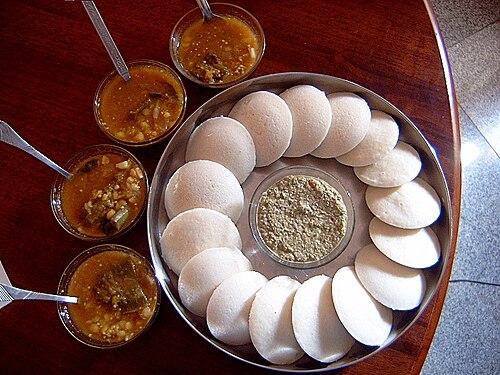
Indian cuisine is a family of regional systems that share tadka (spices bloomed in fat), dal, yogurt and pickle. A Tamil breakfast of idli-sambar and a Punjabi tandoor dinner are not versions of one gravy.
Chili is late (16th century) and now structural in many kitchens. Heat here outruns Thailand only because black pepper, mustard seed and chili stack; many dishes stay fragrant rather than red.
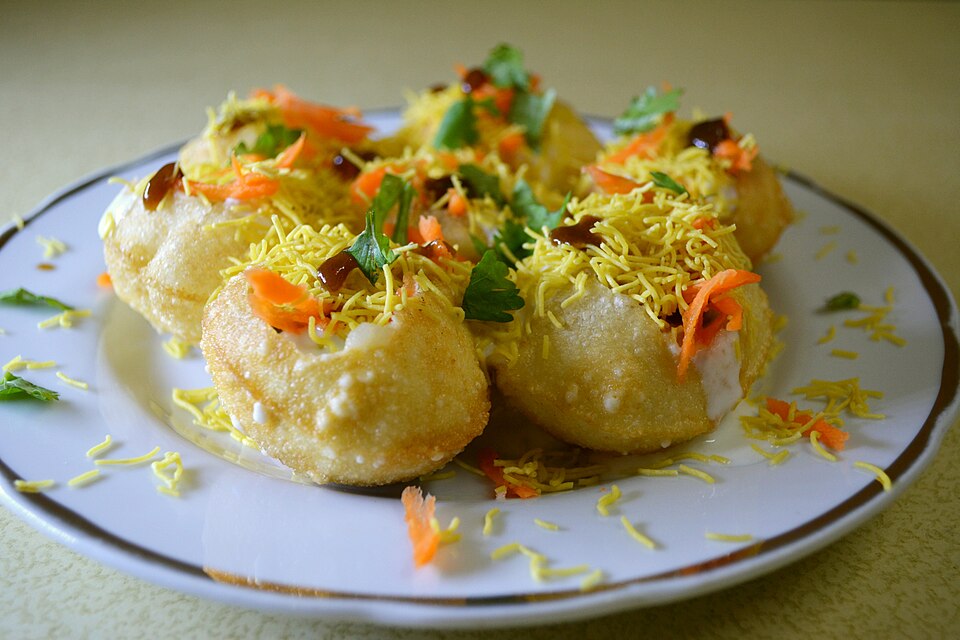
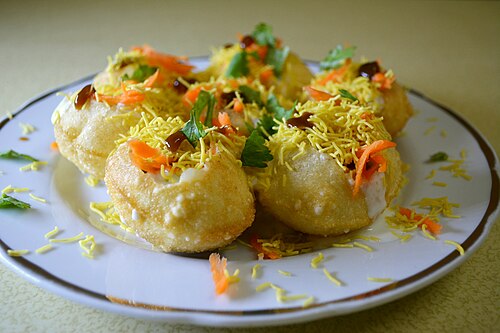
Street India — chaat, vada pav, kolkata rolls, Hyderabad biryani stalls — is a full cuisine. The overseas "curry house" is a real British-Indian dialect, not a replica of Lucknow or Madurai.
Deep introduction
How Indian cuisine holds together
Indian cuisine is organised by dahi / achar / idli batter and rice / roti / dosa.
Regions, pantry, table manners and travel — plus a lens tuned to this language region.
Regional diversity
The south ferments rice and lentil batters; the north bakes bread in tandoors. Bengal butters fish in mustard; Gujarat builds sweet-savoury vegetarian thalis; Hyderabad and Lucknow keep a Mughal rice-and-meat court.
Kerala Syrian-Christian and Malabar Muslim tables, Goan vindaloo and Kashmiri wazwan are full systems, not garnish on a national curry.
Pantry and ferments
Dahi, achar, idli-dosa batter, appam toddy ferments and pickled mango are the living jars. Ghee and mustard oil are regional fats, not interchangeable.
Masala is a method: whole spices, then ground, then bloomed. A single "curry powder" is an export product.
How people eat
A thali is a complete meal: bread or rice, dal, a wet dish, a dry vegetable, pickle, yogurt. Hands are ordinary in much of the country; spoons appear in restaurants.
Street chaat is eaten standing. Sweets (mithai) are a gift economy as much as a dessert course.
How it travels
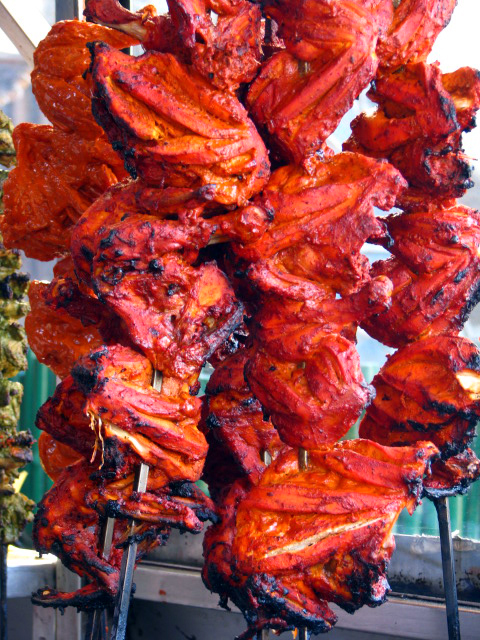
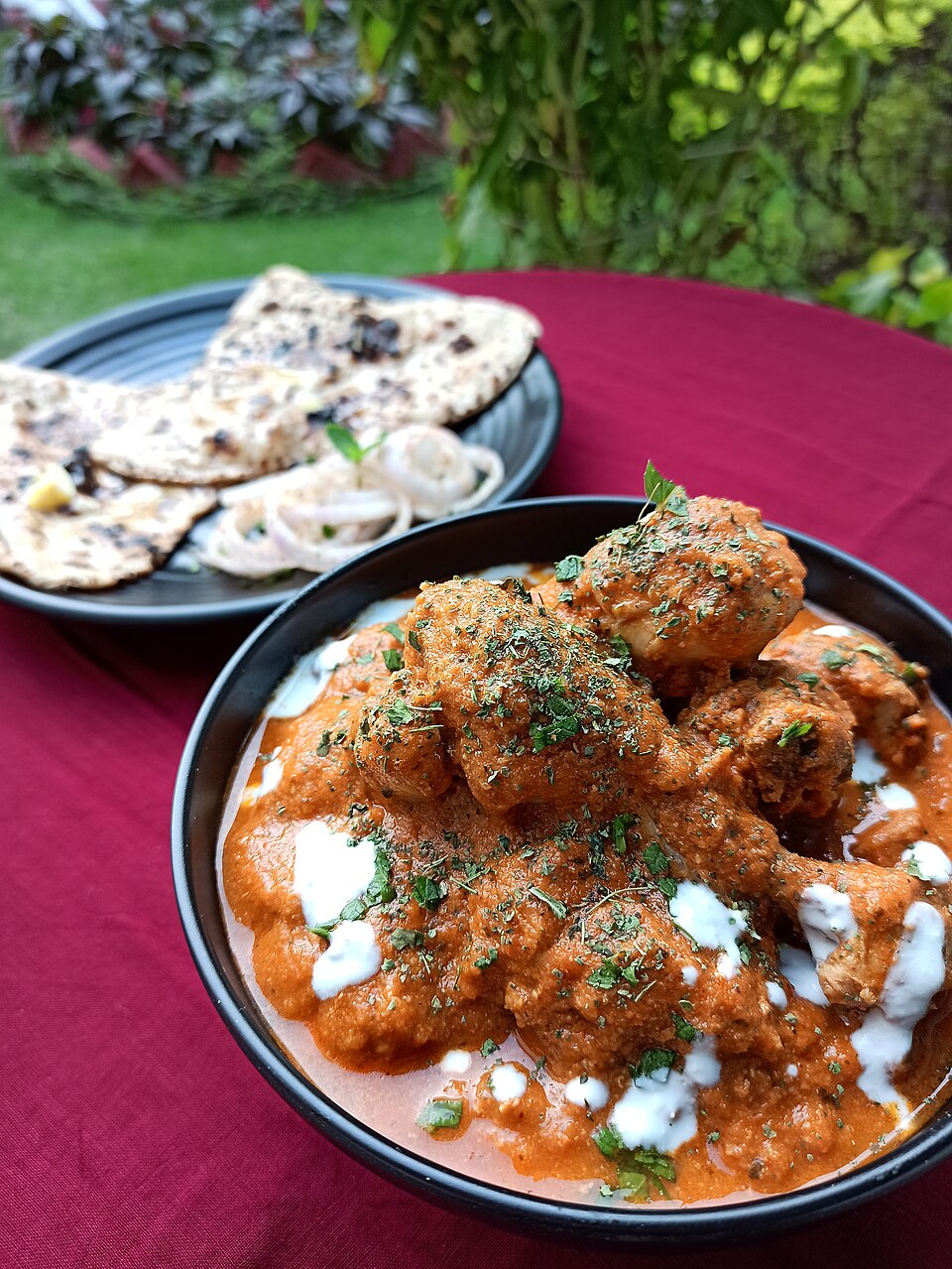
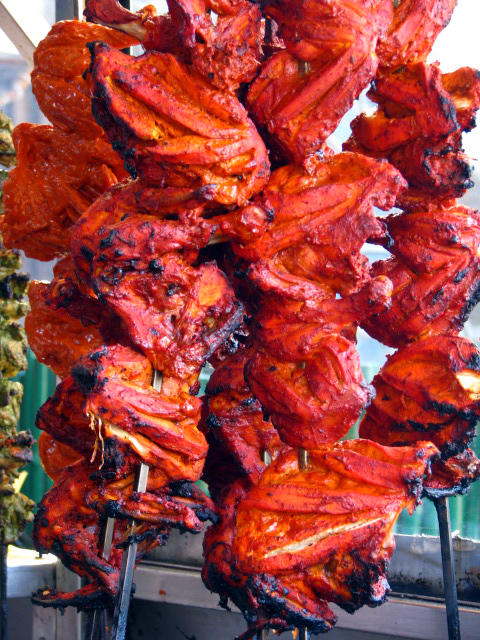
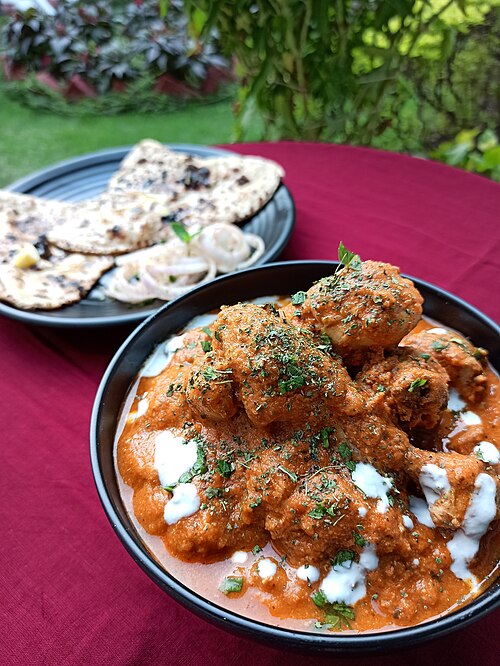
Tandoori and butter chicken wrote the global menu. Dosa and biryani later corrected it. British chicken tikka masala is a diaspora classic with its own honesty.
What travels poorly is the thali labour and the pickle jar that takes weeks.
Taste deep dive
Taste and craft of Indian cuisine
Heat, dahi / achar / idli batter, texture and pairing in Indian cuisine.
Heat, ferment, texture and pairing — plus how this language region cooks the same plates.
Heat
Chili, black pepper, ginger and mustard seed stack. A Gujarati thali can be mild; an Andhra meal can be fierce. Spice 95 here is the atlas ceiling, not every plate.
Tadka temperature matters more than chili count. Burnt cumin is a common home-cook failure.
Fermentation and sauce
Idli-dosa batter is a lactic ferment. Yogurt cools and marinates. Achar is the pickle that outlasts the season.
Gravies are onion-ginger-garlic or coconut-tamarind, not a single brown sauce.
Texture
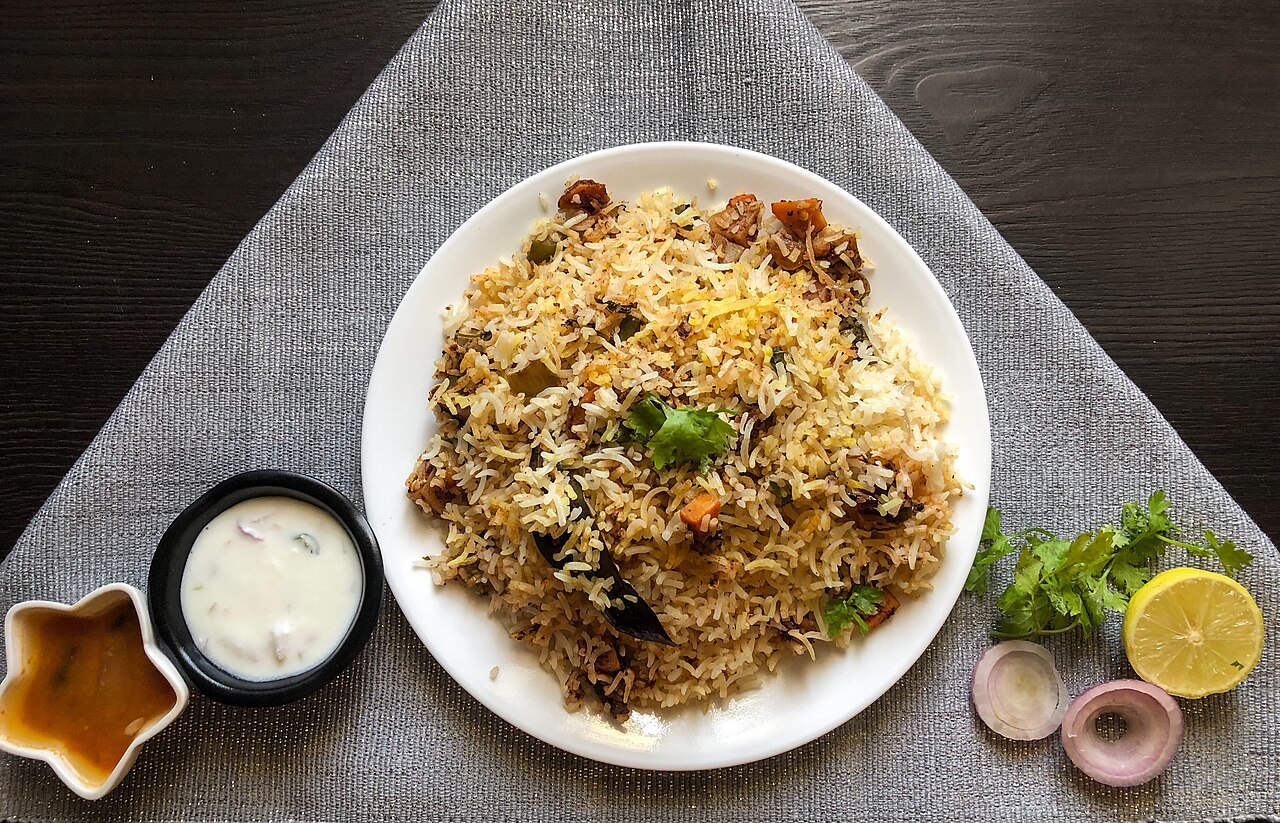
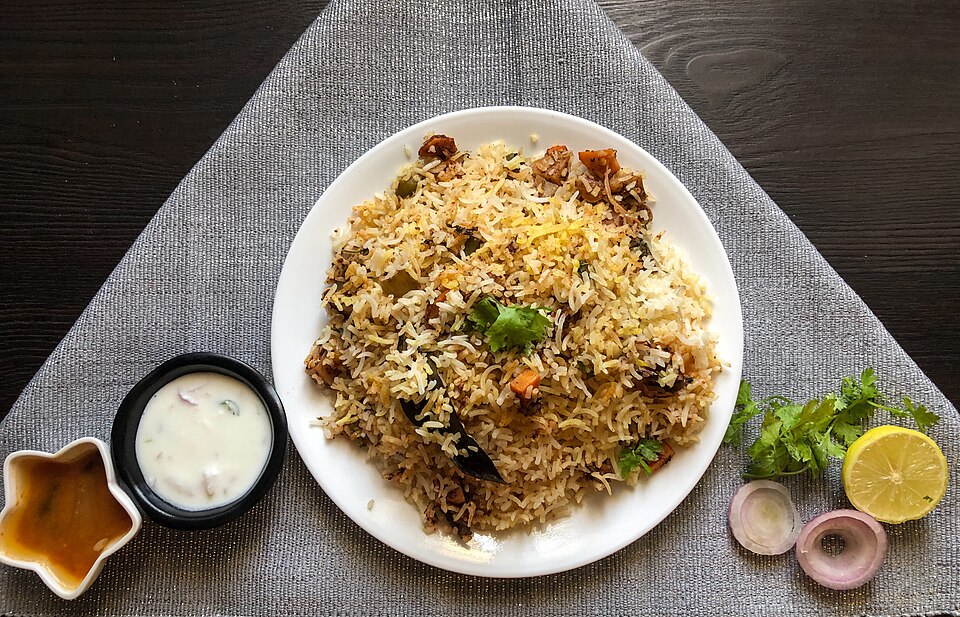
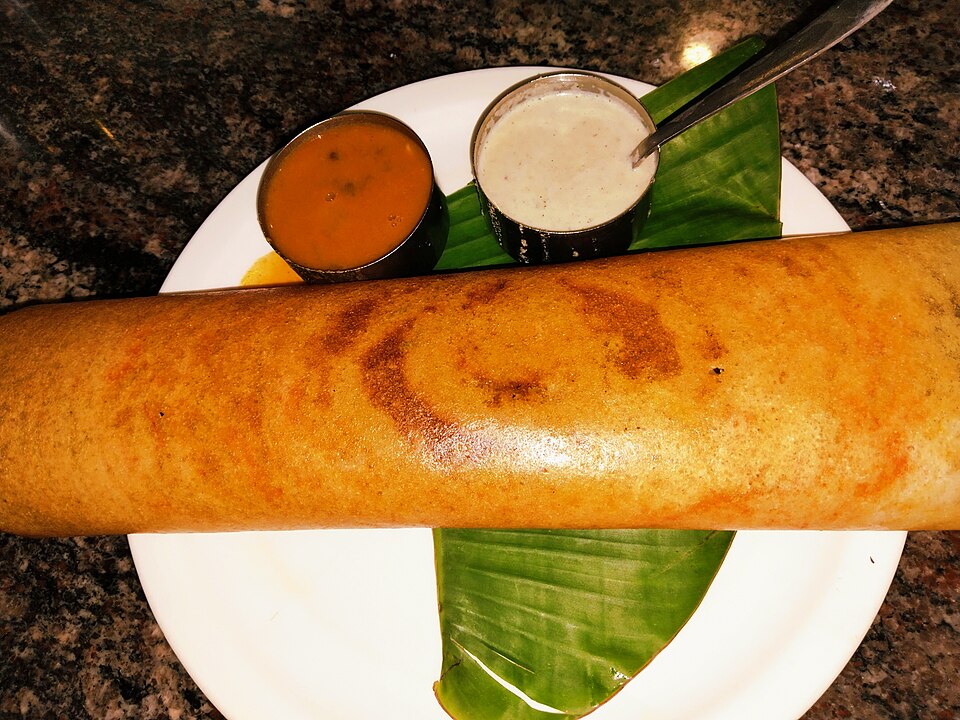
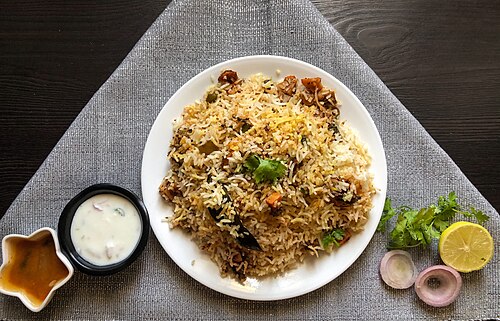
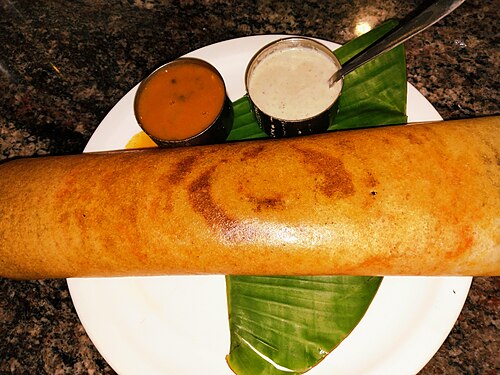
Crisp dosa against sambar; chaat is a crunch-and-chutney machine; biryani is steamed separate grains, not a wet pilaf.
Bread puff (roti, naan, poori) is a craft as serious as any noodle pull.
Pairing
Rice or bread is the pairing. Raita and pickle reset heat. Chai and lassi are meal drinks; beer is a restaurant habit.
A "curry" without starch is a tasting, not the meal.
South Asian neighbours and Ethiopia as a cross-family spice-and-bread table.
See-also cuisines, key terms, adjacent threads and regional notes for this language.
See also
🍜Malaysian cuisineA neighbour that absorbed Indian breads, gravies and mamak-shop logic.
🥥Indonesian cuisineSpice-trade sibling with a different starch and chili story.
🍗Filipino cuisineAnother South/Southeast mix, lighter on tadka, heavier on vinegar and grill.
🫓Ethiopian cuisineCross-family: a spice-blend and fermented-bread table that diners often file beside "hot food".
Key terms
Tadka
Spices bloomed in hot fat and poured over a dish.
Masala
A spice mixture, whole or ground, specific to a dish or region.
Dal
Lentil or pulse stew; the protein backbone of many tables.
Thali
A full-plate meal of several complementary dishes.
Chaat
Sour-sweet-crunchy street snacks built on chutneys.
Tandoor
Clay oven for breads and marinated meats.
Agriculture
The crops behind Tadka and Biryani still set the calendar of Indian cuisine.
Export demand now pulls those crops into a different price season than the home table remembers.
Labour and street vendors
Stall cooks and market women still make the public face of Indian cuisine in Chandni Chowk, Delhi.
Delivery apps moved labour indoors without erasing the night row.
Diaspora
Overseas kitchens taught new cities to say Biryani before they learned the home pot.
Reverse influence is real: sweetness and crunch invented abroad now show up "back home".
Visual field notes
Licensed photographs of this cuisine — heroes, eras and icons on one wall.
Mahi TatavartyMahi TatavartyYakshithaRupamdas75kspoddarYuvraj Singh 97Mahi TatavartyYakshithaRupamdas75kspoddarYuvraj Singh 97Soumya dey at English Wikipedia
The profile
Spice95
Umami68
Street food84
Technique80
Accessibility76
Price spread55
Read one street step beside one craft mark
On Indian cuisine, pair the first published street step with the first craft item — literacy, not a recipe rank.
Name the first street item — The street chapter opens with Read the room on this cuisine file.
Name the first craft item — The craft chapter lists Festival table beside it.
Walk them as literacy — Read stall move and workshop move together — not a tested recipe or vendor league.
Scores are not restaurant ranks — Spice and street-food marks compare cuisines in this atlas, not tonight's shop safety.
Read the room and Festival table on Indian cuisine teach how street and craft chapters talk to each other.
Literacy notes only. Not hygiene certificate, recipe, or booking.
Taste one signature beside one price band
Second literacy pass on Indian cuisine: pair the first published taste signature with the first market cost band — table reading, not a bill estimate.
Name the first taste signature — The taste chapter opens with Biryani on this cuisine file.
Name the first cost band — The market chapter lists Street snack as a published price band.
Read them as table literacy — Signature and band teach how dishes sit beside money talk — not a live quote or booking.
Scores are not a dinner tab — Price-spread marks compare cuisines in this atlas, not tonight's receipt.
Biryani beside Street snack on Indian cuisine is a second teaching pair — taste then table/price.
Literacy notes only. Not a price quote, recipe, or reservation.
Taste one signature beside one price band
Second literacy pass on Indian cuisine: pair the first published taste signature with the first market cost band — table reading, not a bill estimate.
Name the first taste signature — The taste chapter opens with Biryani on this cuisine file.
Name the first cost band — The market chapter lists Street snack as a published price band.
Read them as table literacy — Signature and band teach how dishes sit beside money talk — not a live quote or booking.
Scores are not a dinner tab — Price-spread marks compare cuisines in this atlas, not tonight's receipt.
Biryani beside Street snack on Indian cuisine is a second teaching pair — taste then table/price.
Literacy notes only. Not a price quote, recipe, or reservation.
Indian cuisines are plural: Dravidian rice-and-tamarind, Indo-Gangetic breads, Mughal rice-and-meat, and Portuguese chili on the west coast. "Curry" is a British-Portuguese flattening of tadka, masala and gravy.
Is it always spicy?
Indian cuisine sits at spice 95 in this atlas. Biryani and Masala dosa show the range better than a single heat number.
What should a first meal include?
Biryani plus one regional plate — not only the export icon.
What is Tadka?
Spices bloomed in hot fat and poured over a dish.
How do people eat at home?
Chili is late (16th century) and now structural in many kitchens. Heat here outruns Thailand only because black pepper, mustard seed and chili stack; many dishes stay fragrant rather than red.
What travels poorly?
The home pantry around Tadka and the labour behind Masala dosa rarely fit a takeaway box.
Are restaurant versions "authentic"?
Restaurant Indian cuisine is one register. Home pots and market stalls are others. Authenticity is a marketing word; technique is not.
Where does the native name appear?
भारतीय व्यंजन is the local name used in this atlas beside Indian cuisine.
How do I decide what to order at a stall or restaurant?
Use Decide what to order on each cuisine page: pick room and heat, then follow the published plate and pantry line. It is not a live menu or a reservation.
Is this a recipe I can cook from tonight?
No. The street chapter lists on-file steps and the craft chapter lists techniques already in this cuisine file. They are literacy notes, not a tested recipe, hygiene certificate, or restaurant booking.
What does pairing one street step with one craft mark show?
The pair on this hub sits one published street step beside one published craft item so you can see how a stall move and a workshop move belong to the same kitchen. It does not rank vendors or invent a new dish.
Are the spice and street-food scores a ranking of restaurants?
They are relative editorial marks among cuisines in this atlas, not a league table of shops. A high street-food score means the published street chapter is dense, not that a stall is safe today.
Why is Hungarian cuisine missing in some languages?
A language URL is published only when the seven chapters are real prose in that language. Hungarian pages exist in English, Korean, Japanese and Chinese. Spanish, French, German, Portuguese and Russian stay withheld until a native rewrite is finished — English is not shown under those URLs.
Embed this ranking
Paste this code into your blog or site — the ranking stays up to date.
Copied!
Similar cuisines
Closest neighbours on the six atlas axes — spice, umami, street food, technique, access and price spread.