🍲Nigerian cuisineA western African stew-and-swallow neighbour with different starches.
🍲Moroccan cuisineA Maghreb spice-blend table that also eats from a shared centre.
🍛Indian cuisineCross-family: spice blends and a fermented bread that diners file beside "hot food".
Key terms
Injera
Teff sourdough flatbread.
Berbere
Chili-spice blend.
Niter kibbeh
Spiced clarified butter.
Wat / wot
Stew family.
Gursha
Feeding a guest by hand, a hospitality gesture.
Beyaynetu
Fasting combination platter.
Agriculture
The crops behind Injera and Doro wat still set the calendar of Ethiopian cuisine.
Export demand now pulls those crops into a different price season than the home table remembers.
Labour and street vendors
Stall cooks and market women still make the public face of Ethiopian cuisine in Addis Ababa.
Delivery apps moved labour indoors without erasing the night row.
Diaspora
Overseas kitchens taught new cities to say Doro wat before they learned the home pot.
Reverse influence is real: sweetness and crunch invented abroad now show up "back home".
Visual field notes
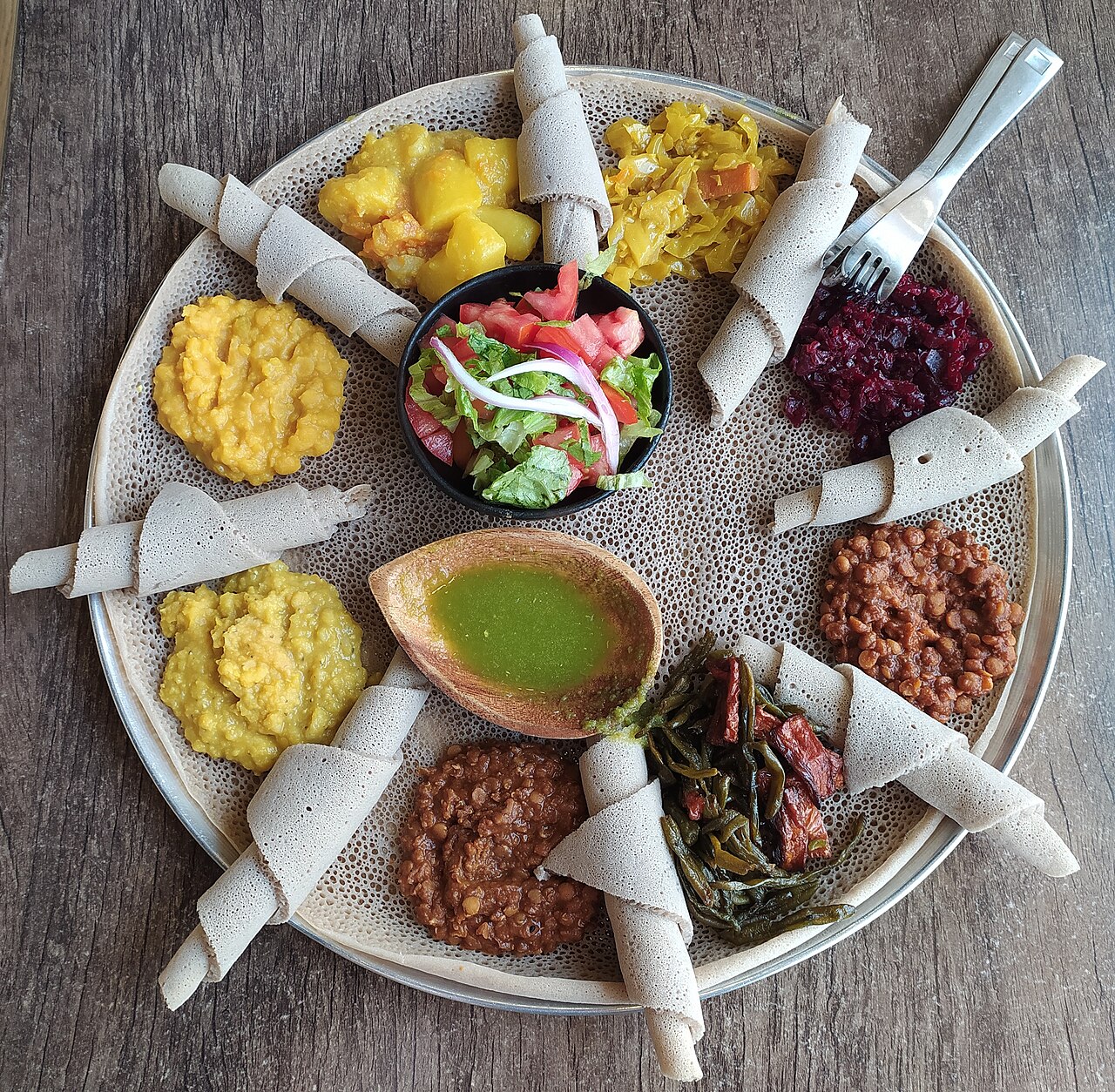
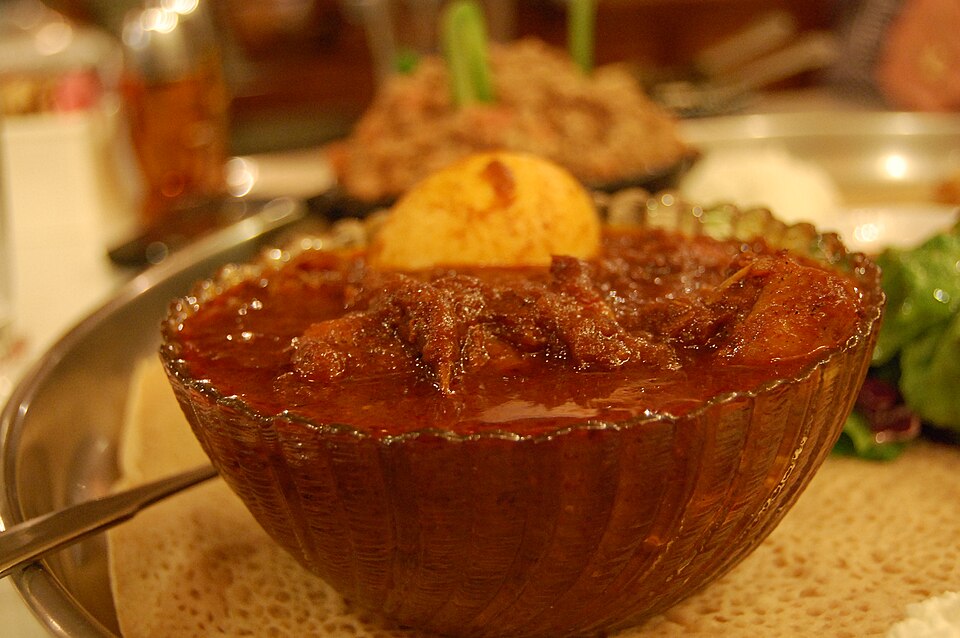
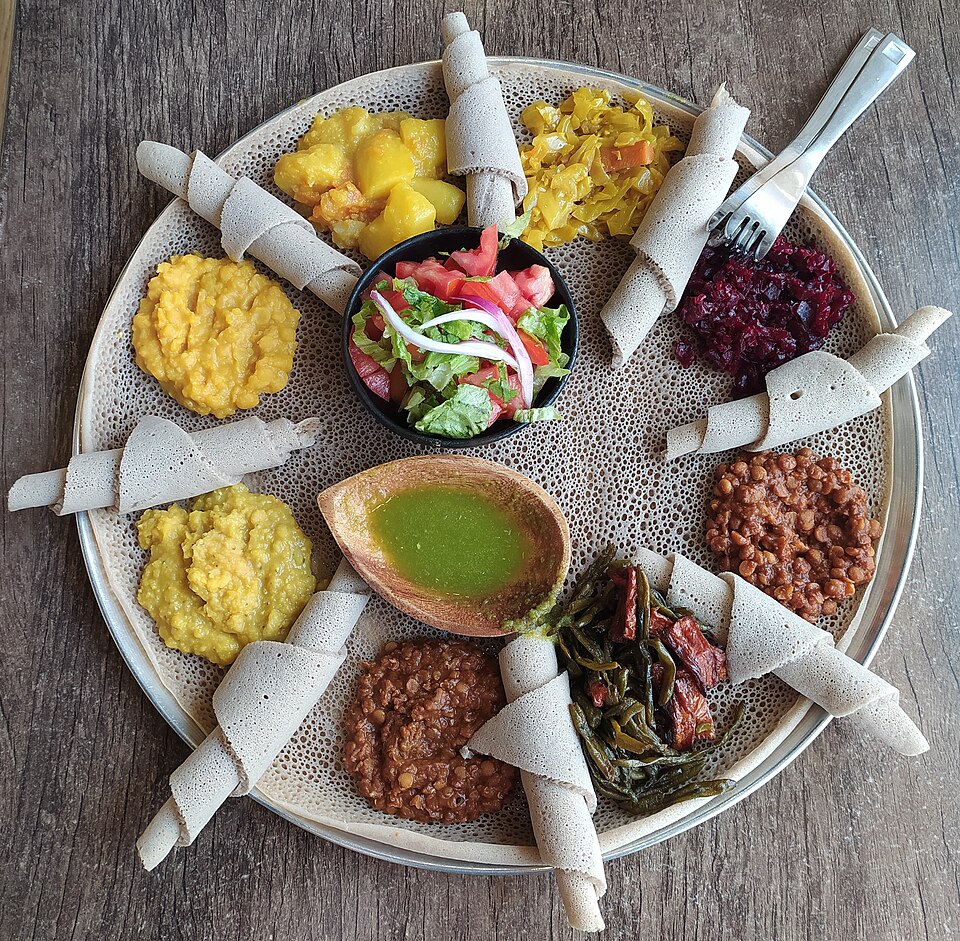
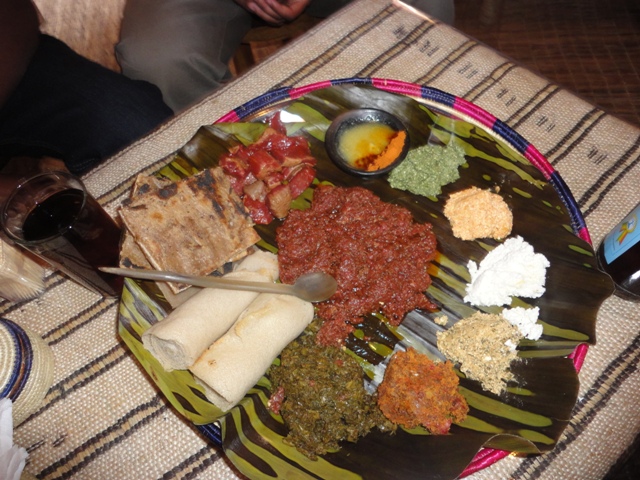
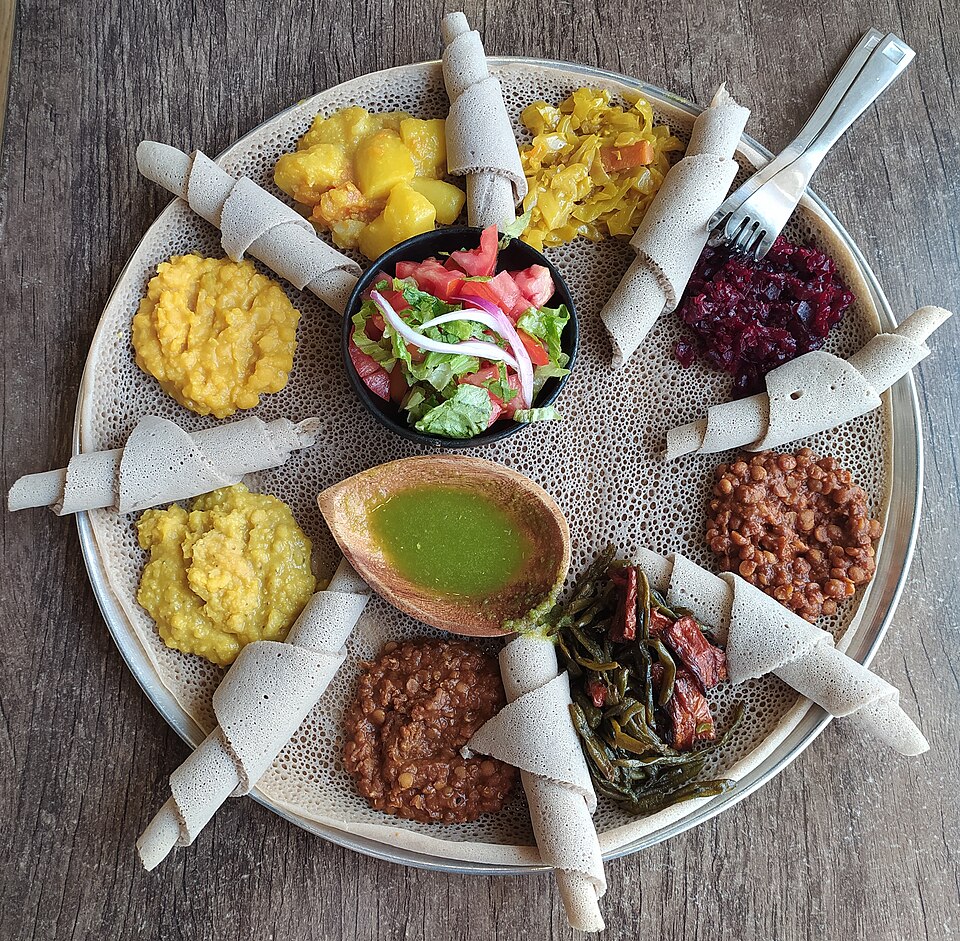
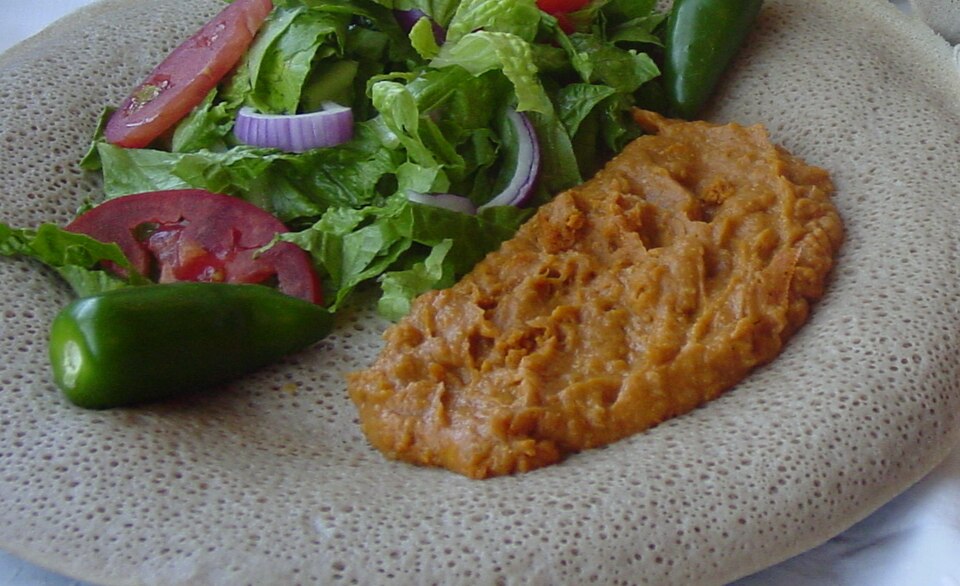
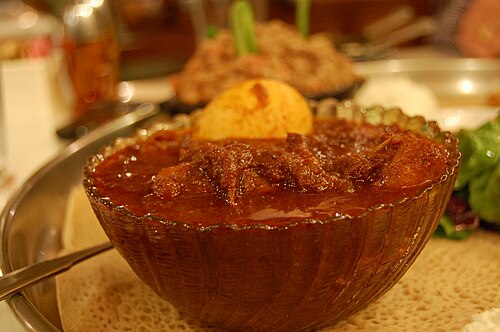
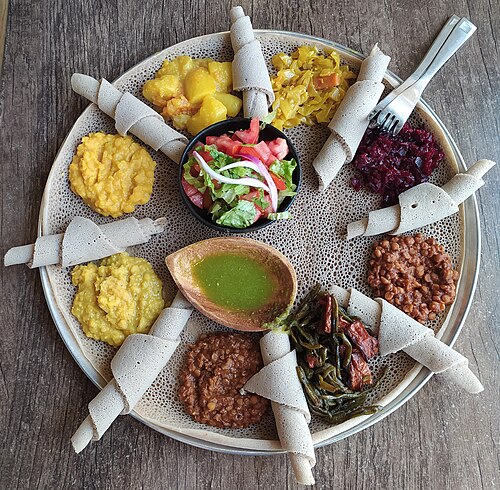
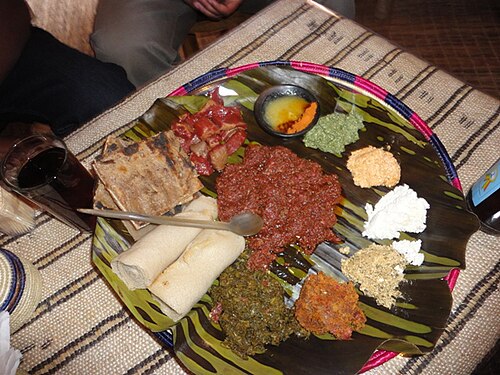
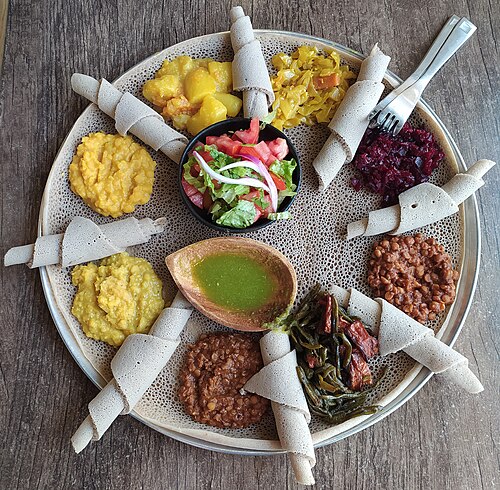
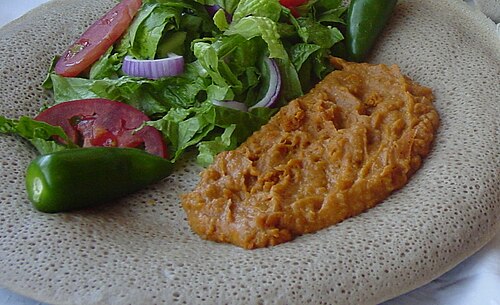
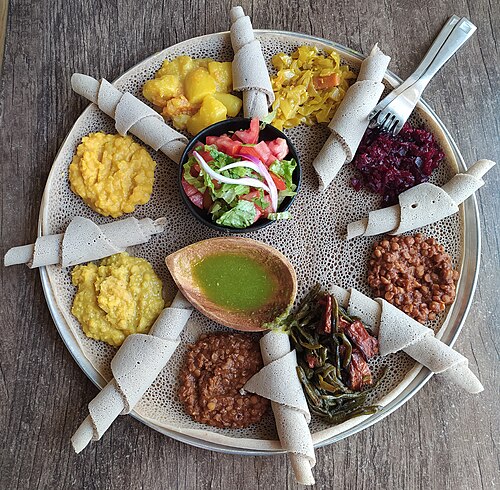
Licensed photographs of this cuisine — heroes, eras and icons on one wall.
Artem.Gstu_spivackArtem.GMilo.GArtem.GTemesgen Woldezion; edited by Merhawie Woldezionstu_spivackArtem.GMilo.GArtem.GTemesgen Woldezion; edited by Merhawie WoldezionArtem.G
The profile
Spice80
Umami72
Street food60
Technique76
Accessibility48
Price spread36
Read one street step beside one craft mark
On Ethiopian cuisine, pair the first published street step with the first craft item — literacy, not a recipe rank.
Name the first street item — The street chapter opens with Read the room on this cuisine file.
Name the first craft item — The craft chapter lists Festival table beside it.
Walk them as literacy — Read stall move and workshop move together — not a tested recipe or vendor league.
Scores are not restaurant ranks — Spice and street-food marks compare cuisines in this atlas, not tonight's shop safety.
Read the room and Festival table on Ethiopian cuisine teach how street and craft chapters talk to each other.
Literacy notes only. Not hygiene certificate, recipe, or booking.
Taste one signature beside one price band
Second literacy pass on Ethiopian cuisine: pair the first published taste signature with the first market cost band — table reading, not a bill estimate.
Name the first taste signature — The taste chapter opens with Doro wat on this cuisine file.
Name the first cost band — The market chapter lists Street snack as a published price band.
Read them as table literacy — Signature and band teach how dishes sit beside money talk — not a live quote or booking.
Scores are not a dinner tab — Price-spread marks compare cuisines in this atlas, not tonight's receipt.
Doro wat beside Street snack on Ethiopian cuisine is a second teaching pair — taste then table/price.
Literacy notes only. Not a price quote, recipe, or reservation.
Taste one signature beside one price band
Second literacy pass on Ethiopian cuisine: pair the first published taste signature with the first market cost band — table reading, not a bill estimate.
Name the first taste signature — The taste chapter opens with Doro wat on this cuisine file.
Name the first cost band — The market chapter lists Street snack as a published price band.
Read them as table literacy — Signature and band teach how dishes sit beside money talk — not a live quote or booking.
Scores are not a dinner tab — Price-spread marks compare cuisines in this atlas, not tonight's receipt.
Doro wat beside Street snack on Ethiopian cuisine is a second teaching pair — taste then table/price.
Literacy notes only. Not a price quote, recipe, or reservation.
Ethiopian cuisine (የኢትዮጵያ ምግብ) grew from injera / niter kibbeh / tej and teff injera. Doro wat is the postcard, not the whole map.
Is it always spicy?
Ethiopian cuisine sits at spice 80 in this atlas. Doro wat and Injera show the range better than a single heat number.
What should a first meal include?
Doro wat plus one regional plate — not only the export icon.
What is Injera?
Teff sourdough flatbread.
How do people eat at home?
Addis Ababa, Gondar and Dire Dawa do not cook the same dinner. Regional stubbornness is the cuisine, not a footnote.
What travels poorly?
The home pantry around Injera and the labour behind Injera rarely fit a takeaway box.
Are restaurant versions "authentic"?
Restaurant Ethiopian cuisine is one register. Home pots and market stalls are others. Authenticity is a marketing word; technique is not.
Where does the native name appear?
የኢትዮጵያ ምግብ is the local name used in this atlas beside Ethiopian cuisine.
How do I decide what to order at a stall or restaurant?
Use Decide what to order on each cuisine page: pick room and heat, then follow the published plate and pantry line. It is not a live menu or a reservation.
Is this a recipe I can cook from tonight?
No. The street chapter lists on-file steps and the craft chapter lists techniques already in this cuisine file. They are literacy notes, not a tested recipe, hygiene certificate, or restaurant booking.
What does pairing one street step with one craft mark show?
The pair on this hub sits one published street step beside one published craft item so you can see how a stall move and a workshop move belong to the same kitchen. It does not rank vendors or invent a new dish.
Are the spice and street-food scores a ranking of restaurants?
They are relative editorial marks among cuisines in this atlas, not a league table of shops. A high street-food score means the published street chapter is dense, not that a stall is safe today.
Why is Hungarian cuisine missing in some languages?
A language URL is published only when the seven chapters are real prose in that language. Hungarian pages exist in English, Korean, Japanese and Chinese. Spanish, French, German, Portuguese and Russian stay withheld until a native rewrite is finished — English is not shown under those URLs.
Embed this ranking
Paste this code into your blog or site — the ranking stays up to date.
Copied!
Similar cuisines
Closest neighbours on the six atlas axes — spice, umami, street food, technique, access and price spread.