Chinese cuisine is a family of regional systems: Cantonese dim sum and wok hei, Sichuan mala, Jiangsu sweetness, northern wheat dumplings and Islamic-Chinese hand-pulled noodles. Soy sauce, doubanjiang and black vinegar are the bass notes.
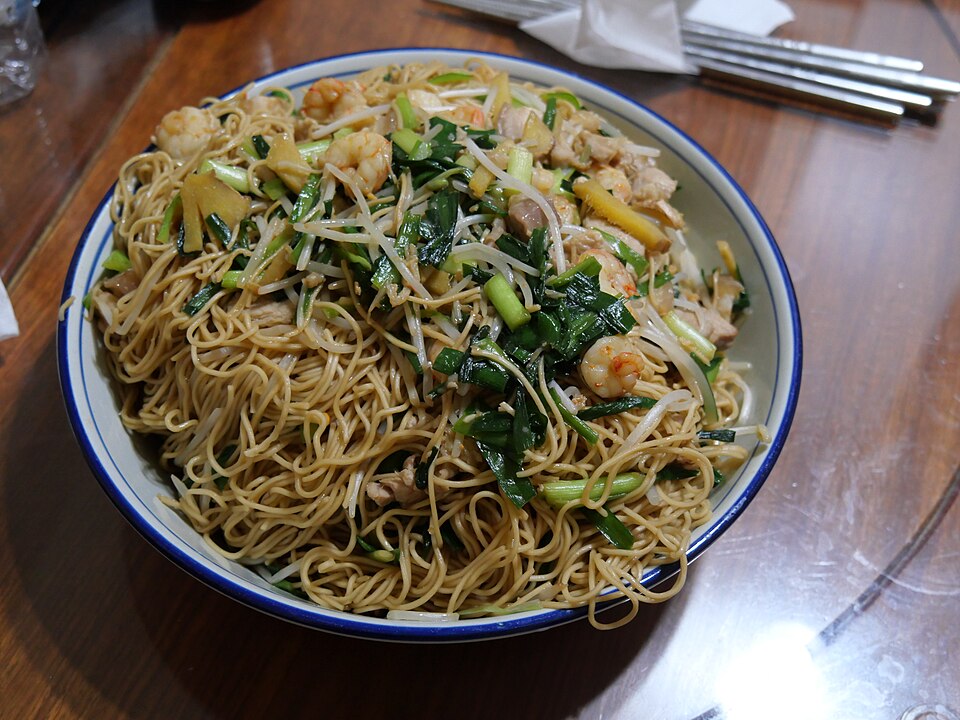
A home table is rice or noodles, a green, a protein and a soup — not a single plated "main". Street China is jianbing, skewers and late-night noodles; banquet China is whole fish and ceremony.
The overseas menu that taught the world — General Tso, chop suey, fortune cookies — is a real diaspora cuisine. It should not be confused with a Chengdu hotpot or a Chaozhou oyster omelette.
Deep introduction
Many Chinas at the table
A continental pantry that only looks singular from a takeaway window.
Regions, pantry, table manners and travel — plus a lens tuned to this language region.
Regional diversity
The "eight great" list (Sichuan, Cantonese, Shandong, Jiangsu and the rest) is a textbook; the lived map includes Xinjiang lamb, Yunnan fungi and Dongbei sour-cabbage stews.
Rice south of the Huai and wheat north of it still predicts whether lunch is a bowl or a dumpling.
Pantry and ferments
Soy sauce, douchi, furu, pickled mustard and Pixian doubanjiang are the fermented spine. Msg is a named taste here, not a scandal.
Tea is a meal partner and a separate craft. Vinegars from Shanxi and Zhenjiang behave like wines.
How people eat
Lazy Susans, shared plates and a personal rice bowl. Bones and shells stay on the table; leaving a little rice can read as waste, not politeness.
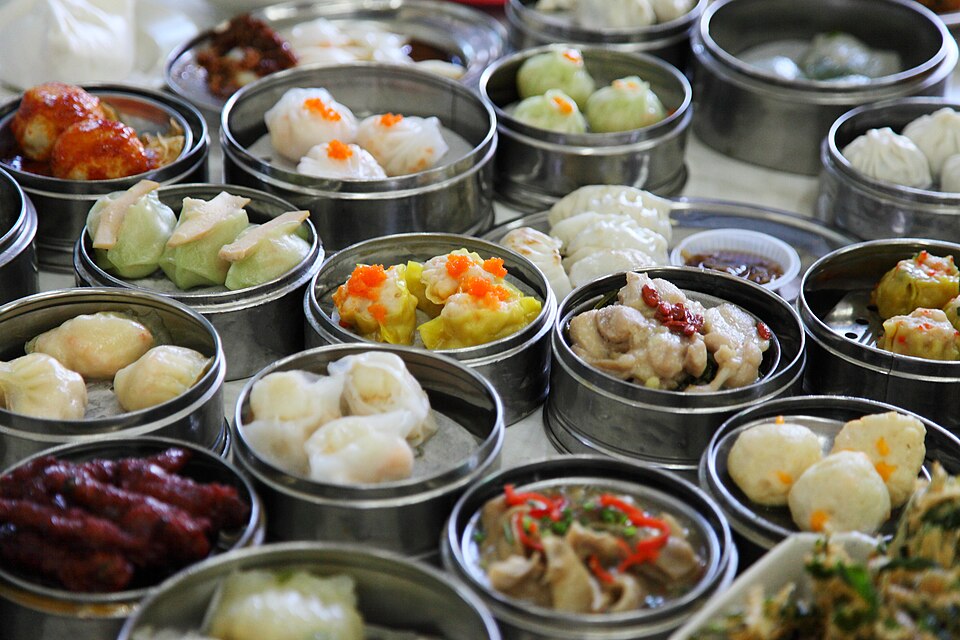
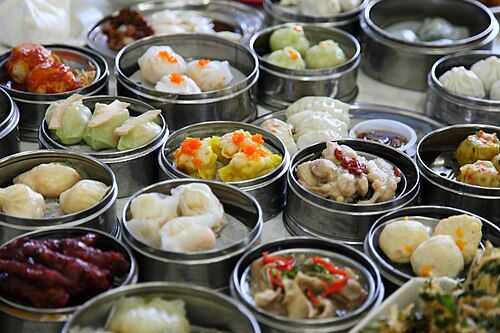
Yum cha is a weekend social form: carts or tickets, pot after pot of tea, har gow and siu mai as the grammar.
How it travels
Cantonese migration wrote the first global Chinese menu. Sichuan mala later rewrote it. American, British and Australian "Chinese" are now their own dialects.
What travels poorly is the banquet whole-fish economy and the regional pickle jar that never makes the takeaway box.
Taste deep dive
Wok, steam and mala
Technique in Chinese kitchens is heat control and fermented seasoning, not a single chili story.
Heat, ferment, texture and pairing — plus how this language region cooks the same plates.
Heat
Wok hei is the scorch of a steel wok over serious BTU. Home stoves abroad rarely reach it; a screaming skillet is the honest substitute.
Sichuan mala is chili plus Sichuan peppercorn numbness. Hunan heat is drier and sharper. Cantonese heat is mostly white pepper and ginger.
Fermentation and sauce
Doubanjiang, soy and black vinegar do the savoury work. XO sauce is a Hong Kong luxury condiment now copied everywhere.
Master stocks and red-braising (hongshao) are time sauces. They do not come from a single bottle labelled "Chinese".
Texture
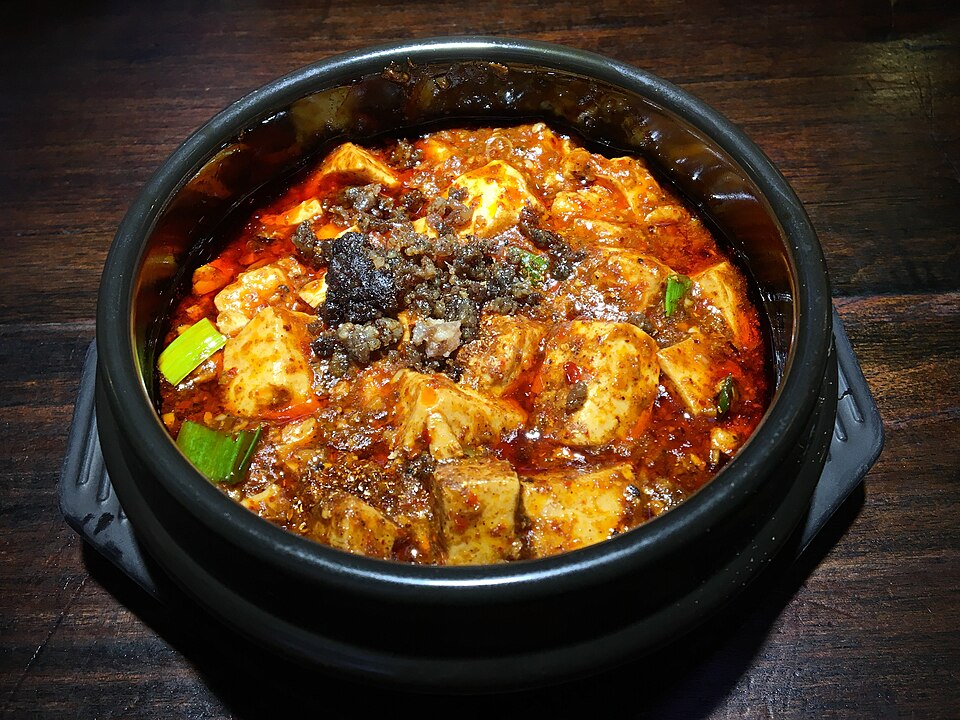
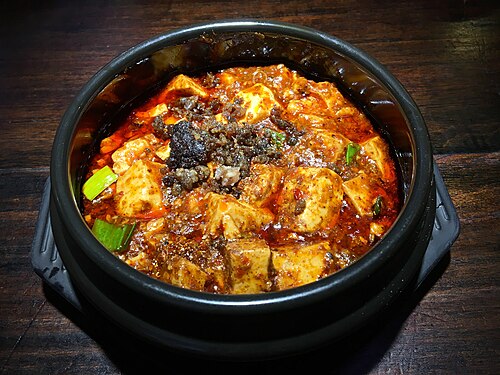
Crunch against silk — kung pao vs mapo tofu — is a design principle. Dumpling skins and noodle pull are judged like bread.
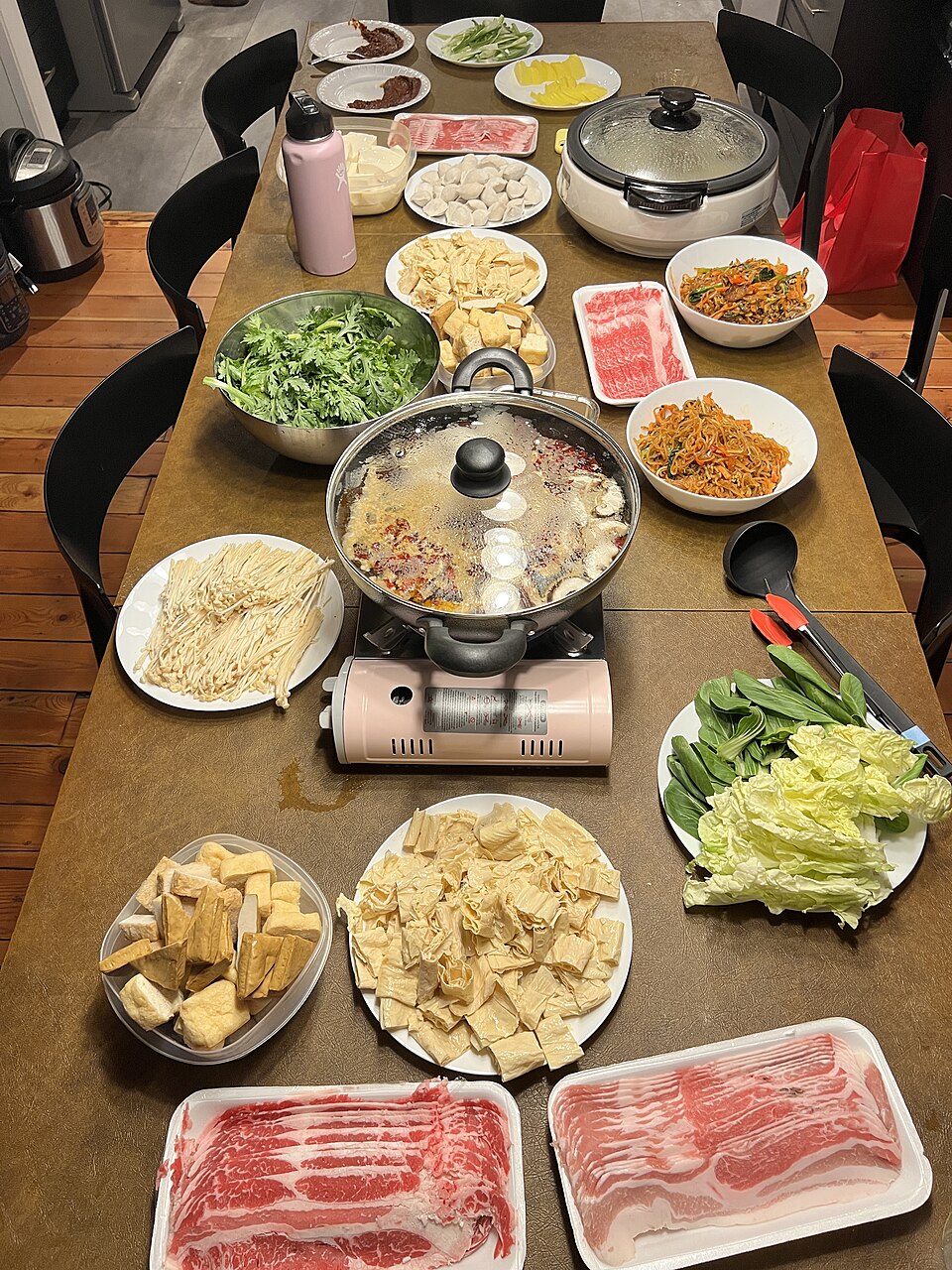
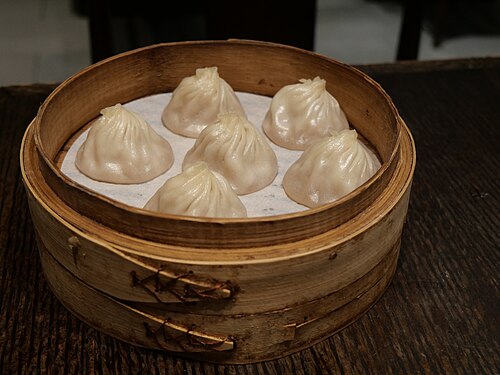
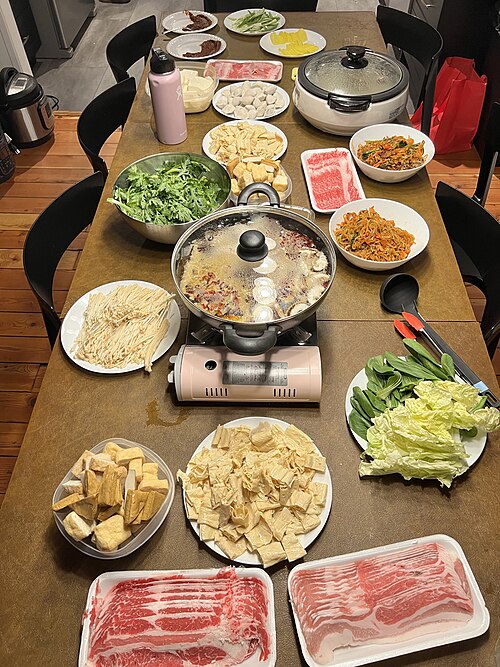
Hotpot is a texture machine: the diner times the dip. Xiaolongbao skin must hold soup.
Pairing
Tea cuts grease. Beer is the skewer drink. Baijiu is ceremonial and not a casual pairing for first-timers.
Sweet-and-sour abroad is a pairing for fried batter; in Jiangsu sweetness is a regional palate, not a kids' menu.
See-also cuisines, key terms, adjacent threads and regional notes for this language.
See also
🍲Korean cuisineSoy ferments and a rice-plus-side table; Korea added gochujang and a different grill.
🍣Japanese cuisineRamen, gyoza and soy are Chinese gifts Japan rebuilt.
🍲Vietnamese cuisineA southern neighbour that kept fish sauce as the bass note and a French-colonial overlay.
🍝Italian cuisineCross-family: two wheat civilisations that turned dough into a national argument.
Key terms
Wok hei
The seared aroma from a properly hot wok — "breath of the wok".
Doubanjiang
Fermented broad-bean chili paste, especially from Pixian in Sichuan.
Mala
Numbing-spicy pairing of chili and Sichuan peppercorn.
Yum cha
Cantonese tea-and-dim-sum meal, often weekend and family.
Hongshao
Red-braising in soy, sugar and spices.
Jianbing
Griddled egg-and-crepe breakfast wrap sold on street corners.
Agriculture
The crops behind Wok hei and Peking duck still set the calendar of Chinese cuisine.
Export demand now pulls those crops into a different price season than the home table remembers.
Labour and street vendors
Stall cooks and market women still make the public face of Chinese cuisine in Guangzhou teahouses.
Delivery apps moved labour indoors without erasing the night row.
Diaspora
Overseas kitchens taught new cities to say Peking duck before they learned the home pot.
Reverse influence is real: sweetness and crunch invented abroad now show up "back home".
Visual field notes
Licensed photographs of this cuisine — heroes, eras and icons on one wall.
City FoodstersCity FoodstersLeonardKongZhengZhouPeachyeung316Praneeth ThallaCity FoodstersLeonardKongZhengZhouPeachyeung316Simon ShekPraneeth Thalla
The profile
Spice62
Umami88
Street food80
Technique86
Accessibility90
Price spread72
Read one street step beside one craft mark
On Chinese cuisine, pair the first published street step with the first craft item — literacy, not a recipe rank.
Name the first street item — The street chapter opens with Read the room on this cuisine file.
Name the first craft item — The craft chapter lists Festival table beside it.
Walk them as literacy — Read stall move and workshop move together — not a tested recipe or vendor league.
Scores are not restaurant ranks — Spice and street-food marks compare cuisines in this atlas, not tonight's shop safety.
Read the room and Festival table on Chinese cuisine teach how street and craft chapters talk to each other.
Literacy notes only. Not hygiene certificate, recipe, or booking.
Taste one signature beside one price band
Second literacy pass on Chinese cuisine: pair the first published taste signature with the first market cost band — table reading, not a bill estimate.
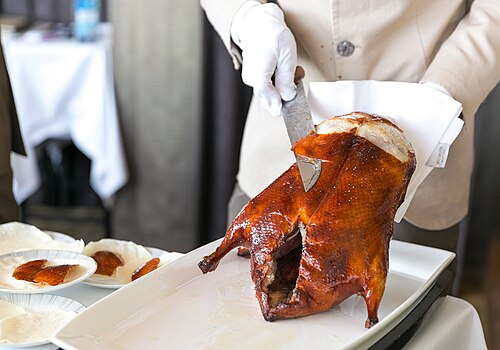
Name the first taste signature — The taste chapter opens with Peking duck on this cuisine file.
Name the first cost band — The market chapter lists Street snack as a published price band.
Read them as table literacy — Signature and band teach how dishes sit beside money talk — not a live quote or booking.
Scores are not a dinner tab — Price-spread marks compare cuisines in this atlas, not tonight's receipt.
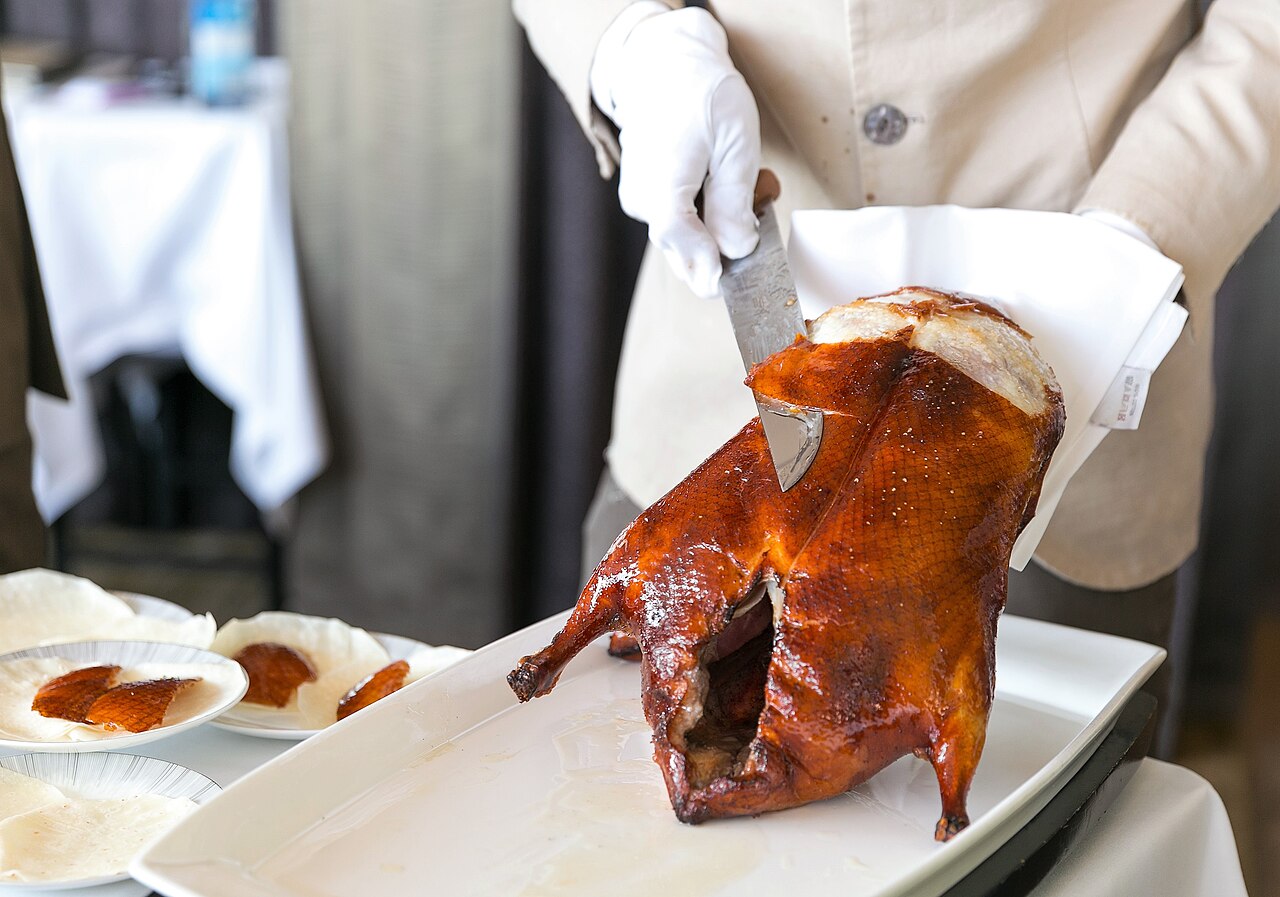
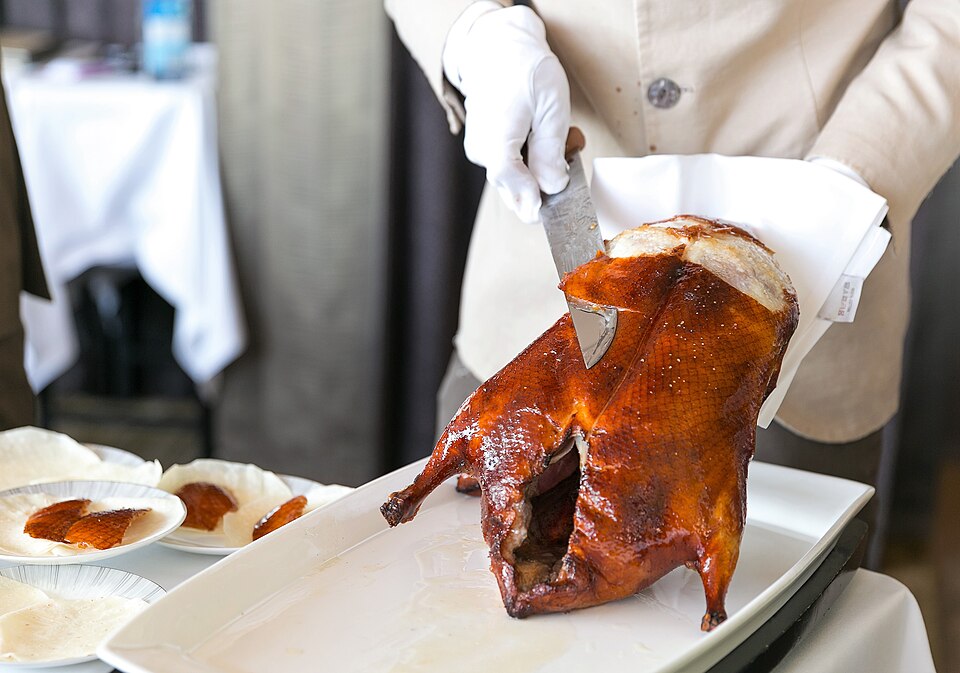
Peking duck beside Street snack on Chinese cuisine is a second teaching pair — taste then table/price.
Literacy notes only. Not a price quote, recipe, or reservation.
Taste one signature beside one price band
Second literacy pass on Chinese cuisine: pair the first published taste signature with the first market cost band — table reading, not a bill estimate.
Name the first taste signature — The taste chapter opens with Peking duck on this cuisine file.
Name the first cost band — The market chapter lists Street snack as a published price band.
Read them as table literacy — Signature and band teach how dishes sit beside money talk — not a live quote or booking.
Scores are not a dinner tab — Price-spread marks compare cuisines in this atlas, not tonight's receipt.
Peking duck beside Street snack on Chinese cuisine is a second teaching pair — taste then table/price.
Literacy notes only. Not a price quote, recipe, or reservation.
中餐 grew from millet and rice civilisations, soy fermentation and a wok that could feed cities. "Chinese food" abroad is mostly Cantonese and later Sichuan, not the eight-great-tradition map.
Is it always spicy?
Chinese cuisine sits at spice 62 in this atlas. Peking duck and Dim sum show the range better than a single heat number.
What should a first meal include?
Peking duck plus one regional plate — not only the export icon.
What is Wok hei?
The seared aroma from a properly hot wok — "breath of the wok".
How do people eat at home?
A home table is rice or noodles, a green, a protein and a soup — not a single plated "main". Street China is jianbing, skewers and late-night noodles; banquet China is whole fish and ceremony.
What travels poorly?
The home pantry around Wok hei and the labour behind Dim sum rarely fit a takeaway box.
Are restaurant versions "authentic"?
Restaurant Chinese cuisine is one register. Home pots and market stalls are others. Authenticity is a marketing word; technique is not.
Where does the native name appear?
中餐 is the local name used in this atlas beside Chinese cuisine.
How do I decide what to order at a stall or restaurant?
Use Decide what to order on each cuisine page: pick room and heat, then follow the published plate and pantry line. It is not a live menu or a reservation.
Is this a recipe I can cook from tonight?
No. The street chapter lists on-file steps and the craft chapter lists techniques already in this cuisine file. They are literacy notes, not a tested recipe, hygiene certificate, or restaurant booking.
What does pairing one street step with one craft mark show?
The pair on this hub sits one published street step beside one published craft item so you can see how a stall move and a workshop move belong to the same kitchen. It does not rank vendors or invent a new dish.
Are the spice and street-food scores a ranking of restaurants?
They are relative editorial marks among cuisines in this atlas, not a league table of shops. A high street-food score means the published street chapter is dense, not that a stall is safe today.
Why is Hungarian cuisine missing in some languages?
A language URL is published only when the seven chapters are real prose in that language. Hungarian pages exist in English, Korean, Japanese and Chinese. Spanish, French, German, Portuguese and Russian stay withheld until a native rewrite is finished — English is not shown under those URLs.
Embed this ranking
Paste this code into your blog or site — the ranking stays up to date.
Copied!
Similar cuisines
Closest neighbours on the six atlas axes — spice, umami, street food, technique, access and price spread.