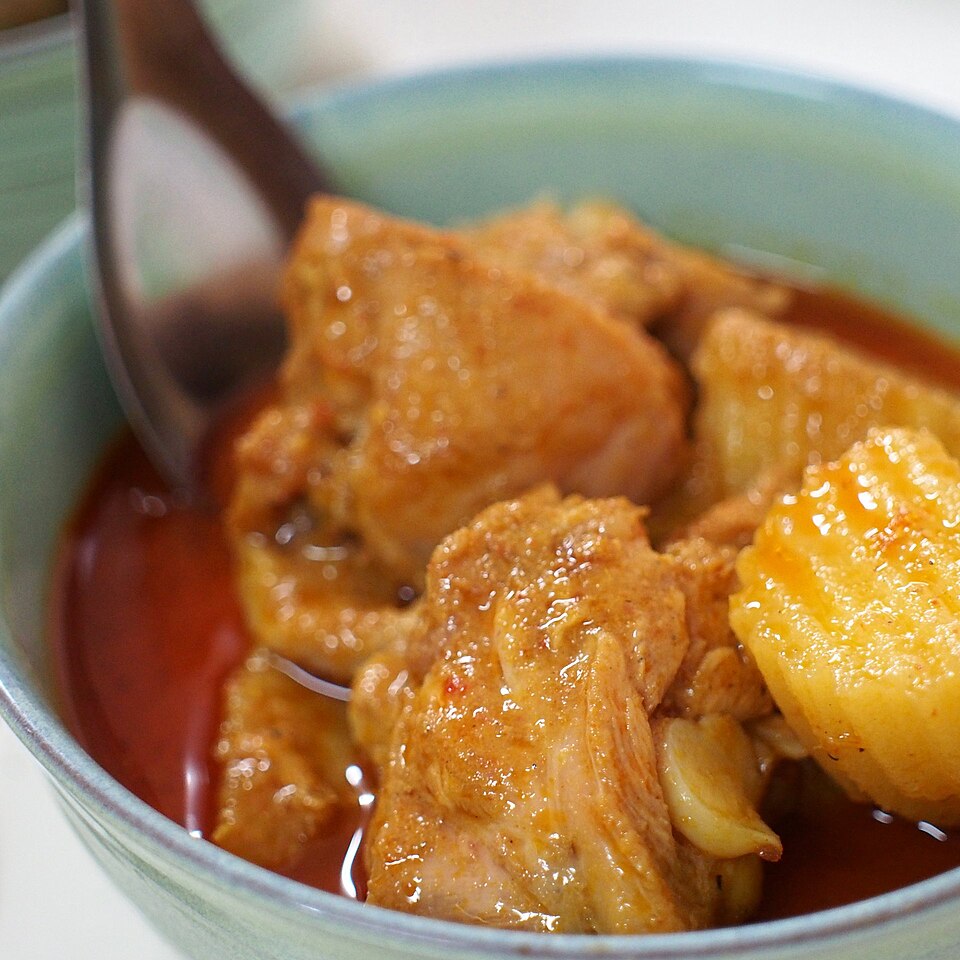
Thai cuisine balances chili heat against lime, palm sugar and nam pla. Central curries (gaeng) sit beside Isan som tum and grilled gai yang, northern sai ua and a southern Muslim-Thai turmeric-and-chili belt.
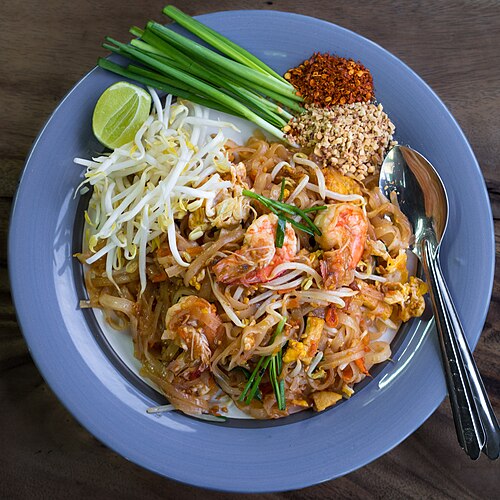
Bangkok street food — boat noodles, boat noodles, boat noodles, som tum carts, late-night rice porridge — is not a sideshow. Pad Thai is a 20th-century national-noodle project, not an ancient royal plate.
Home cooking is nam prik with vegetables and rice, not a seven-curry banquet. The tourist chili dare is a restaurant sport; families still cook to taste.
Deep introduction
Four regions, one fish sauce
A national cuisine that is actually four, held together by rice and nam pla.
Regions, pantry, table manners and travel — plus a lens tuned to this language region.
Regional diversity
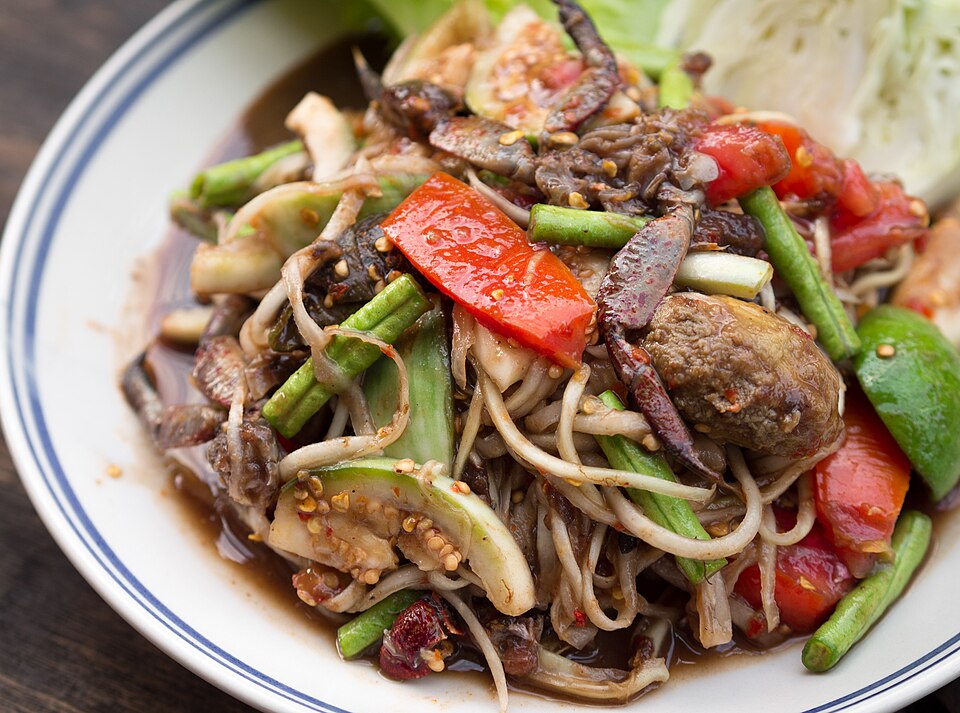
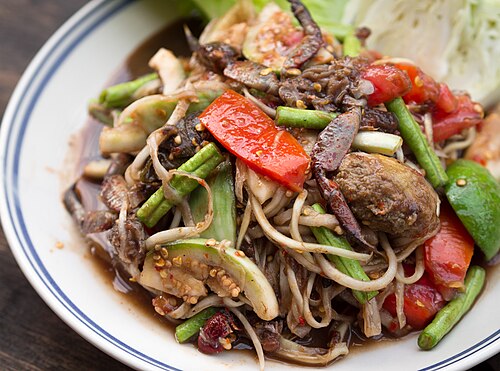
Isan eats sticky rice, pla ra and papaya salad that can be punishing. The north prefers milder herbs and pork sausage. The south burns with turmeric and bird's eye chili.
Bangkok is the blender: Chinese-Thai noodles, royal-ish banquets and the street density that tourists photograph.
Pantry and ferments
Nam pla, pla ra, shrimp paste (kapi) and pickled garlic are the funk. Coconut milk is central, not national.
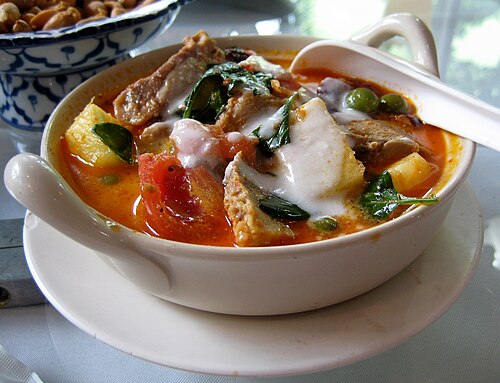
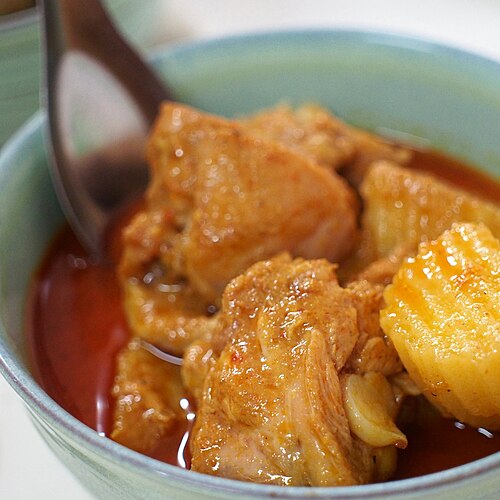
Curry pastes are pounded, not scooped from a single colour. Green, red and yellow are starting points, not a complete map.
How people eat
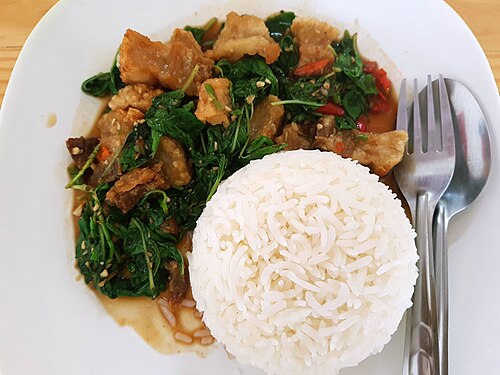
A Thai meal is shared rice plus several dishes of different tastes. Solo pad Thai is a lunch form, not the home grammar.
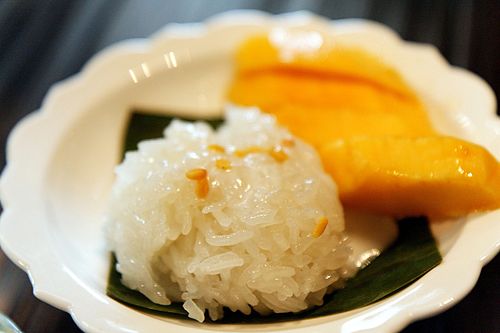
Cutlery is spoon and fork; chopsticks appear for Chinese-Thai noodles. Sticky rice is eaten by hand in the northeast.
How it travels
Pad Thai and green curry colonised the world. Pla ra and proper nam prik did not.
Overseas Thai is often sweeter and chicken-heavy. Reverse influence shows up in Bangkok malls as "farang Thai".
Taste deep dive
Paste, pound and balance
Thai technique is a mortar, a wok and a four-taste argument in every plate.
Heat, ferment, texture and pairing — plus how this language region cooks the same plates.
Heat
Bird's eye chili and prik nam pla make Thailand the atlas spice leader. Heat is supposed to be balanced, not a dare.
Isan som tum and southern curries sit above central royal-ish dishes that can be almost mild.
Fermentation and sauce
Nam pla is the salt. Kapi and pla ra are the deeper funk. Tamarind and lime are the acids.
Nam prik is a family of chili relishes that home tables treat as the meal, with rice and raw vegetables.
Texture
Crisp raw vegetables against coconut gravy; chewy boat noodles; the pound of som tum in a mortar.
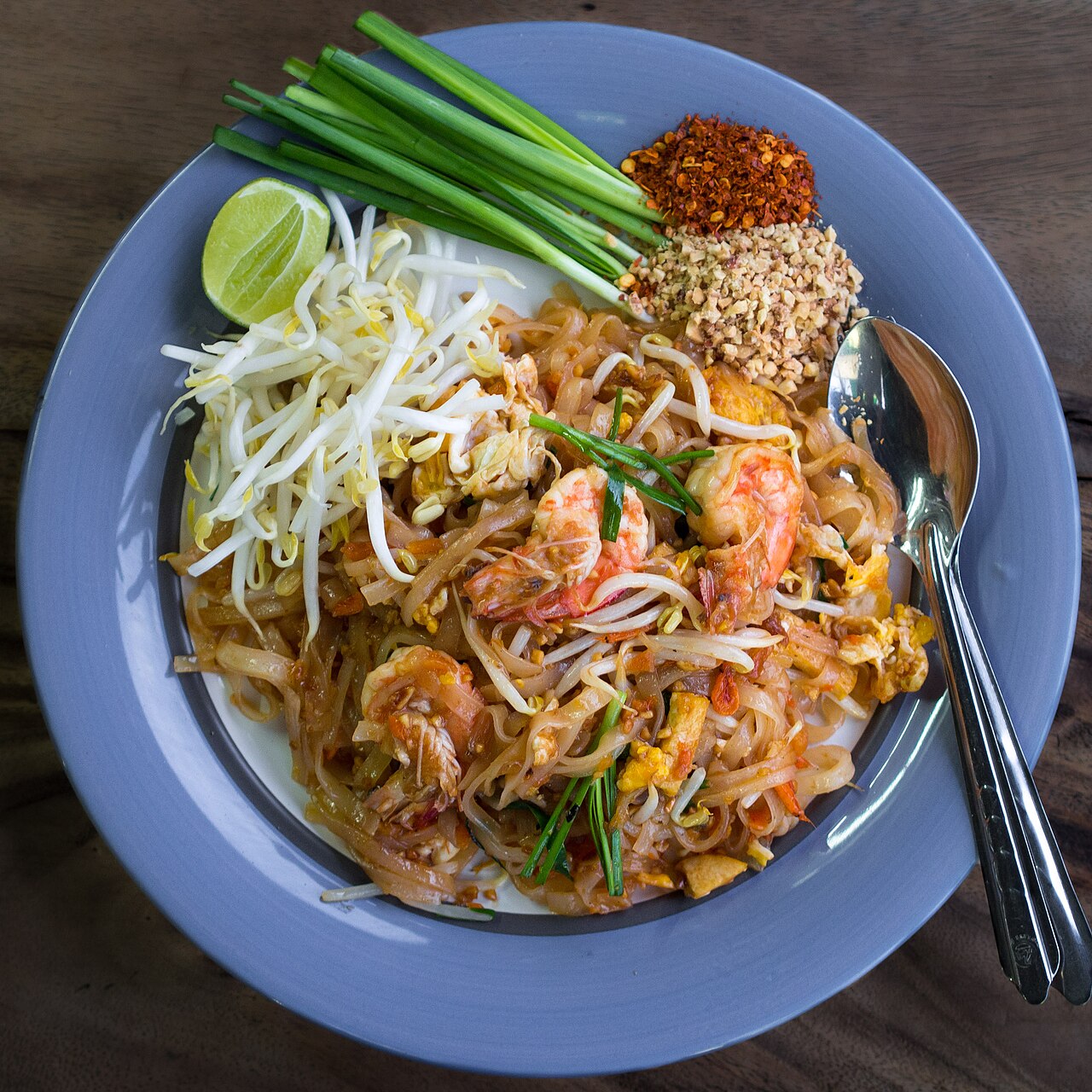
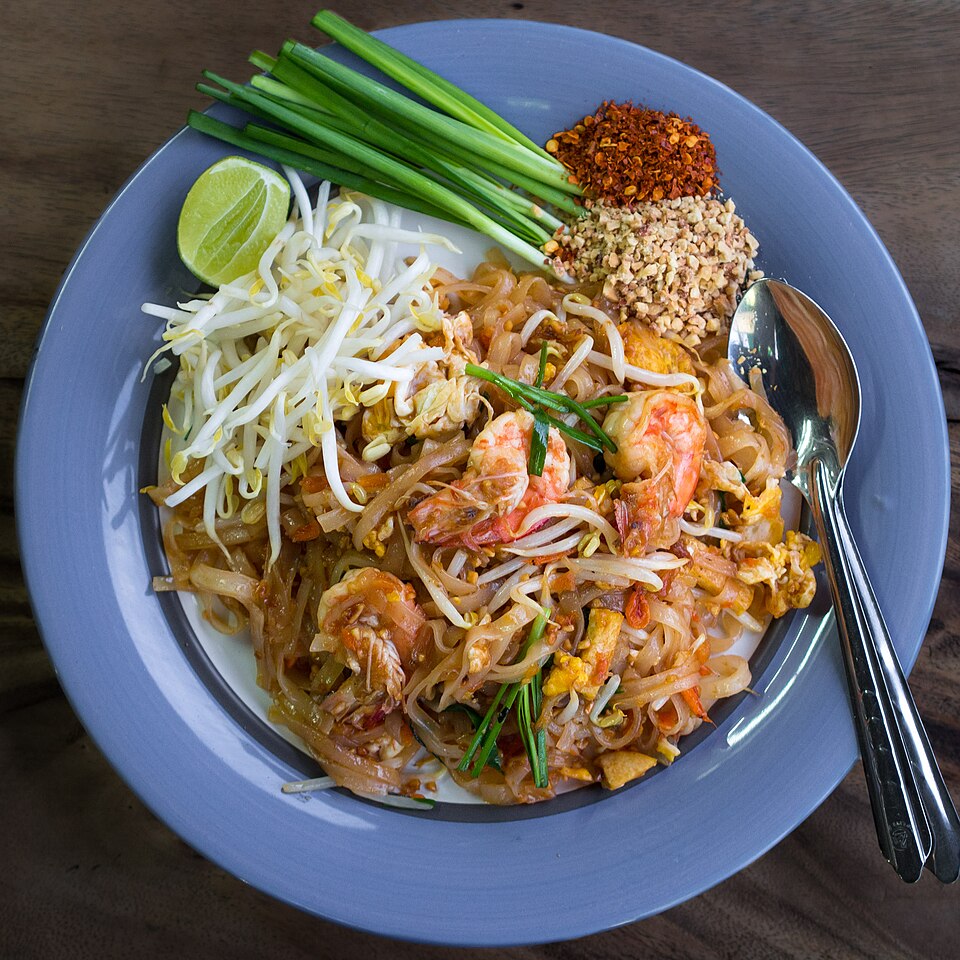
Pad Thai should be dry-ish and tamarind-sour, not a sweet ketchup noodle.
Pairing
Rice cools heat. Som tum belongs with grilled chicken and sticky rice, not as a lonely starter.
Iced tea and beer are the street drinks; herbal nam is the home cooler.
Thai cuisine (ไทย) fused Tai, Chinese, Mon and Indian techniques with New World chili. Nam pla and nam prik are older than the tourist pad Thai of the 20th century.
Is it always spicy?
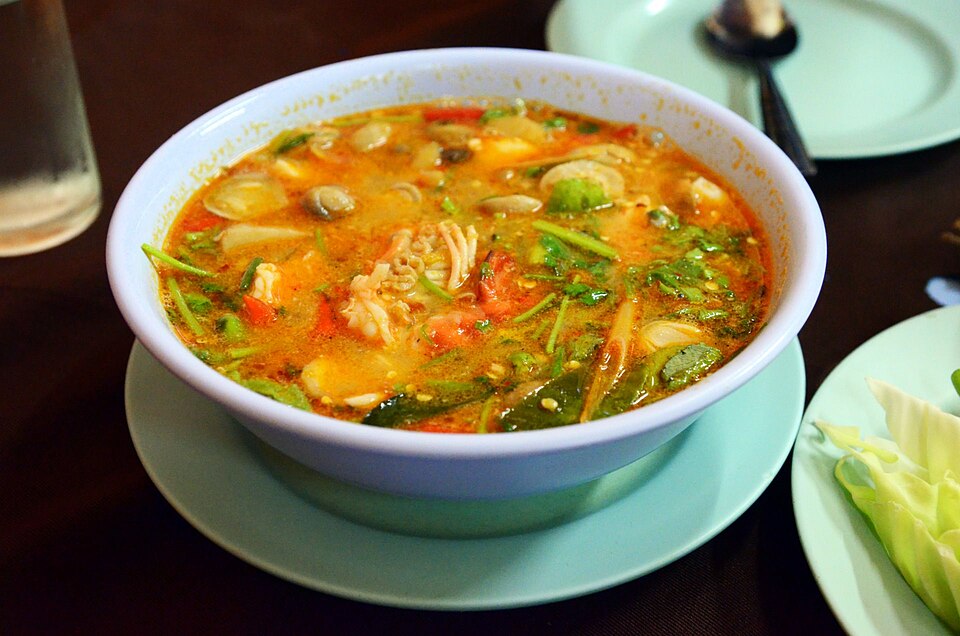
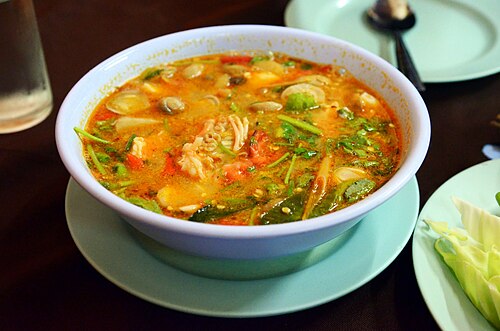
Thai cuisine sits at spice 92 in this atlas. Pad Thai and Tom yum show the range better than a single heat number.
What should a first meal include?
Pad Thai plus one regional plate — not only the export icon.
What is Nam pla?
Thai fish sauce.
How do people eat at home?
Bangkok street food — boat noodles, boat noodles, boat noodles, som tum carts, late-night rice porridge — is not a sideshow. Pad Thai is a 20th-century national-noodle project, not an ancient royal plate.
What travels poorly?
The home pantry around Nam pla and the labour behind Tom yum rarely fit a takeaway box.
Are restaurant versions "authentic"?
Restaurant Thai cuisine is one register. Home pots and market stalls are others. Authenticity is a marketing word; technique is not.
Where does the native name appear?
ไทย is the local name used in this atlas beside Thai cuisine.
How do I decide what to order at a stall or restaurant?
Use Decide what to order on each cuisine page: pick room and heat, then follow the published plate and pantry line. It is not a live menu or a reservation.
Is this a recipe I can cook from tonight?
No. The street chapter lists on-file steps and the craft chapter lists techniques already in this cuisine file. They are literacy notes, not a tested recipe, hygiene certificate, or restaurant booking.
What does pairing one street step with one craft mark show?
The pair on this hub sits one published street step beside one published craft item so you can see how a stall move and a workshop move belong to the same kitchen. It does not rank vendors or invent a new dish.
Are the spice and street-food scores a ranking of restaurants?
They are relative editorial marks among cuisines in this atlas, not a league table of shops. A high street-food score means the published street chapter is dense, not that a stall is safe today.
Why is Hungarian cuisine missing in some languages?
A language URL is published only when the seven chapters are real prose in that language. Hungarian pages exist in English, Korean, Japanese and Chinese. Spanish, French, German, Portuguese and Russian stay withheld until a native rewrite is finished — English is not shown under those URLs.
Embed this ranking
Paste this code into your blog or site — the ranking stays up to date.
Copied!
Similar cuisines
Closest neighbours on the six atlas axes — spice, umami, street food, technique, access and price spread.