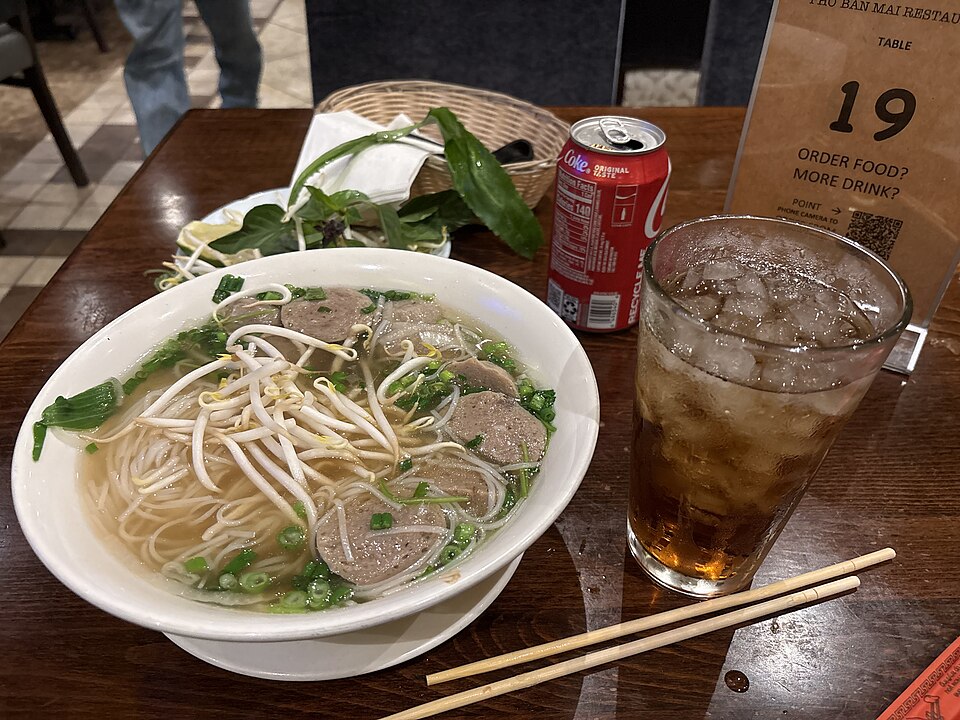
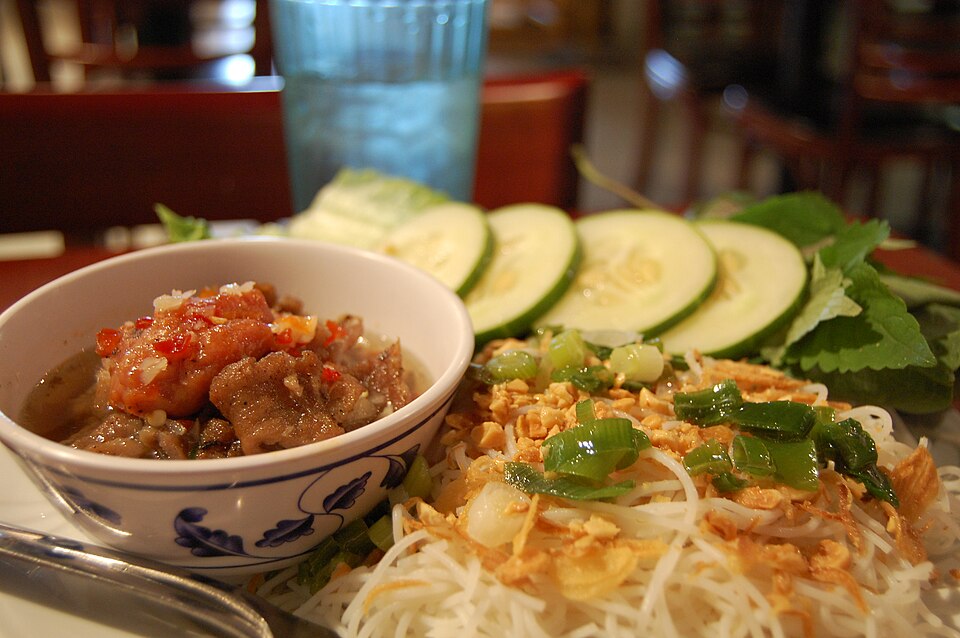
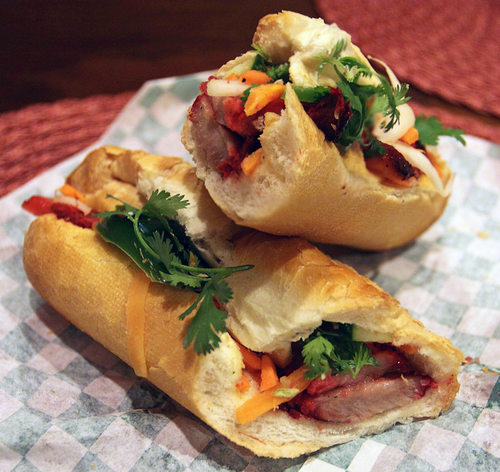
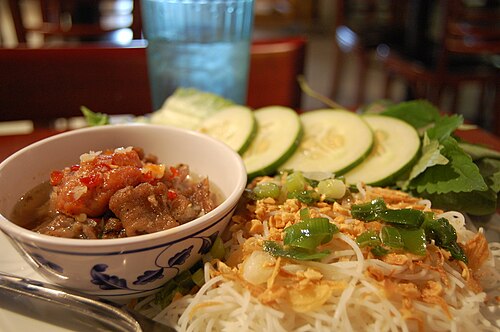
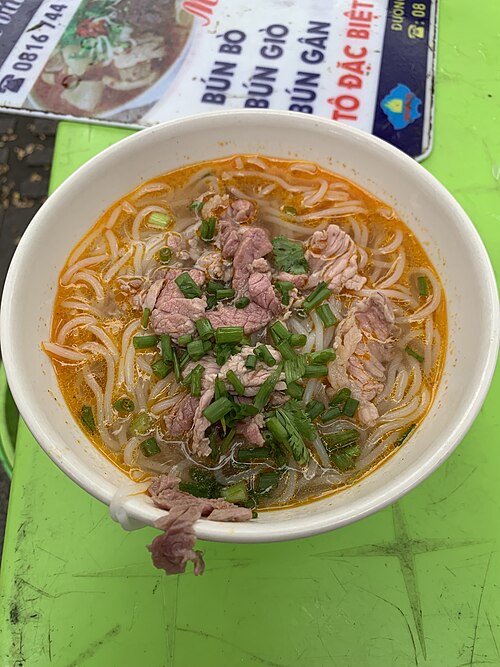
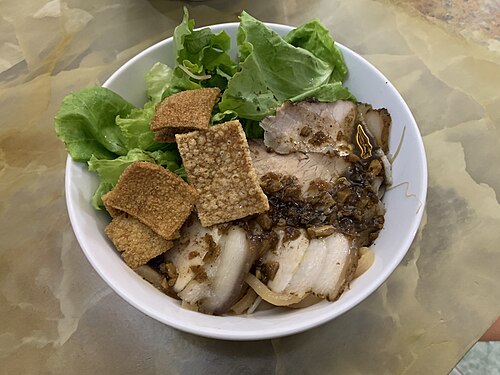
Vietnamese cuisine is a herb-and-broth system: pho in the north, bun bo Hue in the centre, hủ tiếu and sweet-savoury Mekong pots in the south. Nuoc mam is the salt; rau thom is the volume knob.
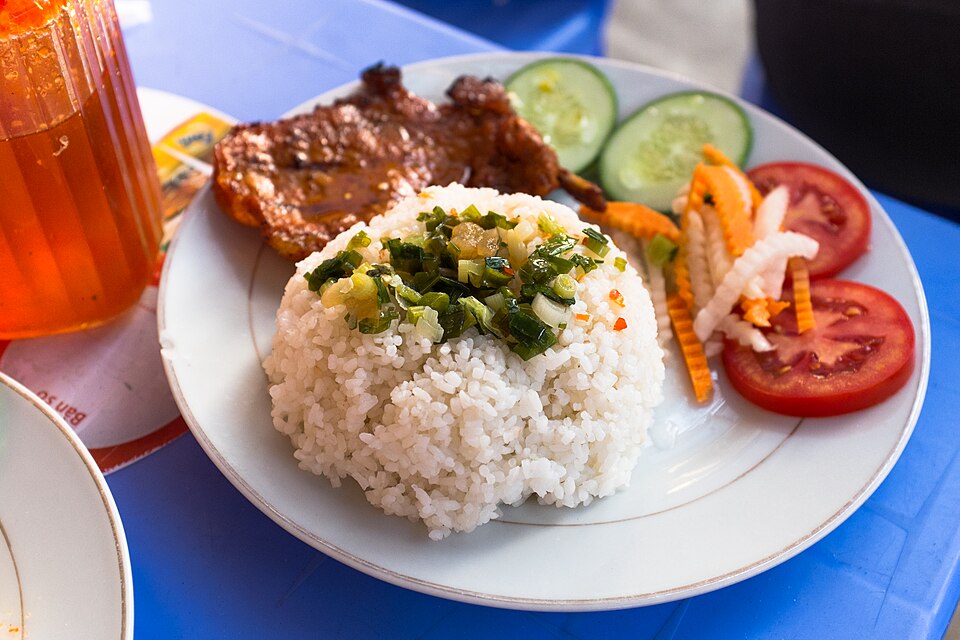
Street Vietnam is the cuisine. Plastic stools, pho at dawn, banh mi from a cart, bun cha at lunch. The French overlay is not a tourist add-on — the baguette is Vietnamese now.
Heat is optional chili and raw pepper, not a curry paste architecture. The diner finishes the bowl with lime, sprouts and sauce — a last-metre technique.
Deep introduction
Three Vietnams at lunch
A long country whose broths, herbs and sweetness change at every latitude.
Regions, pantry, table manners and travel — plus a lens tuned to this language region.
Regional diversity
Hanoi pho is clear and spare; Saigon pho is sweeter and herb-heavy. Hue still cooks imperial and spicy as if the court had not left.
The Mekong adds Khmer sour soups, coconut and a Chinese-Vietnamese noodle culture in Cho Lon.
Pantry and ferments
Nuoc mam from Phu Quoc and Phan Thiet is graded like wine. Mam tom and fermented shrimp pastes scare first-timers and define the centre.
Pickled vegetables and nuoc cham (fish sauce, lime, sugar, chili) are the table condiments, not bottled "soy".
How people eat
A meal is rice or noodles plus shared plates and a personal herb pile. Coffee is a course. Families still buy morning pho rather than cook it.
Street orders are shouted and fast. Sit, eat, leave. Lingering is for bia hoi, not the pho stall.
How it travels
Pho and banh mi became global fast-casual. What travels less is the mam pantry and the dawn wet-market clock.
Diaspora kitchens in Paris, Orange County and Cabramatta wrote the overseas canon — often southern, often sweeter.
Taste deep dive
Broth, herb and baguette
Vietnamese technique is clarification, balancing nuoc cham, and the diner's last squeeze of lime.
Heat, ferment, texture and pairing — plus how this language region cooks the same plates.
Heat
Chili is a garnish and a central-Vietnam habit (bun bo Hue). Northern tables can be almost chili-free.
Black pepper and raw chili slices do the sharp work more often than a cooked curry paste.
Fermentation and sauce
Nuoc mam is the salt of the cuisine. Nuoc cham is the mixed table sauce. Mam tom is the funk that tourists skip and locals do not.
French pate and mayonnaise entered banh mi without replacing fish sauce.
Texture
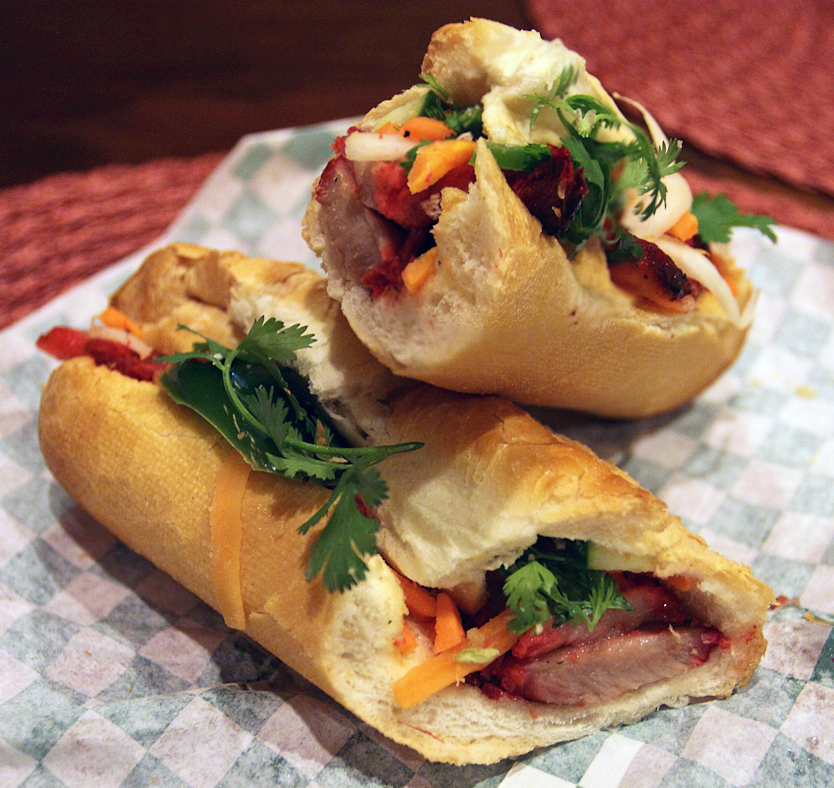
Pho noodles should be soft but not glue. Banh mi needs a shatter crust and a soft interior — a Vietnamese bakery craft.
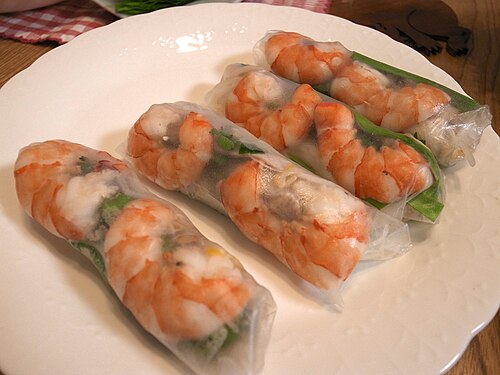
Goi cuon is about cool herbs and a rice-paper chew, not frying.
Pairing
Herbs are the pairing. Lime and chili are the acid. Ca phe sua da and beer are the drinks of the street.
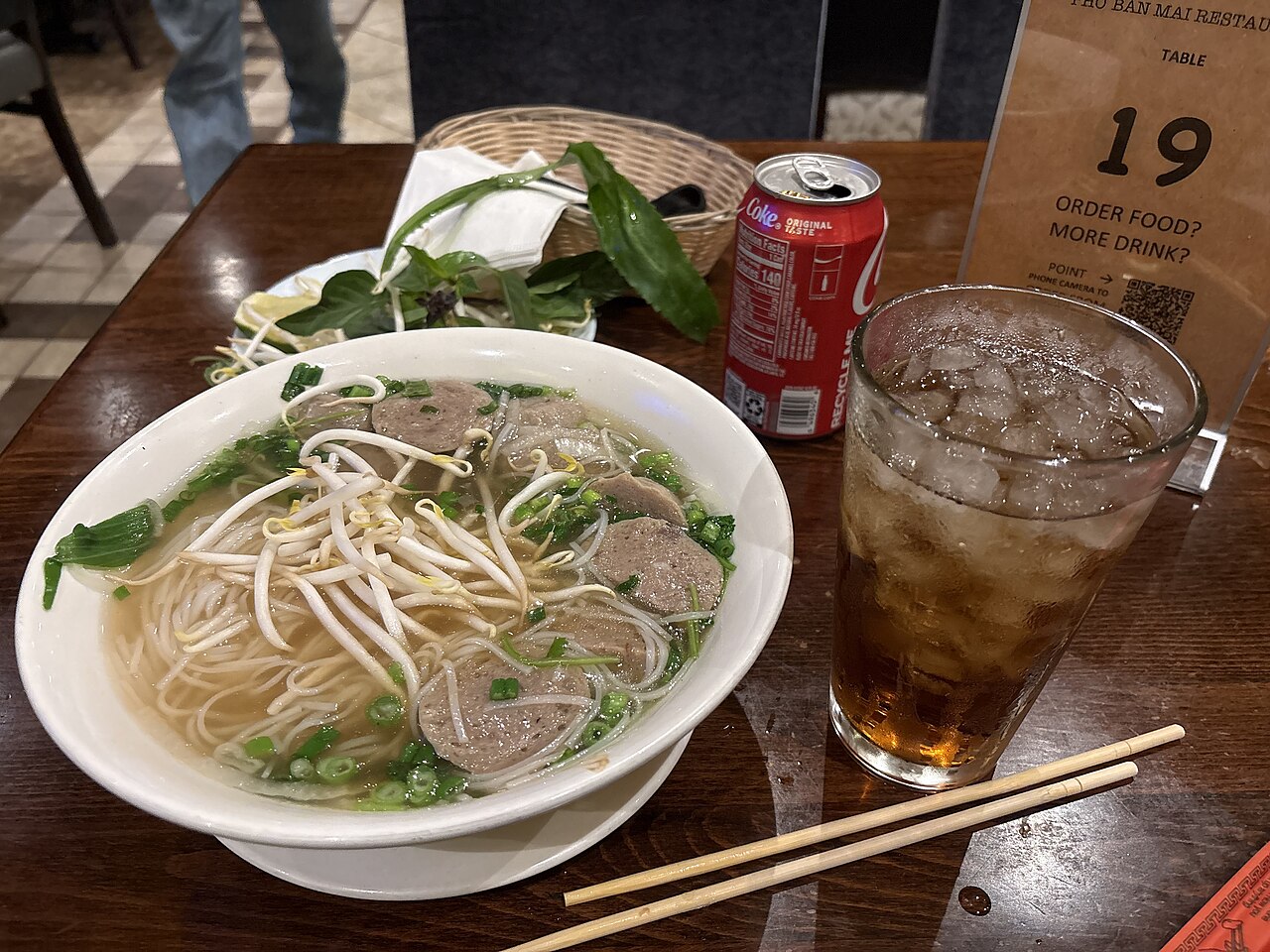
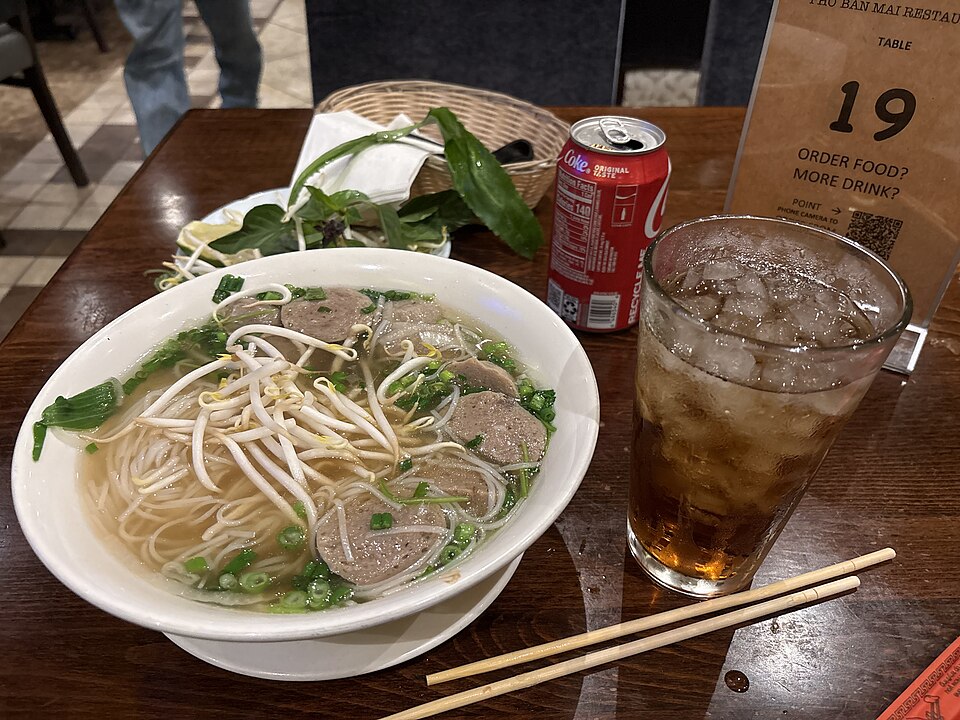
A pho bowl without the herb plate is unfinished, even if the broth is perfect.
East and Southeast Asian neighbours who share herbs, noodles and a street stool.
See-also cuisines, key terms, adjacent threads and regional notes for this language.
See also
🌶️Thai cuisineA sibling herb-and-fish-sauce belt with a much hotter paste architecture.
🥟Chinese cuisineA thousand years of northern influence visible in noodles and stir-fries.
🍲Korean cuisineAnother rice-and-grill neighbour with a stronger chili-ferment bass.
🥖French cuisineCross-family: baguette, coffee and pate were absorbed, not merely imposed.
Key terms
Nuoc mam
Vietnamese fish sauce; the primary salt.
Nuoc cham
Table sauce of fish sauce, lime, sugar, water, chili, garlic.
Rau thom
The herb plate: basil, mint, cilantro, sawtooth, lettuce.
Pho
Rice-noodle soup, northern spare or southern sweet, beef or chicken.
Banh mi
Vietnamese baguette sandwich with pickle, herb, protein and often pate.
Mam
Fermented seafood pastes of the centre and south.
Agriculture
The crops behind Nuoc mam and Pho still set the calendar of Vietnamese cuisine.
Export demand now pulls those crops into a different price season than the home table remembers.
Labour and street vendors
Stall cooks and market women still make the public face of Vietnamese cuisine in Hanoi Old Quarter.
Delivery apps moved labour indoors without erasing the night row.
Diaspora
Overseas kitchens taught new cities to say Pho before they learned the home pot.
Reverse influence is real: sweetness and crunch invented abroad now show up "back home".
Visual field notes
Licensed photographs of this cuisine — heroes, eras and icons on one wall.
SerraKnightzSerraKnightzChristopher Crouzetnsaum75 ¡שיחת! SerraKnightzstuart_spivackSerraKnightznsaum75 ¡שיחת! stuart_spivackpelican from Tokyo, JapanChainwit.Chainwit.
The profile
Spice58
Umami76
Street food90
Technique70
Accessibility74
Price spread42
Read one street step beside one craft mark
On Vietnamese cuisine, pair the first published street step with the first craft item — literacy, not a recipe rank.
Name the first street item — The street chapter opens with Read the room on this cuisine file.
Name the first craft item — The craft chapter lists Festival table beside it.
Walk them as literacy — Read stall move and workshop move together — not a tested recipe or vendor league.
Scores are not restaurant ranks — Spice and street-food marks compare cuisines in this atlas, not tonight's shop safety.
Read the room and Festival table on Vietnamese cuisine teach how street and craft chapters talk to each other.
Literacy notes only. Not hygiene certificate, recipe, or booking.
Taste one signature beside one price band
Second literacy pass on Vietnamese cuisine: pair the first published taste signature with the first market cost band — table reading, not a bill estimate.
Name the first taste signature — The taste chapter opens with Pho on this cuisine file.
Name the first cost band — The market chapter lists Street snack as a published price band.
Read them as table literacy — Signature and band teach how dishes sit beside money talk — not a live quote or booking.
Scores are not a dinner tab — Price-spread marks compare cuisines in this atlas, not tonight's receipt.
Pho beside Street snack on Vietnamese cuisine is a second teaching pair — taste then table/price.
Literacy notes only. Not a price quote, recipe, or reservation.
Taste one signature beside one price band
Second literacy pass on Vietnamese cuisine: pair the first published taste signature with the first market cost band — table reading, not a bill estimate.
Name the first taste signature — The taste chapter opens with Pho on this cuisine file.
Name the first cost band — The market chapter lists Street snack as a published price band.
Read them as table literacy — Signature and band teach how dishes sit beside money talk — not a live quote or booking.
Scores are not a dinner tab — Price-spread marks compare cuisines in this atlas, not tonight's receipt.
Pho beside Street snack on Vietnamese cuisine is a second teaching pair — taste then table/price.
Literacy notes only. Not a price quote, recipe, or reservation.
Vietnamese cooking sits on rice, fish sauce and herbs. Chinese domination, Cham and Khmer neighbours, and French colonialism left baguette, coffee and pate inside a Southeast Asian table.
Is it always spicy?
Vietnamese cuisine sits at spice 58 in this atlas. Pho and Banh mi show the range better than a single heat number.
What should a first meal include?
Pho plus one regional plate — not only the export icon.
What is Nuoc mam?
Vietnamese fish sauce; the primary salt.
How do people eat at home?
Street Vietnam is the cuisine. Plastic stools, pho at dawn, banh mi from a cart, bun cha at lunch. The French overlay is not a tourist add-on — the baguette is Vietnamese now.
What travels poorly?
The home pantry around Nuoc mam and the labour behind Banh mi rarely fit a takeaway box.
Are restaurant versions "authentic"?
Restaurant Vietnamese cuisine is one register. Home pots and market stalls are others. Authenticity is a marketing word; technique is not.
Where does the native name appear?
Ẩm thực Việt is the local name used in this atlas beside Vietnamese cuisine.
How do I decide what to order at a stall or restaurant?
Use Decide what to order on each cuisine page: pick room and heat, then follow the published plate and pantry line. It is not a live menu or a reservation.
Is this a recipe I can cook from tonight?
No. The street chapter lists on-file steps and the craft chapter lists techniques already in this cuisine file. They are literacy notes, not a tested recipe, hygiene certificate, or restaurant booking.
What does pairing one street step with one craft mark show?
The pair on this hub sits one published street step beside one published craft item so you can see how a stall move and a workshop move belong to the same kitchen. It does not rank vendors or invent a new dish.
Are the spice and street-food scores a ranking of restaurants?
They are relative editorial marks among cuisines in this atlas, not a league table of shops. A high street-food score means the published street chapter is dense, not that a stall is safe today.
Why is Hungarian cuisine missing in some languages?
A language URL is published only when the seven chapters are real prose in that language. Hungarian pages exist in English, Korean, Japanese and Chinese. Spanish, French, German, Portuguese and Russian stay withheld until a native rewrite is finished — English is not shown under those URLs.
Embed this ranking
Paste this code into your blog or site — the ranking stays up to date.
Copied!
Similar cuisines
Closest neighbours on the six atlas axes — spice, umami, street food, technique, access and price spread.