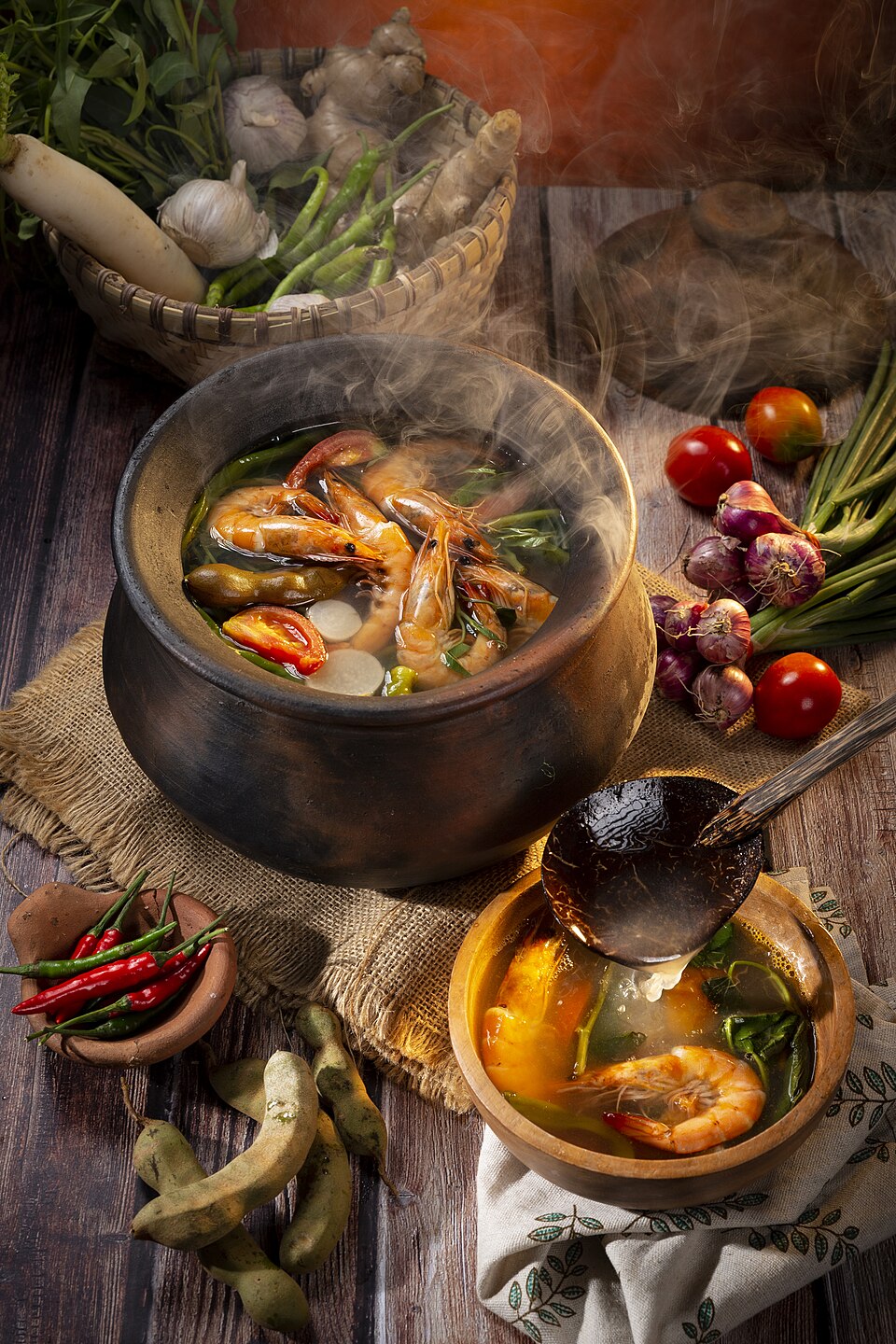
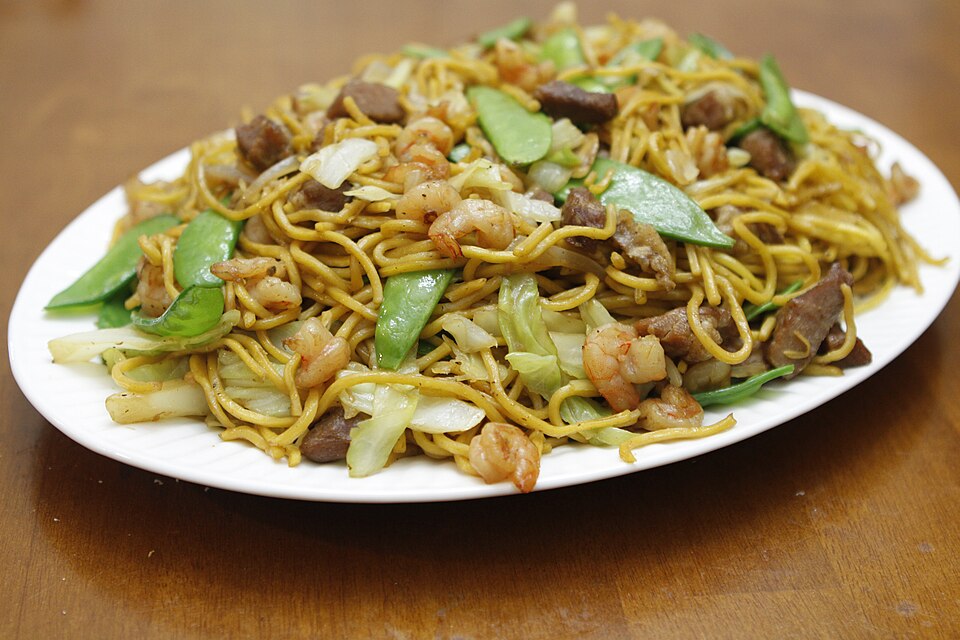
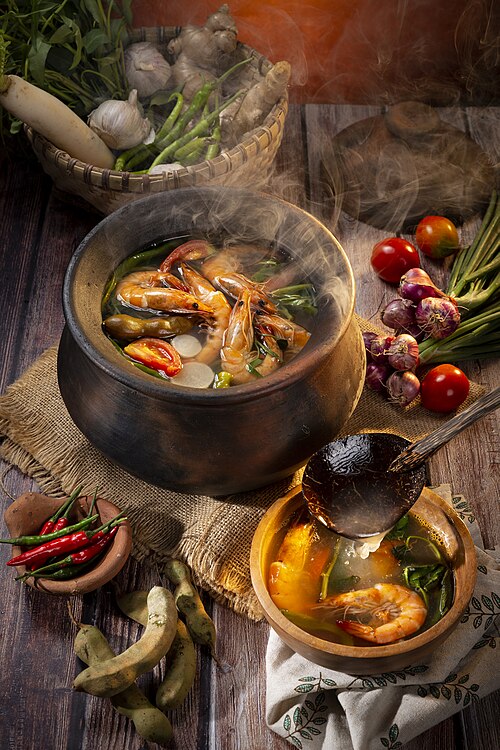
Filipino cuisine tastes first of sour and garlic: adobo, sinigang, kinilaw. Chili exists (Bicol, Mindanao) but the national bass is suka and tamarind, not nam prik.
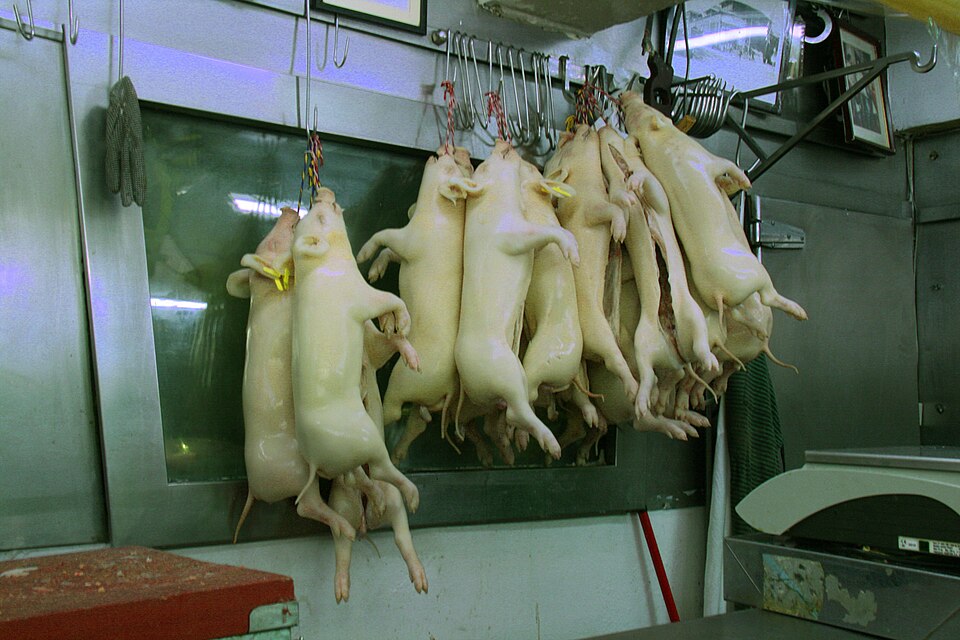
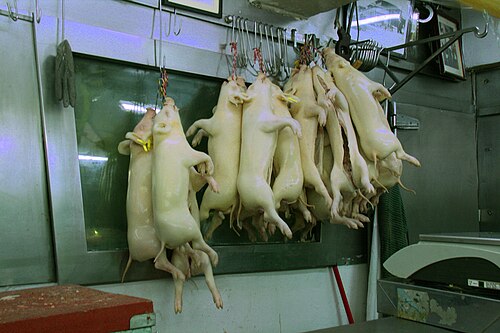
A fiesta is lechon and a table that does not run out. A Tuesday is rice, a sour soup and leftover adobo that tastes better on day two.
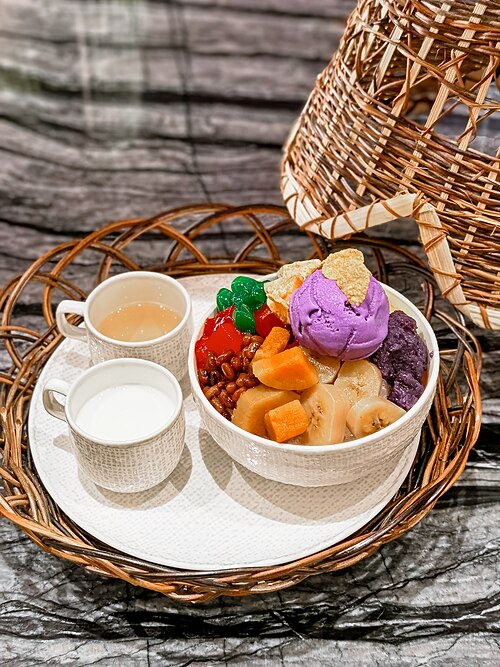
Street food is barbecue sticks, fishballs and halo-halo. Jollibee is a genuine popular taste, not a joke about colonialism — though colonialism is in the gravy.
Deep introduction
How Filipino cuisine holds together
Filipino cuisine is organised by bagoong / suka and rice.
Regions, pantry, table manners and travel — plus a lens tuned to this language region.
Regional diversity
Pampanga claims a culinary capital. Ilocos salts and bagoong; Bicol cooks chili-coconut; the Visayas roast lechon that Manila argues about; Mindanao holds Muslim-Filipino and lumad tables.
Ilocano vegetable austerity and a Kapampangan fiesta spread are not one "Filipino flavour".
Pantry and ferments
Bagoong (fish or shrimp paste) and coconut vinegar are the jars. Soy entered with Chinese trade. Condensed milk is an American-era sweetness that halo-halo never gave back.
Adobo is a method — stew in vinegar and garlic — not a single recipe. Every house claims the ratio.
How people eat
Rice is mandatory. Kamayan (hands) returns at feasts. Saw saw (dipping) sauces are personal.
Leftover adobo in the morning is a cultural fact, not a failure of planning.
How it travels
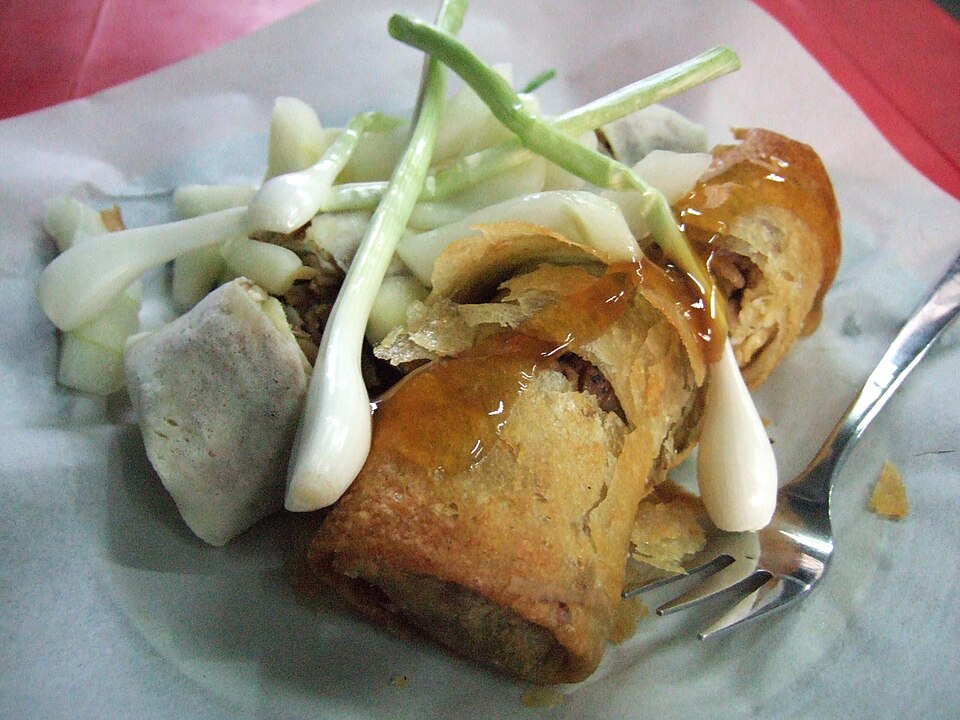
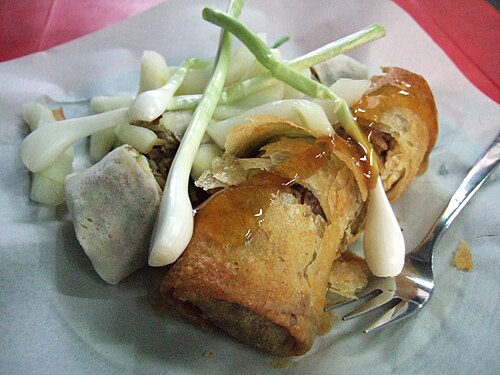
Adobo and lumpia are the export pair. Sinigang mix packets industrialised sour soup for OFW kitchens worldwide.
What travels poorly is the fiesta lechon economy and the regional bagoong that alarms first-timers.
Taste deep dive
Taste and craft of Filipino cuisine
Heat, bagoong / suka, texture and pairing in Filipino cuisine.
Heat, ferment, texture and pairing — plus how this language region cooks the same plates.
Heat
Bicol express and Mindanao dishes can be hot; most home adobo is not. Spice 52 is mid-atlas: sour and garlic lead.
Black pepper in adobo is older than chili in many houses.
Fermentation and sauce
Bagoong and vinegar are the pair. Toyo (soy) and calamansi finish grilled meats.
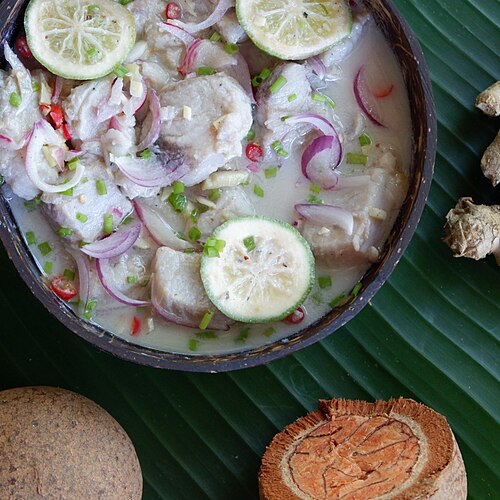
Kinilaw is a raw-fish vinegar cook, cousin to ceviche by accident of acid, not of history.
Texture
Lechon skin shatter; sinigang softness; the crunch of chicharon against rice.
Adobo should be saucy enough for rice, not a dry roast.
Pairing
Rice. Then calamansi and sawsawan. Ice-cold soda is a fiesta drink; beer is a grill drink.
A meal without rice is a snack, even if the lechon is the centrepiece photograph.
🥥Indonesian cuisineArchipelago sibling with sambal instead of suka as the default loud condiment.
🍛Indian cuisineA lighter tadka influence via trade than the Malay world shows.
🥘Spanish cuisineCross-family: fiesta roast, vinegar and Catholic calendar cooking.
Key terms
Adobo
Vinegar-garlic stew method, many meats.
Sinigang
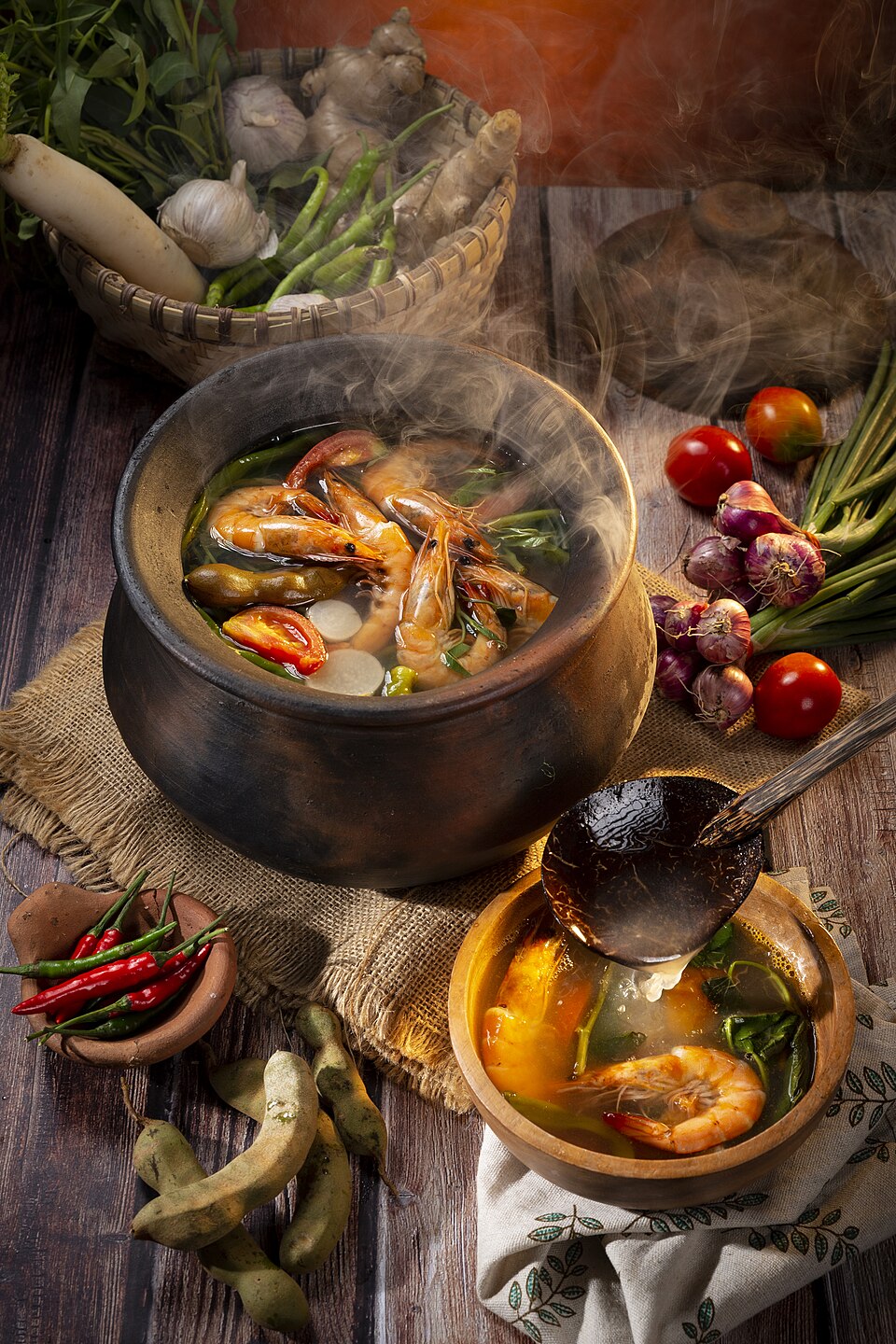
Sour soup, often tamarind.
Bagoong
Fermented fish or shrimp paste.
Lechon
Whole roast pig, fiesta centrepiece.
Kamayan
Hand-eaten feast, banana-leaf service.
Sawsawan
Personal dipping sauces.
Agriculture
The crops behind Adobo and Adobo still set the calendar of Filipino cuisine.
Export demand now pulls those crops into a different price season than the home table remembers.
Labour and street vendors
Stall cooks and market women still make the public face of Filipino cuisine in Pampanga.
Delivery apps moved labour indoors without erasing the night row.
Diaspora
Overseas kitchens taught new cities to say Adobo before they learned the home pot.
Reverse influence is real: sweetness and crunch invented abroad now show up "back home".
Visual field notes
Licensed photographs of this cuisine — heroes, eras and icons on one wall.
JessartcamTamorlanMidoripulawJessartcamTamorlanMidoripulawHerbertkikoyLokalpediaJoy L. CruzJessartcam
The profile
Spice52
Umami74
Street food82
Technique58
Accessibility70
Price spread38
Read one street step beside one craft mark
On Filipino cuisine, pair the first published street step with the first craft item — literacy, not a recipe rank.
Name the first street item — The street chapter opens with Read the room on this cuisine file.
Name the first craft item — The craft chapter lists Festival table beside it.
Walk them as literacy — Read stall move and workshop move together — not a tested recipe or vendor league.
Scores are not restaurant ranks — Spice and street-food marks compare cuisines in this atlas, not tonight's shop safety.
Read the room and Festival table on Filipino cuisine teach how street and craft chapters talk to each other.
Literacy notes only. Not hygiene certificate, recipe, or booking.
Taste one signature beside one price band
Second literacy pass on Filipino cuisine: pair the first published taste signature with the first market cost band — table reading, not a bill estimate.
Name the first taste signature — The taste chapter opens with Adobo on this cuisine file.
Name the first cost band — The market chapter lists Street snack as a published price band.
Read them as table literacy — Signature and band teach how dishes sit beside money talk — not a live quote or booking.
Scores are not a dinner tab — Price-spread marks compare cuisines in this atlas, not tonight's receipt.
Adobo beside Street snack on Filipino cuisine is a second teaching pair — taste then table/price.
Literacy notes only. Not a price quote, recipe, or reservation.
Taste one signature beside one price band
Second literacy pass on Filipino cuisine: pair the first published taste signature with the first market cost band — table reading, not a bill estimate.
Name the first taste signature — The taste chapter opens with Adobo on this cuisine file.
Name the first cost band — The market chapter lists Street snack as a published price band.
Read them as table literacy — Signature and band teach how dishes sit beside money talk — not a live quote or booking.
Scores are not a dinner tab — Price-spread marks compare cuisines in this atlas, not tonight's receipt.
Adobo beside Street snack on Filipino cuisine is a second teaching pair — taste then table/price.
Literacy notes only. Not a price quote, recipe, or reservation.
Filipino cuisine is sour more than chili-hot: adobo in vinegar and soy, sinigang in tamarind. Chinese noodles, Spanish fiesta roasts and American sweet-sauces sit on an Austronesian rice-and-bagoong base.
Is it always spicy?
Filipino cuisine sits at spice 52 in this atlas. Adobo and Sinigang show the range better than a single heat number.
What should a first meal include?
Adobo plus one regional plate — not only the export icon.
What is Adobo?
Vinegar-garlic stew method, many meats.
How do people eat at home?
A fiesta is lechon and a table that does not run out. A Tuesday is rice, a sour soup and leftover adobo that tastes better on day two.
What travels poorly?
The home pantry around Adobo and the labour behind Sinigang rarely fit a takeaway box.
Are restaurant versions "authentic"?
Restaurant Filipino cuisine is one register. Home pots and market stalls are others. Authenticity is a marketing word; technique is not.
Where does the native name appear?
Lutuing Filipino is the local name used in this atlas beside Filipino cuisine.
How do I decide what to order at a stall or restaurant?
Use Decide what to order on each cuisine page: pick room and heat, then follow the published plate and pantry line. It is not a live menu or a reservation.
Is this a recipe I can cook from tonight?
No. The street chapter lists on-file steps and the craft chapter lists techniques already in this cuisine file. They are literacy notes, not a tested recipe, hygiene certificate, or restaurant booking.
What does pairing one street step with one craft mark show?
The pair on this hub sits one published street step beside one published craft item so you can see how a stall move and a workshop move belong to the same kitchen. It does not rank vendors or invent a new dish.
Are the spice and street-food scores a ranking of restaurants?
They are relative editorial marks among cuisines in this atlas, not a league table of shops. A high street-food score means the published street chapter is dense, not that a stall is safe today.
Why is Hungarian cuisine missing in some languages?
A language URL is published only when the seven chapters are real prose in that language. Hungarian pages exist in English, Korean, Japanese and Chinese. Spanish, French, German, Portuguese and Russian stay withheld until a native rewrite is finished — English is not shown under those URLs.
Embed this ranking
Paste this code into your blog or site — the ranking stays up to date.
Copied!
Similar cuisines
Closest neighbours on the six atlas axes — spice, umami, street food, technique, access and price spread.