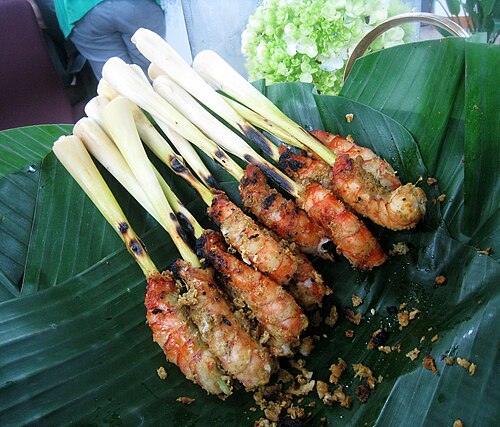
Indonesian cuisine is an archipelago argument: Minangkabau rendang, Javanese gudeg, Balinese babi guling, Manado sour-heat and Chinese-Indonesian bakmi. Sambal is the table chili; terasi and tempeh are the ferments.
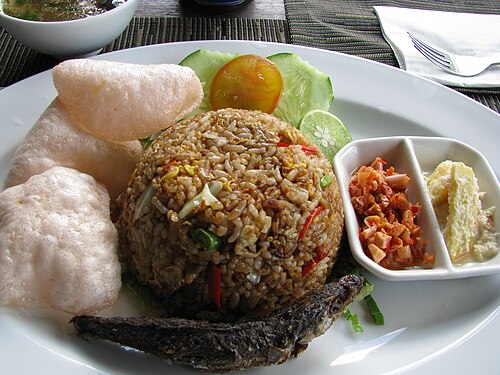
Warung and kaki lima carts are the public kitchen. Nasi goreng is the leftover-rice genius that UNESCO-adjacent campaigns tried to nationalise.
The Dutch rijsttafel is a colonial tasting format, not the home meal. Home is rice plus two or three dishes and a sambal that the family actually likes.
Deep introduction
How Indonesian cuisine holds together
Indonesian cuisine is organised by terasi / tempeh and rice.
Regions, pantry, table manners and travel — plus a lens tuned to this language region.
Regional diversity
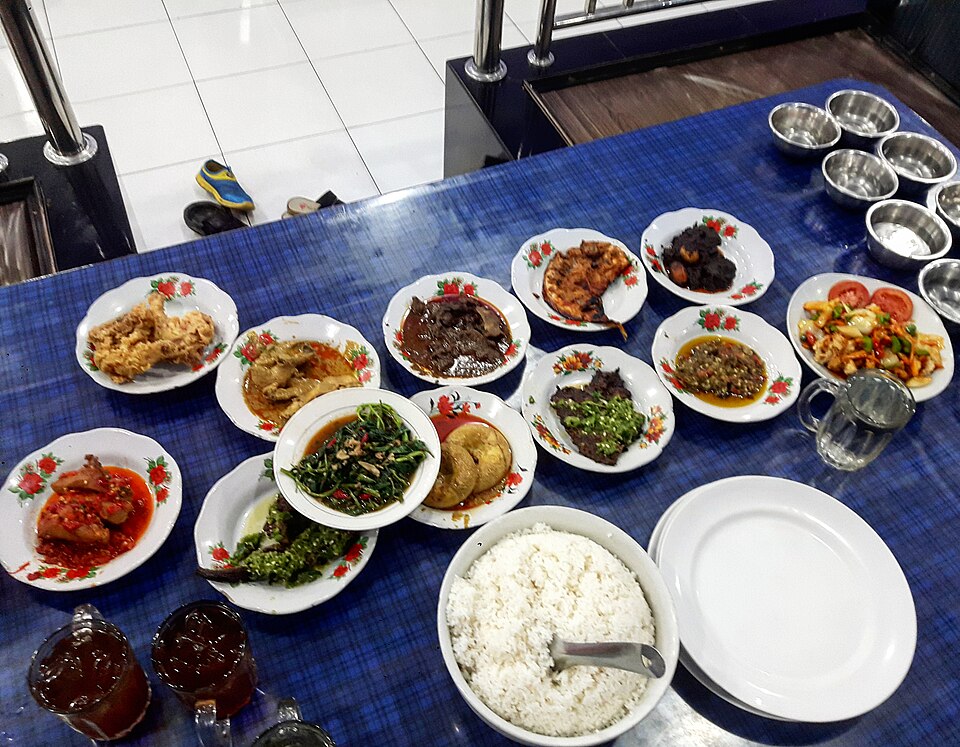
Padang restaurants display a window of gulai and rendang. Java leans sweeter. The eastern islands cook sago and fish that Java barely files as Indonesian.
Bali's Hindu table and Aceh's Muslim-Indian Ocean table are not variations on nasi goreng.
Pantry and ferments
Tempeh is a Javanese soy ferment the world now treats as a health product. Terasi shrimp paste seasons sambal. Kecap manis is a sweet soy unique in weight to this kitchen.
Coconut milk and pounded spices (bumbu) are the stew engine, especially in the west of the archipelago.
How people eat
Rice is the meal. Dishes are shared. Sambal is personal. Eating with the right hand remains ordinary outside formal rooms.
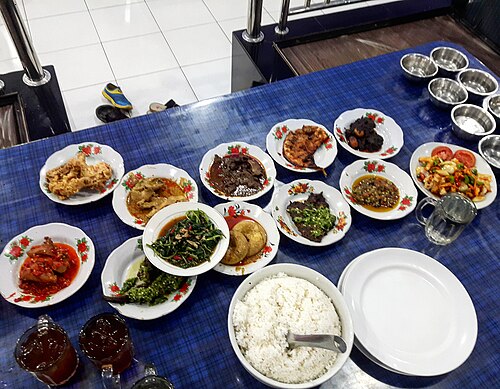
Padang service can be a full table of small plates billed by what is touched — a first-timer trap.
How it travels
Nasi goreng, satay and rendang are the export trio. Tempeh travelled as a vegan protein more than as Javanese home food.
Rijsttafel restaurants in the Netherlands are a colonial memory cuisine with its own honesty.
Taste deep dive
Taste and craft of Indonesian cuisine
Heat, terasi / tempeh, texture and pairing in Indonesian cuisine.
Heat, ferment, texture and pairing — plus how this language region cooks the same plates.
Heat
Sambal is a family, not a bottle. Bird chili, raw or fried, can outrun a curry. Java often sweetens the heat; Padang and Manado do not.
Spice 78 is high, still below Thai and Mexican atlas marks because sweetness and coconut buffer many plates.
Fermentation and sauce
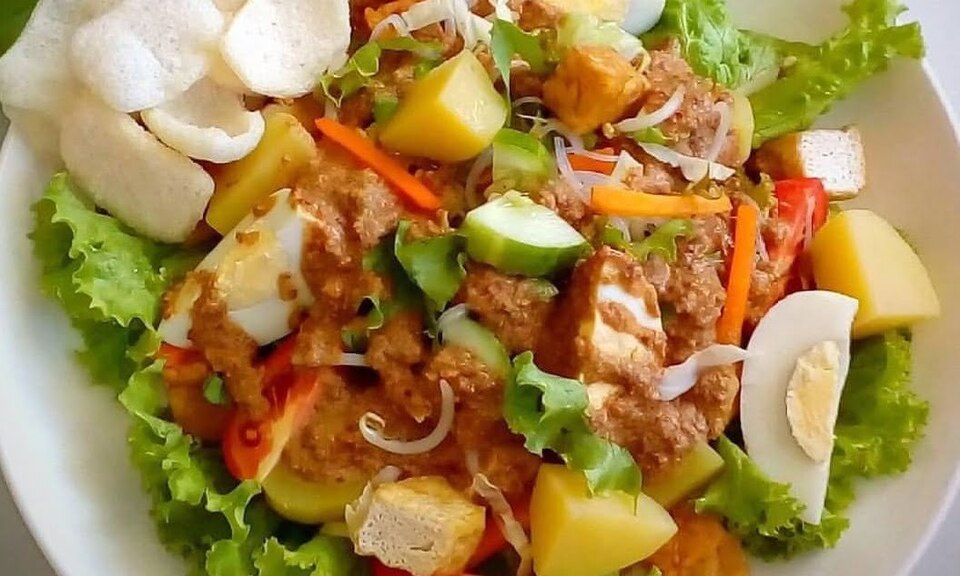
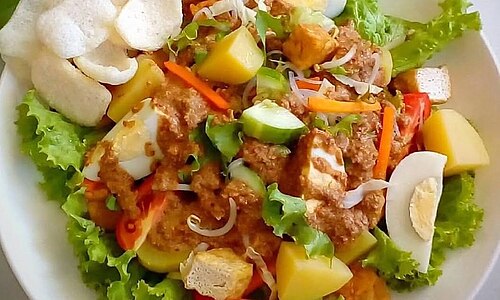
Tempeh, oncom and terasi are the ferments. Kecap manis is the glaze. Peanut sauce (bumbu kacang) binds gado-gado and satay.
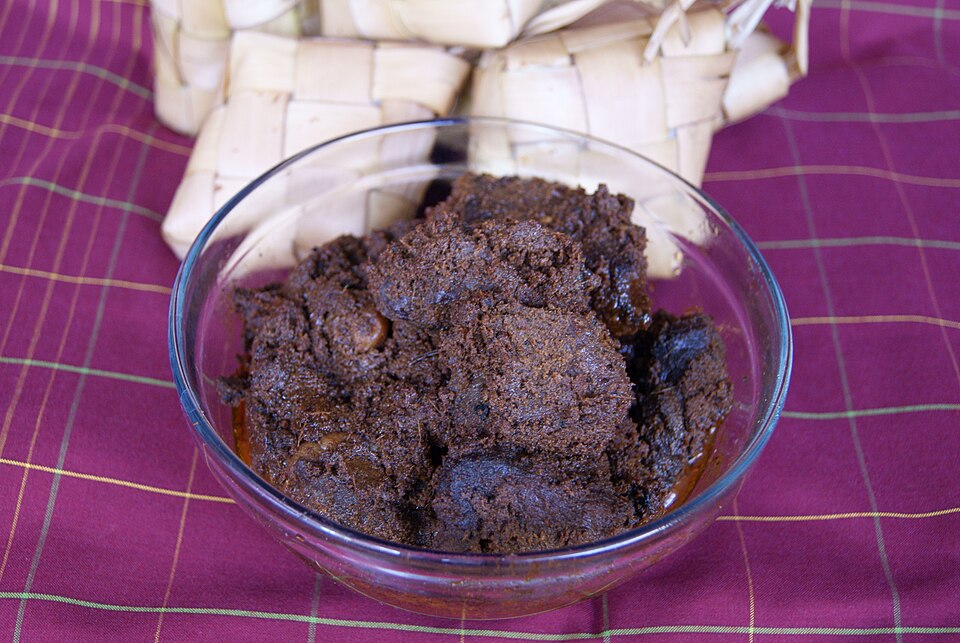
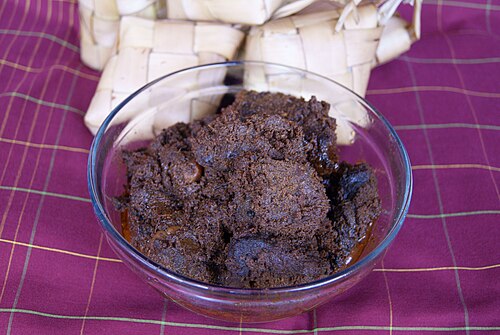
Rendang is a dry coconut-spice stew cooked down for hours — a preservation technique as much as a feast dish.
Texture
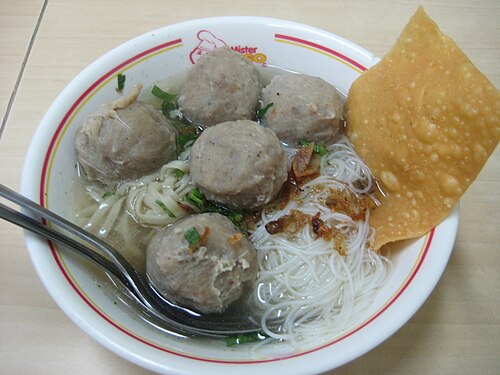
Rendang should be dry and dark, not a wet curry. Krupuk crunch against rice. Bakso bounce is a meatball craft.
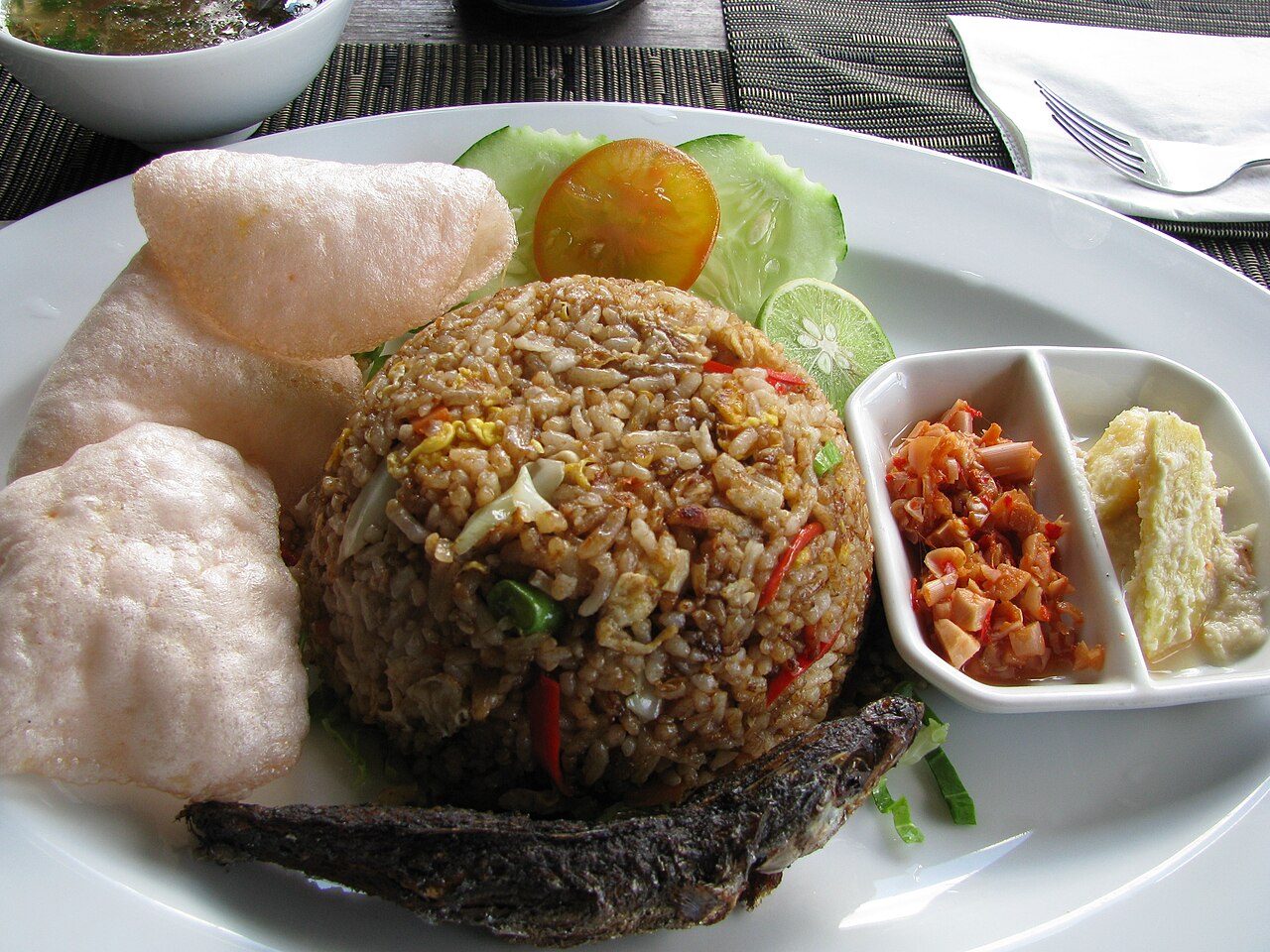
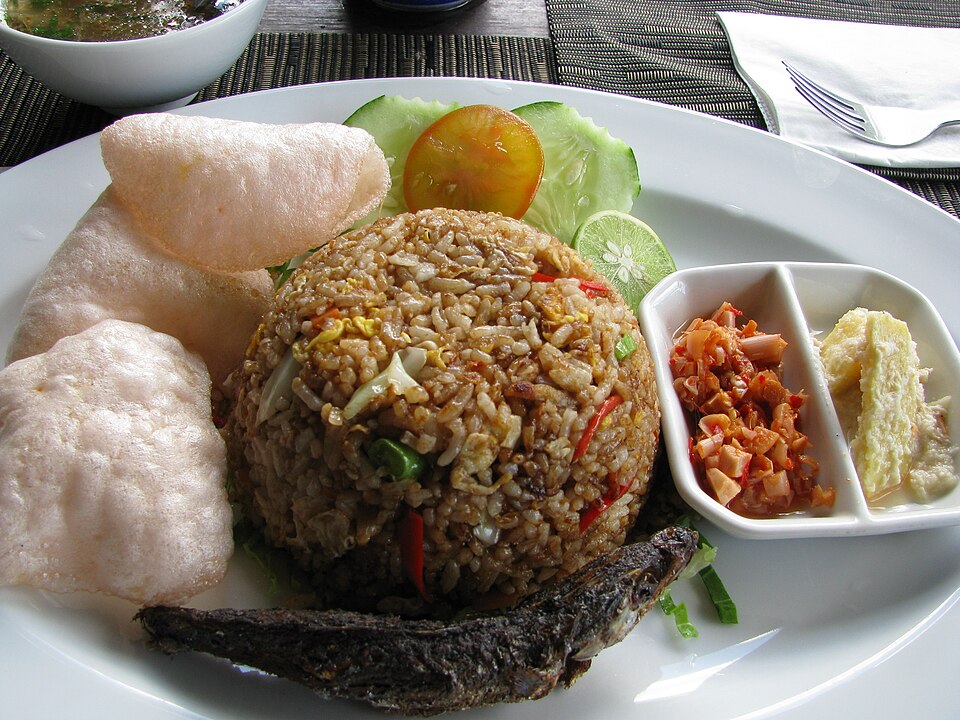
Nasi goreng wok char is the leftover-rice test.
Pairing
Sambal and krupuk are the pairing. Tea and sweet soy drinks; beer in tourist belts.
A plate without sambal is unfinished for many tables, even when the stew is already hot.
Malay-world neighbours and a Thai street-heat conversation.
See-also cuisines, key terms, adjacent threads and regional notes for this language.
See also
🍜Malaysian cuisineA cousin table of sambal, nasi and Indian-Chinese overlays.
🍛Indian cuisineSpice-trade and Indian Ocean gravies visible in Aceh and Minang cooking.
🍗Filipino cuisineArchipelago sibling with vinegar-garlic instead of kecap manis.
🌶️Thai cuisineCross-family-adjacent street heat and pounded chili relishes.
Key terms
Sambal
Chili relish family, raw or cooked, the table heat.
Tempeh
Javanese fermented soybean cake.
Kecap manis
Sweet thick soy sauce.
Warung
Small family eatery.
Bumbu
Pound or blend of spices for a stew.
Rendang
Dry coconut-spice meat stew of the Minangkabau.
Agriculture
The crops behind Sambal and Nasi goreng still set the calendar of Indonesian cuisine.
Export demand now pulls those crops into a different price season than the home table remembers.
Labour and street vendors
Stall cooks and market women still make the public face of Indonesian cuisine in Padang windows.
Delivery apps moved labour indoors without erasing the night row.
Diaspora
Overseas kitchens taught new cities to say Nasi goreng before they learned the home pot.
Reverse influence is real: sweetness and crunch invented abroad now show up "back home".
Visual field notes
Licensed photographs of this cuisine — heroes, eras and icons on one wall.
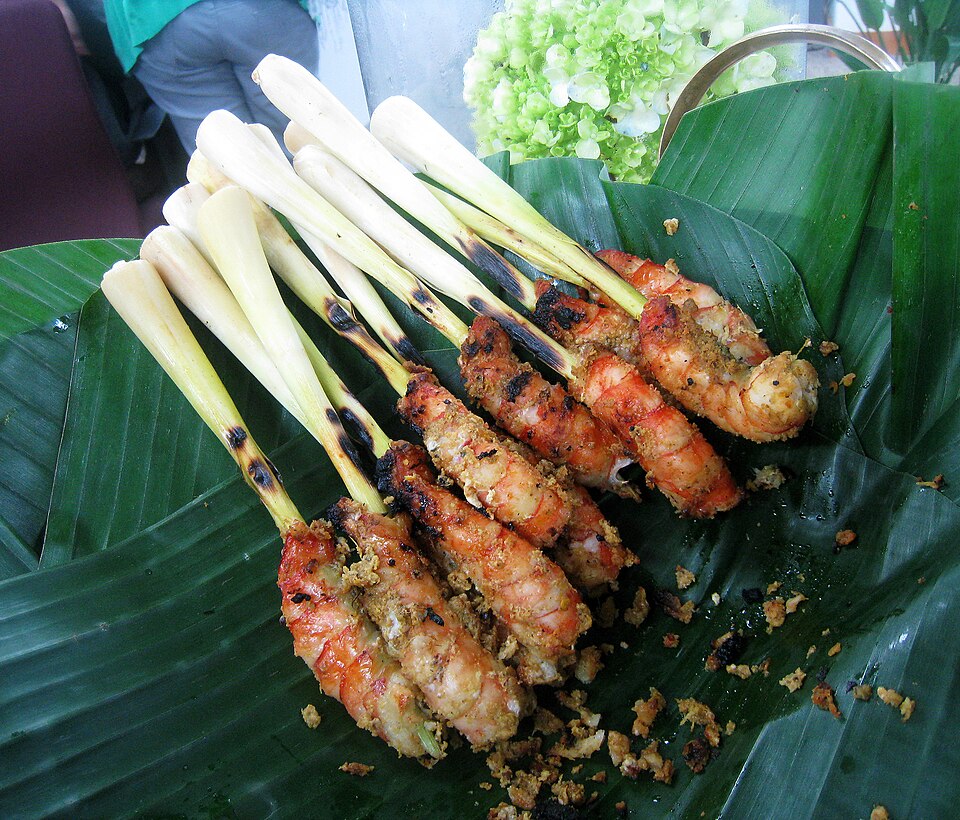
shankar s. from Dubai, united arab emiratesshankar s. from Dubai, united arab emiratesMidoriGunawan KartapranataPiknikdongD.W. Fisher-Frebergshankar s. from Dubai, united arab emiratesMidoriGunawan KartapranataPiknikdongD.W. Fisher-Frebergchristian r from Singapore
The profile
Spice78
Umami70
Street food88
Technique66
Accessibility64
Price spread40
Read one street step beside one craft mark
On Indonesian cuisine, pair the first published street step with the first craft item — literacy, not a recipe rank.
Name the first street item — The street chapter opens with Read the room on this cuisine file.
Name the first craft item — The craft chapter lists Festival table beside it.
Walk them as literacy — Read stall move and workshop move together — not a tested recipe or vendor league.
Scores are not restaurant ranks — Spice and street-food marks compare cuisines in this atlas, not tonight's shop safety.
Read the room and Festival table on Indonesian cuisine teach how street and craft chapters talk to each other.
Literacy notes only. Not hygiene certificate, recipe, or booking.
Taste one signature beside one price band
Second literacy pass on Indonesian cuisine: pair the first published taste signature with the first market cost band — table reading, not a bill estimate.
Name the first taste signature — The taste chapter opens with Nasi goreng on this cuisine file.
Name the first cost band — The market chapter lists Street snack as a published price band.
Read them as table literacy — Signature and band teach how dishes sit beside money talk — not a live quote or booking.
Scores are not a dinner tab — Price-spread marks compare cuisines in this atlas, not tonight's receipt.
Nasi goreng beside Street snack on Indonesian cuisine is a second teaching pair — taste then table/price.
Literacy notes only. Not a price quote, recipe, or reservation.
Taste one signature beside one price band
Second literacy pass on Indonesian cuisine: pair the first published taste signature with the first market cost band — table reading, not a bill estimate.
Name the first taste signature — The taste chapter opens with Nasi goreng on this cuisine file.
Name the first cost band — The market chapter lists Street snack as a published price band.
Read them as table literacy — Signature and band teach how dishes sit beside money talk — not a live quote or booking.
Scores are not a dinner tab — Price-spread marks compare cuisines in this atlas, not tonight's receipt.
Nasi goreng beside Street snack on Indonesian cuisine is a second teaching pair — taste then table/price.
Literacy notes only. Not a price quote, recipe, or reservation.
Indonesian cuisines sit on rice, coconut, sambal and a spice-trade history that once remade the world economy. Javanese sweetness, Padang heat and Chinese-Indonesian noodles share warung tables more than a single national recipe.
Is it always spicy?
Indonesian cuisine sits at spice 78 in this atlas. Nasi goreng and Rendang show the range better than a single heat number.
What should a first meal include?
Nasi goreng plus one regional plate — not only the export icon.
What is Sambal?
Chili relish family, raw or cooked, the table heat.
How do people eat at home?
Warung and kaki lima carts are the public kitchen. Nasi goreng is the leftover-rice genius that UNESCO-adjacent campaigns tried to nationalise.
What travels poorly?
The home pantry around Sambal and the labour behind Rendang rarely fit a takeaway box.
Are restaurant versions "authentic"?
Restaurant Indonesian cuisine is one register. Home pots and market stalls are others. Authenticity is a marketing word; technique is not.
Where does the native name appear?
Masakan Indonesia is the local name used in this atlas beside Indonesian cuisine.
How do I decide what to order at a stall or restaurant?
Use Decide what to order on each cuisine page: pick room and heat, then follow the published plate and pantry line. It is not a live menu or a reservation.
Is this a recipe I can cook from tonight?
No. The street chapter lists on-file steps and the craft chapter lists techniques already in this cuisine file. They are literacy notes, not a tested recipe, hygiene certificate, or restaurant booking.
What does pairing one street step with one craft mark show?
The pair on this hub sits one published street step beside one published craft item so you can see how a stall move and a workshop move belong to the same kitchen. It does not rank vendors or invent a new dish.
Are the spice and street-food scores a ranking of restaurants?
They are relative editorial marks among cuisines in this atlas, not a league table of shops. A high street-food score means the published street chapter is dense, not that a stall is safe today.
Why is Hungarian cuisine missing in some languages?
A language URL is published only when the seven chapters are real prose in that language. Hungarian pages exist in English, Korean, Japanese and Chinese. Spanish, French, German, Portuguese and Russian stay withheld until a native rewrite is finished — English is not shown under those URLs.
Embed this ranking
Paste this code into your blog or site — the ranking stays up to date.
Copied!
Similar cuisines
Closest neighbours on the six atlas axes — spice, umami, street food, technique, access and price spread.