Blue whale is one of 24 types in this animals atlas. The pages treat it as a full system -- history, anatomy, operating principles, culture, icons, future pressure and market shape -- not a ranking of a best species.
Scores compare the blue whale with the other 23 types on speed, intelligence, range, resilience, cultural impact and ecological role. They are relative editorial marks. Resilience high means more secure; low means threatened. Endangered. Some populations (California) are healthier; Antarctic blue whales remain a fraction of pre-whaling biomass.
Seven chapters follow: origins, systems, how the animal works, cultural life, named icons, what conservation can still change, and how tourism, conflict, fisheries and parks move money.
Deep introduction
Deep dive: Blue whale
Blue whale is not a single postcard animal. It is a set of populations, subspecies and human rules inside the wildlife family of this atlas.
Diversity, bodies, culture and ranges — plus a lens tuned to this language region.
Diversity inside the type
Field guides collapse many lineages into the word blue whale. Subspecies, flyways and captive lines do not share one fate.
This atlas picks a Wikipedia title as the hero image and then keeps the rest of the grade in view so a recovered stock cannot launder a Critically Endangered cousin.
Life in the landscape
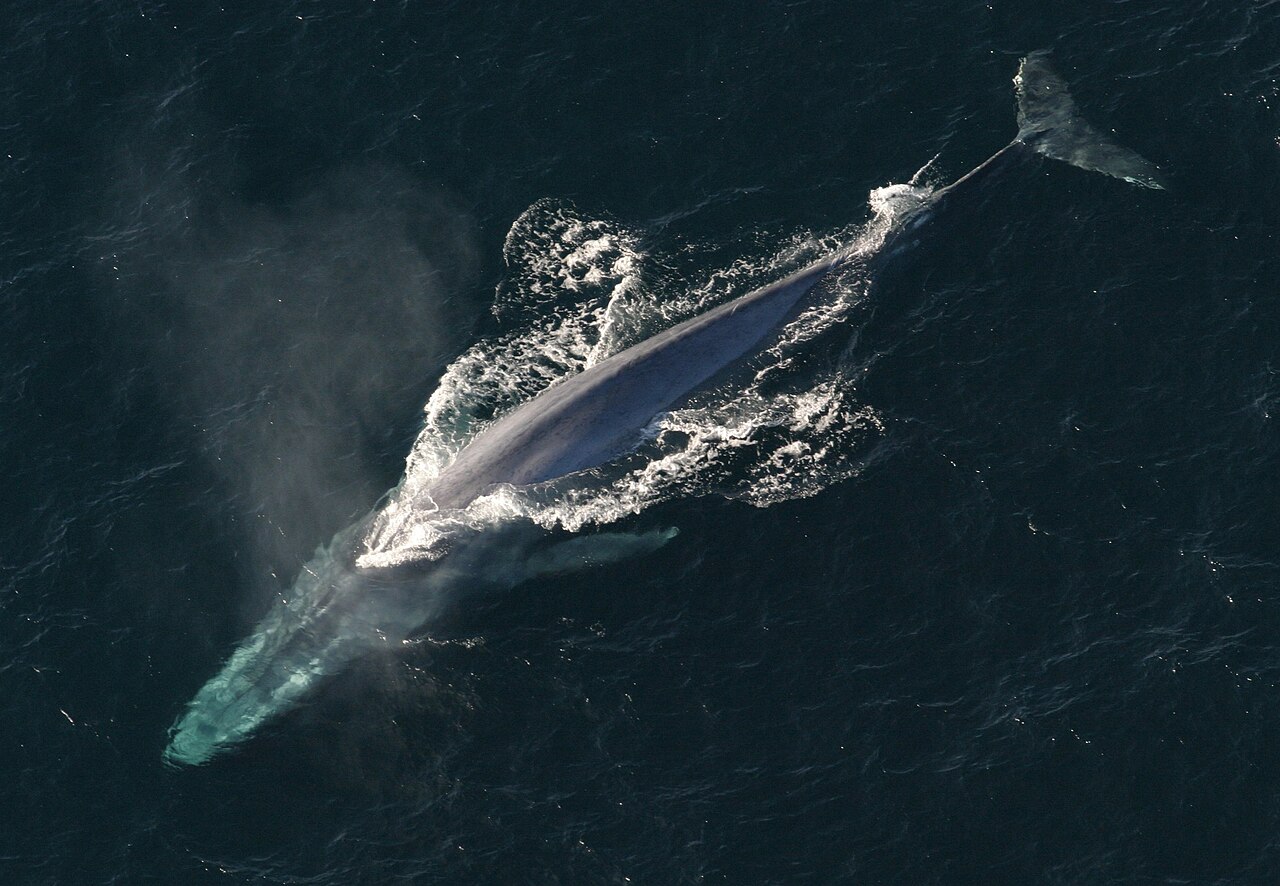
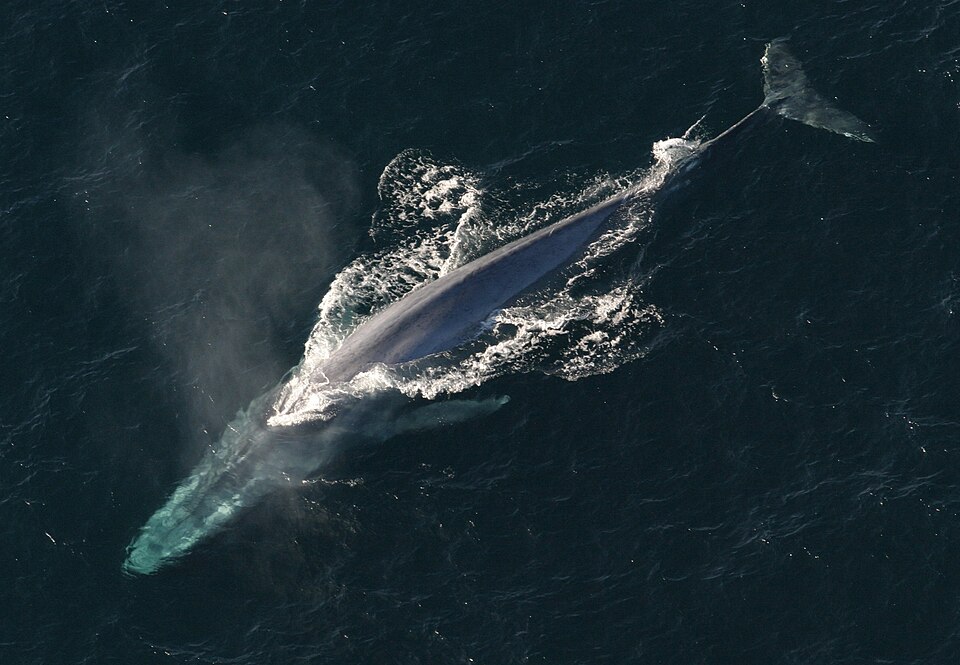
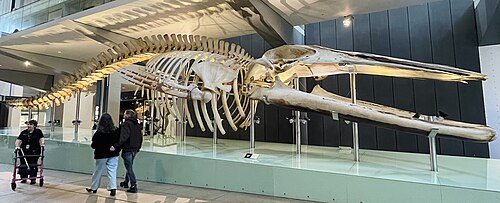
A rorqual with ventral pleats, a 3 m heart in the public myth (the real heart is smaller than the postcard), and baleen for krill. Size is a filter-feeding outcome.
Lunge-feeding on krill swarms -- the most expensive gulp, paid by the densest food. Fasting between polar summer and low-latitude winter.
Culture and meaning
Culture met the blue whale through film, law, heraldry, zoos and local story. Those portrayals move money and sometimes take; they are not a field census.
The culture chapter dates posters and statutes so a 1975 film or a 1961 logo cannot pretend to be a 2020s Red List.
Conservation and money
Endangered. Some populations (California) are healthier; Antarctic blue whales remain a fraction of pre-whaling biomass.
Tourism, conflict payments, quotas and captive loans are dated economic bands in the market chapter -- not live prices and not a best-species prize.
Life-science deep dive
Biology deep dive: Blue whale
Blue whale biology is a stack of structure, energy, sensing and hard limits. The four sections below are the same headings used across the atlas so types can be compared without a best-species frame.
Anatomy, senses, behaviour and limits — plus field language for this region.
Structure
A rorqual with ventral pleats, a 3 m heart in the public myth (the real heart is smaller than the postcard), and baleen for krill. Size is a filter-feeding outcome.
Load paths and tissues (not metals) are expanded in the anatomy chapter.
Energy and foraging
Lunge-feeding on krill swarms -- the most expensive gulp, paid by the densest food. Fasting between polar summer and low-latitude winter.
The how-it-works diagrams reduce that budget to a six-node loop.
Senses and control
Low-frequency sound that crosses basins. Eyes are secondary in that budget.
Control here means the animal steering itself -- not a machine dashboard.
Limits
A 1966 lock on a emptied south, and ships on the healthier coasts. EN is still the species card.
Resilience scores encode those limits relative to the other 23 types.
Some Northern Hemisphere stocks look better. Antarctic blues remain far below pre-whaling. EN is still the honest card.
What did 1966 change?
The IWC protected blue whales after the factory-ship years had already taken the Antarctic majority. Protection was a lock on an empty room in the south.
Is the 1982 moratorium a blue-whale law?
It is a commercial-whaling pause for many species. Blues were already protected; the moratorium is the political weather that kept factory ships from a sequel.
Why ecological role near the top?
A blue whale eats tonnes of krill and returns nutrients in faecal plumes; a fall feeds the benthos. In this atlas that pump outranks most terrestrial carnivores except elephants and wolves.
Did Roger Payne study blues?
Payne whale-song fame is mostly humpback. Blue-whale acoustics (low-frequency pulses) are a later Navy-and-NOAA file.
What is a pygmy blue whale?
A southern subspecies/form -- smaller, still EN, often confused in catch histories.
Are ship strikes the new harpoon?
In some coastal stocks (Sri Lanka, California) yes -- a recovery problem that 1966 did not imagine.
Why cultural impact below tiger and lion?
Save the Whales was huge; lions and tigers still win flags and millennia of art. Scores are relative across 24, not a concert-poster contest.
Role, not a winner
Conservation literacy. Not a live IUCN fetch.
Embed this ranking
Paste this code into your blog or site — the ranking stays up to date.
Copied!
Similar species
Closest neighbours on the six atlas axes — speed, intelligence, range, resilience, culture and ecological role.