Factory south
1904-66
Antarctic blues became oil and meal.
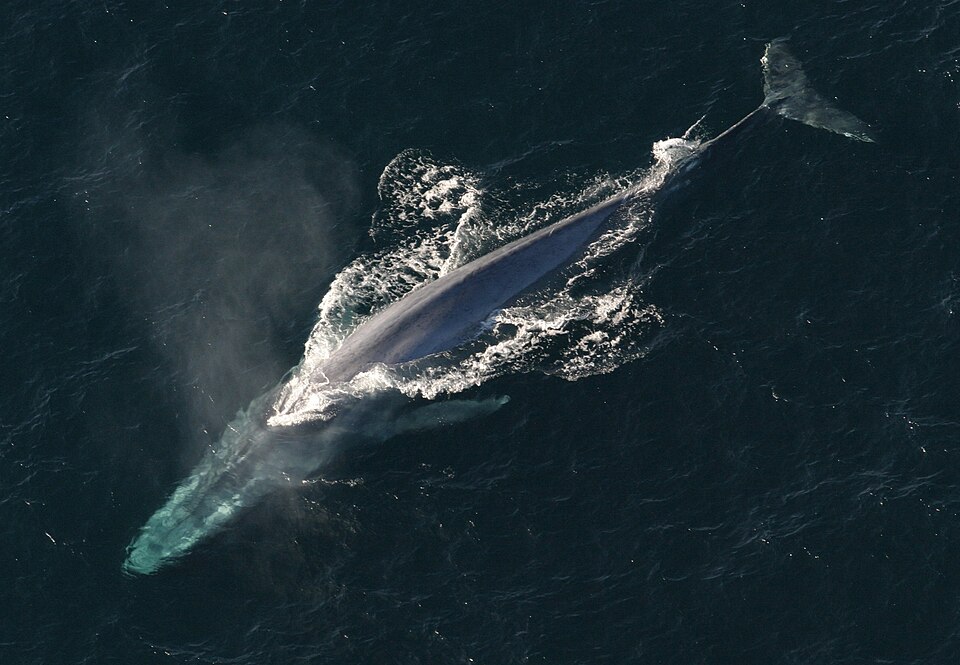
Blue whale · The largest animal whose 1966 IWC protection, 1982 moratorium and still-thin Antarctic recovery define a hunted giant.
Milestones in order. This is history, not a weekly activity grid.
Darker cells mean a higher score for this topic on that metric.
LessMore
Last reviewed Sources & creditsMedia creditsMethodology
Some Northern Hemisphere stocks look better. Antarctic blues remain far below pre-whaling. EN is still the honest card.
The IWC protected blue whales after the factory-ship years had already taken the Antarctic majority. Protection was a lock on an empty room in the south.
It is a commercial-whaling pause for many species. Blues were already protected; the moratorium is the political weather that kept factory ships from a sequel.
A blue whale eats tonnes of krill and returns nutrients in faecal plumes; a fall feeds the benthos. In this atlas that pump outranks most terrestrial carnivores except elephants and wolves.
Payne whale-song fame is mostly humpback. Blue-whale acoustics (low-frequency pulses) are a later Navy-and-NOAA file.
A southern subspecies/form -- smaller, still EN, often confused in catch histories.
IUCN: Endangered
The blue whale did not enter English as a finished emblem. Hunts, films, listings and field stations rewrote the animal on a dated clock.
This chapter keeps ten timeline points, five eras and three milestones so a later translation can hold the same years.
Steam and then factory ships collapsed southern blues.
A late lock after the crash.
NGO decade that made a giant a moral.
Commercial pause effective 1986.
California blues as a brighter stock in a dark species.
Roman, McCarthy and others framed faeces as an ecosystem service.
Antarctic sightings still a remnant math.
A busy lane versus a recovering coastal stock.
Low-frequency pulses as a census when eyes fail.
CCAMLR and whale forage in the same Southern Ocean sentence as penguins.
Antarctic blues became oil and meal.
A species lock, then a wider moratorium.
Save the Whales as a civic style.
Faeces and falls entered ecology papers.
Strikes and forage competition as the new harpoons.
Protection after the Antarctic emptying.
The political weather that kept a sequel from starting.
A giant as a nutrient instrument, not only a victim.
Reading blue whale history beside the resilience score keeps a recovered stock from standing in for a threatened cousin.
Asia largest cat — subspecies maps, 1973 Project Tiger, and roughly 4,000 remaining wild animals still frame a century of recovery arithmetic.
Overall 62 🦁A social pantherine whose prides, Gir relic and 2015 Cecil killing still structure African conservation politics.
Overall 66 🐘The atlas type is the bush elephant -- an ecosystem engineer whose ivory ban (1989) and split from forest elephants still structure African conservation.
Overall 61 🐺A Holarctic pack hunter whose 1995 Yellowstone return and older Leopold ethics still structure predator politics.
Overall 78 🐼A bamboo specialist whose WWF logo, Wolong quake and 2016 IUCN downlist from EN to VU made a recovery into a brand.
Overall 41 🐻A marine bear whose seal-and-ice budget made Churchill, Knut and climate models into one public animal.
Overall 56 🦍The atlas type is the western gorilla -- a knuckle-walking ape whose Fossey-era mountain cousins and Koko lab fame split one public name.
Overall 45