18 min read
If you only read one thing
Anemone-dwelling damselfish whose 2003 film fame became a capture-and-reef case study.
Key takeaways
Clownfish is one of 24 types in this animals atlas. The pages treat it as a full system -- history, anatomy, operating principles, culture, icons, future pressure and market shape -- not a ranking of a best species. Scores compare the clownfish with the other 23 types on speed, intelligence, range, resilience, cultural impact and ecological role. They are relative editorial marks. Resilience high means more secure; low means threatened. Ocellaris is not the most threatened reef fish; binding risks are anemone bleaching, aquarium take and the Nemo effect. Seven chapters follow: origins, systems, how the animal works, cultural life, named icons, what conservation can still change, and how tourism, conflict, fisheries and parks move money.
Jump to section
Previous
Atlantic bluefin tuna
Next
Seahorse
Local systems
CITES desks Permit and appendix language for trade in listed species.
Park systems National park / wildlife refuge rules for readers in this language.
IUCN Red List Status labels used as browsing aids, not a field ID. Local examples Bald eagle as a North America culture icon — not every page’s hero. IUCN labels as browsing aids beside binomial names. Local FAQ Is this a field guide? No — an educational atlas. Use local field keys for ID.
Do Red List grades mean I can keep the animal? No. Check your country’s wildlife and CITES rules.
Local terms
Binomial Latin scientific name kept across languages.
Range Where the species is usually found.
Apex Top predator role in a food web — relative here. Local systems
CITES desks Permit and appendix language for trade in listed species.
Park systems National park / wildlife refuge rules for readers in this language.
IUCN Red List Status labels used as browsing aids, not a field ID. Local examples Bald eagle as a North America culture icon — not every page’s hero. IUCN labels as browsing aids beside binomial names. Local FAQ Is this a field guide? No — an educational atlas. Use local field keys for ID.
Do Red List grades mean I can keep the animal? No. Check your country’s wildlife and CITES rules.
Local terms
IUCN
Binomial
Apex
Range Sources IUCN Red List (dated assessments) CITES Appendices National camera-trap programmes Wikimedia Commons lead images (CC/PD) Local institutions
IUCN Red List Global threat categories — verify the latest assessment.
CITES desks Trade permits and appendix listings differ by country.
National parks / wildlife agencies Access rules, seasons, and species protections are local. Myths vs facts Highest speed meter = “best” animal → Meters are dimensional, not trophies. Ecological role and resilience often matter more. Atlas “protected” label replaces local law → Always verify CITES appendices and national statutes before acting. Culture sections are just trivia → Portrayals drive funding, persecution, and tourism — they are part of the conservation story. Deeper FAQ Is this a field guide? No. It is an encyclopedia-style atlas of ecology, culture, and conservation for browsing and comparison.
Do scores match IUCN Red List ranks? No. Scores are editorial comparison meters inside Tool-Lifes; always verify threat status on IUCN.
Can I use pages for school reports? Yes as a starting overview — cite primary sources (IUCN, agencies, papers) for claims that matter.
Why mix culture with anatomy? Human stories shape how species are hunted, protected, and mythologized — the atlas keeps those threads visible.
Checklist
1 Name the question (ID, trip, report, compare) before opening sections.
2 Cross-read anatomy with culture and market.
3 Verify protected status on primary sources.
4 Do not treat meters as absolute rankings. Important caveat This is not a field identification key and not veterinary advice. Protected-status claims need local law checks.
Editor depth Meters (speed, intelligence, range…) are editorial browsing aids scaled for comparison inside this atlas — not scientific league tables. On VS pages, weigh ecological role and resilience beside cultural impact — one high meter rarely decides the story.
Deeper sources IUCN Red List species assessments CITES Appendices and national management authorities Commons-hosted imagery credits on our media page Important caveat This is not a field identification key and not veterinary advice. Protected-status claims need local law checks.
Print this page
Key scores Speed 27 Intelligence 36 Range 34 Resilience 54 Cultural impact 52 Ecological role 43 Eagle Owl Penguin Hummingbird Pin anatomy against behaviour Pick one anatomy system and one operating fact already on this species page. A reading pair — not a winner board.
Browsing aid inside this atlas. Field biology and local law decide any real encounter. No live feed.
Anatomy fact on this page Support and integument Feeding apparatus Respiration and circulation Senses and neural control Reproduction and ontogeny Thermoregulation and salt/water
Behaviour fact on this page Energy in, work out Information before motion Replacement rate Place is part of the phenotype Human systems are now habitat
Stored on this device. Change one pin to reopen the same pair.
Restore last pair Forget pair
Field terms
IUCN Global Red List category — dated, method-dependent.
Binomial Genus + species Latin name shared across languages.
Apex Top predator role in a food web — context matters.
Range Geographic extent, not a passport stamp. How to use this atlas Pick a family — Birds, fish or wildlife — start where your question lives.Open a species hub — Scores and local lens sit above the seven chapters.Jump a chapter — Anatomy, culture, market and future each stand alone.Compare next — Use related cards or the compare pillar before you leave.Practical tools Compare species
Next tool After this species hub, open Compare or Conservation.
Use this page Pick a family — Birds, fish or wildlife — start where your question lives. Open a species hub — Scores and local lens sit above the seven chapters. Jump a chapter — Anatomy, culture, market and future each stand alone.
Share this page
Share…
𝕏
f
Copy link
Link copied
Quick facts Amphiprion ocellaris Atlas type
Sea anemone Home
Protandrous Sex
Finding Nemo 2003 Film
Indo-Pacific Range
fish Family
Clownfish is one of 24 types in this animals atlas. The pages treat it as a full system -- history, anatomy, operating principles, culture, icons, future pressure and market shape -- not a ranking of a best species.
Scores compare the clownfish with the other 23 types on speed, intelligence, range, resilience, cultural impact and ecological role. They are relative editorial marks. Resilience high means more secure; low means threatened. Ocellaris is not the most threatened reef fish; binding risks are anemone bleaching, aquarium take and the Nemo effect.
Seven chapters follow: origins, systems, how the animal works, cultural life, named icons, what conservation can still change, and how tourism, conflict, fisheries and parks move money.
Deep introduction
Deep dive: Clownfish
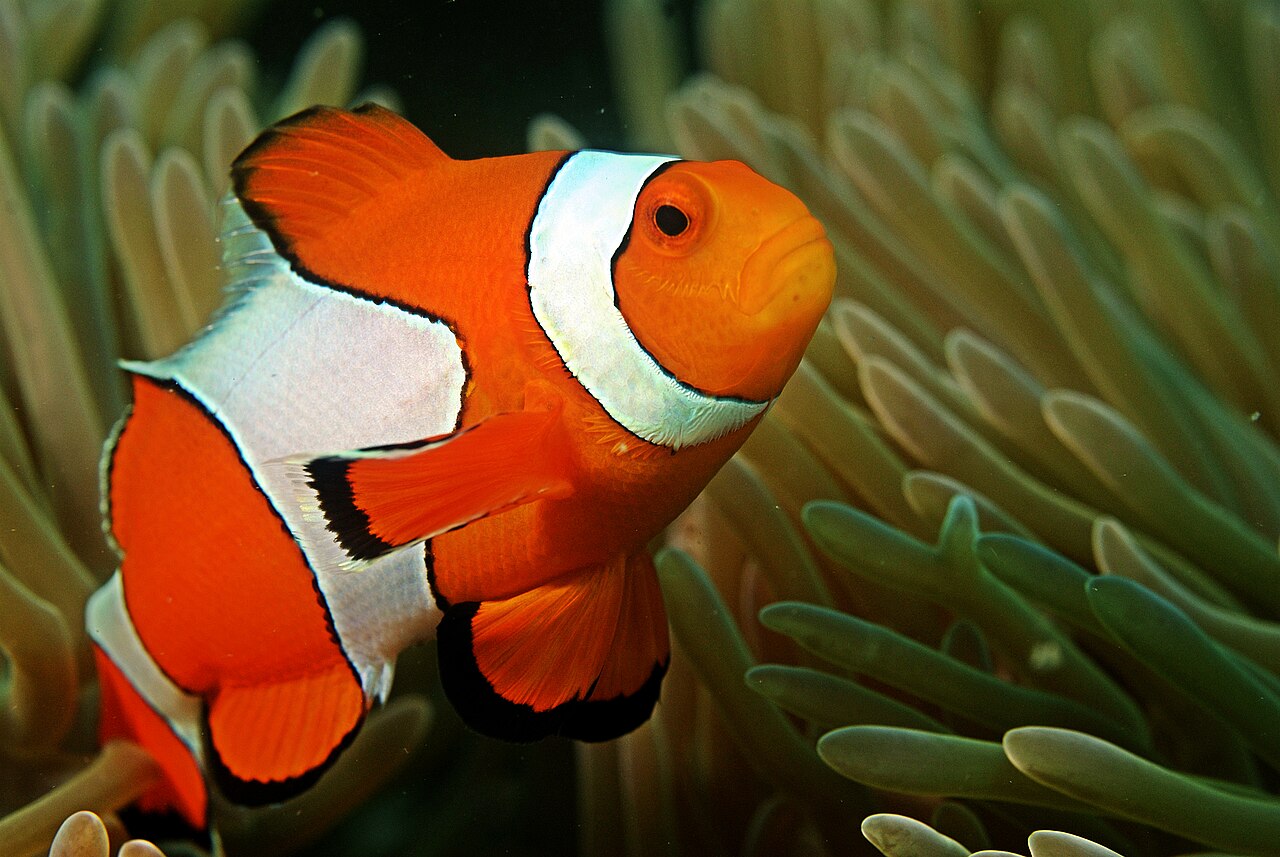
Clownfish is not a single postcard animal. It is a set of populations, subspecies and human rules inside the fish family of this atlas.
Diversity, bodies, culture and ranges — plus a lens tuned to this language region.
Diversity inside the type Field guides collapse many lineages into the word clownfish. Subspecies, flyways and captive lines do not share one fate.
This atlas picks a Wikipedia title as the hero image and then keeps the rest of the grade in view so a recovered stock cannot launder a Critically Endangered cousin.
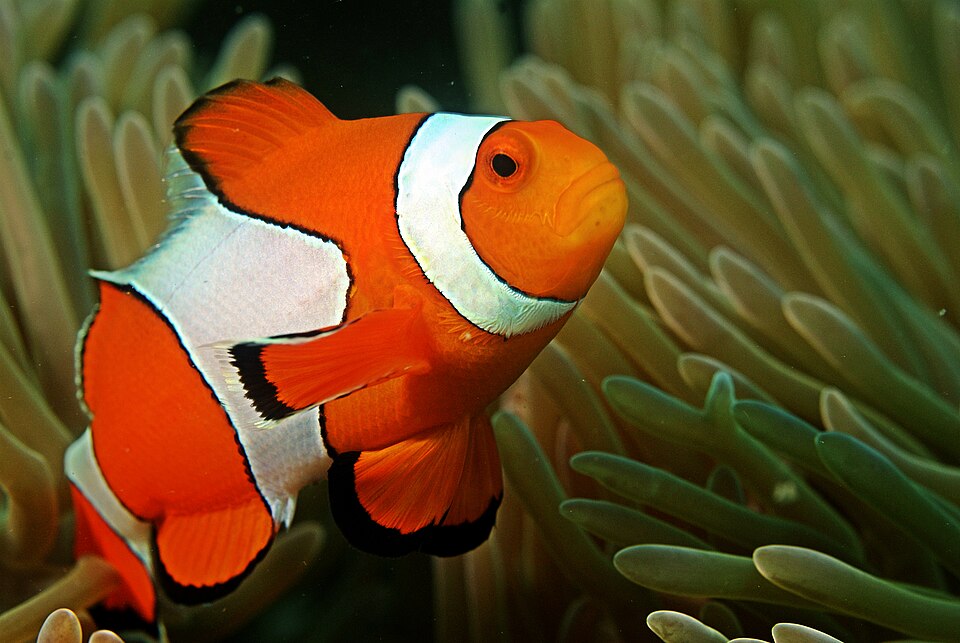
Life in the landscape A small pomacentrid with a mucus coat and a body plan for hovering in tentacles. The swim bladder and pectorals are built for a tiny territory, not a gyre.
Algae, zooplankton and anemone scraps inside a few cubic metres. The expensive trick is immunity, not speed.
Culture and meaning Culture met the clownfish through film, law, heraldry, zoos and local story. Those portrayals move money and sometimes take; they are not a field census.
The culture chapter dates posters and statutes so a 1975 film or a 1961 logo cannot pretend to be a 2020s Red List.
Conservation and money Ocellaris is not the most threatened reef fish; binding risks are anemone bleaching, aquarium take and the Nemo effect.
Tourism, conflict payments, quotas and captive loans are dated economic bands in the market chapter -- not live prices and not a best-species prize.
North America, UK and English-speaking conservation
US FWS, Parks Canada, NOAA and state agencies write the North American file -- ESA listings, recoveries and the occasional delisting fight.
In the UK and Ireland, RSPB, NatureScot, JNCC and university field stations translate the same type into a smaller island politics of reintroduction and farm advice.
Australia, New Zealand and southern African English programmes (SANCCOB, SANParks, DOC) add a third dialect. This lens stays in those languages on purpose; it is not a substitute for range-state science.
Life-science deep dive
Biology deep dive: Clownfish
Clownfish biology is a stack of structure, energy, sensing and hard limits. The four sections below are the same headings used across the atlas so types can be compared without a best-species frame.
Anatomy, senses, behaviour and limits — plus field language for this region.
Structure A small pomacentrid with a mucus coat and a body plan for hovering in tentacles. The swim bladder and pectorals are built for a tiny territory, not a gyre.
Load paths and tissues (not metals) are expanded in the anatomy chapter.
Energy and foraging Algae, zooplankton and anemone scraps inside a few cubic metres. The expensive trick is immunity, not speed.
The how-it-works diagrams reduce that budget to a six-node loop.
Senses and control Chemical cues from the host and social rank by size. Vision is tuned to a bright, shallow reef, not to open water.
Control here means the animal steering itself -- not a machine dashboard.
Limits No anemone, no species behaviour. Heat and trade both remove the house or the household.
Resilience scores encode those limits relative to the other 23 types.
Field sites and labs in the English-speaking world
North American sites -- Farallones, Yellowstone, Amboseli-linked US labs, NOAA moorings, Churchill -- produce a large share of the English papers cited in this type.
UK and Irish stations (Tour du Valat is Francophone but Camargue rings are read in British journals; more typical are Highland sea-eagle desks, Oxford and St Andrews seabird groups) still set exam-board versions of the animal.
Southern English labs (BAS, CSIRO, DOC, SANCCOB, Cape Town shark desks) hold the ice, island and Benguela files that northern campuses only visit.
Open anatomy & senses →
Open life & behaviour →
Pin anatomy against behaviour Pick one anatomy system and one operating fact already on this species page. A reading pair — not a winner board.
Browsing aid inside this atlas. Field biology and local law decide any real encounter. No live feed.
Anatomy fact on this page Support and integument Feeding apparatus Respiration and circulation Senses and neural control Reproduction and ontogeny Thermoregulation and salt/water
Behaviour fact on this page Energy in, work out Information before motion Replacement rate Place is part of the phenotype Human systems are now habitat
Stored on this device. Change one pin to reopen the same pair.
Restore last pair Forget pair
Seven chapters on this species
01
Origins & evolution Dated timeline, eras and milestones for the clownfish -- recoveries, crashes and laws, not a best-species story.
Read →
02
Anatomy & senses Structure, tissues, meters and hotspots of the clownfish -- biology, not a machine bill of materials.
Read →
03
Life & behaviour Principles, life-cycle or hunt steps, flow diagrams and hard limits for the clownfish.
Read →
04
Culture & meaning Status, portrayals, rituals and sayings around the clownfish -- dated, not marketing.
Read →
05
Icons & legends Eight dated individuals, researchers, films or programmes that define how English speakers picture the clownfish.
Read →
06
Conservation pressure Risk band, safeguards and what conservation can still change for the clownfish.
Read →
07
Range & people Dated cost bands, regions, stats and institutions around the clownfish -- tourism, conflict, fisheries, parks.
Read →
Everything About Animals
Which species fits you?
Twelve questions reorder all twenty-four species around your priorities.
Take the quiz →
Atlas rankings
Head-to-head
Same family, different scores — pick a duel.
Frequently asked questions Is Nemo an ocellaris or a percula? Pixar Nemo is styled on Amphiprion ocellaris (this atlas type). Shops still mix ocellaris and percula under one common name.
How does sex change work? A group is a female, a breeding male and non-breeders. If the female dies, the male changes sex. The film missing-mother plot skipped that rule.
Did Finding Nemo increase wild take? Several trade analyses reported a demand spike after 2003. Captive-bred ocellaris later absorbed much of the legal market in the US and EU.
Why do anemones not sting their fish? The fish mucus lacks the cues that trigger nematocysts, and acclimation behaviour matters. It is not a cartoon handshake.
What happens when a host bleaches? Fish may linger on a dying anemone and then vanish from that site. Reef heatwaves are a housing crisis for the genus.
Are clownfish good parents in the film sense? Males tend the nest of demersal eggs. The biology is paternal care, not a transoceanic search.
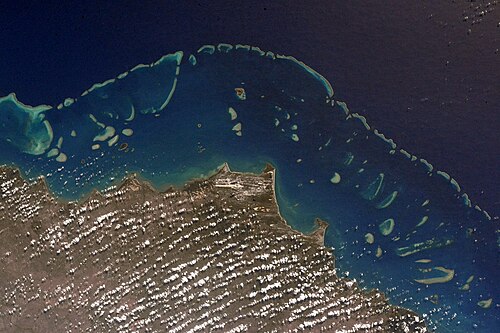
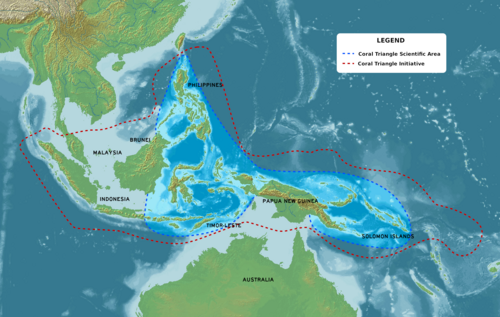
Where is the wild centre of the type? Eastern Indian and western Pacific reefs -- Andaman to the Philippines and Australia north -- not a Sydney Harbour suburban anemone.
Is aquaculture the conservation ending? Captive-bred ocellaris cut some wild take. It does not rebuild bleached hosts or stop cyanide fishing of other reef species sold beside them.
Embed this ranking
Paste this code into your blog or site — the ranking stays up to date.
Copy code
Copied!
Similar species
Closest neighbours on the six atlas axes — speed, intelligence, range, resilience, culture and ecological role.
Previous
🎏 Koi
Next
🐡 Pufferfish