Pufferfish is one of 24 types in this animals atlas. The pages treat it as a full system -- history, anatomy, operating principles, culture, icons, future pressure and market shape -- not a ranking of a best species.
Scores compare the pufferfish with the other 23 types on speed, intelligence, range, resilience, cultural impact and ecological role. They are relative editorial marks. Resilience high means more secure; low means threatened. The family is mixed; fugu fisheries are regulated more as toxin law than as a single Red List story.
Seven chapters follow: origins, systems, how the animal works, cultural life, named icons, what conservation can still change, and how tourism, conflict, fisheries and parks move money.
Deep introduction
Deep dive: Pufferfish
Pufferfish is not a single postcard animal. It is a set of populations, subspecies and human rules inside the fish family of this atlas.
Diversity, bodies, culture and ranges — plus a lens tuned to this language region.
Diversity inside the type
Field guides collapse many lineages into the word pufferfish. Subspecies, flyways and captive lines do not share one fate.
This atlas picks a Wikipedia title as the hero image and then keeps the rest of the grade in view so a recovered stock cannot launder a Critically Endangered cousin.
Life in the landscape
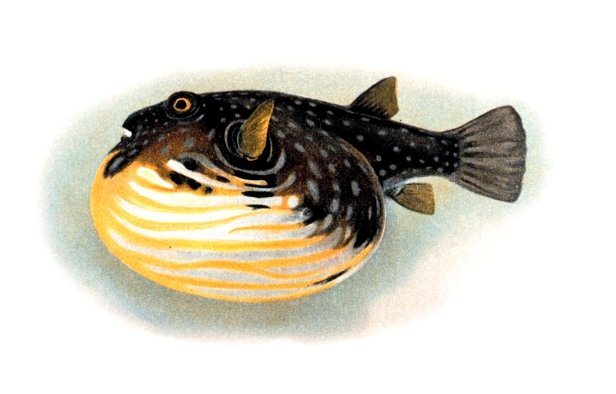
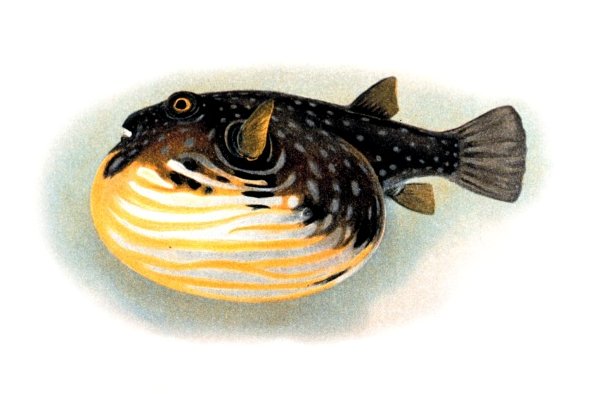
A rigid boxy body, four fused tooth plates and a stomach diverticulum for inflation. Skin may carry spines; liver and gonad may carry TTX.
Crushing molluscs, crustaceans and reef invertebrates. Inflation is a rare expensive defence, not a commute gait.
Culture and meaning
Culture met the pufferfish through film, law, heraldry, zoos and local story. Those portrayals move money and sometimes take; they are not a field census.
The culture chapter dates posters and statutes so a 1975 film or a 1961 logo cannot pretend to be a 2020s Red List.
Conservation and money
The family is mixed; fugu fisheries are regulated more as toxin law than as a single Red List story.
Tourism, conflict payments, quotas and captive loans are dated economic bands in the market chapter -- not live prices and not a best-species prize.
Life-science deep dive
Biology deep dive: Pufferfish
Pufferfish biology is a stack of structure, energy, sensing and hard limits. The four sections below are the same headings used across the atlas so types can be compared without a best-species frame.
Anatomy, senses, behaviour and limits — plus field language for this region.
Structure
A rigid boxy body, four fused tooth plates and a stomach diverticulum for inflation. Skin may carry spines; liver and gonad may carry TTX.
Load paths and tissues (not metals) are expanded in the anatomy chapter.
Energy and foraging
Crushing molluscs, crustaceans and reef invertebrates. Inflation is a rare expensive defence, not a commute gait.
The how-it-works diagrams reduce that budget to a six-node loop.
Senses and control
Good close vision for a beak strike. Toxin is not a sense -- it is a stored consequence of diet and microbes.
Control here means the animal steering itself -- not a machine dashboard.
Limits
A licence and a sodium channel. Over-harvest of Takifugu and reef heat are quieter than the poison story.
Resilience scores encode those limits relative to the other 23 types.
Four other atlas types, six terms, three threads and three local notes -- a map out of the pufferfish page without leaving the 24-id taxonomy.
See-also species, key terms, adjacent threads and regional notes for this language.
See also
🎏KoiAnother Japanese-managed fish whose human rules (show vs licence) define the public animal.
🐠ClownfishReef neighbour in the aquarium trade with a friendlier toxin story.
🐴SeahorseSlow shallow-water fish under a different trade (dried vs dinner).
⚡Electric eelAnother fish famous for a weaponised physiology.
Key terms
Tetrodotoxin
TTX -- a sodium-channel blocker concentrated in liver and ovary, often via symbiotic bacteria.
Fugu
Japanese puffer cuisine; licensed chefs, not a home experiment.
Takifugu rubripes
Tiger puffer -- the 2002 compact-genome model.
Inflation
Water (or air) pumped into a diverticulum -- a sudden sphere that jams a mouth.
Beak
Four fused tooth plates that crush molluscs and barnacles.
Puffer licence
Japan food-safety credential after Meiji- and postwar poisoning scandals.
Habitat and movement
Where the pufferfish breeds and feeds is the first constraint. Single lakes, islands and forests appear again in the history timeline.
Range scores in this atlas mark how widely that movement runs -- albatross and blue whale high, koi and panda low -- not a quality ranking.
Research and law
Named projects (Project Tiger, ACAP, ICCAT, Amboseli) are the conservation bureaucracy of the type.
Listings and downlists are dated events in the timeline, not eternal essences.
Culture and price
Film, auction and logo years are filed under culture and market so they cannot masquerade as demography.
The icons chapter keeps eight real Wikipedia titles so a later language pack can attach the same faces.
Visual field notes
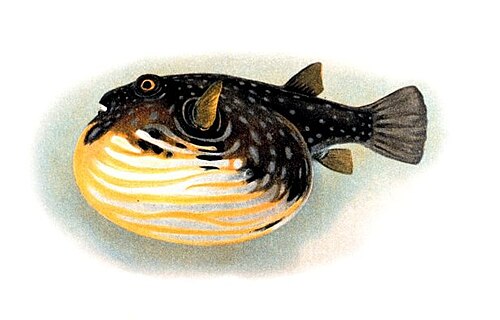
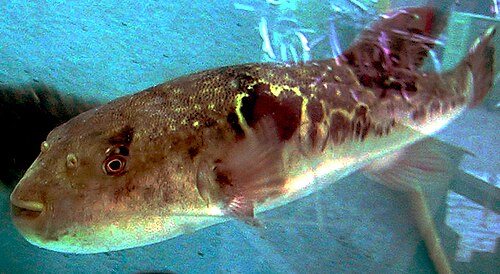
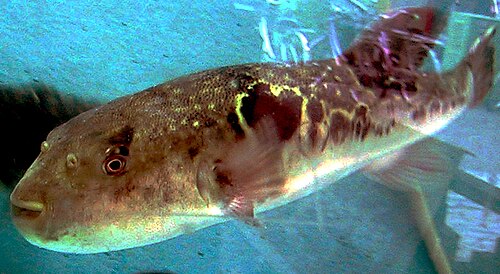
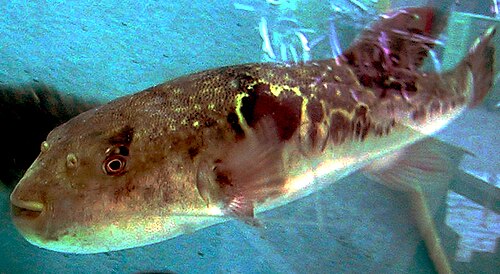
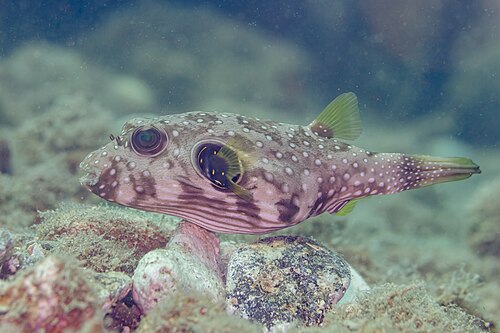
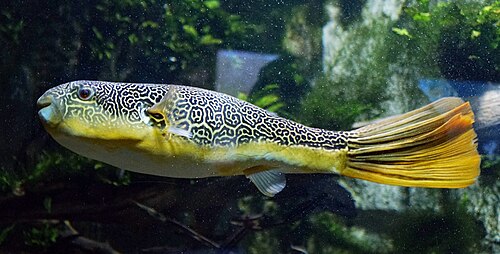
Licensed photographs of this species — heroes, eras and icons on one wall.
National Oceanic and Atmospheric AdministrationNational Oceanic and Atmospheric AdministrationNational Oceanic and Atmospheric AdministrationUnknown authorUnknown authorUnknown authorDiego DelsoTiia MontoNo machine-readable author provided. Ayacop assumed (based on copyright claims).United States Department of the Army
The profile
Speed21
Intelligence33
Range49
Resilience58
Cultural impact43
Ecological role40
Pin anatomy against behaviour
Pick one anatomy system and one operating fact already on this species page. A reading pair — not a winner board.
Browsing aid inside this atlas. Field biology and local law decide any real encounter. No live feed.
No. Toxin load varies by species, organ and season. Licensed fugu service still treats liver as forbidden in many prefectures after historic poisonings.
Why was Takifugu rubripes sequenced so early?
A compact genome (about 400 Mb) made it a 2002 model in Nature -- a puffer as a human-genome shortcut, not a menu story.
How does inflation work?
The fish gulps water into a specialised stomach diverticulum. Spines (in some species) erect. It is a mechanical jam, not a bluff only.
Do puffers make their own TTX?
Much evidence points to bacterial and food-chain accumulation. Captive-raised puffers can be far less toxic -- a husbandry fact that complicates folklore.
What is the fugu chef licence?
Japan requires training and exams after 20th-century restaurant deaths. The licence is a public-health instrument, not a gourmet badge.
Are aquarium puffers the same as fugu?
Hobbyists keep freshwater and brackish tetraodontids (e.g. figure-eight, Mbu). They share the beak and inflate; they are not all Takifugu.
Why do puffers look beak-faced?
Four fused tooth plates continuously grow and must be worn on hard prey -- a dental bill, not a cartoon.
Is the family conservation-secure?
Many coastal species are Least Concern; some endemics and heavily fished Takifugu stocks are not. Resilience here is mid-pack, not a free pass.
Role, not a winner
Conservation literacy. Not a live IUCN fetch.
Embed this ranking
Paste this code into your blog or site — the ranking stays up to date.
Copied!
Similar species
Closest neighbours on the six atlas axes — speed, intelligence, range, resilience, culture and ecological role.