🧠Origins & Evolution

Psychiatrist · Diagnoses and treats mental illness through medication and therapy, one of medicine's only specialties with legal authority to detain a patient in crisis.

Long before mental illness could be reliably treated, it was confined: chained wards, custodial asylums and keepers whose main tool was restraint rather than remedy. For most of history, treating the mind meant managing a household or an institution, not practicing medicine.

This page follows the psychiatrist from an early hospital ward for the mentally ill in medieval Cairo through Pinel's reforms, Kraepelin's classification, Freud's psychoanalysis, chlorpromazine's psychopharmacology revolution and the DSM, to today's ketamine and psilocybin research — plus three roles the profession left behind along the way.

Where it began

872 CECairo, Egypt

The Ahmad ibn Tulun Hospital, built in Cairo in 872, is among the earliest documented hospitals to include a dedicated section for people with mental illness, treated alongside other patients rather than confined separately as criminals or outcasts. Bimaristans across the medieval Islamic world — in Baghdad, Damascus and Cairo — offered patients music, occupation and rest as treatment, a model of care centuries ahead of the chained wards that would later define European asylums.

Timeline

1247Bethlem Hospital is founded in London

The Priory of St Mary of Bethlehem opens as a small religious house; within two centuries it is recorded caring for the mentally ill, and by the 17th century its nickname 'Bedlam' has become a byword for chaos and confinement across the English-speaking world.

1656Paris confines the poor and insane together

A royal edict from Louis XIV creates the Hôpital général de Paris, merging several institutions including the Bicêtre and Salpêtrière hospitals into one administration for confining beggars, the poor, the criminal and the insane — the 'Great Confinement' that historian Michel Foucault later made central to his history of madness.

1793Chains come off at the Bicêtre

Physician Philippe Pinel, building on years of quiet reform already begun by chief attendant Jean-Baptiste Pussin, removes iron restraints from patients at the Bicêtre Hospital in Paris, publicly arguing the insane were sick rather than criminal or possessed — the symbolic start of 'moral treatment.'

1808The word 'psychiatry' is coined

German physician Johann Christian Reil introduces the term 'Psychiatrie' in a journal article published in Halle, proposing that treating the mind required its own dedicated medical specialty distinct from general medicine and surgery.

1899Kraepelin splits psychosis into two diseases

The sixth edition of Emil Kraepelin's textbook, based on years of tracking patient outcomes in Heidelberg, distinguishes dementia praecox — which worsened over time — from manic-depressive insanity, which came in recoverable episodes; the split remains recognizable in diagnosis today as schizophrenia and bipolar disorder.

1900Freud publishes The Interpretation of Dreams

Sigmund Freud's book, dated 1900 on its title page though released in Vienna in late 1899, argues dreams reveal unconscious wishes and lays the theoretical groundwork for psychoanalysis, which would dominate much psychiatric theory in Europe and North America for the next half-century.

1935The first leucotomy is performed in Lisbon

Neurologist António Egas Moniz designs, and surgeon Almeida Lima carries out, the first prefrontal leucotomy — cutting connections in the frontal lobe to treat severe mental illness. The procedure, later popularized in a cruder outpatient form as the lobotomy, wins Moniz a Nobel Prize in 1949 and, decades later, widespread condemnation.

1952Chlorpromazine calms psychosis in Paris

Psychiatrists Jean Delay and Pierre Deniker trial chlorpromazine, a compound developed for surgical anesthesia, on psychiatric patients at Sainte-Anne Hospital in Paris and find it reliably calms psychotic symptoms without simply sedating patients into unconsciousness — the discovery that launches modern psychopharmacology and, within two decades, empties much of Europe and North America's asylum wards.

1980DSM-III remakes psychiatric diagnosis

Chaired by Robert Spitzer, the American Psychiatric Association's third Diagnostic and Statistical Manual drops the psychoanalytic language of earlier editions for explicit, checklist-style symptom criteria — a deliberately atheoretical approach meant to make two psychiatrists in different countries reach the same diagnosis from the same patient.

2019The FDA approves esketamine for depression

Esketamine nasal spray becomes the first antidepressant approved by the US Food and Drug Administration with a genuinely new mechanism of action in decades, targeting NMDA glutamate receptors rather than serotonin — part of a wider return of ketamine- and psilocybin-based treatments to serious psychiatric research after a half-century of prohibition.

The eras

Historical engraving of Bethlem Royal Hospital, the London asylum known as Bedlam
The original uploader was Mtiedemann at English Wikipedia . · CC BY-SA 3.0 · Wikimedia Commons
1247–1792

The age of confinement

For over five centuries, most societies handled serious mental illness by confinement rather than treatment: family cellars, church-run almshouses, and, increasingly, dedicated institutions like Bethlem in London or the Hôpital général in Paris, which by 1656 held the poor, the criminal and the insane under one roof. Physical restraint — chains, straitjackets, cages — was standard practice, justified by the belief that the insane felt no cold, pain or shame.
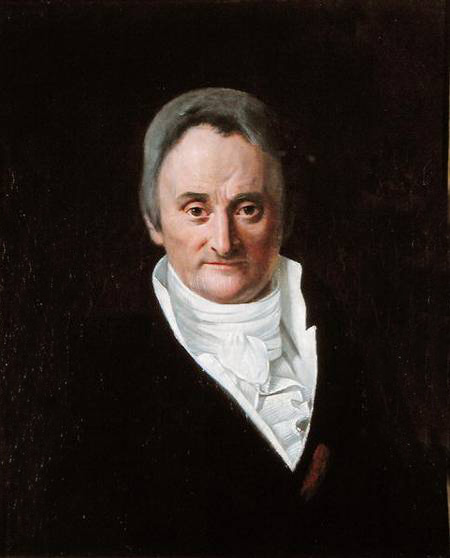
Portrait of physician Philippe Pinel
Anne-Louise Moreau, dite Anna Mérimée (1775-1852), mother of Prosper Mérimée · Public domain · Wikimedia Commons
1793–1899

Moral treatment and the birth of the asylum reform movement

Pinel's unchaining of patients at the Bicêtre, and a parallel reform led by Quaker tea merchant William Tuke at England's York Retreat from 1796, argued that routine, useful work and humane surroundings healed more effectively than restraint. The idea spread internationally — reformer Dorothea Dix alone persuaded American state legislatures to fund more than thirty new asylums between the 1840s and 1880s — but many of the resulting institutions grew overcrowded and custodial again within a generation.

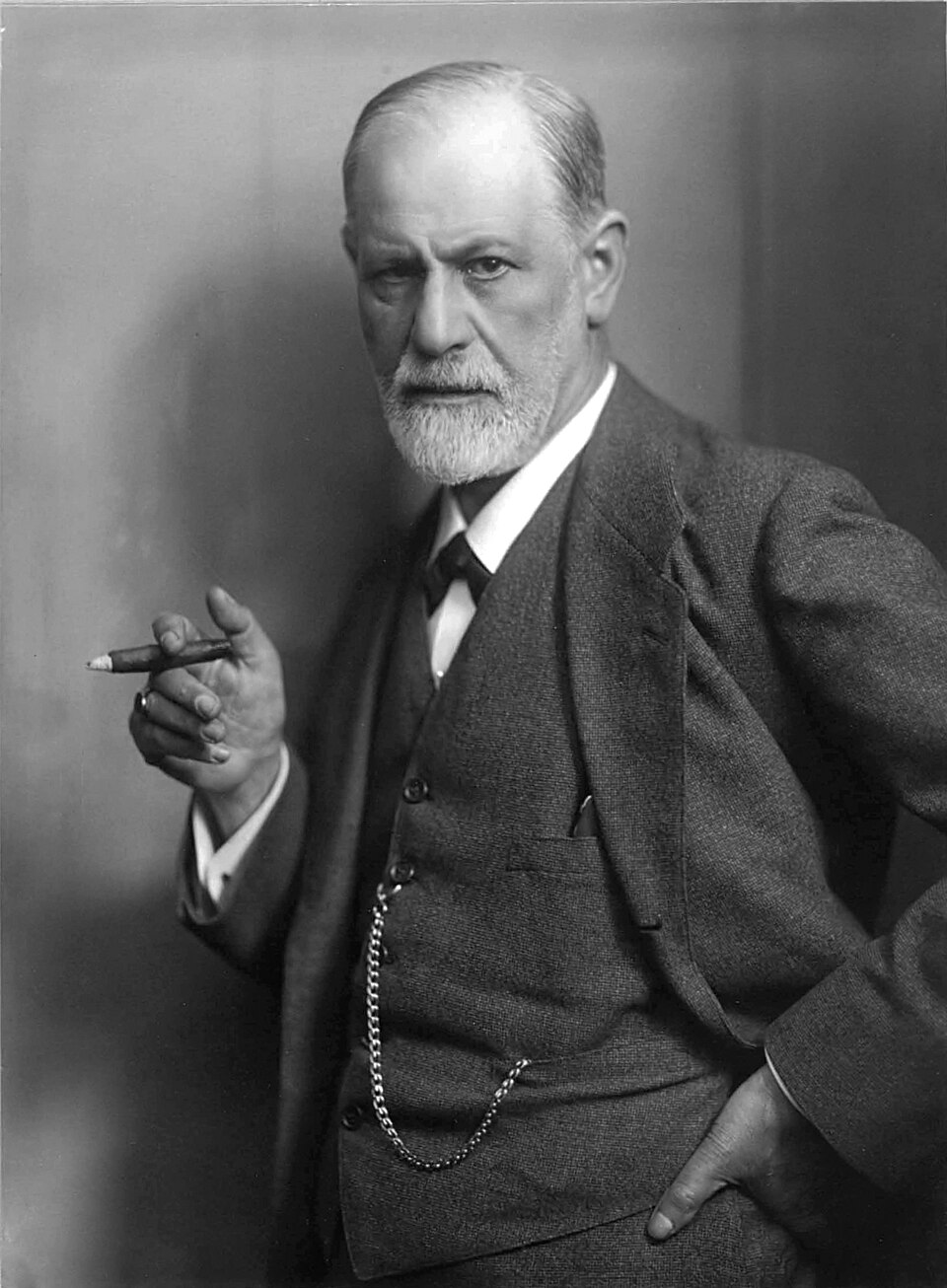
Portrait photograph of Sigmund Freud
Max Halberstadt · Public domain · Wikimedia Commons
1900–1951

Freud, Kraepelin, and the era of desperate treatments

Two rival models split the field: Freud's psychoanalysis treated symptoms as clues to unconscious conflict, while Kraepelin's biological classification treated them as markers of underlying disease. With no effective drug for severe psychosis, psychiatrists also experimented with insulin-induced comas, convulsive therapy, and, from 1935, psychosurgery — treatments aimed as much at managing overcrowded wards as at curing patients.

Chemical structure diagram of chlorpromazine, the first antipsychotic drug
Vaccinationist · Public domain · Wikimedia Commons
1952–1979

Chlorpromazine and deinstitutionalization

Chlorpromazine and the antipsychotics that followed gave psychiatrists, for the first time, a drug that reliably controlled psychotic symptoms, making large-scale institutional care look both cruel and unnecessary. Combined with new civil-rights-era legal protections and community mental health legislation, from the US Community Mental Health Act of 1963 onward, asylum populations collapsed across the West — though community care was frequently underfunded, leaving many patients homeless or in jail instead of hospitalized.

Chemical structure diagram of psilocybin, a compound studied in psychiatric research
en:User:Cburnett · CC BY-SA 3.0 · Wikimedia Commons
1980–present

Criteria, chemistry, and the psychedelic revival

DSM-III's 1980 shift to symptom checklists, paired with a wave of newer antidepressants like fluoxetine (Prozac) from 1987, turned psychiatry into a largely biological, medication-centered field through the 1990s and 2000s. That has since been complicated by two developments: a growing research base showing psychotherapy works as well as or better than drugs for many conditions, and serious clinical trials of psilocybin, MDMA and ketamine-derived compounds for depression, PTSD and addiction, treatments once dismissed entirely after 1970s-era drug prohibition.

What this job replaced

Neighbouring trades that no longer exist — absorbed, automated or regulated away.

The alienist

c. 1800s–1920s

Before 'psychiatrist' became standard English usage, doctors who treated the insane were called alienists — from the French aliéné, meaning someone alienated from their own mind and society. The Association of Medical Superintendents of American Institutions for the Insane, founded in 1844, only renamed itself the American Psychiatric Association in 1921, roughly tracking when the older term fell out of use.

The asylum superintendent

c. 1810s–1960s

A single physician often ran an entire custodial institution housing hundreds or thousands of patients, controlling admissions, discharge, staffing and daily routine with near-total authority. Deinstitutionalization from the 1960s onward, driven by antipsychotic drugs and shrinking public asylum budgets, dissolved most of these institutions and, with them, the role of running one.

The lobotomist

1935–1970s

Following Egas Moniz's original leucotomy, American neurologist Walter Freeman developed and toured the country performing a crude 'transorbital' version — driving an ice-pick-like instrument through the eye socket in minutes, often in outpatient settings without a surgeon present. Antipsychotic drugs, lawsuits and mounting evidence of permanent harm ended the practice almost entirely by the 1970s.

Trades that vanished →

Psychiatry has spent two centuries alternating between two convictions — that mental illness is fundamentally biological, treatable with the right chemical, and that it is fundamentally relational, treatable with the right conversation. Almost every era covered on this page picked one side hard, then the next era corrected toward the other.

What has not changed is the basic difficulty: unlike most of medicine, a psychiatrist usually cannot see, image or biopsy the thing that is actually wrong, and has to reason instead from what a patient says, how they say it, and what changes when treatment is tried — a method still closer to Kraepelin's careful notebooks than to a lab result.

Keep exploring

More in Medicine & Life