💉The Greats

Nurse · Healthcare's largest profession: from Scutari's lamp to the ICU monitor, the person who is still at the bedside when everyone else has gone home.

Choosing eight names from history's largest caring occupation is harsher than for most professions, because nursing's defining figures are collective and anonymous: the Augustinian sisters of the Hôtel-Dieu, the deaconesses, the hundreds of thousands who staffed the wars and epidemics without leaving a written trace. The eight below are chosen because their individual influence is documented, checkable and still visible in how nursing is trained and practiced.

They span thirteen centuries and six countries, and reached the top by very different routes: a tent beside a mosque in Medina, a breakdown in a Granada asylum, a war hospital's sewers, a self-funded hut in Crimea, a firing squad's aftermath, a bush telegraph in Queensland, and a library at Yale. Six of the eight are women — in this profession, the historical imbalance runs the other way.

The all-time podium

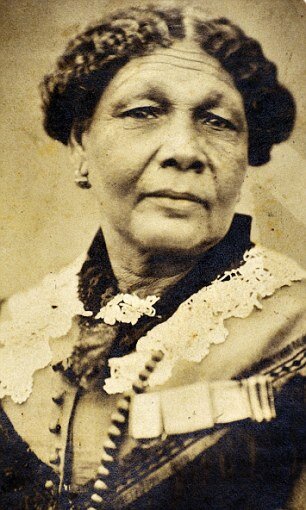
Mary Seacole
Mary Seacole
Jamaica / United Kingdom
2
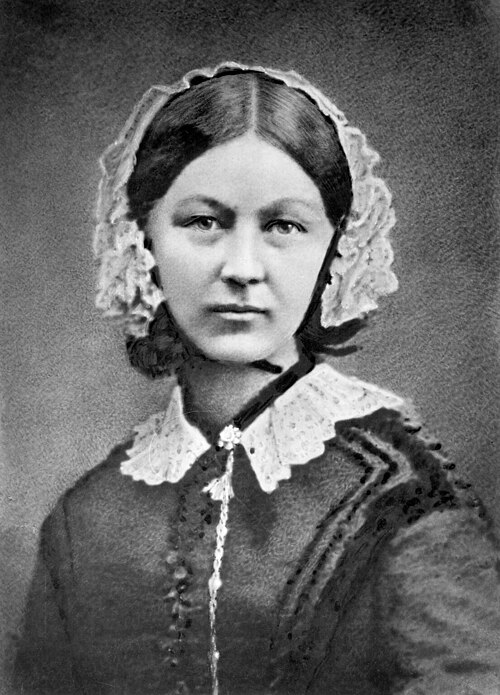
Florence Nightingale
United Kingdom
1
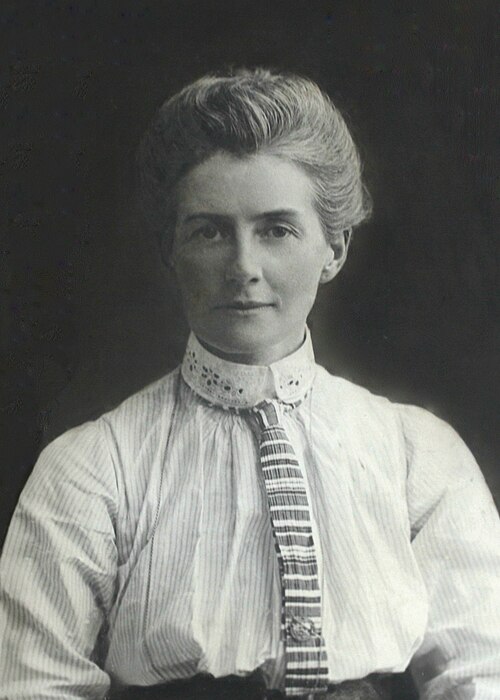
Edith Cavell
Edith Cavell
United Kingdom
3

The eight who reached the top

1
Portrait of Florence Nightingale, founder of modern nursing. Henry Hering (1814-1893) · Public domain

Florence Nightingale

United Kingdom · 1820–1910

The founder of modern secular nursing: famous for Scutari, more consequential for what followed — Notes on Nursing (1859), the first secular training school at St Thomas' Hospital (1860), and decades of statistical warfare on the causes of preventable death in hospitals and armies.

The story

After Crimea, Nightingale worked with the statistician William Farr to analyze why soldiers had died, and invented her polar-area 'rose' diagrams to show that far more men were killed by preventable disease than by wounds. She aimed the charts deliberately at Queen Victoria and cabinet ministers — readers, she judged, who would never work through tables. The campaign drove a Royal Commission on army health, and in 1858 she became the first woman elected a Fellow of the Royal Statistical Society.

“Count what is killing people, draw it so power cannot look away, and attach a reform to the chart.”
Nurses led to Scutari
38 (1854)
First woman, Royal Statistical Society
Elected 1858
Training school opened
St Thomas', 1860
2
Portrait of Mary Seacole, Jamaican nurse of the Crimean War. Unknown author Unknown author · Public domain

Mary Seacole

Jamaica / United Kingdom · 1805–1881

A Jamaican 'doctress' trained in Caribbean herbal and nursing practice who, refused by every official channel in London, funded her own way to Crimea in 1855, built the 'British Hotel' near Balaclava, and nursed soldiers on the battlefield itself — sometimes under fire.

The story

Turned away in 1854 by the War Office, the army medical department and Nightingale's recruiters — rejections she believed owed something to her skin — Seacole sailed for Crimea at her own expense and built her hut-hospital from salvaged driftwood and packing cases at Spring Hill. She rode out to the battlefields with food and bandages during the assaults on Sevastopol. Bankrupted by the war's sudden end, she was rescued by a four-night benefit festival at London's Royal Surrey Gardens in 1857, staged by the soldiers' own press campaign, and her memoir that year became a bestseller.

“If the institution refuses you, the need is still there; competence delivered anyway can outlast the institution's memory of refusing it.”

Route to Crimea
Self-funded, 1855
Memoir, 1857
Bestseller
Greatest Black Briton poll
1st, 2004
3
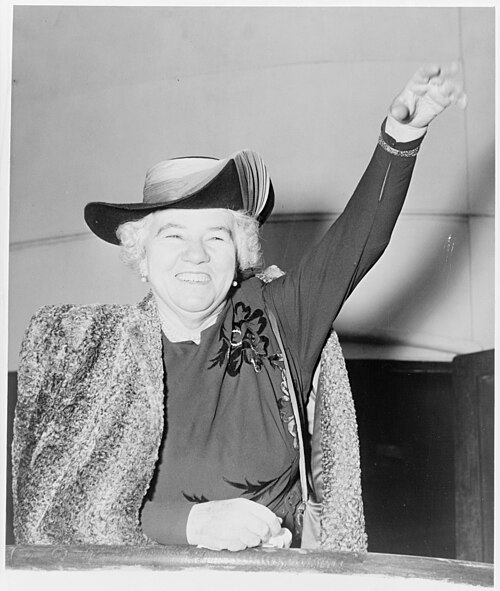
Photograph of Edith Cavell, British nurse executed in 1915. The original uploader was Vivedatica at Dutch Wikipedia . · Public domain

Edith Cavell

United Kingdom · 1865–1915

Matron of Brussels' pioneering secular nursing school from 1907, Cavell modernized Belgian nurse training before the First World War overtook her. Under German occupation she hid Allied soldiers in her clinic and helped some 200 escape to the neutral Netherlands — and was executed for it.

The story

Arrested in August 1915 and court-martialed, Cavell freely admitted the escapes. On the night before her execution she told the English chaplain Stirling Gahan, "Patriotism is not enough. I must have no hatred or bitterness towards anyone." She was shot at dawn on 12 October 1915 at the Tir national in Brussels. The execution of a nurse became one of the war's defining propaganda events; enlistment surged in Britain, and within a year Canada had named a Rocky Mountain peak after her.

“The profession's ethics can outrank the war: she nursed wounded soldiers of both sides, and said so at her trial.”

Soldiers helped to escape
~200 (1914–15)
Months running the line
~9
Mountain named for her
Mt. Edith Cavell, 1916
4
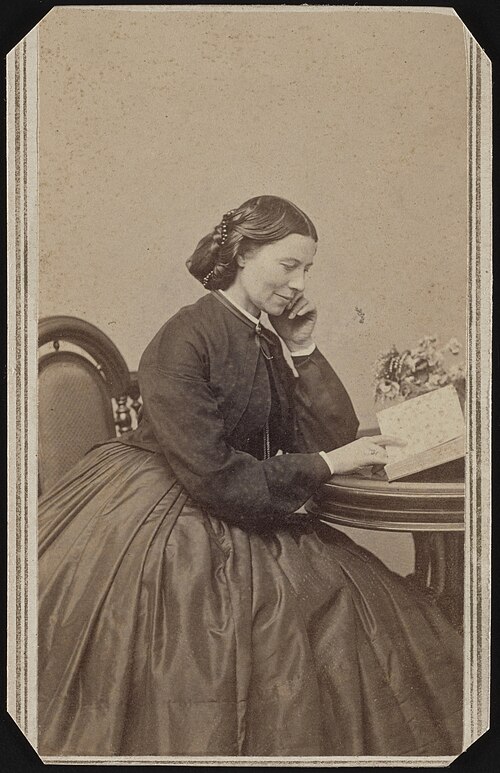
Photograph of Clara Barton, Civil War nurse and founder of the American Red Cross. The Library of Congress · No restrictions

Clara Barton

United States · 1821–1912

A self-taught battlefield nurse who organized her own supply lines to the American Civil War's front, ran the war's missing-soldiers office afterward, and then — aged 59 — founded the American Red Cross in 1881 and led it for 23 years of war and disaster relief.

The story

At Antietam on 17 September 1862, the bloodiest day in American military history, Barton brought a wagon of supplies to the front line while surgeons were dressing wounds with corn husks. As she knelt to give a wounded man water, a bullet passed through her sleeve and killed him where he lay; she noted afterward that she never mended the hole. A field surgeon, James Dunn, called her 'the angel of the battlefield,' and the name followed her for the rest of her life.

“Logistics is care: the supplies arriving at the right place, on the right day, save as many lives as the bandaging.”

Founded American Red Cross at
Age 59 (1881)
Years leading it
23
Missing soldiers traced
~22,000 (1865–68)
5
Photograph of Sister Elizabeth Kenny, the Australian bush nurse who transformed polio treatment. New York World-Telegram and the Sun staff photographer · Public domain

Elizabeth Kenny

Australia · 1880–1952

A self-trained Australian bush nurse whose treatment of polio — moist hot packs and early gentle movement instead of the rigid splinting orthodoxy demanded — was fought by the medical establishment for decades and then vindicated, laying groundwork for modern physical therapy.

The story

Nursing alone in the Queensland bush around 1911, Kenny telegraphed the Toowoomba surgeon Aeneas McDonnell about children stricken with a paralyzing illness she did not recognize. His reply — infantile paralysis, no known treatment, treat the symptoms — left her to improvise: strips of hot woolen blanket to relieve the muscle spasm, then gentle movement. Her patients recovered unusually well. Thirty years later, after Australian commissions dismissed her, Minneapolis doctors endorsed the method, the Sister Kenny Institute opened in 1942, and in 1951 Gallup found her the most admired woman in America — the only year in two decades Eleanor Roosevelt did not top the poll.

“Watch the patient, not the doctrine — and keep the case records, because vindication arrives on evidence.”

Formal nursing qualifications
None
Sister Kenny Institute
Minneapolis, 1942
Gallup most-admired woman (US)
1st, 1951
6

Virginia Henderson

United States · 1897–1996

The twentieth century's most influential nursing theorist. Her definition of nursing — assisting people, sick or well, in what they would do unaided if they had the strength, will or knowledge — was adopted by the International Council of Nurses in 1960 and still frames how the profession explains itself.

The story

Convinced that nursing could not call itself a discipline without command of its own literature, Henderson spent over a decade at Yale — roughly 1959 to 1971 — reading and annotating six decades of nursing publications to produce the four-volume Nursing Studies Index, covering 1900 to 1959. Colleagues called the project unglamorous drudgery; it became the foundation of nursing research bibliography. In 1985 the ICN gave her its first Christiane Reimann Prize, often described as nursing's Nobel, and she remained a working presence in nursing scholarship into her nineties.

“A profession owns its future only when it has indexed, and can argue from, its own evidence.”

Definition adopted by ICN
1960
Nursing Studies Index
4 vols, 1900–59
First Christiane Reimann Prize
1985
7

Rufaida Al-Aslamia

Arabia (Medina) · fl. c. 620s CE

The earliest named nurse of the Islamic tradition. A member of the Bani Aslam tribe in Medina who learned care of the sick from her physician father, she tended the wounded of early Islam's battles in a dedicated tent, trained other women as helpers, and cared for orphans and the poor in peacetime.

The story

During the Battle of the Trench around 627 CE, the Companion Sa'd ibn Mu'adh was struck in the arm by an arrow. The Prophet Muhammad ordered him moved to Rufaida's tent, pitched beside the mosque in Medina, so that he could visit him closely — an arrangement Islamic medical historians cite as the tradition's first field hospital, run by a woman. Nursing schools and awards across the Gulf and wider Muslim world now carry her name, twelve centuries before the profession's European founding figures were born.

“Organized nursing was invented more than once; the profession's history is wider than the countries that wrote it down first.”

Battles served
Badr, Uhud, Trench
Centuries before Nightingale
12+
Field hospital tent
Medina, c. 627 CE
8

John of God

Portugal / Spain · 1495–1550

A Portuguese ex-soldier and bookseller in Granada whose hospital for the poor and mentally ill founded the Brothers Hospitallers, a male nursing order now working in some fifty countries. The Catholic Church declared him, with Camillus de Lellis, patron of nurses in 1930.

The story

After a public breakdown in Granada in 1539, John was confined in the Royal Hospital, where the standard treatment for the mad was chaining and flogging. Released, he founded a small hospital run on the opposite principle — patients separated by condition, nursed rather than punished — funding it by begging with the cry 'do good to yourselves.' When the Royal Hospital caught fire in 1549 he repeatedly walked into the burning building to carry patients out, emerging, witnesses said, unharmed. He died the next year, at 55, after diving into the flooded Genil river to save a drowning young man.

“How the mad and the poor are nursed is a choice; one person keeping a different standard can institutionalize mercy.”

Order's presence today
~50 countries
Declared patron of nurses
1930
Hospital founded
Granada, c. 1539

Bars are scaled to the leader in this list.

Comparison Lab

Toggle names on and off — every bar rescales to the leader of your selection.

5 / 8

The argument

Nightingale herself is contested terrain: historians such as Hugh Small argue that Scutari's death rate remained catastrophic until the Sanitary Commission rebuilt its sewers in 1855, and that her real achievement was the post-war statistical reckoning — a reading she partly shared, having spent the rest of her life on sanitation data rather than bedside fame.

The pairing of Seacole and Nightingale has become a proxy war. Critics of Seacole's elevation note she ran a provisioning business and never claimed to be a hospital nurse; her defenders reply that her Caribbean 'doctress' training was real nursing by any honest definition, and that the 2016 statue of her at St Thomas' Hospital — Nightingale's own ground — was contested for exactly that reason.

The deeper unfairness is structural: a list like this can only include people whose work was recorded, which excludes almost the entire history of a profession practiced anonymously by religious sisters, colonized peoples and working-class women — and understates men like the Brothers Hospitallers, whose centuries of nursing rarely enter the standard Anglophone story.

Keep exploring

More in Medicine & Life