13 min read
If you only read one thing
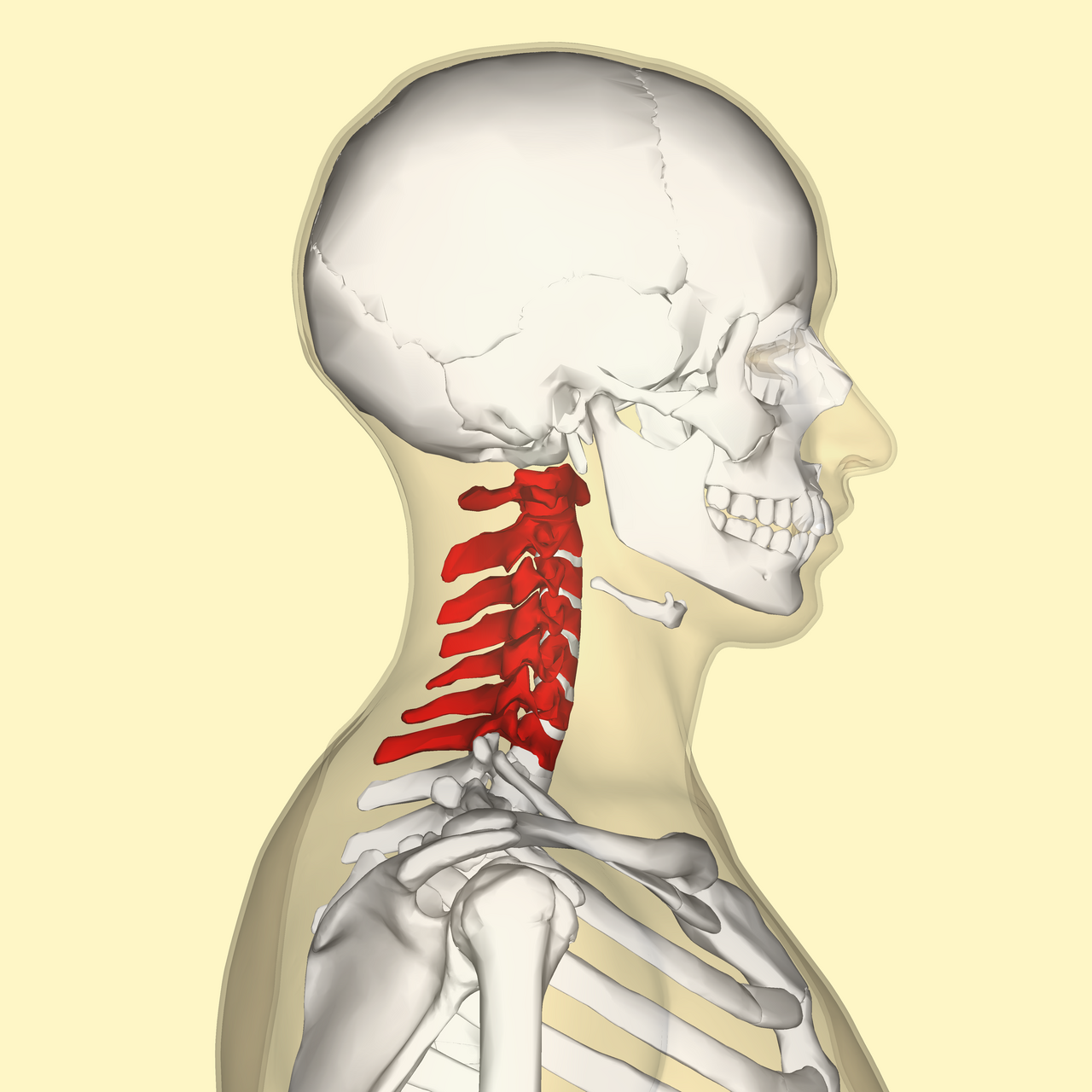
The seven cervical vertebrae and the soft tissues that carry the head — posture load, disc and facet pain, and graded mobility work.
Key takeaways
Neck rehab sits at the intersection of local tissue capacity and whole-person load — sleep, work posture, sport volume and fear of movement all change outcomes. Contemporary guidelines favour active strategies: education, graded exercise and criteria-based progression rather than prolonged rest or passive care alone. This page maps anatomy, common conditions, assessment tests, a typical exercise menu, phase progressions, precautions and recovery timelines used in educational summaries of care.
Jump to section
Next
Lower Back
Who this is for The seven cervical vertebrae and the soft tissues that carry the head — posture load, disc and facet pain, and graded mobility work.
Print this page
Key scores Pain frequency 82 Recovery length 45 Exercise load 55 Clinician need 48 Self-care fit 72 Recurrence risk 68 Lower Back Core Shoulder Elbow Rehab pathways in this language US/UK pages lead with PT/physio referral pathways. Other languages name local clinic and insurance norms. Red flags always beat more sets. Referral and self-pay rules are local — read them before DIY loading. Return-to-sport needs criteria, not only calendar weeks. PT / physio access may need referral, self-referral or insurance pre-auth — local rules win. Emergency departments are for red flags, not for skipping waitlists casually. Not a diagnosis Rehab pages are editorial maps of regions, phases and pathways — not personal diagnosis or a prescription.
How to browse rehab 1 Check red flags before any exercise list. 2 Pick a body region, then assessment → exercises → progression. 3 Read referral notes for your language market. 4 Use VS/compare for neighbouring joints carefully. 5 Open the body map before scrolling exercise lists. 6 Print red-flag and phase notes beside any home program. Compare next Knee vs ankle — Shared early calm, different return drillsShoulder vs neck — Referral thresholds differLower back phases — Red flags before loadingBalance vs strength — Falls risk firstEducational encyclopedia — not medical advice and not your personal physio plan.
Sudden weakness, night pain, trauma, fever or neurological change: seek care.
Insurance coverage and self-pay rules for physio differ by country — confirm locally; this page does not bill or prescribe.
Not a substitute for physiotherapy or medical care. Stop and seek help if red flags appear.
Self-care has limits: night pain, trauma, neuro deficits and unexplained swelling need clinicians.
Insurance and access pathways differ — this atlas cannot authorize care.
Key terms
Red flag A warning sign that needs medical review before loading more.
Range of motion How far a joint moves in a plane.
Progression Planned load increase across phases, not random harder workouts.
Self-care fit How much safe home work is realistic before hands-on care.
Return criteria Checks before sport or heavy work — strength, control, tolerance.
Recurrence risk Relative chance symptoms return without capacity and load management.
Difficulty 1–5 Editorial load hint on moves — not a challenge badge.
ACL return Stricter criteria than “pain quiet for a day” before cutting sports.
Referral pathway How PT / physio access works via GP, insurance or self-pay locally.
Return to sport Criteria-based return — not a calendar guess after injury.
Red flags Warning signs that need urgent clinical care — not DIY progression.
ROM Range of motion — measured by a clinician; apps are not a substitute. From this language PT / physio pathways Referral and self-referral rules differ by country. Red flags need a clinician before more loading — educational, not a personal prescription.
Phases over random hard Progression charts show load percent by phase — jump phases and recurrence risk rises.
Body-map traffic Spine, upper, lower and neuro-balance hubs route searchers to the right atlas cell fast.
Compare & quiz Compare topics and take the locale quiz when translations exist — traffic without inventing diagnoses.
Red flags first Night pain, trauma, neuro change or fever changes the path — seek care before loading.
Phases over heroics Progression beats random hard sessions after injury.
Pathway literacy Know whether you need a referral, insurance auth, or can self-pay for PT.
Return criteria Sport return needs strength, control and symptom rules — not only “weeks since injury”.
Educational reference only — not a diagnosis or personal treatment plan. Seek a licensed clinician for individual care.
Key takeaways
Vertebrae: C1–C7 Typical ROM: Flex ~40–50° Common visit: Office / screen work Red-flag watch: Cord / artery signs
Quick facts C1–C7 Vertebrae
Flex ~40–50° Typical ROM
Office / screen work Common visit
Cord / artery signs Red-flag watch
Often 2–6 weeks Self-care window
Prefer active over passive Guideline cue
Neck rehab sits at the intersection of local tissue capacity and whole-person load — sleep, work posture, sport volume and fear of movement all change outcomes.
Contemporary guidelines favour active strategies: education, graded exercise and criteria-based progression rather than prolonged rest or passive care alone.
This page maps anatomy, common conditions, assessment tests, a typical exercise menu, phase progressions, precautions and recovery timelines used in educational summaries of care.
The profile
82 45 55 48 72 68
Pain frequency 82 Recovery length 45 Exercise load 55 Clinician need 48 Self-care fit 72 Recurrence risk 68
Clinician need
48
/ 100
The seven cervical vertebrae and the soft tissues that carry the head — posture load, disc and facet pain, and graded mobility work.
Seven ways into this topic
01
Anatomy How the seven cervical vertebrae, discs, facets and deep neck muscles share posture load — the map behind graded neck rehab.
Read →
02
Common problems Educational overview of frequent neck presentations: mechanical pain, disc and facet irritation, and posture-related load patterns.
Read →
03
Tests & assessment How clinicians screen the neck: history, movement tests, neurological checks and warning signs that need prompt review.
Read →
04
Exercise menu Typical neck rehabilitation exercises: gentle mobility, deep neck flexor work, scapular support and paced progression.
Read →
05
Load progression Phased neck rehabilitation from calming irritability through mobility and strength to confident daily and desk load.
Read →
06
Precautions Common don’ts and stop-rules in neck rehab education, including red-flag patterns that need clinical care.
Read →
07
Recovery & return A realistic framing of neck recovery: early calm-down, graded loading, and return to desk or sport demands.
Read →
Frequently asked questions What is Neck rehab about? Neck rehab sits at the intersection of local tissue capacity and whole-person load — sleep, work posture, sport volume and fear of movement all change outcomes.
When should I stop and seek care for Neck? Progressive neurological deficit — Worsening weakness, saddle anaesthesia or bowel/bladder change needs urgent review.
What is a starter exercise for Neck? Isometric hold — 3×30–45 s — Build gentle tension without sharp symptom spike; breathe steadily.
How does Neck load progression usually start? Calm & protect — Days–2 wks — Settle irritability, protect healing tissues, keep neighbouring joints moving.
What should I avoid with Neck? Ignoring red flags — Neurological, systemic or trauma flags are not “push through” moments.
Is neck pain always a structural injury? Not always. Sensitivity can rise with load spikes, sleep loss and stress even when imaging is unremarkable. Clinicians separate serious pathology from common nociplastic or mechanical patterns.
How long do typical programmes last? Many soft-tissue presentations settle over weeks to a few months with graded loading; post-operative and neuro pathways often run longer and are criteria-based.
Should imaging come first? Guidelines generally reserve early imaging for red flags or when results would change management — not for every first presentation of mechanical pain.
Next
Lower Back
Neighbouring regions Neighbouring topics share region literacy — not a severity ranking.