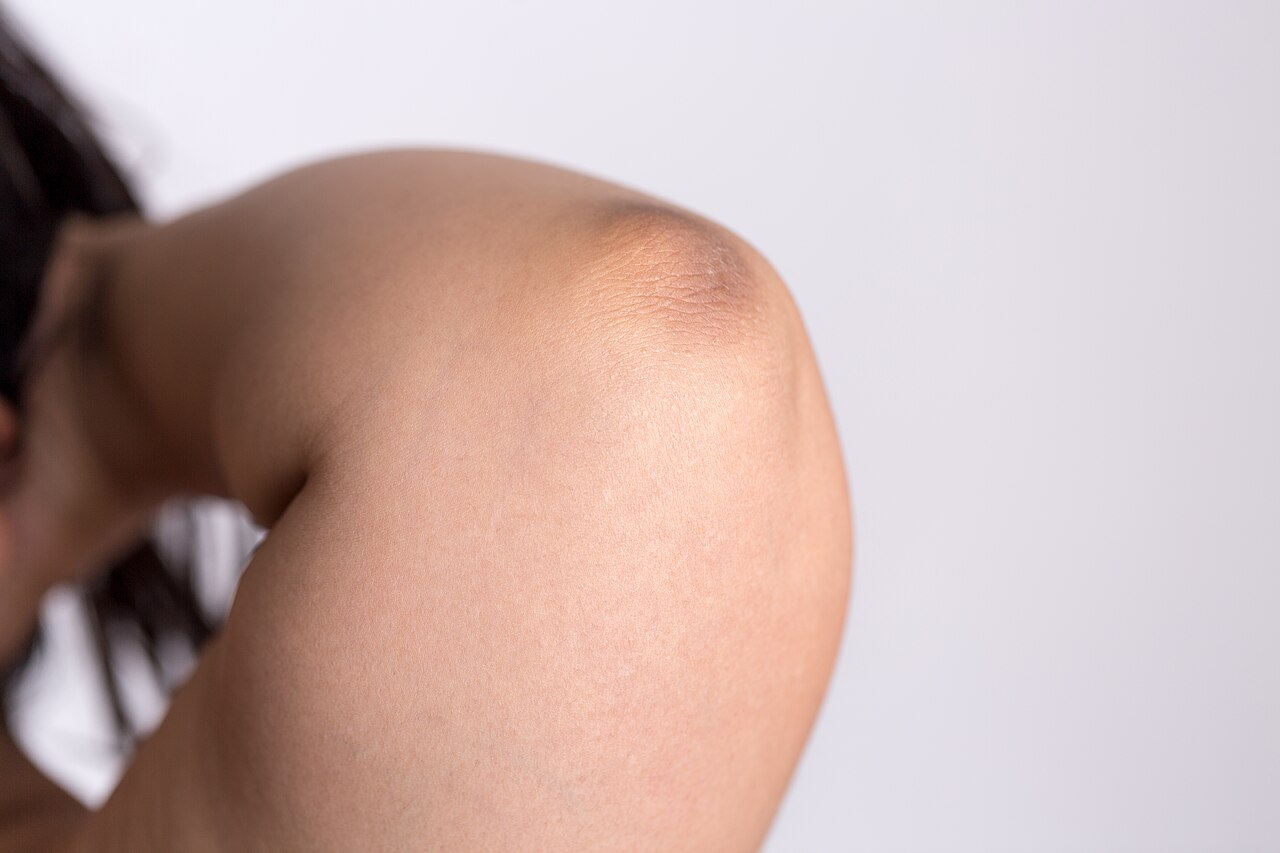
The elbow's hinge-and-rotation design lets the forearm bend and turn simultaneously, but this dual role concentrates repetitive stress on a small set of tendons.
Also called: Tennis/Golfer's Elbow Region · Cubital Joint
Repetitive gripping or overuse of forearm tendonsCommon cause
6–12 weeks for tendinopathyTypical recovery
Common extensor and flexor tendonsKey structures
Deformity or inability to move after traumaRed-flag signs
The elbow connects the upper arm to the forearm through a hinge joint that also permits the forearm to rotate, allowing the hand to be turned palm-up or palm-down. This combination of bending and rotating motion is unusual among joints and places particular demand on the tendons that cross it.
Most elbow pain in adults relates to overuse of the forearm muscles that attach near the joint rather than to the joint itself, with lateral epicondylitis, commonly called tennis elbow, being the most frequently diagnosed condition. These conditions are strongly associated with repetitive gripping, typing, or racquet-sport activity rather than any single acute injury.
Less commonly, the elbow is affected by ligament injury, nerve entrapment, or joint degeneration. This page reviews the elbow's anatomy, common conditions, assessment approaches, and general exercise and recovery patterns.
The profile
Pain frequency45
Recovery length35
Exercise load35
Clinician need40
Self-care fit70
Recurrence risk45
Clinician need
The elbow's hinge-and-rotation design lets the forearm bend and turn simultaneously, but this dual role concentrates repetitive stress on a small set of tendons.
The elbow connects the upper arm to the forearm through a hinge joint that also permits the forearm to rotate, allowing the hand to be turned palm-up or palm-down. This combination of bending and rotating motion is unusual among joints and places particular demand on the tendons that cross it.
When should I stop and seek care for Elbow?
Visible deformity after trauma — An obvious change in the elbow's shape following a fall or direct blow raises concern for fracture or dislocation and warrants urgent evaluation.
What is a starter exercise for Elbow?
Wrist flexor/extensor stretch — 2 × 3 each direction, held 20–30s — With the elbow straight, gently bend the wrist forward and back using the opposite hand to add a mild stretch.
How does Elbow load progression usually start?
Isometric loading and activity modification — 0–3 weeks — Isometric holds and reduced aggravating activity aim to calm irritation while maintaining some tendon loading.
What should I avoid with Elbow?
Complete rest for prolonged periods — Avoiding all forearm loading for weeks at a time is generally discouraged, since tendons tend to respond better to graded loading than to prolonged inactivity.
What is tennis elbow?
Tennis elbow, or lateral epicondylitis, is degenerative irritation of the tendons attaching to the outer bony bump of the elbow, most often related to repetitive wrist extension and gripping rather than tennis specifically.
What is golfer's elbow?
Golfer's elbow, or medial epicondylitis, is a similar condition affecting the tendons on the inner side of the elbow, associated with repetitive gripping and wrist flexion activities.
Is elbow tendinopathy an inflammatory condition?
Research has shown that chronically affected tendons often show degenerative changes with little active inflammation, which is part of why the term tendinopathy is now often preferred over the older term tendinitis.
Neighbouring regions
Neighbouring topics share region literacy — not a severity ranking.